English हिन्दी
Connect with us

Top Stories

Nupur Sharma controversy: Rahul Gandhi says divided internally, India becomes weak externally

Nupur Sharma’s derogatory comment against Prophet Muhammad and his wife gained global attention that led to backlash from Gulf countries like Qatar and Kuwait.

Published

on

Rahul Gandhi

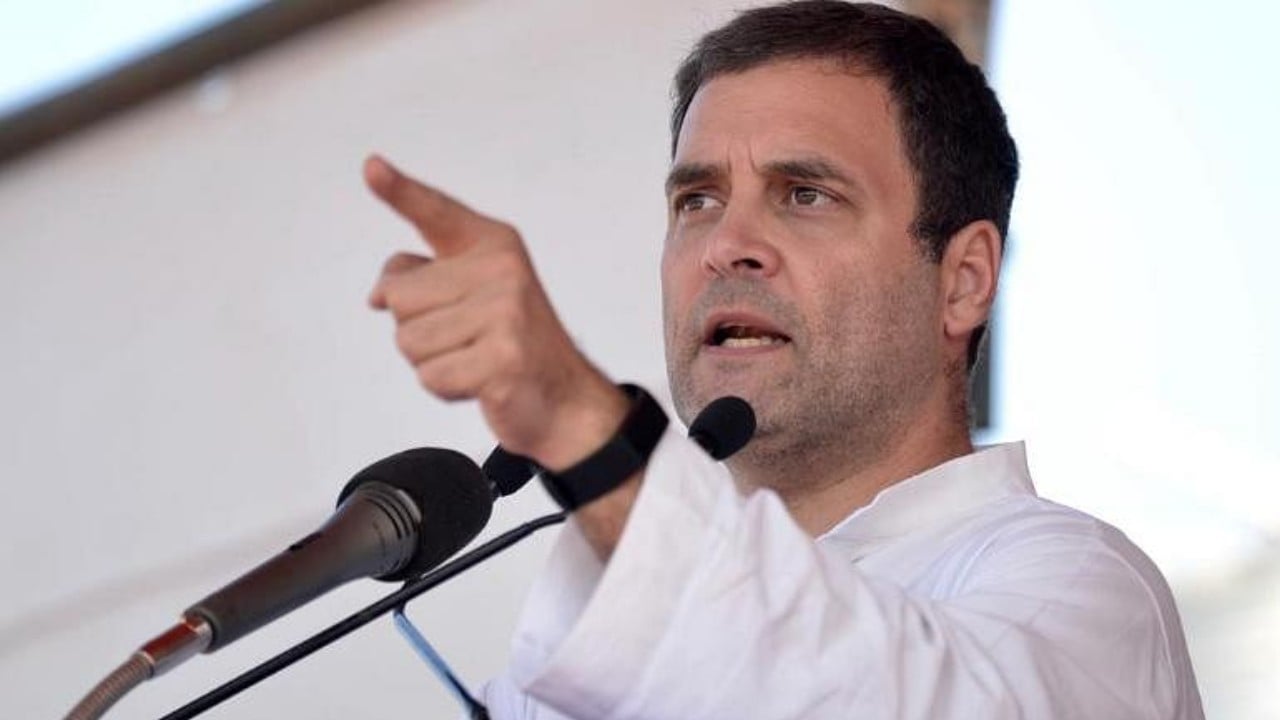
The Bharatiya Janata Party (BJP) is facing a massive social media outrage and backlash from Gulf countries over the ongoing Nupur Sharma controversy. Slamming BJP, Congress leader Rahul Gandhi on Monday said that internally divided India is now weak externally.

Taking it to Twitter, Gandhi wrote that BJP’s shameful bigotry has not only isolated India but also damaged its standing globally.

Have a look at Rahul Gandhi’s tweet:

Nupur Sharma’s derogatory comment against Prophet Muhammad and his wife gained global attention that led to backlash from Gulf countries like Qatar and Kuwait. Both the countries summoned India’s envoys and gave them protest notes over the controversial remarks made by Nupur Sharma and Naveen Jindal which also triggered communal violence in Uttar Pradesh’s Kanpur.
Read Also: Nupur Sharma controversy: Bycott Qatar Airways trends after BJP suspends leader, here’s why

Nupur Sharma controversy

It all started last week after remarks by the BJP national spokesperson Nupur Sharma on a TV debate and the Delhi media head Naveen Kumar Jindal’s now-deleted tweets. These comments were criticised by several Muslim groups and also led to communal violence in Uttar Pradesh’s Kanpur which left 40 injured.

Soon the outrage spread across the globe and India received a massive backlash with several hashtags trending on social media. Following the outrage, BJP suspended the membership of Nupur Sharma and Naveen Jindal. The BJP’s national general secretary, Arun Singh issued a statement which read that the party does not condone insults to any religion and respects all faiths.

An FIR was also filed against Sharma at Pydhonie Police Station in Mumbai under sections 295A (hurting religious feelings), 153A (promoting enmity) and 505B of the Indian Penal Code (IPC). The case was filed by Raza Academy, a Sunni Barelvi organisation of Indian Sunni Muslims.

Nupur Sharma withdrew her statement and said that it was not her intention to hurt religious sentiments and claimed that her comments were a reaction to continuous insult and disrespect towards Lord Shiva.

Saudi Arabia joins global outrage over Nupur Sharma’s remarks on Prophet Muhammad, welcomes BJP’s action

Who is Nupur Sharma? Everything you need to know about her life, political career, and more

India News

Amit Shah counters delimitation concerns, says southern states to gain Lok Sabha seats

Amit Shah assures Parliament that southern states will gain Lok Sabha seats after delimitation, countering opposition criticism during the women’s reservation debate.

Published

on

Amit Shah

Union Home Minister Amit Shah on Thursday addressed concerns over the proposed delimitation exercise, asserting in the Lok Sabha that southern states will not lose representation but instead see an increase in their number of seats.

His remarks came during a heated debate linked to the implementation of women’s reservation, where opposition parties have raised fears that population-based delimitation could reduce the political weight of southern states.

Shah rejected these claims, calling them misleading, and said the proposed framework ensures fairness while expanding the overall strength of the Lok Sabha.

Seat count to rise with expansion of Lok Sabha

The government has indicated that the total number of Lok Sabha seats could increase significantly as part of the delimitation process. In this expanded House, the combined representation of southern states is expected to rise from 129 seats at present to around 195 seats.

Shah emphasised that no state will lose seats in absolute terms, and the exercise is designed to reflect population changes while maintaining balance across regions.

State-wise projections shared in Parliament

During his address, Shah also provided indicative figures for individual southern states, suggesting notable increases in representation. According to the projections:

  • Tamil Nadu could see its seats rise substantially
  • Kerala, Telangana, and Andhra Pradesh are also expected to gain additional seats
  • Karnataka’s representation may increase as well

These figures were presented to counter the argument that delimitation would disproportionately favour northern states.

Political debate intensifies over linkage with women’s quota

The delimitation exercise has been closely linked to the rollout of women’s reservation, which proposes one-third seats for women in Parliament and state assemblies.

Opposition leaders have questioned this linkage, arguing that tying reservation to delimitation could delay its implementation and raise federal concerns. Some leaders have also warned that the move could impact national unity if apprehensions among states are not addressed.

The government, however, maintains that the reforms are necessary to ensure equitable representation and to align the electoral system with demographic realities.

Centre dismisses ‘false narrative’ on southern states

Shah reiterated that concerns about southern states losing influence are unfounded. He said the delimitation process will increase representation across regions and described the criticism as a “false narrative” aimed at creating confusion.

The issue is expected to remain a key flashpoint as Parliament continues discussions on the women’s reservation framework and related legislative changes.

Continue Reading

Latest world news

Israel-Lebanon ceasefire to begin within hours as Trump announces 10-day truce

Israel and Lebanon may begin a 10-day ceasefire within hours after a proposal announced by Donald Trump amid ongoing tensions.

Published

on

Donald Trump

A temporary halt in hostilities between Israel and Lebanon is expected to begin within hours after US President Donald Trump announced a proposed 10-day ceasefire between the two sides, amid ongoing tensions in the region.

According to his statement, the ceasefire is likely to take effect around 5 p.m. Eastern Time, although independent confirmation from both sides is still awaited.

The development follows discussions involving Israeli Prime Minister Benjamin Netanyahu and Lebanese President Joseph Aoun, with mediation efforts led by the United States.

Officials indicated that the proposed truce is aimed at creating a limited window to reduce violence and potentially pave the way for broader diplomatic engagement. The situation along the Israel-Lebanon border has remained tense in recent weeks, with escalation linked to the activities of Hezbollah.

Diplomatic efforts have intensified in recent days, with discussions facilitated by the United States, including the involvement of US Secretary of State Marco Rubio. However, details of the agreement and the extent of coordination between the parties remain unclear.

The situation remains fluid, and the success of the ceasefire will depend on adherence by all sides involved. The conflict has already led to significant humanitarian and geopolitical consequences, including displacement and disruption in affected areas.

While the proposed ceasefire is being seen as an important step toward de-escalation, broader negotiations involving regional stakeholders are expected to be necessary for any lasting resolution.

Continue Reading

India News

PM Modi assures no discrimination in women’s quota, delimitation debate intensifies in Parliament

PM Narendra Modi has assured that women’s reservation will be implemented without discrimination, amid a heated debate over delimitation in Parliament.

Published

on

PM modi

Prime Minister Narendra Modi has assured that there will be no discrimination in the implementation of women’s reservation, as Parliament witnessed a sharp debate over the proposed linkage between the quota and delimitation exercise.

During the ongoing special session, the government reiterated its commitment to ensuring fair representation while addressing concerns raised by opposition parties regarding the timing and structure of the legislation.

The proposed framework aims to reserve 33 percent of seats for women in the Lok Sabha and state assemblies. However, its implementation is tied to a fresh delimitation exercise, which is expected after the next census.

Opposition questions timing and intent

Opposition leaders have raised concerns that linking the women’s quota to delimitation could delay its implementation. They argue that the process of redrawing constituencies may push the actual rollout further into the future.

The issue has triggered a broader political confrontation, with multiple parties questioning whether the move could alter representation across states.

Some critics have also alleged that the delimitation exercise could disproportionately benefit certain regions based on population, a charge the government has rejected.

Government reiterates commitment to fair implementation

Responding to these concerns, the Centre has maintained that the reforms are necessary to ensure accurate and updated representation based on population data.

Leaders from the ruling side have repeatedly emphasized that the process will be carried out transparently and without bias. The assurance that there will be “no discrimination” is aimed at addressing fears among states and opposition parties.

The debate marks a key moment in Parliament, with both sides engaging in intense exchanges over one of the most significant electoral reforms in recent years.

Continue Reading

Trending

© Copyright 2022 APNLIVE.com