English हिन्दी
Connect with us

Top Stories

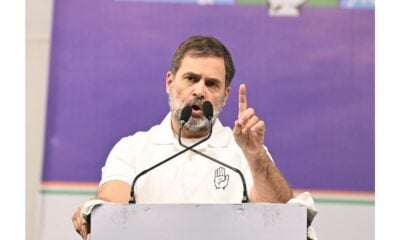
Modi surname remark case: Rahul Gandhi to appear before Patna Court on April 12

Following disqualification, Rahul Gandhi was also asked to vacate his official residence which he had occupied since 2005.

Published

on

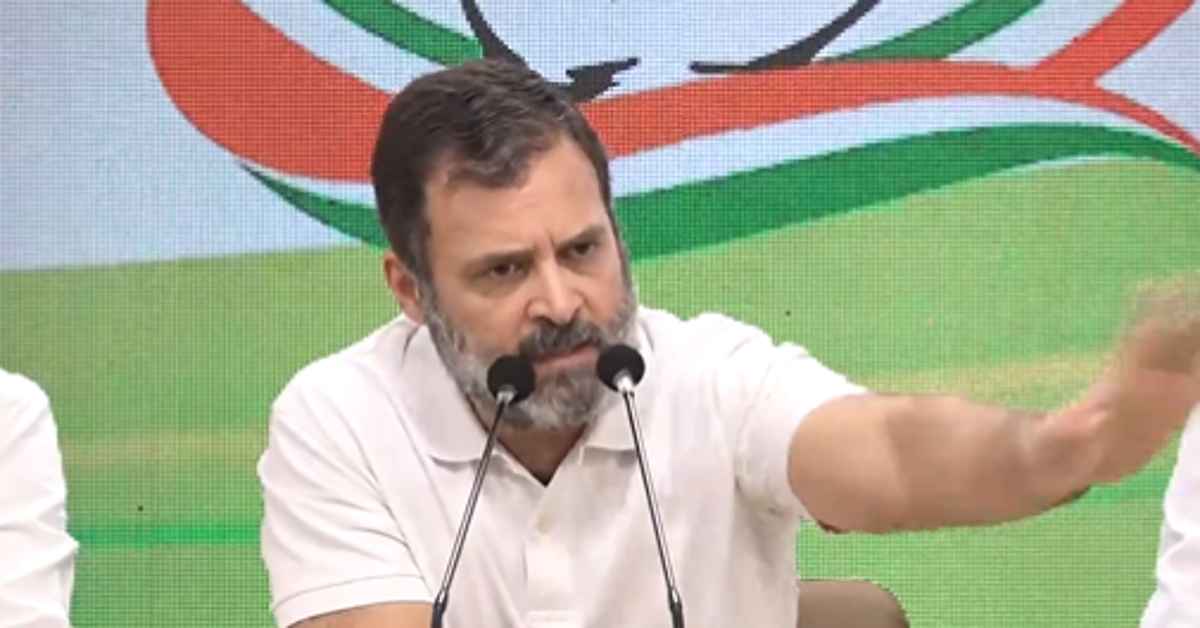
Modi surname remark case: Rahul Gandhi to appear before Patna Court on April 12

Patna MP/MLA court has ordered Congress leader Rahul Gandhi to appear before the court on April 12 to record his statements in the 2019 criminal defamation case filed against him by Rajya Sabha MP Sushil Kumar Modi.

Gandhi’s statements will be recorded under Section 313 of the Code of Criminal Procedure (CrPC). The court has directed Rahul Gandhi’s lawyer to appear before it.

Sushil Modi levelled a criminal defamation case against Gandhi under Section 500 of the Indian Penal Code (Defamation) over his alleged remark “why all thieves share the Modi surname” made during a political campaign in Karol ahead of the 2019 Lok Sabha elections.

Gandhi, in his statement, referred to IPL founder Lalit Modi and fugitive Nirav Modi who fled the country after taking thousands of crores of rupees. Gandhi obtained bail in the case in the year 2019.

Several witnesses on behalf of Sushil Modi, including, the then road construction minister in Bihar Government Nitin Nabin, president of BJYM Bihar Manish Kumar, Senior Advocate Subodh Jha, Senior Advocate SD Sanjay, Advocate Ratnesh Kumar and Advocate Arjun Kumar appeared in the court and have recorded their statements.

Last week, The 52-year-old leader was convicted by the Surat court over his remarks and was subsequently disqualified from the Lok Sabha membership after a complaint was filed by BJP MLA Purnesh Modi.

Following disqualification, Rahul Gandhi was also asked to vacate his official residence which he had occupied since 2005.

India News

Enforcement Directorate raids former Kerala Chief Minister Pinarayi Vijayan’s residence in money laundering probe

The Enforcement Directorate on Wednesday carried out searches at the Thiruvananthapuram residence of former Kerala Chief Minister Pinarayi Vijayan and 11 other locations in connection with a money-laundering probe registered in 2024.

Published

on

The Enforcement Directorate on Wednesday conducted extensive searches at the Thiruvananthapuram residence of former Kerala Chief Minister Pinarayi Vijayan. The action comes as part of an ongoing money-laundering investigation, with the central probe agency executing simultaneous raids at 12 separate locations across the state under the Prevention of Money Laundering Act (PMLA).

Broad Crackdown in Financial Probe

The central agency’s operations focused significantly on Vijayan’s rented residence in the state capital, alongside eleven other locations, including premises in Kochi, Kozhikode, Kannur, and Bengaluru. This major enforcement action was initiated shortly after the Kerala High Court dismissed a petition on Tuesday, which had been filed by Cochin Minerals And Rutile Ltd (CMRL) seeking to quash the ongoing ED proceedings.

The roots of the financial investigation trace back to a PMLA case registered in 2024. The core allegation involves an estimated illegal payment of ₹1.72 crore made between 2017 and 2019 by a private entity, Cochin Minerals And Rutile Ltd (CMRL), to Exalogic Solutions, an IT firm owned by Vijayan’s daughter, T Veena.

According to investigators, the financial transactions took place despite the IT firm allegedly rendering no services to the private company. Apart from the financial probe agency’s scrutiny, the Serious Fraud Investigation Office (SFIO) is also independently conducting an inquiry into the wider financial transactions of the matter.

Political Developments

The searches also covered locations linked to other political and executive figures associated with the matter, including premises connected to senior CMRL executives. While the ruling party has previously described the investigations as politically motivated, the central agency has intensified its probe following the high court’s refusal to grant interim relief to the private firm. The case has sparked intense political debate, with opposition parties using the findings to allege financial irregularities, while local party leaders maintain that the transactions were part of a legitimate business arrangement.

Continue Reading

India News

Congress Dismisses Karnataka Leadership Transition Rumors After Six-Hour Delhi Meet

The Congress party has rejected ongoing rumors regarding a leadership change or a rotating Chief Minister formula in Karnataka, stating that a recent six-hour meeting in Delhi focused strictly on the upcoming Rajya Sabha and MLC elections.

Published

on

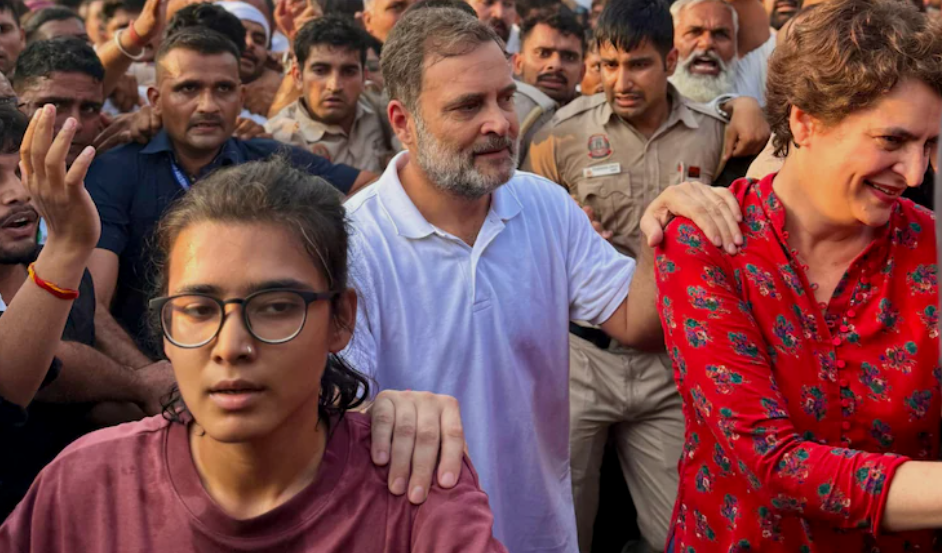
The Congress party has strongly downplayed the intense political buzz surrounding a potential leadership transition or a change in the Chief Minister’s post in Karnataka. Following a marathon six-hour meeting with the state’s top leadership in New Delhi, the party explicitly rejected the ongoing speculation, labeling it as having “no reality.”

A brief statement issued to the media after the high-level meeting advised against spreading rumors, clarifying that the discussions were entirely centered on upcoming electoral strategies rather than structural changes within the state government. The party stated that the deliberations solely revolved around the state’s three vacant Rajya Sabha seats and the upcoming Member of Legislative Council (MLC) elections.

Rajya Sabha and MLC Polls Take Center Stage

The high-stakes meeting was attended by Congress President Mallikarjun Kharge, senior leader Rahul Gandhi, and party General Secretary KC Venugopal, alongside Karnataka Chief Minister Siddaramaiah and Deputy Chief Minister DK Shivakumar.

Briefing the media post-meeting, KC Venugopal stated that conversations were strictly confined to the Rajya Sabha and MLC elections, emphasizing that there is no truth to any other political speculation. Chief Minister Siddaramaiah also confirmed that the agenda of a potential cabinet expansion or a leadership shift did not come up during the six-hour-long discussion.

Background of the Power Struggle

The question of leadership in Karnataka has remained a recurring theme for over a year. Supporters of Deputy Chief Minister DK Shivakumar have consistently maintained that the central leadership promised a rotating Chief Ministership arrangement when the government was formed after the 2023 assembly elections.

Speculation had intensified recently as the ruling government faced local anti-incumbency pressures alongside renewed political activity from the opposition bench. Some internal reports had even indicated a push from within certain sections of the high command, including Priyanka Gandhi Vadra, for a leadership revamp.

Balancing Caste Equations and Party Structure

The central leadership has navigated the situation cautiously to maintain political stability. Chief Minister Siddaramaiah, 80, commands a powerful “Ahinda” support base—a coalition comprising minority communities, backward classes, and Dalits. This social alliance was crucial in helping the party navigate the traditional Vokkaliga and Lingayat caste dynamics during the 2023 elections.

Although the rotation issue had previously gained significant momentum when the government completed two years in office, the party high command had chosen to maintain the status quo to avoid any adverse electoral impact in neighboring assembly elections, such as in Tamil Nadu. With those elections concluded, supporters of the 64-year-old Deputy Chief Minister had expressed optimism for a transition. Shivakumar currently holds the dual responsibility of being the Deputy Chief Minister as well as the state Congress chief, signaling his critical organizational value to the party. However, for the time being, the party high command has firmly signaled that the current leadership structure will remain unchanged.

Continue Reading

India News

External Affairs Minister S Jaishankar and US Secretary of State Marco Rubio review global strategic partnership amid regional conflicts

n a high-stakes meeting in New Delhi, External Affairs Minister S Jaishankar defined India’s multi-alignment stance on West Asia, while US Secretary of State Marco Rubio declared the two nations as global strategic allies.

Published

on

S Jayshankar Marco Rubio meet

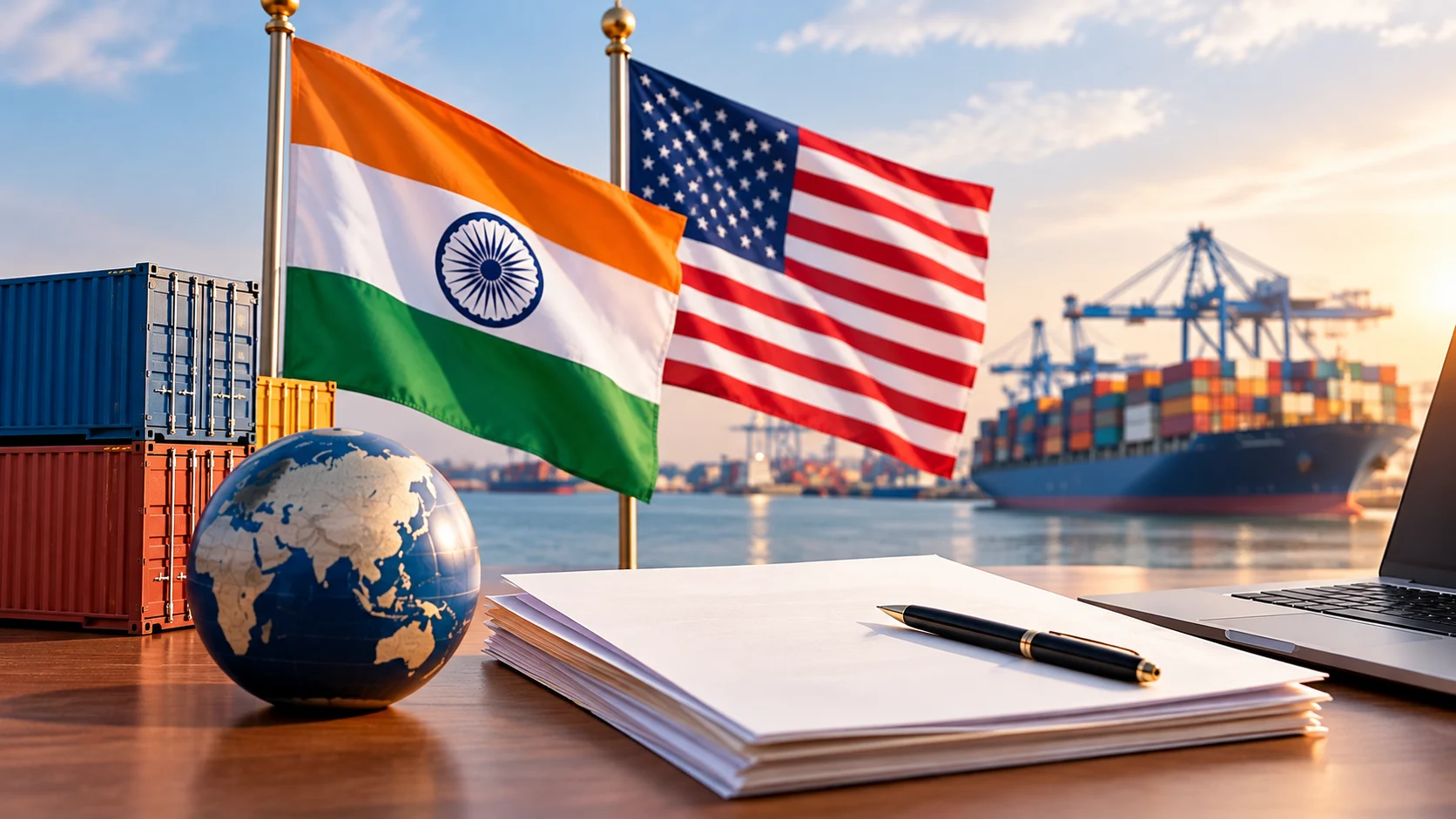
External Affairs Minister S Jaishankar and visiting US Secretary of State Marco Rubio held comprehensive delegation-level talks in New Delhi, emphasizing that the relationship between the two nations remains strong, strategic, and far-reaching. Addressing a joint press conference at Hyderabad House, both leaders rejected suggestions that the bilateral partnership has lost momentum, outlining instead a shared vision for global cooperation.

India outlines ‘multi-alignment’ stance on West Asia conflict

During the high-level discussions, the ongoing conflict in West Asia emerged as a key focal point. Addressing the media, External Affairs Minister S Jaishankar stated that India continues to maintain robust and stable relationships with all key stakeholders in the region, including the United States, Israel, Iran, and Gulf nations.

Jaishankar stressed that India approaches regional conflicts through a distinct policy of “multi-alignment”. He explicitly outlined India’s core operational priorities in West Asia:

  • Ensuring regional peace and stability
  • Safeguarding the welfare of the vast Indian diaspora living and working in the region
  • Maintaining lower energy prices to shield the domestic economy
  • Securing safe and uninterrupted maritime commerce through vital sea lanes

Global strategic allies extending beyond the region

Secretary Rubio strongly backed the depth of the partnership, asserting that the ties between Washington and New Delhi set themselves apart from standard global relationships.

“The US and India aren’t just allies. We are strategic allies and that’s of critical importance,” Rubio stated. “We obviously work with countries all over the world on a variety of issues, but our strategic partnership is what sets this relationship apart because it’s not simply limited to the region, it extends to offer opportunities to cooperate globally in different regions of the world.”

Rubio further revealed that their high-level deliberations, which included a working dinner, covered potential avenues for joint India-US cooperation in the Western Hemisphere and other global theaters.

Clarifications on immigration reforms and visa concerns

The joint press conference also touched upon critical people-to-people and diplomatic friction points. Responding to concerns flagged by media regarding the new US immigration rules—which require certain legal immigrants to leave the US before applying for permanent residency—Rubio reassured the Indian public that the overhaul is a global modernization effort and is not targeted at India.

He acknowledged the profound economic contributions made by Indian professionals and corporations to the American economy. Rubio attributed the policy changes to the broader migration challenges confronting the US, noting that the administration is modernizing the system to regulate how many people enter and when, admitting that the transition period could cause “some bumps”.

When questioned on isolated instances of online racism or prejudice faced by Indians, Rubio took a firm stance alongside Jaishankar. Branding such instances as “dumb” commentary, the top US diplomat remarked, “Every country in the world has stupid people. I’m sure there are stupid people here; there are stupid people in the United States who make dumb comments all the time.” He re-emphasized that the US remains a highly welcoming country whose fabric has been significantly enriched by immigrants from across the world.

Continue Reading

Trending

© Copyright 2022 APNLIVE.com