English हिन्दी
Connect with us

Top Stories

Maharashtra: 67-year-old dies during gym workout

The incident happened at around 7:30 pm when he was doing his regular exercise at the gym.

Published

on

man died gymming

A 67-year-old man collapsed on Wednesday while working at a gym in Vasai, a town in Maharashtra’s Palghar district. The incident happened at around 7:30 pm when he was doing his regular exercise at the gym.
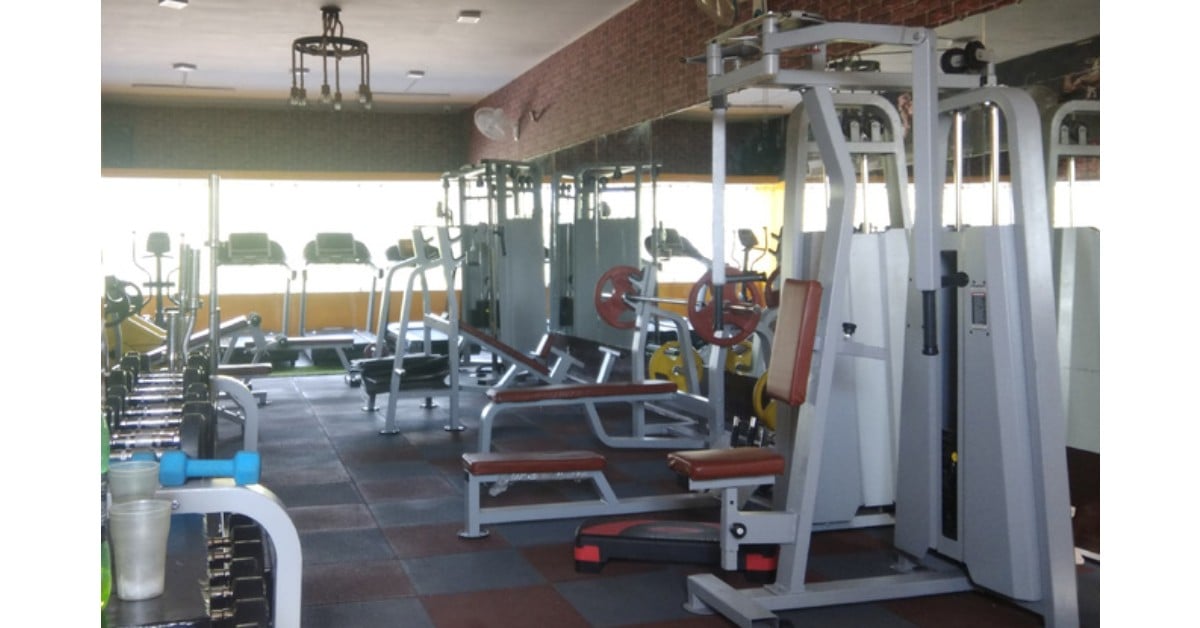
The police said the deceased, identified as Pralhad Nikam, felt giddy and collapsed on the ground while gymming. The gym trainers and people around him immediately took him to the hospital, where the doctors declared him brought dead.

The police said the cause of his death is still not known, however, his body was sent to a government hospital for post-mortem.

On the same day, a 32-year-old man in Madhya Pradesh’s Bhopal collapsed and died while dancing at a wedding ceremony. According to the reports, the deceased was dancing with a group, surrounded by band beating drums, when he collapsed on the ground.

Read Also: At 115, Spanish granny Branyas Morera is world’s oldest; never visited a hospital

He was rushed to the hospital where the doctors him dead. The reports state that the man suffered cardiac arrest.

This is not the first incident where someone has died while gymming. Earlier, a 33-year-old bodybuilder in Chandigarh died while stretching. As per the reports, the man, identified as Ram Rana, was talking to his friends in the gym after a workout. He stretched his arms and tilted backward. Suddenly, he fell to the ground and stopped responding.

His friends immediately took him to the nearby hospital, where the doctors declared him brought dead. He is survived by his wife and two children, aged 11 and 3, respectively.

9 people including a child, 4 women die in car-truck collision on Mumbai-Goa highway

Singapore-bound flight departs 5 hours before schedule from Amritsar Airport, 35 passengers stranded; DGCA orders probe

Continue Reading

India News

Modi-Xi meeting draws global attention, China says India should be partner

Chinese Foreign Minister Wang Yi said the Modi-Xi meeting at the BRICS summit reached a consensus on partnership, border peace and wider cooperation.

Published

on

Chinese Foreign Minister Wang Yi has said Prime Minister Narendra Modi and Chinese President Xi Jinping reached a key consensus during their meeting on the sidelines of the 18th BRICS Summit in New Delhi, with both sides viewing India and China as partners rather than rivals.

The meeting between Modi and Xi took place on September 12 during Xi’s two-day visit to New Delhi for the BRICS summit. According to Wang, the two leaders held a candid and in-depth discussion on strategic, long-term and broader issues concerning India-China relations.

India-China partnership highlighted

Wang said the “most important consensus” reached by the two leaders was that China and India should be partners.

According to the Chinese foreign minister, Xi said the two countries could draw on each other’s strengths, support one another and pursue common development.

Wang also said the Modi-Xi meeting attracted widespread international attention.

He described the recent improvement in China-India relations as a shift from a “restart” towards a “renewed elevation”, while saying that cooperation between the two countries has continued to expand.

Focus on border peace

The two countries agreed to jointly maintain peace and tranquility in their border areas, Wang said.

He added that both sides pledged to strengthen political mutual trust, appropriately manage differences and contradictions, and maintain peace along the border.

During his meeting with Modi, Xi called for mutual respect and understanding to help overcome disruptions in bilateral ties. He also advocated progress on India-China relations and border issues, with the two tracks reinforcing each other.

Wang said Modi responded positively and reaffirmed that India approaches its relationship with China from a strategic and long-term perspective.

Modi says India ready to be China’s partner

According to Wang’s account of the meeting, PM Modi said India was ready to be a partner rather than an adversary to China.

Modi also viewed the development of the two countries as an opportunity rather than a challenge, Wang said.

He added that India remains committed to high-level exchanges with China, stronger strategic communication and broader people-to-people ties based on mutual respect and trust.

Cooperation in BRICS and other forums

The two leaders also agreed to support each other’s BRICS chairmanship, according to Wang.

They discussed stronger coordination through multilateral platforms, including the United Nations, the Shanghai Cooperation Organisation and the G20.

The two sides also agreed to expand cooperation in areas including cultural and people-to-people exchanges and direct air connectivity, Wang said.

Wang said China and India should deepen mutually beneficial cooperation and contribute to cooperation across the Global South.

China calls for implementation of consensus

Chinese Foreign Ministry spokesman Guo Jiakun said China would work with India to implement the understandings reached by Modi and Xi.

Guo said Beijing would seek to expand the areas of cooperation, deepen people-to-people exchanges and strengthen coordination in multilateral forums.

He also said China would continue efforts to improve bilateral ties and support each other’s development, with the aim of contributing to peace and prosperity in the region and beyond.

PM Modi and Xi Jinping reached a key consensus that India and China should be partners, not rivals, Chinese Foreign Minister Wang Yi said after their BRICS meeting.

The two sides also discussed border peace, BRICS cooperation and stronger bilateral ties.

Continue Reading

India News

3 Italians leave Delhi without immigration clearance, Air India gets notice

Three Italian nationals flew from Delhi to Munich without immigration clearance after travelling from Amritsar. The Civil Aviation Ministry has issued Air India a show-cause notice.

Published

on

Three Italian nationals travelled from Delhi to Munich without completing mandatory immigration clearance, prompting the Ministry of Civil Aviation to issue a show-cause notice to Air India.

The incident took place in the early hours of September 4. The three passengers had arrived in Delhi from Amritsar on Air India flight AI-1115 at around 12:50 am before boarding Lufthansa flight LH-763 to Munich at approximately 1:45 am.

The ministry has sought an explanation from Air India and given the airline seven days from receipt of the notice to respond.

How the passengers bypassed immigration

The three passengers were travelling under Air India’s hub-and-spoke arrangement, in which travellers from smaller airports connect to international destinations through a major hub.

They travelled from Amritsar to Delhi and were issued domestic, or “D”, boarding passes for their Air India flight. They were also issued boarding passes for their onward Lufthansa flight to Munich at Amritsar.

According to the ministry’s notice, Air India’s standard operating procedure provides for two categories of boarding passes — “D” for domestic passengers and “I” for international passengers. The ministry has questioned the issuance of the additional boarding passes in this case.

After arriving in Delhi, the passengers were taken from Gate 39 towards the International-to-International Transfer Area. They then reached the departure area and boarded the Lufthansa flight without passing through the immigration checkpoint.

Ministry flags five SOP provisions

The Ministry of Civil Aviation has flagged five provisions of Air India’s Domestic-International Operations SOP in connection with the incident.

These include rules concerning the categories of boarding passes, segregation of domestic and international passengers after disembarkation, and access to the International-to-International Transfer Desk.

The ministry has also raised questions over Air India’s requirement to maintain a nodal officer and monitoring team at hub and spoke airports around the clock. These mechanisms are intended to ensure that passengers do not enter the international departure process through an incorrect route without completing the required formalities.

The ministry said the monitoring mechanism failed in this case.

Ministry seeks answers from Air India

The show-cause notice asks Air India to explain how passengers holding domestic boarding passes were able to enter the international transfer area.

It has also sought clarification on why the passengers were issued boarding passes for their onward Lufthansa flight at Amritsar and has asked about the role of Air India personnel and SATS staff involved in handling the passengers.

The ministry has further sought information about the designated nodal officer and monitoring team’s presence and actions at the time. It has questioned why the required reconciliation of domestic and international passengers was not completed promptly.

Questions have also been raised over whether the General Declaration, passenger manifest and API-PNR data concerning the passengers were shared with immigration authorities in time and whether their status was accurately reflected in those records.

Lapse detected during manual reconciliation

According to the notice, the lapse was detected later during manual reconciliation.

The incident has therefore raised questions about both the handling of the passengers and the systems intended to prevent domestic-arrival passengers from entering the international departure process without completing immigration clearance.

Air India gets seven days to respond

The Ministry of Civil Aviation has asked Air India to explain why action should not be initiated against the airline for failing to follow the prescribed SOP and take adequate precautions.

The airline has seven days from receiving the notice to submit its response.

The ministry has warned that failure to respond within the stipulated period could be treated as having no explanation to offer, after which administrative and regulatory action may be considered based on the available records.

What is the hub-and-spoke model?

Under a hub-and-spoke model, passengers from smaller airports travel through a major airport before connecting to international destinations.

In this case, the passengers travelled from Amritsar to Delhi before connecting to a Munich-bound international flight.

At the hub airport, passengers arriving on domestic flights but holding onward international bookings must be identified and routed through the prescribed process, including immigration clearance before leaving India.

In the Delhi incident, the three Italian passengers instead entered the international transfer process and boarded their Munich flight without completing the required immigration formalities.

Continue Reading

India News

China reduces PLA deployment along LAC, says Defence Ministry report

The Defence Ministry has reported a significant reduction in Chinese PLA deployment along the northern borders in 2025, while saying Indian Army deployment along the LAC remains robust and prepared for contingencies.

Published

on

The Defence Ministry has reported a significant reduction in Chinese deployment along the Line of Actual Control (LAC) in 2025, while stating that the Indian Army continues to maintain a robust deployment along the northern borders.

The assessment was included in the Defence Ministry’s annual report for 2025-26, which also highlighted continued political, diplomatic and military engagement between India and China.

Chinese deployment along LAC reduced in 2025

According to the annual report, the People’s Liberation Army (PLA) witnessed a significant reduction in its deployment opposite India’s northern borders during 2025.

The report said the PLA had 10 Combined Arms Brigade-size forces each deployed along the LAC and in traditional training areas.

A brigade typically consists of around 3,000 soldiers along with supporting units. The Defence Ministry described the Indian Army’s deployment across sectors of the LAC as robust, well-positioned and prepared to deal with any emerging contingency.

Combined Arms Brigades bring together different military capabilities, including infantry, armour, artillery and air defence, allowing the formation to operate as a self-contained combat unit.

India-China engagement continued

The Defence Ministry also pointed to continued engagement between India and China during 2025.

The report said the 33rd and 34th rounds of the Working Mechanism for Consultation and Coordination (WMCC) were held in March and July 2025 respectively.

Special Representatives’ talks on the India-China boundary question also resumed, with rounds held in December 2024 and August 2025.

The report said these political, diplomatic and military interactions contributed to positive developments and greater stability along the northern borders.

Military-level talks also held

Military engagement between the two countries continued during the year.

The 23rd Corps Commander Level Meet was held in Eastern Ladakh on October 25 and 26, 2025. The Defence Ministry said Border Personnel Meetings with the PLA also continued across sectors in what it described as a cordial environment aimed at resolving issues of concern.

The report also noted that the positive developments in bilateral relations were reinforced by Prime Minister Narendra Modi’s visit to China for the Shanghai Cooperation Organisation (SCO) Summit in Tianjin in August 2025.

What does the Defence Ministry report say about the LAC?

The report says that Chinese PLA deployment along the northern borders saw a significant reduction in 2025. At the same time, it says the Indian Army’s deployment along the LAC remains robust and prepared for emerging contingencies.

The assessment comes amid continued military and diplomatic engagement between India and China following the disengagement process in eastern Ladakh.

Jammu and Kashmir security situation

The annual report also discussed the security situation in Jammu and Kashmir.

It said the situation remained firmly under control and pointed to lower levels of violence, scaled-down protests and zero incidents of stone-pelting during the period covered by the assessment.

The report said the situation in Jammu and Kashmir and along the Line of Control had changed significantly during Operation Sindoor. It added that the situation stabilised to a large extent after talks between the Directors General of Military Operations of India and Pakistan on May 10 and 12, 2025, while noting that unpredictability remained.

What is the significance of the reduced Chinese deployment?

The Defence Ministry’s assessment indicates a reduction in PLA deployment along India’s northern borders compared with the earlier deployment posture. However, the report simultaneously stresses that the Indian Army remains prepared for emerging contingencies along the LAC.

The development comes alongside continued India-China diplomatic and military-level communication aimed at maintaining stability along the disputed border.

Continue Reading

Trending

© Copyright 2022 APNLIVE.com