English हिन्दी
Connect with us

Top Stories

Bank puts Sunny Deol’s Juhu villa up for auction after sending him a notice of unpaid debts of Rs 55 crore

The Juhu property will reportedly be put up for sale on September 9. Sunny’s father and actor Dharmedra, has been listed as the grantor.

Published

on

Sunny Deol

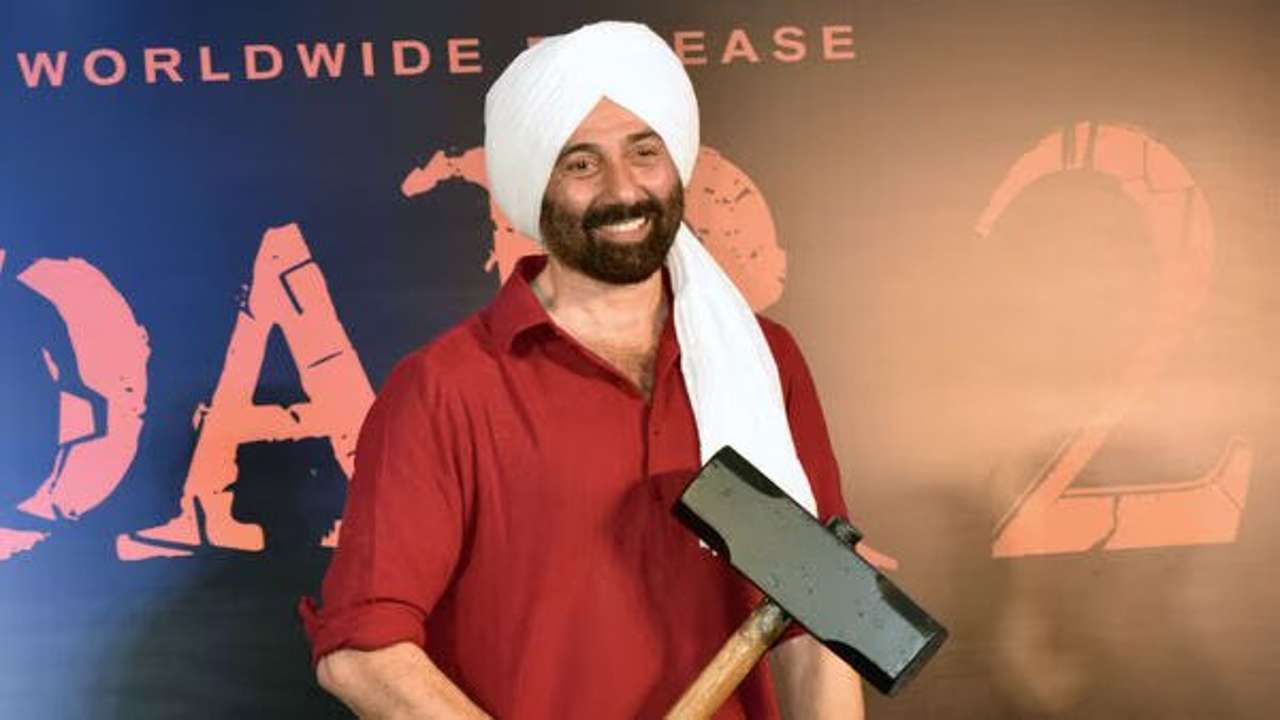
For actor Sunny Deol, whose latest film Gadar 2 recently surpassed the Rs 300 crore milestone at the Indian box office, trouble has emerged. According to reports, the actor has got a letter from the Bank of Baroda regarding unpaid debts totaling more than Rs 55 crore. According to the news, Sunny’s Juhu property has been placed up for sale in order to recoup unpaid debts.

Bank notifies Sunny Deol of his Rs 55 crore in unpaid debts and puts his Juhu house up for sale.

The portal uploaded a photo of the notice that it had seen in a newspaper. The Juhu property will reportedly be put up for sale on September 9. Sunny’s father and actor Dharmedra, has been listed as the grantor. The Deols have not yet responded to this.

According to the notice, Ajay Singh Deol also known as Sunny Deol borrowed Rs 55,99,80,766.33 from the Bank of Baroda. In addition, Sunny Deol served as the loan’s guarantee. The bank has stated that the purpose of the virtual auction is to recoup the amount of Rs 55.99 crore that he owes.

From this house, Sunny Deol manages his business. The Sunny Super Sound offices, a preview theatre, and two post-production rooms are located inside Sunny Villa. In the late 1980s, this company was formed.

The Bank of Baroda requires permission from the District Magistrate as part of the procedure. The bidder who wins will take physical ownership of the property after receiving the DM’s permission.

The winning bidder in the virtual auction will essentially own the bungalow. The bidder can take physical possession after receiving DM’s approval, which might take months or years.

According to rumours, Sunny Deol used his studio as leverage to acquire funding for his directorial debut, Ghayal Once Again (2016). He decided to take out a loan secured by his property in order to pay back his lenders.

Continue Reading

India News

3-day bank strike deferred after talks between unions, banks’ association

The three-day nationwide bank strike scheduled to begin on Monday has been deferred after the United Forum of Bank Unions held talks with the Indian Banks’ Association.

Published

on

Bank Strike

The three-day nationwide bank strike scheduled to begin on Monday has been deferred following a meeting between the United Forum of Bank Unions (UFBU) and the Indian Banks’ Association (IBA) on Sunday night.

The development came after the two sides held talks ahead of the planned strike, which was expected to affect banking operations across the country.

The UFBU, an umbrella forum representing bank unions, had called for the three-day nationwide strike. The action was scheduled to begin on September 28.

Bank strike deferred after Sunday meeting

The decision to defer the strike followed an eleventh-hour meeting between representatives of the UFBU and the IBA on Sunday night.

The proposed strike had raised concerns about disruption to banking services for millions of customers. With the strike now deferred, the immediate three-day disruption that was scheduled to begin Monday will not take place as planned.

The development comes after earlier efforts by the government and bank managements to persuade the unions to defer the strike. The unions had been seeking, among other demands, the introduction of a five-day banking system.

What were the bank unions demanding?

The UFBU’s demands included the introduction of five-day banking. Other issues raised by the unions included improvements in pension-related matters, a uniform dearness allowance formula for pensioners and an option for employees covered under the National Pension System to move to the old pension scheme.

The proposed strike had been scheduled for September 28, 29 and 30. The timing had also raised concerns because September 26 and 27 were a Saturday and Sunday, respectively, while September 30 coincides with the half-yearly closing of banks.

Continue Reading

Latest world news

S Jaishankar calls Pakistan a “serial practitioner of terrorism” at UN

S Jaishankar criticised Pakistan at the UN General Assembly, referring to a “serial practitioner of terrorism” and warning against attempts to normalise terrorism.

Published

on

S Jayshankar

External Affairs Minister S Jaishankar criticised Pakistan during his address to the 81st session of the United Nations General Assembly in New York, saying that a “serial practitioner of terrorism” had misrepresented facts and that arguments were being made to normalise terrorism. 

Jaishankar’s remarks came a day after Pakistan Prime Minister Shehbaz Sharif addressed the UN General Assembly and spoke about the 2025 military confrontation between India and Pakistan.

Jaishankar’s message to Pakistan

Referring to Pakistan without naming it directly in that remark, Jaishankar said a “serial practitioner of terrorism” had misrepresented facts before the UN General Assembly.

He said arguments were being made to normalise terrorism and claim immunity from its consequences, adding that such an approach would not stand. 

Jaishankar reiterated India’s position that the country would exercise its right to defend itself against terrorism.

He also said that friendship and goodwill could not coexist with terrorism and that understandings based on such circumstances would naturally be called into question. 

“It is for the perpetrator of terrorism to mend its ways,” Jaishankar said.

India stresses zero tolerance on terrorism

Jaishankar described terrorism as a persistent threat to peace and called for governments involved in cross-border terrorism to be held accountable.

He also stressed that there should be no dilution in India’s zero-tolerance approach towards terrorism and particularly called for greater attention to its financial aspects.

His remarks came a day after Pakistan Prime Minister Shehbaz Sharif referred to the 2025 India-Pakistan military confrontation during his UN General Assembly address. 

Jaishankar backs two-state solution for Palestine

During his UN address, Jaishankar also spoke about the situation in West Asia and said India was prepared to contribute to efforts addressing food and energy security amid continuing tensions and violence.

On the Palestine issue, he reiterated India’s longstanding support for a two-state solution.

Jaishankar said India was also contributing humanitarian assistance and relief efforts for the Palestinian people.

He also warned about continuing threats and pressures around the world and stressed the need for greater stability, security and predictability.

Continue Reading

India News

Gyanesh Kumar meets election commissioners amid poll panel row

Chief Election Commissioner Gyanesh Kumar met Election Commissioners Sukhbir Singh Sandhu and Vivek Joshi amid a controversy over reported objections to Election Commission decisions.

Published

on

Chief Election Commissioner Gyanesh Kumar held a meeting with Election Commissioners Sukhbir Singh Sandhu and Vivek Joshi amid an ongoing controversy over the functioning and decision-making process of the Election Commission of India.

The meeting comes days after a report raised questions over formal objections allegedly recorded by the two Election Commissioners regarding several decisions and orders of the poll panel.

The Election Commission has maintained that differing views, observations and suggestions are part of its normal deliberative process. It has also said that all decisions taken by the full Commission over the past year were unanimous.

What is the Election Commission controversy?

The controversy followed a report that Election Commissioners Sukhbir Singh Sandhu and Vivek Joshi had raised objections on at least 14 occasions over a 10-month period.

The reported objections included issues concerning changes to Form 6, the handling of additions and deletions from electoral rolls and the centralisation of electoral-roll data.

Form 6 is the statutory form used for applying for registration as a voter.

The Election Commission, however, has disputed the suggestion that the objections amounted to dissent over final decisions. The poll body said written notes, observations, technical suggestions and internal checks and balances are standard parts of its functioning.

ECI says decisions were unanimous

The poll panel has said that all decisions taken by it during the past year were the outcome of unanimous decisions of the full Commission.

It also said that operational queries or inputs raised during the drafting stage are part of the normal administrative process and are intended to improve electoral procedures and safeguard voter rights.

The issue has gained significance because the Election Commission is conducting electoral-roll revisions, including the Special Intensive Revision (SIR), in several parts of the country.

Opposition parties have questioned the functioning of the poll panel and have cited the reported objections by the two Election Commissioners in their criticism of Chief Election Commissioner Gyanesh Kumar.

Political parties seek clarification

The controversy has also prompted calls for greater clarity from political parties, including some parties that are allies of the BJP-led NDA.

LJP (Ram Vilas) chief Chirag Paswan, TDP Lok Sabha floor leader Lavu Srikrishna Devarayalu and Rashtriya Lok Morcha chief Upendra Kushwaha have sought clarification from the Election Commission regarding concerns surrounding the voter-list revision and the reported objections.

The Election Commission has continued to maintain that its decisions have followed the applicable laws, rules and established procedures.

Continue Reading

Trending

© Copyright 2022 APNLIVE.com