English हिन्दी
Connect with us

Entertainment

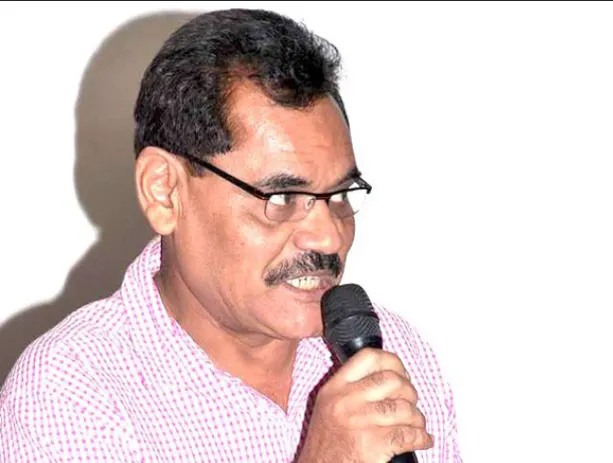
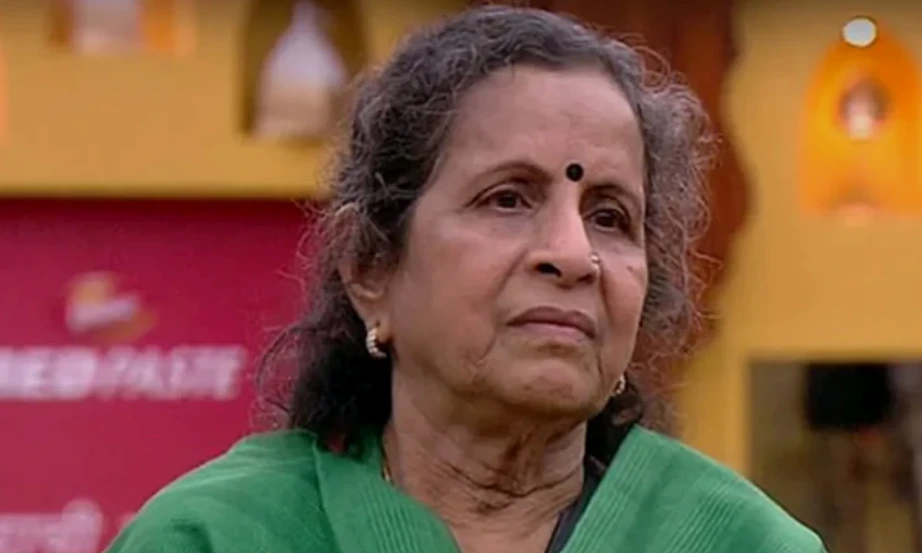
Usha Nadkarni reflects on living alone at 80, abusive childhood and sacrifices behind her acting career

Veteran actor Usha Nadkarni reflects on living alone since 1987, her abusive childhood, motherhood and the struggles behind her successful acting career.

Published

on

Veteran actor Usha Nadkarni, known for her memorable performances in Marathi and Hindi films, television and theatre, has opened up about the personal struggles that shaped her life. From surviving an abusive childhood to living alone for decades and balancing motherhood with a demanding acting career, the 80-year-old actor shared intimate details of her journey in recent and past interviews.

Despite the hardships, Nadkarni says she continues to work and live independently in Mumbai while embracing the life she has built over nearly seven decades in the entertainment industry.

Usha Nadkarni says she has lived alone since 1987

Speaking in a recent interview with Rajshri Marathi, Nadkarni revealed that she has been living alone since 1987. With her son now settled overseas and her siblings no longer alive, she has gradually become comfortable with solitude.

She recalled that she initially feared staying alone and would ask the building’s security guard to accompany her to her apartment. Over time, however, those fears disappeared.

The veteran actor also spoke candidly about ageing and mortality, saying she occasionally thinks about death because she lives alone but does not fear it. She added that she believes death comes differently for everyone and has accepted that reality.

Her son was raised by her mother during her busiest years

Nadkarni also reflected on her personal life, sharing that she separated from her husband many years ago. She said there is no bitterness between them and that she has maintained cordial relations with his family over the years.

She explained that her son spent much of his childhood with her mother while she remained occupied with Marathi theatre and acting commitments. In an earlier interview, she had revealed that he also stayed at her brother’s house because it offered more space.

Looking back, Nadkarni shared that her son still tells her she only gave birth to him and that his real mother was actually his grandmother, who raised him during those formative years.

Actor recalls growing up with a violent father

Nadkarni has also spoken publicly about the difficult environment in which she grew up. She described her father, an Air Force officer, as a man with a violent temper whose anger often left the family frightened.

According to the actor, even minor household matters, such as an untidy newspaper or improperly arranged schoolbooks, could trigger angry outbursts.

She also recounted an incident in which she tried to protect her brother from being beaten and was injured on her arm after her father attacked her with a curved farming blade. Despite the injury, she went ahead with a stage performance the following day.

Family opposed her dream of becoming an actor

The actor said her passion for acting began in childhood, but pursuing that ambition was far from easy.

She recalled first confiding in her mother, hoping for support, but instead faced strong opposition. According to Nadkarni, her mother threw her belongings out of the house, forcing her to stay with a friend for nearly a week before eventually returning home.

Reflecting on those years, she said societal opinions did not stop her from following her dream. Nadkarni noted that she first performed on stage while studying in the fourth standard and continues acting even at the age of 80.

Career built on determination

Over nearly 70 years, Usha Nadkarni has established herself as one of the most respected actors in Marathi and Hindi entertainment.

She has previously acknowledged that there were periods when she accepted projects primarily for financial reasons, even when she felt she was not receiving the professional respect she deserved. Despite those challenges, she has continued to remain active in films, television and theatre, building a career defined by perseverance and resilience.

Continue Reading

Entertainment

Batwara 1947 box office failure: Shabana Azmi says audiences couldn’t accept Sunny Deol as Muslim

Shabana Azmi has reflected on Batwara 1947’s poor box office performance, suggesting that audiences may have struggled to accept Sunny Deol as a Muslim character.

Published

on

Batwara 1947 has had a disappointing run at the box office, and actor Shabana Azmi has now shared her thoughts on why the film may not have connected with audiences. According to Azmi, one possible reason could be the difficulty some viewers had in accepting Sunny Deol as a Muslim character.

The film, which also features Preity Zinta and Shabana Azmi, was released on August 14. It has reportedly earned around Rs 53 crore so far, while Awarapan 2, which released on the same day, has crossed the Rs 200 crore mark.

Shabana Azmi on Sunny Deol’s Muslim character

Discussing the film’s response, Shabana Azmi questioned whether audiences were able to accept Sunny Deol in a Muslim role.

She compared the situation with Amitabh Bachchan’s earlier performances in which he portrayed Muslim characters. Azmi pointed to Deewaar, where Bachchan’s character is associated with the number 786, and said such portrayals had been accepted by audiences.

Azmi also suggested that there may have been confusion among some viewers about Sunny Deol’s character in Batwara 1947. She said that even some people who had watched the film believed Deol was playing a Pakistani character, whereas, according to her, he plays an Indian Muslim.

What Shabana Azmi said about the film’s reception

Azmi said she was surprised by the contrast between the appreciation she had heard from people who watched the film and its weak theatrical performance.

According to her, viewers who discussed the film with her had praised its message of humanity, but that appreciation did not translate into enough people going to theatres.

She also questioned whether audiences were uncomfortable with the film’s India-Pakistan subject. Azmi maintained that the film’s message was not politically incorrect and praised Sunny Deol’s performance.

Batwara 1947 vs Awarapan 2 at the box office

The poor performance of Batwara 1947 has become more noticeable because the film released alongside Awarapan 2. While Batwara 1947 has struggled commercially, Awarapan 2 has performed significantly better at the box office.

The contrast has added to the discussion around the reception of the Sunny Deol-starrer, particularly after Azmi offered her view on why audiences may not have connected with the film.

Continue Reading

Entertainment

Aasha Jaiswal Singh, Known for mimicking Meena Kumari, dies in Mumbai

Veteran actor and mimicry artist Aasha Jaiswal Singh died in Mumbai on August 22. Her son Akkash Bharadwaj confirmed the news and remembered her contribution to acting and mimicry.

Published

on

Veteran actor and mimicry artist Aasha Jaiswal Singh died in Mumbai on August 22. Her son, Akkash Bharadwaj, shared the news and remembered her for her work as an actor, social worker and mimicry artist.

Aasha Jaiswal Singh was particularly known for her ability to mimic the voice of legendary actor Meena Kumari. According to details shared by her son, she was also credited as India’s first female mimicry artist and worked as a character actor.

Aasha Jaiswal Singh’s death confirmed by son

Akkash Bharadwaj announced his mother’s death in a social media post. Remembering her, he described her as a “karmath loh-mahila”, or “iron lady”, and urged people to pray for her soul.

He also asked people to remember Aasha Jaiswal Singh by revisiting her work and contributions rather than only mourning her death.

According to the details shared by her son, Aasha Jaiswal Singh died on August 22. Her last rites were held at the Pawan Hans crematorium in Vile Parle West, Mumbai, on August 23 at 10 am.

Aasha Jaiswal Singh was known for Meena Kumari mimicry

Aasha Jaiswal Singh’s work as a mimicry artist was an important part of her public identity. She was recognised for recreating the voice of Meena Kumari, one of Hindi cinema’s celebrated actors.

Alongside mimicry, she worked as a character actor and social worker. Her son also said that she was the founder, owner and operator of Aasha Events and Films.

Her death marks the loss of an artist remembered for combining acting with mimicry and social work.

Aasha Jaiswal Singh’s final rites held in Mumbai

The family conducted her last rites on August 23 at the Pawan Hans crematorium in Vile Parle West. The rites took place at 10 am, according to details shared by her son.

Continue Reading

Entertainment

Kriti Sanon’s Raksha Bandhan ad draws criticism over modern festive look

Kriti Sanon’s Raksha Bandhan advertisement has sparked an online debate, with some social media users questioning her contemporary festive outfit and the campaign’s concept.

Published

on

Kriti Sanon’s latest festive appearance has triggered a debate on social media after the actor featured in a Raksha Bandhan advertisement wearing a contemporary outfit.

In the advertisement, Kriti Sanon is seen in an off-white bralette-style blouse paired with a cape and a draped skirt. While the actor has previously experimented with contemporary interpretations of traditional fashion, some social media users criticised her look in the festive campaign.

The criticism was directed particularly at the choice of outfit for a Raksha Bandhan-themed advertisement, with several users questioning whether the look was appropriate for the occasion.

Advertisement’s pet dog sequence also draws reactions

The concept of the advertisement also became a point of discussion online. In the campaign, Kriti is seen tying a traditional rakhi on a dog after the pet barks at her.

The advertisement presents the ritual as a way of including the pet in the family’s Raksha Bandhan celebrations. However, several social media users questioned the decision to include the dog in the festive ritual.

Some commenters accused the brand of making a mockery of Indian festivals, while others said they disagreed with the overall concept of the advertisement.

Social media users criticise Kriti Sanon’s festive look

Kriti Sanon’s outfit became one of the main talking points among those criticising the advertisement. Some users described the outfit as inappropriate for a Raksha Bandhan campaign.

One social media user wrote that Kriti was tying rakhi in a “bra kinda attire” and questioned the use of such an outfit during the festival.

Another commenter compared the treatment of Raksha Bandhan with other festivals and criticised the advertisement’s presentation of the celebration.

Other reactions focused on traditional elements associated with Raksha Bandhan. One user questioned the absence of a puja thali and tilak while also criticising Kriti’s outfit.

A separate comment objected to the inclusion of the dog, arguing that the campaign was not representative of the traditional spirit of Raksha Bandhan.

These comments reflect the views of individual social media users and do not establish a broader consensus about the advertisement.

Kriti Sanon yet to respond to criticism

The Raksha Bandhan advertisement continues to receive mixed reactions on social media. While some users have criticised the actor’s outfit and the campaign’s concept, Kriti Sanon is yet to respond to the criticism.

The debate comes as brands increasingly use contemporary interpretations of traditional festivals in advertising, with the campaign’s presentation becoming a subject of discussion among social media users.

Continue Reading

Trending

© Copyright 2022 APNLIVE.com