
Latest world news
Bangladesh proposes India’s observer status at OIC


Bangladesh has sounded the first official call to induct India and other countries with large Muslim populations as observers to the Organisation of Islamic Cooperation (OIC) during 45th meeting of the council of foreign ministers in Dhaka on Saturday.
According to reports, Bangladesh minister of foreign affairs Abul Hasan Mahmood Ali called for reforms in the organisation to pave the way for countries like India, which are not Muslim majority, to get an observer status in the organisation. The organisation is presently having only Muslim majority countries as its members.
Ali said, “A number of countries, not OIC members, have a large number of Muslims as their citizens. The Muslims may be minority in those countries, but in terms of number they often exceed the total population of many OIC member countries.”
Egypt, with a population of 92 million, is 5% of the global Muslim population. In terms of Muslims as a percentage of the global population, India ranks third after Indonesia and Pakistan.
Pakistan uses the forum to regularly target India. Bangladesh has supported India’s case for “inclusion” arguing that large Muslim populations should not be denied a say at the OIC as India constitute 10% of the global Muslim population.
Read More: India rejects OIC statement at UN, asserts J&K an integral part of the country
Supporting for reforms at OIC, Abul Hasan Mahmood Ali said, “There is a need to build bridges with those non-OIC countries so that a large number of Muslim populations do not remain untouched by the good work of OIC. That is why reforms and restructuring is critical for OIC.”
Ali said, “We need to rethink our work, method and process of functioning to cater to the needs of the current era and beyond.”
Bangladesh’s suggestion received support of the OIC secretary general. This is not the first time there has been a call to bring countries like India into the ambit of the OIC, but Pakistan has always held a veto position.
This has prevented India from engaging more meaningfully with the organisation even though India has fairly robust relations with most OIC member states.
The Organisation of Islamic Cooperation is an international organisation, founded in 1969, consists of 57 member states, with a collective population over 1.6 billion as of 2008.
It claims of being “the collective voice of the Muslim world” working to “safeguard and protect the interests of the Muslim world in the spirit of promoting international peace and harmony.
During first OIC summit at Rabat, Morocco, in 1969 Pakistan’s President Gen Yahya Khan had boycotted the proposal for India’s inclusion in the organisation put forwarded by Saudi Arabia’s King Faisal and Jordan’s King Hussein. India’s subsequent efforts could not reverse the situation till date.
Again in 2006, Saudi King Abdullah had proposed that India become an observer. In the 1990s, Pakistan had used forum to criticise India on Jammu and Kashmir situation.
In September 2017, India refuted egregious comments on Jammu and Kashmir byPakistan at the UN when it was speaking on behalf of the OIC.
At that time India said, “The Organisation of Islamic Cooperation has no locus- standi on India’s internal affairs, we strongly advise the OIC to refrain from making such references in future.”








Latest world news
Magnitude 7 earthquake strikes Tibet after floods
A magnitude 7 earthquake struck northern Tibet on Thursday, October 22. The tremor came weeks after deadly flash floods and landslides hit the mountainous region near the Nepal-China border. Initial reports did not confirm casualties or damage from the earthquake.


Latest world news
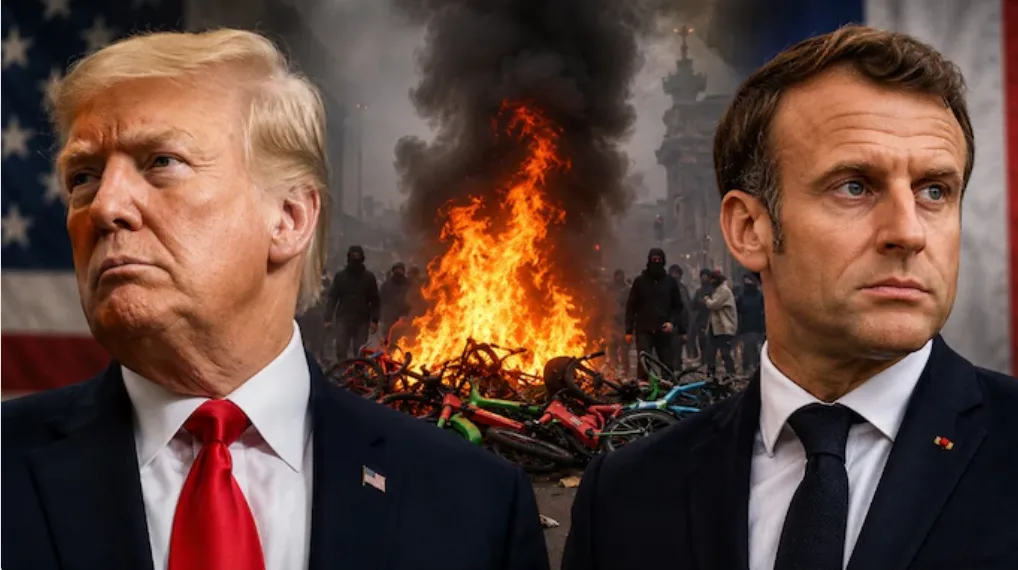
Macron rejects Trump’s immigration claims over France riots
French President Emmanuel Macron criticised Donald Trump and other foreign leaders over their comments on France’s recent unrest. Macron rejected claims that the country was being overrun by migrants and Islamists, calling such assertions false.
Latest world news
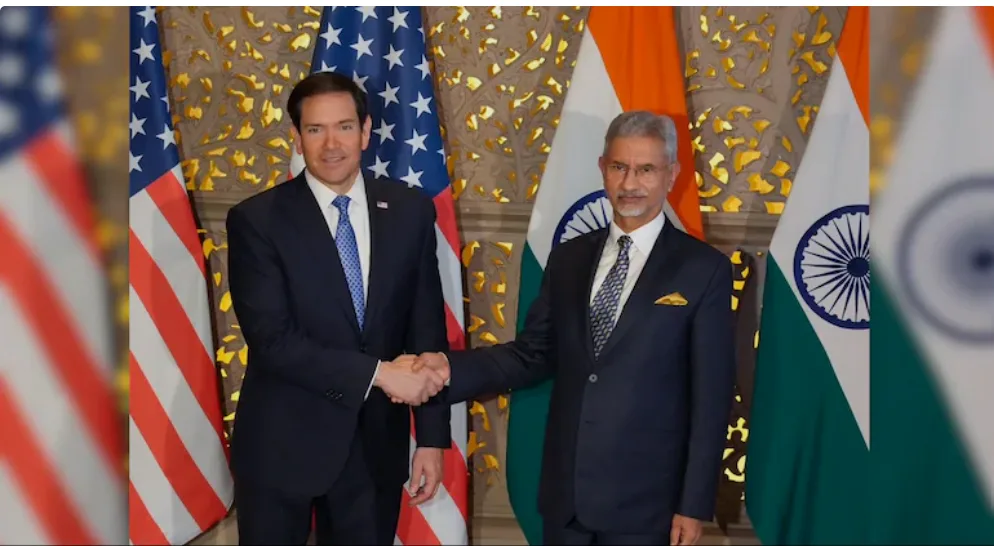
Marco Rubio says India and US share extraordinary alignment on key issues
US Secretary of State Marco Rubio said India and the United States share an extraordinary alignment on core issues, even though disagreements between the two countries may arise.

Punjab strike hits public services as 3 lakh employees and roadways workers protest

Two election commissioners complained against senior poll officer, RTI reveals

Om Prakash Mathur sworn in as Keralam Governor

PM Modi to inaugurate Rs 169-crore RBI data centre in Odisha on October 25

Delhi High Court rejects Neha Bora’s plea against peace bond notice

MEA responds after ITBP chief flags ongoing face-offs with China in Arunachal
Delhi High Court rejects Neha Bora’s plea against peace bond notice
PM Modi to inaugurate Rs 169-crore RBI data centre in Odisha on October 25
Om Prakash Mathur sworn in as Keralam Governor
Two election commissioners complained against senior poll officer, RTI reveals

Afghan Men Try To Hang With The Jet Engine Of The Aircraft in Kabul- Afghanistan News – Kabul News
Trending Top 10 News: 10000 Crore Fine on Flipkart, Apple to Launch Unique Feature, Hdfc Bank Job Ad

Trending Top 10 News: Nokia 6310, Apple sales, Bachpan ka Pyar Video Kid, Dainik Bhaskar IT Raid

Trending Top 10 News: Canada bans Indian flights, Rain in Delhi NCR, AIMIM Twitter hacked, Raj Kundra case

Trending Top 10 News: Shein India, Apple New Service, Pocket Oxygen, Oppo Launched New Phone
-
 India News15 hours ago
Punjab strike hits public services as 3 lakh employees and roadways workers protest
-
 India News15 hours ago
Two election commissioners complained against senior poll officer, RTI reveals
-
 India News4 hours ago
Om Prakash Mathur sworn in as Keralam Governor
-
 India News4 hours ago
PM Modi to inaugurate Rs 169-crore RBI data centre in Odisha on October 25
-
 India News2 hours ago
Delhi High Court rejects Neha Bora’s plea against peace bond notice
-
 India News2 hours ago
MEA responds after ITBP chief flags ongoing face-offs with China in Arunachal
