Latest world news
Buddhist-Muslim clashes continue in Sri Lanka


Hard-line Buddhists have ties with their counterparts in Myanmar
Despite imposition of state of emergency in Sri Lanka, reports of violent mob attacks by Sinhalese Buddhists against Muslims in various parts of the country are pouring in. Ambetana in the central region witnessed hundreds of attackers shouting slogans and carrying sticks, stones and petrol bombs descending on the hill town. At least fifteen Muslim houses and a mosque were vandalized while several vehicles were set on fire.
According to Aljazeera correspondents in the region residents have said that some two dozen policemen and soldiers watched helplessly as the mob vandalised and set fire to Muslim homes and businesses in the town’s Welekada area in the town.
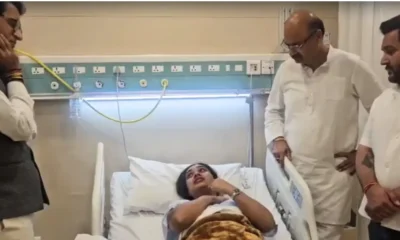
Fatima Zameera clutching her three-week old infant recounted the violence that swept her neighborhood said, “We were so scared. We have nowhere to go. They broke all the windows in my house. Our whole house is burnt.”
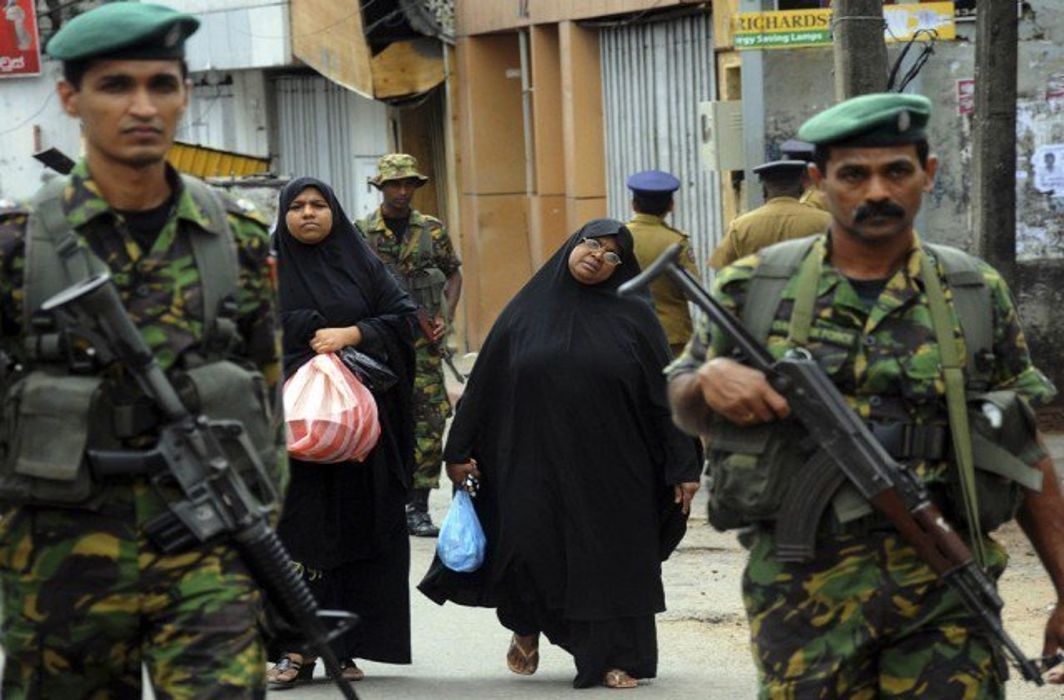 The mob between 200 and 500-strong, overran Welekada defying a curfew and a state of emergency imposed by President Maithiripala Sirisena to quell anti-Muslim riots that began in the highland district of Kandy last weekend.
According to Colombo based Daily News, Prime Minister Ranil Wickremesinghe, while delivering a special statement on the situation in Kandy on Wednesday, said that the Security Forces Chiefs and the Police have been instructed to take prompt action against acts of sabotage and be prepared to control any kind of unrest.
Wickremesinghe said that Security Forces Commander in the Central Province, Major General Rukman Dias has been appointed to coordinate security related activities between the Police and the Security Forces.
He further said that the Tri Forces, the Special Task Force have been deployed in the Kandy district in addition to the Police in order to ensure that the normal life of the community is maintained without any hindrance.
Prime Minister Wickremesinghe said several shops in the Katugastota area had been set on fire on Tuesday. He said that a hand grenade in the possession of a person who was among a group who had been acting violently had exploded. He said these incidents were being investigated by the Police. “In the other areas of the Kandy district, law and order and peace prevailed,” the Premier claimed.
The Premier said that temporary restrictions have been imposed against the use of social media which is being used by some elements to instigate violence by spreading false stories in order to mislead the public and spread hatred.
Read More: Sri Lanka declares emergency to prevent spread of communal clashes
Sensing the growing trouble ahead, Minister for Public Administration and management Ranjith Madduma Bandara was sworn in as the Minister of Law and Order before President Maithripala Sirisena at the Presidential Secretariat Thursday morning.
Meanwhile, another Colombo based newspaper-The Island reports that Former President Mahinda Rajapaksa has warned that some sinister forces, bent on destabilising the country, were trying to engineer another 1983 style conflagration to drum up international support for their constitutional reforms, aimed at dividing the country into several semi-independent states.
Former President said that the gravitation of a section of the Muslim population towards communal political parties had made it easy for the siniser forces to create tensions between the Sinhalese and Muslims by using agent provocateurs.
“I call on citizens belonging to all communities to reflect intelligently on what has been happening and to refrain from all acts of violence”, he said.
Mahinda Rajpaksa was country’s President from November 2005 to January 2015. He also held Premier’s position from April 2004 to November 2005.
The communal violence began on Sunday when a man belonging to Buddhist Sinhalese majority died after being beaten by some Muslim men over a traffic accident in the town of Teledeniya in Kandy, known for tea plantations and Buddhist religious sites.
On Monday, hundreds of Sinhala Buddhists, mostly outsiders poured into Kandy and attacked and torched dozens of Muslim businesses, houses and mosques. Body of a 23-year-old Muslim man was found in a burned building, and the government, fearing more violence, imposed a state of emergency on Tuesday. It also deployed the army and extended a police curfew in the region.
However, violence continued overnight on Wednesday with “several incidents” in four towns, said Ruwan Gunasekara, a police spokesman. Three police officers were injured in Menikhinna. Later in the day, Ambatenna was attacked and a Sinhalese man was killed there after a hand grenade he was carrying exploded.
Shukry Cassim, whose four-bedroom house was vandalised in Welekada, said he was “petrified”. “We don’t feel safe. All our children are traumatized. We don’t know where to go, or who to trust,” the 27-year-old accountant told Al Jazeera, standing in front of his burnt car in his garage.
He further said, “We don’t know why this is happening. The mob is not from our area. We don’t know them. But they couldn’t have done this without the support of people from our area because they have targeted the Muslim houses, and excluded the non-Muslim houses.”
Ties between Muslims and Buddhists in the Kandy have been historically harmonious, he said, adding: “We share food during religious festivals, we play together and buy goods from each other’s shops.”
Analysts say tensions flared up between the two communities because of the rise of Buddhist militant groups following the end of the country’s three-decade war. One of these groups Bodu Bala Sena has links to Buddhist hard-line groups in Myanmar.







Latest world news
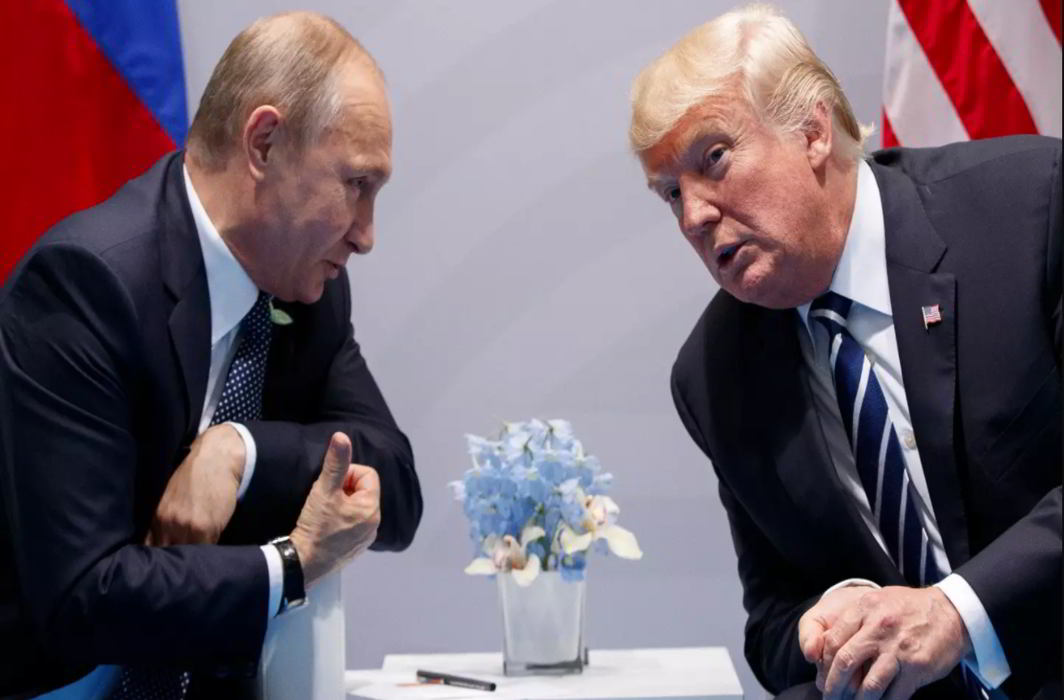
Trump waives Russia-related sanctions, tariffs in relief for India
Donald Trump has waived several Russia-related sanctions, restrictions and duties under a new US law, potentially easing tariff pressure on India and China, two major buyers of Russian energy.

Latest world news
Magnitude 7 earthquake strikes Russia’s Kamchatka Peninsula
A magnitude 7 earthquake struck Russia’s Kamchatka Peninsula region on Friday. The initial report placed the earthquake at a depth of 140 kilometres.

Latest world news
S Jaishankar says India is a natural option for Russia amid Europe tensions
External Affairs Minister S Jaishankar said India remained a natural option for Russia as Moscow increasingly turned towards Asia amid strained relations with Europe. He highlighted the continuity of India-Russia ties and their significance for the balance of power in Asia.


Journalist files police complaint against Rahul Gandhi over push allegation

Delhi court orders release of CJP founder Abhijeet Dipke

Anirudh Ravichander to marry Kavya Maran in November, reception on November 21

ED summons Pinarayi Vijayan in money laundering case

LK Advani, 98, hospitalised in Delhi with chest infection

Afghan Men Try To Hang With The Jet Engine Of The Aircraft in Kabul- Afghanistan News – Kabul News
Trending Top 10 News: 10000 Crore Fine on Flipkart, Apple to Launch Unique Feature, Hdfc Bank Job Ad

Trending Top 10 News: Nokia 6310, Apple sales, Bachpan ka Pyar Video Kid, Dainik Bhaskar IT Raid

Trending Top 10 News: Canada bans Indian flights, Rain in Delhi NCR, AIMIM Twitter hacked, Raj Kundra case