
Latest world news
Mayan Civilisation – A discovery on the likes of which Sci fi and Hollywood movies thrive


All photos: Courtesy Wild Blue Media/National Geographic
In a major breakthrough in Maya archaeology, researchers have identified ruins of more than 60,000 houses, palaces, elevated highways, and other human-made features hidden for centuries under the jungles of northern Guatemala, Central America.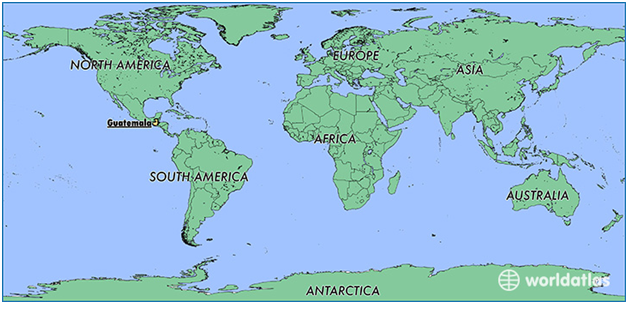
Beneath the thick, impenetrable canopy of lush green trees ruins of an intricately build Mayan urban civilization has been revealed.
The team mapped a 810sq-mile area around the ancient city of Tikal, a popular tourist destination located in the heart of the Guatemalan rainforest.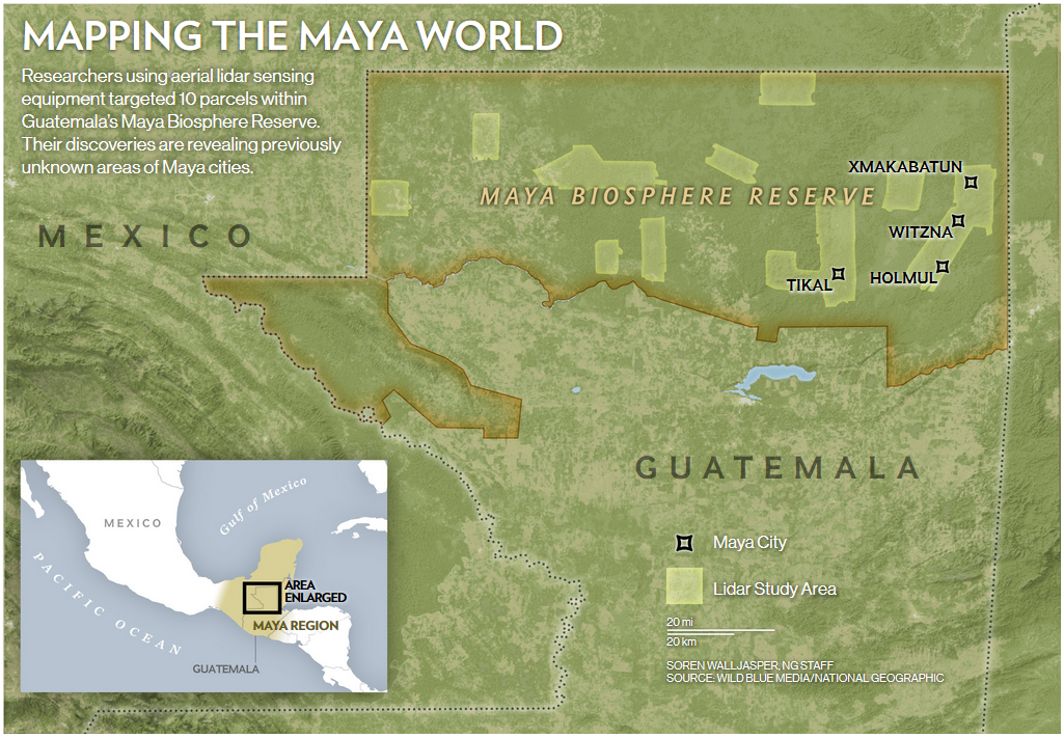
A cluster of cities, fortifications, farms and highways have been laid bare. The ruins clearly show that a highly developed society flourished some 1200 years ago. A mysterious Mayan dynasty named Snake Kings ruled the community.
Some 60,000 previously unknown structures, including a seven-story pyramid has been uncovered by the laser technology.
Using a technology called LiDAR (short for “Light Detection And Ranging”), scientists were able to strip away the tree canopy from aerial images and reveal the ancient civilisation underneath.
The technique uses pulses of laser light to create 3D representations of targets.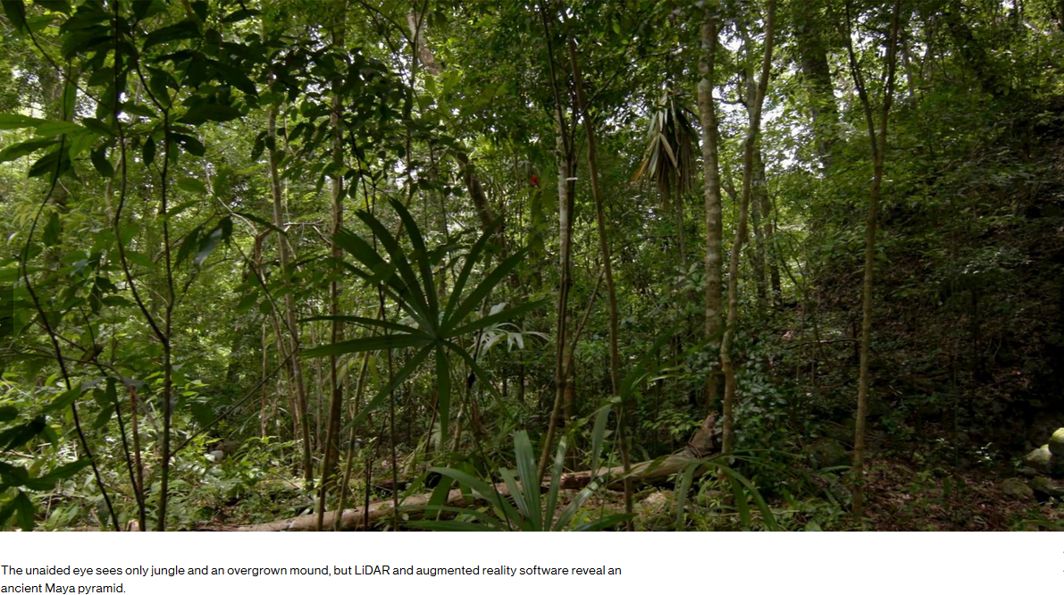
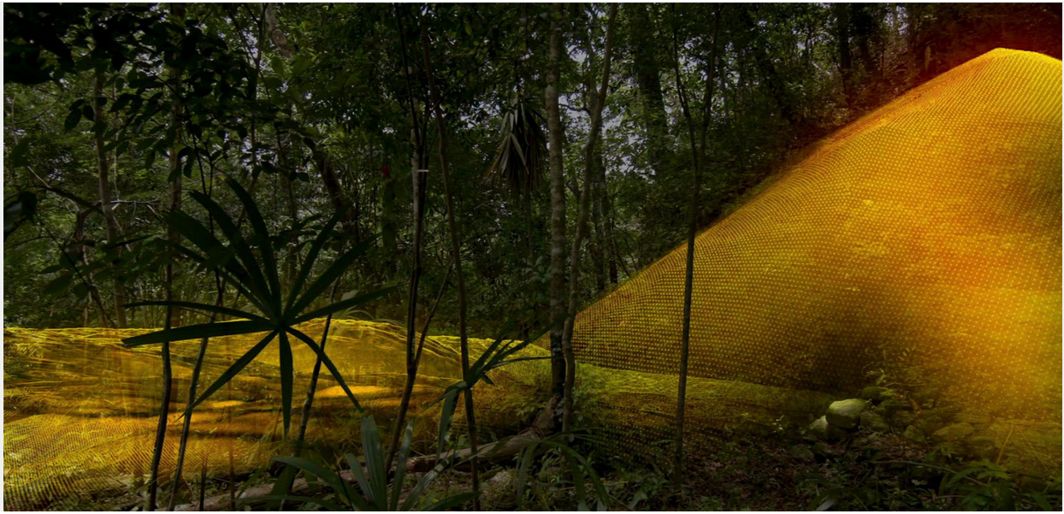
Historically, archaeologists have assumed that Maya cities were isolated and self-sufficient, but this discovery provides evidence for a complex, interconnected society flourishing deep in the jungle.
The population estimate of the community have been upgraded from 2 million to 20 million.
The civilization flourished in cities and was connected by a network of highways. The site was four times larger than previously assumed.
There was also irrigation and terracing systems suggesting farming and food production systems to feed its millions.
The ancient Maya never used the wheel or beasts of burden, yet “this was a civilization that was literally moving mountains,” said Marcello Canuto, a Tulane University archaeologist and National Geographic Explorer who participated in the project, the National Geographic reported.
“We’ve had this western conceit that complex civilizations can’t flourish in the tropics, that the tropics are where civilizations go to die,” said Canuto, who conducts archaeological research at a Guatemalan site known as La Corona. “But with the new LiDAR-based evidence from Central America and [Cambodia’s] Angkor Wat, we now have to consider that complex societies may have formed in the tropics and made their way outward from there.”
So far, the scientists have only mapped a fraction of the archaeological area and they think there is a lot more to be discovered.
Scientists had used a similar scans to unearth a network of ancient cities in Angkor, in Cambodia that includes the famed Angkor Wat.


Latest world news
Magnitude 7 earthquake strikes Russia’s Kamchatka Peninsula
A magnitude 7 earthquake struck Russia’s Kamchatka Peninsula region on Friday. The initial report placed the earthquake at a depth of 140 kilometres.


Latest world news
S Jaishankar says India is a natural option for Russia amid Europe tensions
External Affairs Minister S Jaishankar said India remained a natural option for Russia as Moscow increasingly turned towards Asia amid strained relations with Europe. He highlighted the continuity of India-Russia ties and their significance for the balance of power in Asia.

Latest world news
Putin praises PM Modi, says he has very good ideas on Ukraine war
Russian President Vladimir Putin has praised Prime Minister Narendra Modi for repeatedly raising the need to end the Ukraine war, describing his ideas for a settlement as “very good”.


Election Commission orders voter roll revision in 17 states, UTs

Delhi Police offers 11-person limit for CJP’s Connaught Place protest

Actor Imran Khan asked to leave India after CJP protest

Mallikarjun Kharge’s ‘Your Friends’ jab at Rahul Gandhi over congress exits

Delhi deploys 25,000 personnel, installs CCTV cameras ahead of CJP march

Magnitude 7 earthquake strikes Russia’s Kamchatka Peninsula
Delhi deploys 25,000 personnel, installs CCTV cameras ahead of CJP march
Mallikarjun Kharge’s ‘Your Friends’ jab at Rahul Gandhi over congress exits
Delhi Police offers 11-person limit for CJP’s Connaught Place protest
Actor Imran Khan asked to leave India after CJP protest

Afghan Men Try To Hang With The Jet Engine Of The Aircraft in Kabul- Afghanistan News – Kabul News
Trending Top 10 News: 10000 Crore Fine on Flipkart, Apple to Launch Unique Feature, Hdfc Bank Job Ad

Trending Top 10 News: Nokia 6310, Apple sales, Bachpan ka Pyar Video Kid, Dainik Bhaskar IT Raid

Trending Top 10 News: Canada bans Indian flights, Rain in Delhi NCR, AIMIM Twitter hacked, Raj Kundra case

Trending Top 10 News: Shein India, Apple New Service, Pocket Oxygen, Oppo Launched New Phone
-
 India News22 hours ago
Election Commission orders voter roll revision in 17 states, UTs
-
 India News20 hours ago
Delhi Police offers 11-person limit for CJP’s Connaught Place protest
-
 India News21 hours ago
Actor Imran Khan asked to leave India after CJP protest
-
 India News9 hours ago
Mallikarjun Kharge’s ‘Your Friends’ jab at Rahul Gandhi over congress exits
-
 India News9 hours ago
Delhi deploys 25,000 personnel, installs CCTV cameras ahead of CJP march
-
 Latest world news8 hours ago
Magnitude 7 earthquake strikes Russia’s Kamchatka Peninsula
