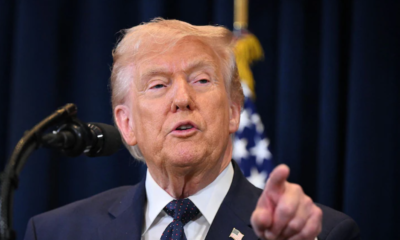
[vc_row][vc_column][vc_column_text]The US under President Donald Trump has gone into crisis as it was forced to shut down federal government at midnight Friday as senators continued to scramble to reach a deal to fund the government. In a late night vote, Democrats joined to block a bill that could have kept the government running for another four weeks.
This has come on the day when Trump was about to celebrate completion of one year in office. He was inaugurated on January 20, 2017.
However, White House has blamed Democrats for the shutdown. Trump’s press secretary Sarah Sanders said few minutes before Friday midnight that “Tonight, they put politics above our national security, military families, vulnerable children, and our country’s ability to serve all Americans. We will not negotiate the status of unlawful immigrants while Democrats hold our lawful citizens hostage over their reckless demands. This is the behavior of obstructionist losers, not legislators.”
India is 10.30 hours ahead of Washington time (known as Eastern Time). Friday midnight in Washington occurred at 10.30 am on Saturday in India. United States is divided into four time zones. Time at US west coast was 9 pm Friday while Washington was entering into Saturday.
According to CNN, 60 votes were required to advance the bill to keep the government going for four weeks. Republicans only control 51 seats, so they needed Democratic votes to cross that threshold. As of midnight in Washington the vote was still technically ongoing but enough senators had voted against the plan to prevent government open. Senate Majority Leader Mitch McConnell ended the vote at 12:16 a.m. ET (12.46 Indian time).
Just before midnight Republican John Yarmuth, a Kentucky Democrat, told reporters that the House Democratic leadership team concluded at their meeting Friday night that there would be a government shutdown and the group expected it to last through early next week.
Yarmuth, the top Democrat on the House Budget Committee said,”I think it is almost 100% likely that the government will shut down for some period of time — now my guess is it won’t go past the first of the week — in which the disruption won’t be particularly severe.”
Yarmuth expected the House, which would be out of session next week, would likely come back just for a day to approve some type of stopgap bill.
“There are all sorts of things being discussed apparently, from one day to three days, to five days, to three weeks to four weeks. Four weeks being the president’s position.” He said Democrats would be fine with backing some type of short term continuing resolution.
However, later reports say that Congressional leaders — including Senate Majority Leader Mitch McConnell and Senate Minority Leader Chuck Schumer — are working to come up with a deal on the floor of the chamber. The source said to CNN that the talks on the floor are, indeed, real and “potentially productive” but the gap is too big to bridge right now.
The development seems to be shocking and unexpected for the President Trump. His tweet on Friday evening, at 5.30 pm, was quite positive.[/vc_column_text][/vc_column][/vc_row][vc_row][vc_column][vc_raw_html]JTNDYmxvY2txdW90ZSUyMGNsYXNzJTNEJTIydHdpdHRlci10d2VldCUyMiUyMGRhdGEtbGFuZyUzRCUyMmVuJTIyJTNFJTNDcCUyMGxhbmclM0QlMjJlbiUyMiUyMGRpciUzRCUyMmx0ciUyMiUzRUV4Y2VsbGVudCUyMHByZWxpbWluYXJ5JTIwbWVldGluZyUyMGluJTIwT3ZhbCUyMHdpdGglMjAlM0NhJTIwaHJlZiUzRCUyMmh0dHBzJTNBJTJGJTJGdHdpdHRlci5jb20lMkZTZW5TY2h1bWVyJTNGcmVmX3NyYyUzRHR3c3JjJTI1NUV0ZnclMjIlM0UlNDBTZW5TY2h1bWVyJTNDJTJGYSUzRSUyMC0lMjB3b3JraW5nJTIwb24lMjBzb2x1dGlvbnMlMjBmb3IlMjBTZWN1cml0eSUyMGFuZCUyMG91ciUyMGdyZWF0JTIwTWlsaXRhcnklMjB0b2dldGhlciUyMHdpdGglMjAlM0NhJTIwaHJlZiUzRCUyMmh0dHBzJTNBJTJGJTJGdHdpdHRlci5jb20lMkZTZW5hdGVNYWpMZHIlM0ZyZWZfc3JjJTNEdHdzcmMlMjU1RXRmdyUyMiUzRSU0MFNlbmF0ZU1hakxkciUzQyUyRmElM0UlMjBNY0Nvbm5lbGwlMjBhbmQlMjAlM0NhJTIwaHJlZiUzRCUyMmh0dHBzJTNBJTJGJTJGdHdpdHRlci5jb20lMkZTcGVha2VyUnlhbiUzRnJlZl9zcmMlM0R0d3NyYyUyNTVFdGZ3JTIyJTNFJTQwU3BlYWtlclJ5YW4lM0MlMkZhJTNFLiUyME1ha2luZyUyMHByb2dyZXNzJTIwLSUyMGZvdXIlMjB3ZWVrJTIwZXh0ZW5zaW9uJTIwd291bGQlMjBiZSUyMGJlc3QlMjElM0MlMkZwJTNFJTI2bWRhc2glM0IlMjBEb25hbGQlMjBKLiUyMFRydW1wJTIwJTI4JTQwcmVhbERvbmFsZFRydW1wJTI5JTIwJTNDYSUyMGhyZWYlM0QlMjJodHRwcyUzQSUyRiUyRnR3aXR0ZXIuY29tJTJGcmVhbERvbmFsZFRydW1wJTJGc3RhdHVzJTJGOTU0NDc4MDQ0NDg3NTIwMjU3JTNGcmVmX3NyYyUzRHR3c3JjJTI1NUV0ZnclMjIlM0VKYW51YXJ5JTIwMTklMkMlMjAyMDE4JTNDJTJGYSUzRSUzQyUyRmJsb2NrcXVvdGUlM0UlMEElM0NzY3JpcHQlMjBhc3luYyUyMHNyYyUzRCUyMmh0dHBzJTNBJTJGJTJGcGxhdGZvcm0udHdpdHRlci5jb20lMkZ3aWRnZXRzLmpzJTIyJTIwY2hhcnNldCUzRCUyMnV0Zi04JTIyJTNFJTNDJTJGc2NyaXB0JTNFJTBB[/vc_raw_html][/vc_column][/vc_row][vc_row][vc_column][vc_column_text]But situation took worst turn within hours. Trump sensed the defeat on floor at 9.30 pm, some two and half hours before midnight. Here is his tweet;[/vc_column_text][/vc_column][/vc_row][vc_row][vc_column][vc_raw_html]JTNDYmxvY2txdW90ZSUyMGNsYXNzJTNEJTIydHdpdHRlci10d2VldCUyMiUyMGRhdGEtbGFuZyUzRCUyMmVuJTIyJTNFJTNDcCUyMGxhbmclM0QlMjJlbiUyMiUyMGRpciUzRCUyMmx0ciUyMiUzRU5vdCUyMGxvb2tpbmclMjBnb29kJTIwZm9yJTIwb3VyJTIwZ3JlYXQlMjBNaWxpdGFyeSUyMG9yJTIwU2FmZXR5JTIwJTI2YW1wJTNCJTIwU2VjdXJpdHklMjBvbiUyMHRoZSUyMHZlcnklMjBkYW5nZXJvdXMlMjBTb3V0aGVybiUyMEJvcmRlci4lMjBEZW1zJTIwd2FudCUyMGElMjBTaHV0ZG93biUyMGluJTIwb3JkZXIlMjB0byUyMGhlbHAlMjBkaW1pbmlzaCUyMHRoZSUyMGdyZWF0JTIwc3VjY2VzcyUyMG9mJTIwdGhlJTIwVGF4JTIwQ3V0cyUyQyUyMGFuZCUyMHdoYXQlMjB0aGV5JTIwYXJlJTIwZG9pbmclMjBmb3IlMjBvdXIlMjBib29taW5nJTIwZWNvbm9teS4lM0MlMkZwJTNFJTI2bWRhc2glM0IlMjBEb25hbGQlMjBKLiUyMFRydW1wJTIwJTI4JTQwcmVhbERvbmFsZFRydW1wJTI5JTIwJTNDYSUyMGhyZWYlM0QlMjJodHRwcyUzQSUyRiUyRnR3aXR0ZXIuY29tJTJGcmVhbERvbmFsZFRydW1wJTJGc3RhdHVzJTJGOTU0NTQxMjE5OTcwOTc3NzkzJTNGcmVmX3NyYyUzRHR3c3JjJTI1NUV0ZnclMjIlM0VKYW51YXJ5JTIwMjAlMkMlMjAyMDE4JTNDJTJGYSUzRSUzQyUyRmJsb2NrcXVvdGUlM0UlMEElM0NzY3JpcHQlMjBhc3luYyUyMHNyYyUzRCUyMmh0dHBzJTNBJTJGJTJGcGxhdGZvcm0udHdpdHRlci5jb20lMkZ3aWRnZXRzLmpzJTIyJTIwY2hhcnNldCUzRCUyMnV0Zi04JTIyJTNFJTNDJTJGc2NyaXB0JTNFJTBB[/vc_raw_html][/vc_column][/vc_row][vc_row][vc_column][vc_column_text]US Defense Secretary Jim Mattis said on Friday that government shutdown would impact military operations including some training and intelligence operations.
He was quoted saying, “Our maintenance activities will probably pretty much shut down … Over 50 percent, altogether of my civilian workforce will be furloughed … We do a lot of intelligence operations around the world and they cost money, those obviously would stop,”
In a separate statement, the Defence Department said that the shutdown would not impact the US military’s war in Afghanistan or its operations in Iraq and Syria, where it claims of fighting against Daesh (IS) and other terror groups.
Reports says that essential government offices and services including military, the border patrol, air traffic controllers and Federal Bureau Investigation (FBI) will remain functioning until there is agreement in the senate.
Patty Culhane, working for Aljazeera in Washington says, “It’s not as if the public is going to see a massive impact right now. But it is politically damaging and that is what we are seeing from the statement of White House press secretary.
In US politics a government shutdown occurs when Congress and the President fall to pass appropriations legislation funding government operations and agencies.
During Ronald Reagan administration, there were three funding gaps leading to shutdowns lasting one day or less. A funding gap in 1990 during George H.W. Bush administration caused a weekend shutdown. Bill Clinton administration also faced two full government shutdowns during 1995 and 1996 lasting five and twenty days. During Barack Obama presidency, government shutdown occurred during October 1-16, 2013.
London based The Independent reported in December that Donald Trump has the lowest approval rating at any post-war US President at the end of their first calendar year in office. The Republican’s favourability sank as low as 32 percent in mid to late December.[/vc_column_text][/vc_column][/vc_row]