English हिन्दी
Connect with us

Latest world news

Trump hits back at UK envoy who said he is ‘inept’, ‘dysfunctional’ and ‘radiates insecurity’

Published

on

Trump hits back at UK envoy who said he is ‘inept’, ‘dysfunctional’ and ‘radiates insecurity’

US President Donald Trump has been the butt of ridicule often and has always retorted in his characteristic acerbic manner but this time it came from the UK ambassador, envoy of a nation with close ties with US, whose confidential mails to his government were leaked to a newspaper.

British Ambassador to US, Kim Darroch, described the US president and his White House as ‘inept’ and ‘dysfunctional’ and Trump himself as ‘radiating insecurity’.

Reacting, Trump told reporters in the US: “The ambassador has not served the UK well, I can tell you that.

“We are not big fans of that man and he has not served the UK well. So I can understand it, and I can say things about him but I won’t bother.”

The UK has meanwhile launched as inquiry into the leak.

Troves of diplomatic cables sent to London by British Ambassador to US Kim Darroch, which contain stinging remarks about US President Donald Trump’s temperament and policies, were leaked to the Daily Mail, which first reported the scoop on Sunday.

The oldest files go back to 2017 and the most recent ones were penned just last month, including a dispatch from June, 22, in which Darroch shares uncensored insight into the erratic policies his country’s top ally is pursuing in regards to Iran.

Darroch had said Trump’s presidency could “crash and burn” and “end in disgrace”, according to a cache of secret cables and briefing notes sent back to Britain seen by the Mail on Sunday newspaper.

In memos to the British government which date from 2017 to the present, Kim Darroch said Trump “radiates insecurity” and advises officials in London that to deal with him effectively “you need to make your points simple, even blunt”.

“We don’t really believe this Administration is going to become substantially more normal; less dysfunctional; less unpredictable; less faction riven; less diplomatically clumsy and inept,” Darroch wrote in one, according to the newspaper.

In others, the newspaper said he had described the administration as “uniquely dysfunctional” and that the “vicious infighting and chaos” inside the White House — widely reported in the US but dismissed by Trump as “fake news” — was “mostly true”.

The paper said the most damning comments by Darroch described Trump, who was received by Queen Elizabeth II during a state visit to Britain just last month, as “insecure” and “incompetent”.

A memo sent following the controversial visit said the president and his team had been “dazzled” by the visit but warned Britain might not remain “flavour of the month” because “this is still the land of America First”.

Although the Mueller investigation later found allegations of conspiracy between the Trump campaign and Russia were not proven, Darroch’s emails said “the worst cannot be ruled out”

In one of the most recent reported dispatches filed on June 22, Darroch criticised Trump’s fraught foreign policy on Iran, which has prompted fears in global capitals of a military conflict, as “incoherent” and “chaotic”.

He allegedly said the President’s assertion that he called off retaliatory missile strikes against the Iranian regime after a US drone was shot down because it risked killing 150 Iranians, “doesn’t stand up”.

“It’s more likely that he was never fully on board and that he was worried about how this apparent reversal of his 2016 campaign promises would look come 2020,” Darroch reportedly stated, referring to the next presidential election.

He added that Trump could still trigger a conflict with Iran. “Just one more Iranian attack somewhere in the region could trigger yet another Trump U-turn. Moreover, the loss of a single American life would probably make a critical difference.”

Darroch wrote that “we could also be at the beginning of a downward spiral, rather than just a rollercoaster: something could emerge that leads to disgrace and downfall.”

But he also warned British officials not to write Trump off, saying there was a “credible path” to him winning a second term in office. He said Trump may “emerge from the flames, battered but intact, like (Arnold) Schwarzenegger in the final scenes of The Terminator.”

While describing the rhetoric Trump uses to fire up crowds at his campaign rallies as “incendiary,” and “a mix of fact and fiction,” the diplomat at the same time marvels at the zeal with which Trump supporters continue to stand by their candidate, comparing the atmosphere of a MAGA rally to a “mega-church” or a “major sporting event.”

The UK foreign ministry said it would carry out a formal investigation into the leak.

British foreign minister Jeremy Hunt distanced himself from Darroch’s remarks, saying: “It’s really important to say that the ambassador was doing his job as an ambassador which is to give frank reports and personal opinions about what’s happening in the country where he works, and that’s his job to send back those reports but they are personal opinions, not the opinions of the British Government, not my opinion.

“And we continue to think that under President Trump the United States administration is both highly effective and the best possible friend of Britain on the international stage.”

Britain’s Foreign Office did not dispute the veracity of the memos. .

“The British public would expect our ambassadors to provide ministers with an honest, unvarnished assessment of the politics in their country,” a spokeswoman said.

“Their views are not necessarily the views of ministers or indeed the government. But we pay them to be candid,” she added.

“Our team in Washington have strong relations with the White House and no doubt that these will withstand such mischievous behaviour,” the spokeswoman said of the potential fallout from the leak.

The Foreign Office later said a formal investigation into the leak would take place.

Darroch is one of Britain’s most experienced diplomats whose posting in Washington began in January, 2016, before Trump winning the presidency.

Continue Reading

Latest world news

PM Modi and Netanyahu pledge deeper defence, trade ties during Israel visit

PM Narendra Modi and Benjamin Netanyahu pledged to deepen defence, trade and connectivity ties during Modi’s visit to Israel, with missile deals and IMEC discussions on the agenda.

Published

on

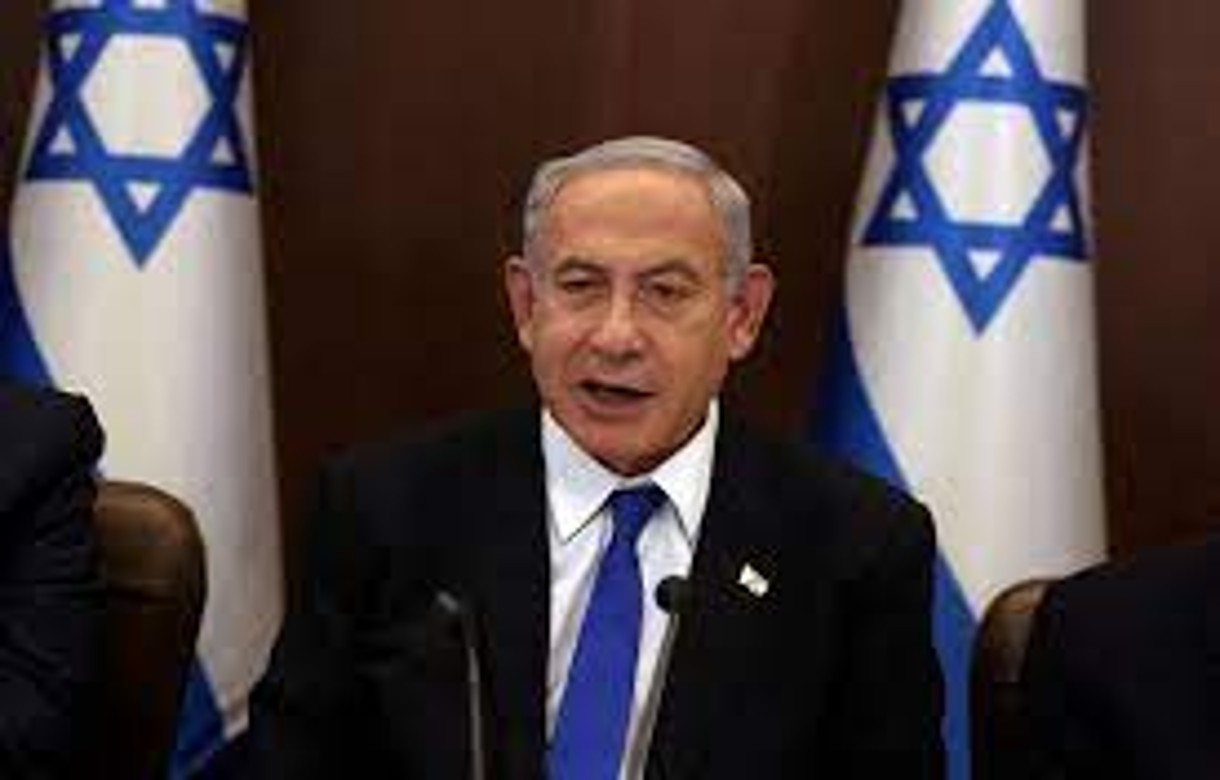
Prime Minister Narendra Modi and Israeli Prime Minister Benjamin Netanyahu have reaffirmed their commitment to strengthening defence, trade and security cooperation, marking a significant step forward in India-Israel relations during Mr Modi’s visit to Tel Aviv.

Addressing Israel’s parliament, the Knesset, Mr Modi described defence cooperation as an “important pillar” of the bilateral partnership and stressed the need for closer collaboration in an increasingly uncertain global environment.

“In today’s uncertain world, a strong defence partnership between trusted partners like India and Israel is of vital importance,” he said.

Defence deal likely on agenda

During the visit — Mr Modi’s first to Israel in nine years — discussions are expected to include a major order for Israeli-made missile systems. An official in New Delhi familiar with the matter indicated that details of the potential deal may not be publicly disclosed, as both governments are keen to keep the spotlight on broader strategic ties.

India’s Ministry of External Affairs has not commented on the reported missile purchase.

Israel has long been among India’s key arms suppliers. Over the years, the defence relationship has evolved into joint manufacturing projects, including drones and missile systems. Ahead of the visit, Israel’s Ambassador to India, Reuven Azar, said both sides are working towards a more comprehensive defence and security framework that could open doors for cooperation on more sensitive projects.

Focus on trade and investment

Trade and investment featured prominently in the leaders’ discussions. Mr Modi said both governments are committed to expanding bilateral trade, boosting investment flows and promoting joint infrastructure projects.

Israeli negotiators recently travelled to India to begin formal talks on a proposed free-trade agreement, building on terms agreed in November. Such a pact could provide Israel greater access to one of the world’s fastest-growing economies.

According to Israel’s Economy and Industry Ministry, India is Israel’s second-largest trading partner in Asia, with bilateral trade estimated at $5 billion in 2025, excluding defence transactions.

India is also the largest buyer of Israeli defence equipment, accounting for up to 34% of Israel’s total arms exports, according to data from the Stockholm International Peace Research Institute.

Regional security and Gaza ceasefire

The visit comes amid shifting regional alliances and ongoing security challenges. Referring to last year’s ceasefire in Gaza, Mr Modi said the truce created an opportunity for closer cooperation.

He also welcomed the US-brokered peace plan for Gaza, later endorsed by the United Nations, saying it holds the promise of a just and durable peace, including progress on the Palestine issue. However, uncertainty remains over the future of the truce with Hamas, with key governance and security questions yet to be resolved.

Strategic observers note that both leaders see their countries as operating in complex neighbourhoods marked by security threats and geopolitical shifts.

Connectivity push through IMEC

Connectivity initiatives also featured in the discussions. Mr Netanyahu told the Knesset that India and Israel are working on developing a maritime and land corridor linking India to Israel’s port of Haifa and onward to Europe.

The plan builds on the India-Middle East-Europe Economic Corridor initiative unveiled in September 2023. Although the outbreak of the Israel-Hamas conflict soon after raised concerns about the project’s future, Israeli officials have indicated that the corridor remains viable.

Haifa port, partly acquired by India’s Adani Group, is expected to play a key role as the Mediterranean endpoint of the corridor.

As India and Israel seek to reinforce strategic, economic and security ties, the visit underlines the growing convergence between New Delhi and Tel Aviv in defence, trade and regional connectivity.

Continue Reading

Latest world news

Canada softens stance on alleged Indian interference ahead of PM Carney’s India visit

Canada appears to ease its earlier allegations of Indian interference as PM Mark Carney heads to India to strengthen trade and strategic ties.

Published

on

Canada appears to be easing its earlier allegations of Indian interference as Prime Minister Mark Carney prepares for a key visit to India aimed at rebuilding commercial and diplomatic ties.

Senior officials in Ottawa indicated that the Canadian government maintains “mature and robust discussions” with the Government of India on concerns related to foreign interference. They also emphasised that Canada has strong safeguards in place to protect its democratic institutions.

According to officials quoted by media, the Prime Minister would likely not be travelling to India if Ottawa believed New Delhi was actively interfering in Canada’s democratic processes. The remarks suggest a noticeable shift from the strong accusations levelled last year.

Officials said there has been sustained engagement with the government of Narendra Modi at multiple levels, including senior officials, ministers and leadership-level interactions. They expressed confidence that the discussions provide a foundation for further constructive dialogue.

At the same time, a senior official reiterated that Canada maintains “no tolerance” for foreign interference in its domestic affairs.

From allegations to engagement

The recent comments contrast with statements made last June by the Canadian Security Intelligence Service (CSIS), which accused India of being among the primary actors involved in foreign interference and espionage activities in Canada.

CSIS had also described alleged links between Indian authorities and the 2023 killing of Hardeep Singh Nijjar in Vancouver as a “significant escalation” in India’s actions against the Khalistan movement.

India firmly rejected those accusations. The dispute triggered a diplomatic standoff, with both countries expelling senior diplomats from Ottawa and New Delhi in a tit-for-tat move.

Carney’s push to rebuild ties

Prime Minister Carney’s visit to India is being positioned as part of a broader Indo-Pacific outreach and a more pragmatic foreign policy approach. His trip will begin in Mumbai before he heads to New Delhi for talks with Prime Minister Modi.

The visit comes as both nations seek to stabilise relations that deteriorated sharply following Canada’s allegations over Nijjar’s killing — claims that New Delhi strongly denied.

Carney’s office has said discussions will centre on expanding cooperation in trade, energy, technology, artificial intelligence, talent mobility, culture and defence.

Growing trade partnership

India is currently Canada’s seventh-largest trading partner in goods and services. Annual bilateral trade exceeds $21 billion, according to Canadian government data.

The two sides had previously agreed to resume negotiations on a proposed free-trade agreement, targeting bilateral trade of $50 billion by 2030.

More than 600 Canadian companies operate in India across sectors such as information technology, banking, health sciences and financial services. Key Indian exports to Canada include pharmaceuticals, gems and jewellery, precious stones and seafood.

Diplomatic ties show signs of recovery

Canada hosts approximately 2.8 million people of Indian origin. Nearly 400,000 Indian students are enrolled in Canadian universities, making them the largest group of international students in the country.

Canada is also home to the largest Sikh population outside India, including some fringe separatist elements advocating for Khalistan.

Relations between the two countries began to improve after Carney assumed office in March 2025, with envoys restored and diplomatic engagement gradually resuming.

The upcoming visit is being viewed as a significant step toward stabilising ties and advancing economic cooperation amid shifting global trade dynamics and uncertainties linked to policies under US President Donald Trump.

Continue Reading

Latest world news

PM Modi reaffirms support for Israel, recalls 26/11 victims in Knesset address

Addressing Israel’s parliament, PM Narendra Modi reaffirmed India’s support for Israel, condemned terrorism, and recalled the 26/11 Mumbai attacks.

Published

on

Prime Minister Narendra Modi on Wednesday addressed the Knesset, expressing solidarity with Israel and condemning terrorism, while highlighting the growing partnership between the two nations.

Calling it a rare honour, Mr Modi said he brought greetings from 1.4 billion Indians and described his address as a symbol of the warmth between the two democracies.

Condolences over October 7 attack

The Prime Minister conveyed condolences for the lives lost in the October 7 attack by Hamas. He said India shares Israel’s grief and stands firmly with the country “with full conviction in this moment and beyond”.

“Nothing can justify terrorism,” Mr Modi said, adding that India too has suffered from terror attacks for decades. He recalled the 26/11 Mumbai attacks and the innocent lives lost, including Israeli citizens, and reiterated India’s policy of zero tolerance towards terrorism without double standards.

Reference to Abraham Accords and regional hope

Referring to the Abraham Accords, Mr Modi said India had applauded the vision and courage shown at the time. While noting that the regional situation has since become more challenging, he stressed the importance of sustaining hope for peace.

Historic ties and expanding partnership

The Prime Minister said he was the first Indian Prime Minister to visit Israel nine years ago and expressed happiness at returning. He also noted that he shares his birth date — September 17, 1950 — with the day India formally recognised Israel.

Recalling his earlier visit to Israel as Gujarat Chief Minister in 2006 and his 2017 trip as Prime Minister, Mr Modi said bilateral ties were elevated to a Strategic Partnership during the latter visit. Since then, he added, engagement has broadened across sectors.

He pointed to cooperation in innovation, mentioning the inauguration of the iCreate Technology Business Incubator in 2018 with then Prime Minister Benjamin Netanyahu. The incubator, he said, has since supported nearly 900 start-ups.

Shared civilisational values

Mr Modi said Jewish communities have lived in India without fear of persecution and have preserved their faith while participating fully in society. He described this as a matter of pride.

Highlighting philosophical parallels, he referred to the Israeli concept of “Tikkun Olam”, meaning healing the world, and India’s belief in “Vasudhaiva Kutumbakam”, which sees the world as one family. Both traditions, he said, call for compassion and moral courage beyond immediate boundaries.

He also acknowledged the contribution of Indian caregivers and skilled workers in Israel, noting their courage and dedication, including during the October 7 crisis.

Continue Reading

Trending

© Copyright 2022 APNLIVE.com