
Latest world news
Egypt: former PM withdraws from Presidential contest


The second term for Abdel Fattah el-Sisi, as Egyptian President has been ensured by forcing former PM Ahmed Shafik to withdraw from Presidential elections to be held between January to May this year.
According to New York Times report from Cairo, the strongest challenger against Sisi- former PM Ahmed Shafik withdrew from the presidential race on Sunday, with his lawyer saying “the government had forced him to drop our”.
Shafik had narrowly lost the country’s only free presidential election in 2012, when Mohammad Morsi of Muslim Brotherhood was declared elected. Shafik was recently deported to Egypt from UAE within a few days of announcement of his intention to contest the Presidential elections in his country.
On Sunday, Shafik posted an Arabic message on twitter saying, “After reviewing the situation, I realized I am not the best person to manage state affairs in the coming period.”
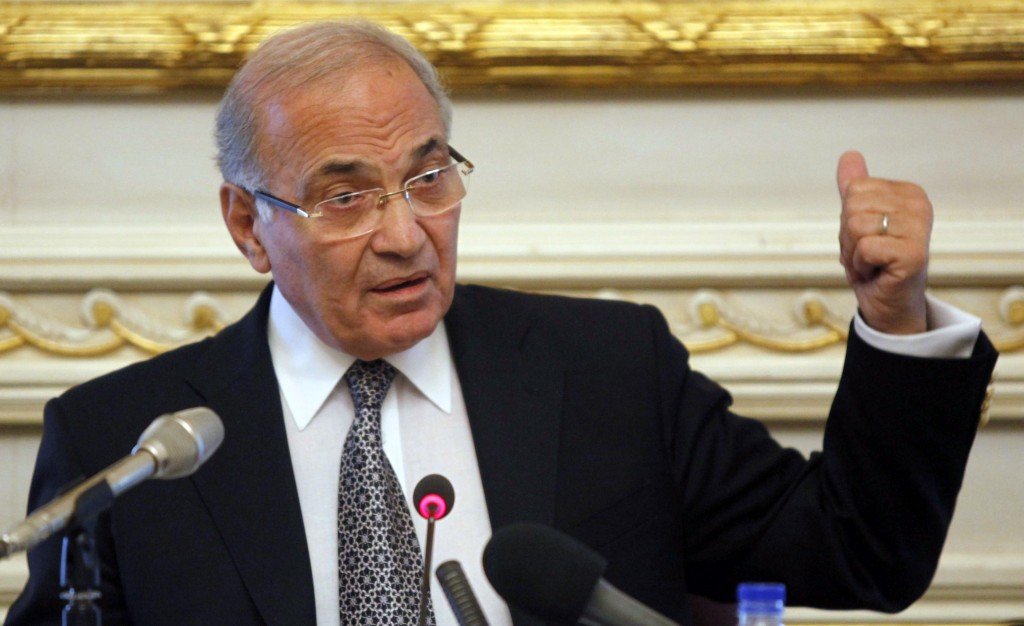
Shafik’s lawyer, who did not like to be named, said that Egyptian government ha coerced him into withdrawing by ‘threatening to investigate old corruption charges against him.”
New York Times reports that lawyer’s account was broadly confirmed by audio recordings of telephone calls by an Egyptian intelligence officer, obtained by the newspaper.
In late November last year, UAE prevented Ahmed Shafik to travel back to Egypt. He, along with his family were given refuge in UAE for last several years. Shafik had claimed that he was prevented from leaving UAE after he announced his intention of contesting the presidential elections.
On December 3, UAE suddenly sent Shafik by a private unmarked aircraft to Cairo. However, the Egyptian leader denied of his deportation. He was taken to undisclosed location after arriving in Cairo. The Egyptian leader was about to leave for Paris on that day.
According to Cairo based Ahram online, Lasheen Ibrahim, the head of National Election Authority (NEA) has, on Monday, announced that voting in the upcoming presidential elections will begin in March. The whole exercise will take place between late January 20 to May 1, the day when new President’s name will be announced.
Ahmed Shafik was a senior commander in the Egyptian Air Force and later served as Prime Minister from 29 January 2011 to 3 March 2011. He was appointed as PM by President Hosni Mubarak in response to the 2011 revolution making him the last Pm to serve under Mubarak’s administration.
The incumbent President Abdel Fattah el-Sisi staged a successful military coup removing Mohammad Morsi in 2014. He was Defence Minister in the MOrsi government.
Saudi Arabia extended huge financial support to Sisi for stabilising the situation after he took over the government. Former President Mohammad Morsi along with his hundreds of supporters was sent to jail. Sisi is considered to be close to US, Israel and Saudi Arabia.








Latest world news
Magnitude 7 earthquake strikes Russia’s Kamchatka Peninsula
A magnitude 7 earthquake struck Russia’s Kamchatka Peninsula region on Friday. The initial report placed the earthquake at a depth of 140 kilometres.


Latest world news
S Jaishankar says India is a natural option for Russia amid Europe tensions
External Affairs Minister S Jaishankar said India remained a natural option for Russia as Moscow increasingly turned towards Asia amid strained relations with Europe. He highlighted the continuity of India-Russia ties and their significance for the balance of power in Asia.

Latest world news
Putin praises PM Modi, says he has very good ideas on Ukraine war
Russian President Vladimir Putin has praised Prime Minister Narendra Modi for repeatedly raising the need to end the Ukraine war, describing his ideas for a settlement as “very good”.


India-US trade deal first phase finalised, drafting underway

Election Commission orders voter roll revision in 17 states, UTs

Actor Imran Khan asked to leave India after CJP protest

Delhi Police offers 11-person limit for CJP’s Connaught Place protest

Mallikarjun Kharge’s ‘Your Friends’ jab at Rahul Gandhi over congress exits

Magnitude 7 earthquake strikes Russia’s Kamchatka Peninsula

Delhi deploys 25,000 personnel, installs CCTV cameras ahead of CJP march
Mallikarjun Kharge’s ‘Your Friends’ jab at Rahul Gandhi over congress exits
Delhi Police offers 11-person limit for CJP’s Connaught Place protest
Actor Imran Khan asked to leave India after CJP protest

Afghan Men Try To Hang With The Jet Engine Of The Aircraft in Kabul- Afghanistan News – Kabul News
Trending Top 10 News: 10000 Crore Fine on Flipkart, Apple to Launch Unique Feature, Hdfc Bank Job Ad

Trending Top 10 News: Nokia 6310, Apple sales, Bachpan ka Pyar Video Kid, Dainik Bhaskar IT Raid

Trending Top 10 News: Canada bans Indian flights, Rain in Delhi NCR, AIMIM Twitter hacked, Raj Kundra case

Trending Top 10 News: Shein India, Apple New Service, Pocket Oxygen, Oppo Launched New Phone
-
 India News23 hours ago
India-US trade deal first phase finalised, drafting underway
-
 India News21 hours ago
Election Commission orders voter roll revision in 17 states, UTs
-
 India News20 hours ago
Actor Imran Khan asked to leave India after CJP protest
-
 India News19 hours ago
Delhi Police offers 11-person limit for CJP’s Connaught Place protest
-
 India News8 hours ago
Mallikarjun Kharge’s ‘Your Friends’ jab at Rahul Gandhi over congress exits
-
 India News7 hours ago
Delhi deploys 25,000 personnel, installs CCTV cameras ahead of CJP march
-
 Latest world news7 hours ago
Magnitude 7 earthquake strikes Russia’s Kamchatka Peninsula
