English हिन्दी
Connect with us

Latest world news

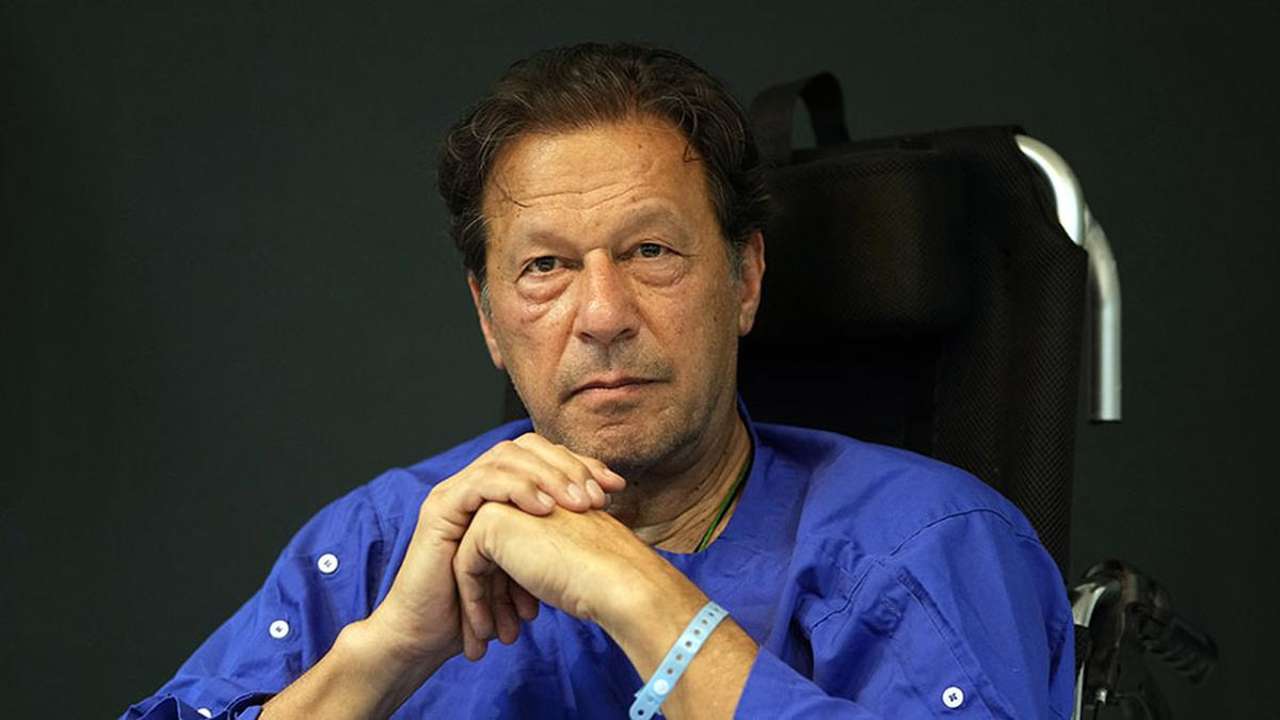
Former Pakistan Prime Minister Imran Khan jailed for 3 years in Toshakhana corruption case, fined PKR 1 lakh, barred from politics for 5 years

According to Intezar Panjotha, Khan’s attorney, police have arrested Imran Khan from his residence. He also said they have petitioned the Supreme Court to overturn the ruling.

Published

on

Pakitan ex-PM Imran Khan

Former prime minister of Pakistan Imran Khan was detained on Saturday after receiving a three-year prison term in the Toshakhana case. Imran Khan was also prohibited from engaging in active politics for five years by an Islamabad trial court.

Khan is accused of making money off the sale of state gifts while he was in power. He didn’t attend the session in court.

Following the court’s decision, Imran Khan, the chairman of the Pakistan Tehreek-e-Insaf (PTI), was apprehended at his Lahore home by Islamabad police working with the Punjab police. From Lahore, he has been dispatched to Islamabad.

Imran Khan has been taken into custody, stated PTI General Secretary Omar Ayub Khan. Every Pakistani has a constitutional right to peaceful protest.

Imran Khan is being moved to Kot Lakhpat Jail, the party’s Punjab branch tweeted.

The 70-year-old politician, who was previously a professional cricketer, is accused of making money off the sale of pricey official gifts while in office. Imran Khan’s appeal against the trial’s progress was rejected by Pakistan’s Supreme Court on Friday, the court noting that an application to transfer the case to another court was being considered by the Islamabad High Court (IHC).

Imran Khan has asserted his innocence and announced that an appeal will be made right away.

According to Intezar Panjotha, Khan’s attorney, police have arrested Imran Khan from his residence. He also said they have petitioned the Supreme Court to overturn the ruling.
According to a Pakistani newspaper, an Islamabad trial court today found Imran Khan guilty of corrupt practises in the Toshakhana case.

Khan was also given a Rs 100,000 punishment by Additional Judge Humayun Dilawar of the District and Sessions Court in Islamabad, who also threatened to keep him in jail for an additional six months if the fine wasn’t paid.

The court concluded that the charges against the former prime minister in the case were supported by the evidence during the hearing today. Imran Khan submitted fake details to the Election Commission of Pakistan and is found guilty of corrupt practises, he said.

He is accused of exploiting his position as prime minister from 2018 to 2022 to purchase and resell gifts that were given to the government during foreign trips and were valued at more than Rs 140 million (USD$ 635,000). The penalty pertains to an investigation by the election commission, which concluded that Khan had sold official gifts for an illegal price while serving as prime minister from 2018 to 2022.

In the Toshakhana case, which was brought last year on the complaint of the Election Commission of Pakistan (ECP), which had already disqualified Khan, 70, in the same case, he was found guilty.

Latest world news

Zohran Mamdani creates history as New York’s first Indian-American Muslim mayor

Democrat Zohran Mamdani has made history by becoming the first Indian-American Muslim and youngest mayor of New York City in over 100 years.

Published

on

Zohran Mamdani

In a landmark political moment, Democrat Zohran Mamdani has been elected as the new mayor of New York City, marking multiple historic firsts. At 34, Mamdani will become the city’s youngest mayor in over a century and the first Muslim and Indian-American of South Asian heritage to hold the office.

Historic victory for a new generation

Mamdani’s win, achieved against heavyweight contenders like former governor Andrew Cuomo and Republican Curtis Sliwa, represents a generational shift in New York politics. His progressive platform—focusing on affordable housing, public transport, and social equity—struck a chord with voters.

Born in Kampala, Uganda, on October 18, 1991, to Ugandan scholar Mahmood Mamdani and Indian filmmaker Mira Nair, Zohran Mamdani spent his early years in Uganda and South Africa before moving to New York. A graduate of Bowdoin College with a degree in Africana Studies, he co-founded a Students for Justice in Palestine chapter during his university years.

The campaign and vision ahead

Mamdani’s grassroots campaign called for a rent freeze on stabilised units, universal childcare, tuition-free education, and fare-free buses. He also proposed building two lakh public housing units and city-run grocery stores. His plan to raise the minimum wage to $30 by 2030, funded through higher taxes on millionaires and corporations, drew both praise and criticism.

Despite facing ideological opposition and being branded as “too radical” by his rivals, Mamdani’s authenticity and mass connect drove one of the highest voter turnouts in five decades, with over 2 million ballots cast.

Now, as he prepares to assume office on January 1, the young leader faces the challenge of transforming his ambitious promises into policy amid scrutiny from conservatives and the business community alike.

Continue Reading

Latest world news

Trump orders US to test nuclear weapons, cites Russia, China, N Korea, Pakistan are at it

US Energy Secretary Chris Wright says tests won’t include explosions

Published

on

By

New tests of the US nuclear weapons system ordered up by US President Donald Trump will not include nuclear explosions, Energy Secretary Chris Wright has said.

It was the first clarity from the Trump administration since the president took to social media last week to say he had “instructed the Department of War to start testing our Nuclear Weapons on an equal basis”. Trump had said Russia, China, North Korea and Pakistan were still continuing to test nuclear weapons and saw no reason why the US should stick to following the no-nuclear test moratorium.

“I think the tests we’re talking about right now are system tests,” Wright said in an interview on Fox News’ “Sunday Briefing”. “These are not nuclear explosions. These are what we call noncritical explosions.”

Wright, whose agency is responsible for testing, added that the planned testing involves “all the other parts of a nuclear weapon to make sure they deliver the appropriate geometry and they set up the nuclear explosion.”

The confusion over Trump’s intention started minutes before he held a critical meeting in South Korea with Chinese President Xi Jinping.

Trump took to his Truth Social platform and appeared to suggest he was preparing to discard a decades-old US prohibition on testing the nation’s nuclear weapons.

Later that day, as he made his way back to Washington, Trump was coy on whether he really meant to say he was ordering the resumption of explosive testing of nuclear weapons — something only North Korea has undertaken this century — or calling for the testing of US systems that could deliver a nuclear weapon, which is far more routine.

He remained opaque on Friday when asked by reporters about whether he intended to resume underground nuclear detonation tests.

“You’ll find out very soon,” Trump told reporters aboard Air Force One on Friday, as he headed to Florida for a weekend stay.

The US military regularly tests its missiles that are capable of delivering a nuclear warhead, but it has not detonated the weapons since 1992.

The Comprehensive Nuclear Test Ban Treaty, which the US signed but did not ratify, has been observed since its adoption by all countries possessing nuclear weapons, North Korea being the only exception.

Trump announced his plans for nuclear tests after Russia announced it had tested a new atomic-powered and nuclear-capable underwater drone and a new nuclear-powered cruise missile.

Russia responded to Trump’s nuclear testing comments by underscoring that it did not test its nuclear weapons and has abided by a global ban on nuclear testing.

The Kremlin warned though, that if the US resumes testing its weapons, Russia will as well — an intensification that would restart Cold War-era tensions.

—AP/PTI

Continue Reading

Latest world news

Sheikh Hasina says she would love to return home but only under legitimate Bangladesh government

Sheikh Hasina, ousted from power in 2024, says she will remain in India and not return to Bangladesh unless free and fair elections allow the Awami League to participate.

Published

on

Sheikh Hasina

Former Bangladesh Prime Minister Sheikh Hasina has said she will remain in India and not return to her country under any government formed after elections that exclude her party, the Awami League. Speaking from her exile in New Delhi, the 78-year-old leader described the ban on her party as “unjust and self-defeating”.

Hasina fled to India in August 2024 after a student-led uprising that resulted in her ouster. An interim government headed by Nobel laureate Muhammad Yunus has since been in charge, with general elections scheduled for February next year.

“The next government must have electoral legitimacy. Millions of people support the Awami League, so as things stand, they will not vote,” she said in written responses to media. “You cannot disenfranchise millions if you want a political system that works.”

Hope for Awami League’s return to polls

Bangladesh’s Election Commission suspended the Awami League’s registration in May, citing national security and ongoing war crimes investigations against senior party figures. The Nobel laureate-led government also banned all party activities earlier this year.

Hasina said her party is not asking supporters to vote for other parties and still hopes “common sense will prevail” so that the Awami League can contest the election. However, she did not reveal if any communication is ongoing with authorities in Dhaka regarding the issue.

The Awami League and the Bangladesh Nationalist Party (BNP) have dominated the country’s political landscape for decades. The BNP is expected to benefit from the ruling’s absence in the upcoming vote.

Hasina faces war crimes charges

Hasina, credited with driving Bangladesh’s economic growth but accused of human rights violations during her long tenure, is facing charges of crimes against humanity for the violent crackdown on protests in 2024. A verdict from Bangladesh’s International Crimes Tribunal is expected on November 13.

According to UN estimates, up to 1,400 people were killed and thousands injured during the unrest, primarily from gunfire by security forces. Prosecutors also allege she oversaw enforced disappearances and torture of opposition activists through secret detention centres.

Rejecting the allegations, Hasina said, “These proceedings are a politically motivated charade. They’ve been brought by kangaroo courts, with guilty verdicts a foregone conclusion.”

“I live freely in Delhi, but would love to return”

Despite her exile, Hasina remains hopeful that her party will play a role in Bangladesh’s future politics. “It’s not about me or my family,” she said, adding that her son Sajeeb Wazed, based in Washington, could lead if asked.

Hasina, who lost most of her family in the 1975 military coup, said she lives “freely in Delhi” but remains vigilant due to her family’s violent past. She was recently spotted taking a stroll in Lodhi Garden with her security team, acknowledging locals who recognised her.

“I would of course love to go home, so long as the government there was legitimate, the constitution was being upheld, and law and order genuinely prevailed,” she said.

Continue Reading

Trending

© Copyright 2022 APNLIVE.com