
Latest world news
France: Onwards or Far Right?

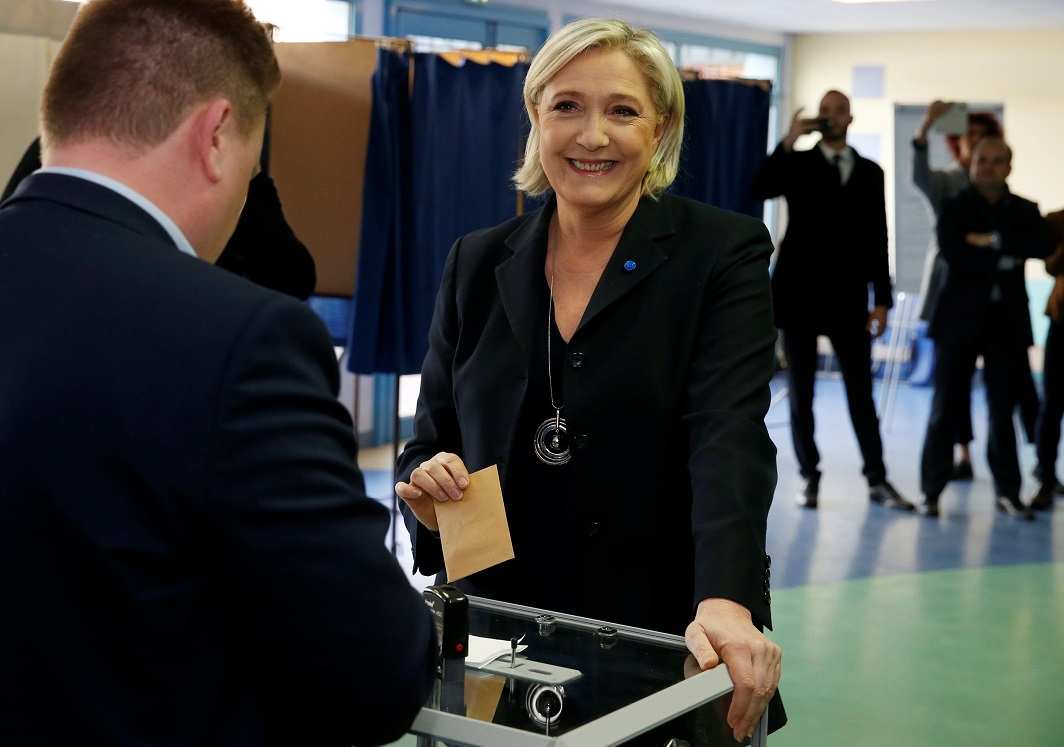
[vc_row][vc_column][vc_column_text]Emmanuel Macron will face off against Marine Le Pen in final round of voting on May 7
By Shailaja Paramathma
With the projections of the French presidential elections 2017 now out, France shows a preference for the centrist candidate Emmanuel Macron at 23.7 percent on the one hand and on the other for extreme right-wing party candidate Marine Le Pen at 21.7 percent. The danger of this once social democratic country leaning far right for good is now as real as it is not. So in a way even though the first round of elections are over, we are nowhere over the hump with the suspense.
The second and final round of elections will be in two weeks time on May 7, where these top two candidates will vie for the presidency of France. It is often said that the French vote with their hearts in the first round of elections, pushing their preferred candidate to advance to the second round. And in the second round they vote with their heads, coldly calculating to ensure that the candidate they dislike the most loses.
Former banker, Macron is only 39 years old and a relative newbie on the French political scene. Macron resigned from current president Francois Hollande’s government in 2016 and formed his own party En Marche (Onwards!). At that time, it had seemed like a rather ambitious plan but in just 18 months, he has managed to garner 200,000 singed-up members, which has made the possibility of him sitting in the hot seat quite real. In his manifesto he vows to cut taxes and spending but also provide support for those on low incomes. This ex-economy minister promises to bring down unemployment and give businesses greater leeway to design their own schedules. He is pro-globalisation and is in favour of France remaining in the European Union.
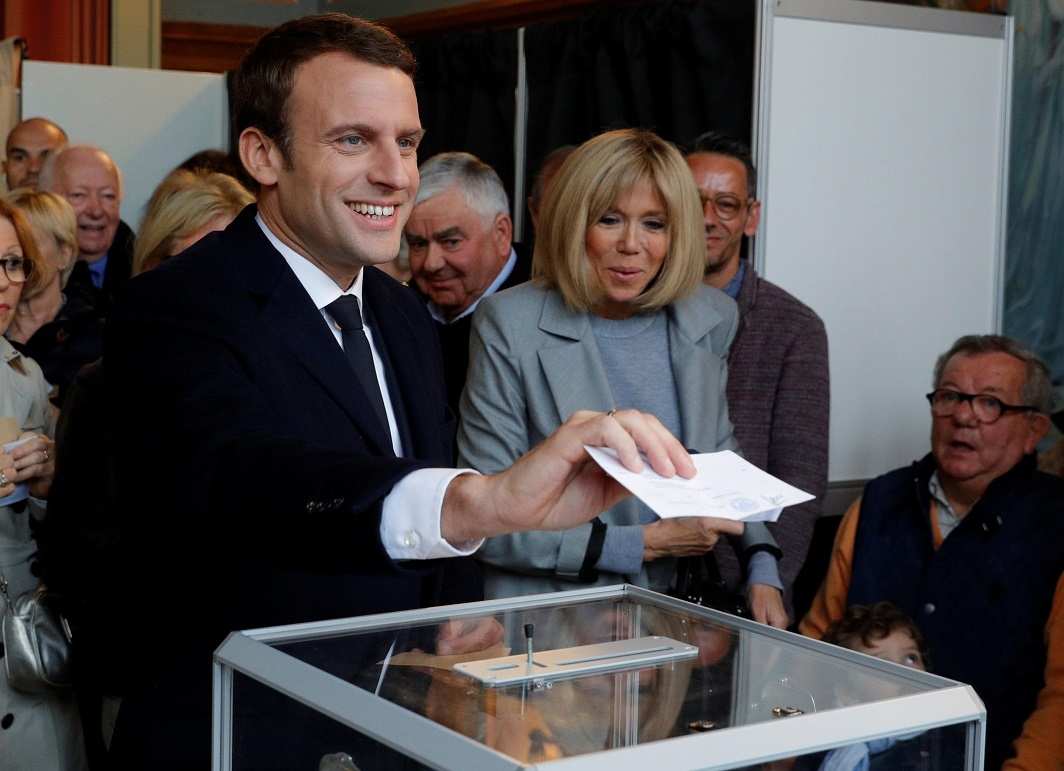
Accompanied by his wife, Macron casts his ballot
He differs on all of this with his contender Le Pen from the Front National but most of all the two are placed diametrically opposite from each other on immigration—Macron does not just support immigration but also intends to intervene in Syria if elected, whereas Le Pen has promised to be extremely hard on immigration and wishes to give back France to the French, as it were.
Daughter of Jean-Marie Le Pen who led the Front National for four decades, it is only under Marine’s leadership that the party has for the first time come as close as she has to the presidential palace. Even though the junior Le Pen expelled daddy dearest from the party in 2015, she seems to have retained her father’s vitriol for immigrants, especially Muslims. A chest-beating nationalist, she has plans to hold a referendum on “Frexit”, if elected.
The final television debate between the two candidates will take place on May 3. It will be a highly watched program and decisive in more ways than one for those still sitting on the fence.
Irrespective of which way the voters lead their nation, the truth of the matter is that the tussle between the far right and the rest is at present very real in France. The two parties, with their agendas and promises, are very unlike each other. So, in that sense no matter which candidate wins, there will be an equal number of the French population who will be dissatisfied and opposed to what the winning party will do during its tenure.[/vc_column_text][/vc_column][/vc_row]





Latest world news
S Jaishankar says India is a natural option for Russia amid Europe tensions
External Affairs Minister S Jaishankar said India remained a natural option for Russia as Moscow increasingly turned towards Asia amid strained relations with Europe. He highlighted the continuity of India-Russia ties and their significance for the balance of power in Asia.


Latest world news
Putin praises PM Modi, says he has very good ideas on Ukraine war
Russian President Vladimir Putin has praised Prime Minister Narendra Modi for repeatedly raising the need to end the Ukraine war, describing his ideas for a settlement as “very good”.

Latest world news
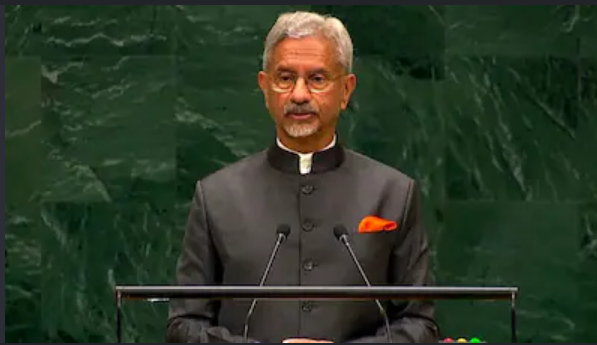
S Jaishankar calls Pakistan a “serial practitioner of terrorism” at UN
S Jaishankar criticised Pakistan at the UN General Assembly, referring to a “serial practitioner of terrorism” and warning against attempts to normalise terrorism.

Dhruv Rathee gets fresh summons in 2018 BJP IT cell video case

Nobody can browbeat judiciary, Chief Justice warns over Rahul Gandhi’s march

India-US trade deal first phase finalised, drafting underway

Election Commission orders voter roll revision in 17 states, UTs

Actor Imran Khan asked to leave India after CJP protest

Delhi Police offers 11-person limit for CJP’s Connaught Place protest
Actor Imran Khan asked to leave India after CJP protest
Election Commission orders voter roll revision in 17 states, UTs
India-US trade deal first phase finalised, drafting underway
Nobody can browbeat judiciary, Chief Justice warns over Rahul Gandhi’s march

Afghan Men Try To Hang With The Jet Engine Of The Aircraft in Kabul- Afghanistan News – Kabul News
Trending Top 10 News: 10000 Crore Fine on Flipkart, Apple to Launch Unique Feature, Hdfc Bank Job Ad

Trending Top 10 News: Nokia 6310, Apple sales, Bachpan ka Pyar Video Kid, Dainik Bhaskar IT Raid

Trending Top 10 News: Canada bans Indian flights, Rain in Delhi NCR, AIMIM Twitter hacked, Raj Kundra case

Trending Top 10 News: Shein India, Apple New Service, Pocket Oxygen, Oppo Launched New Phone
-
 India News13 hours ago
Dhruv Rathee gets fresh summons in 2018 BJP IT cell video case
-
 India News9 hours ago
Nobody can browbeat judiciary, Chief Justice warns over Rahul Gandhi’s march
-
 India News5 hours ago
India-US trade deal first phase finalised, drafting underway
-
 India News2 hours ago
Election Commission orders voter roll revision in 17 states, UTs
-
 India News2 hours ago
Actor Imran Khan asked to leave India after CJP protest
-
 India News1 hour ago
Delhi Police offers 11-person limit for CJP’s Connaught Place protest
