English हिन्दी
Connect with us

Latest world news

India rejects press freedom concerns raised during PM Modi’s Oslo visit

India rejected criticism over press freedom and human rights during PM Narendra Modi’s Oslo visit, with MEA official Sibi George defending the country’s democratic system.

Published

on

India rejects press freedom concerns raised during PM Modi’s Oslo visit

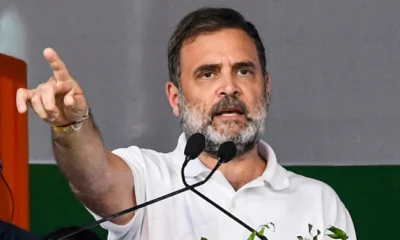
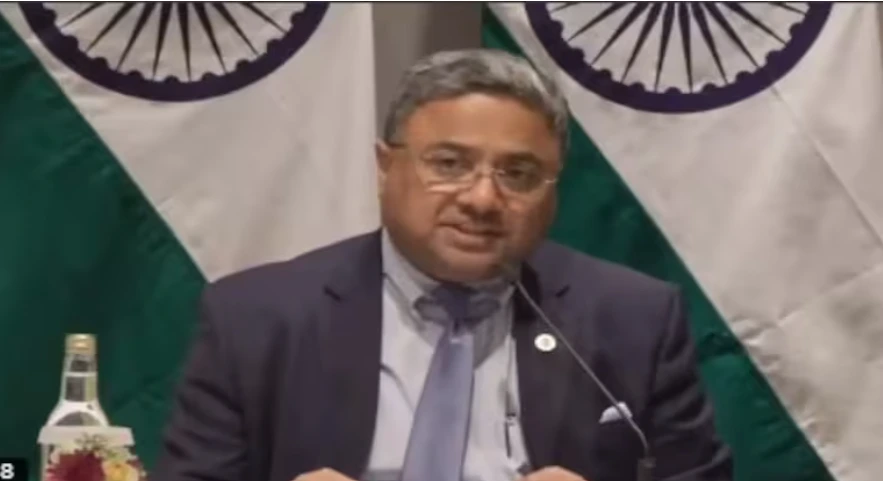
India firmly pushed back against concerns over press freedom and human rights raised during Prime Minister Narendra Modi’s visit to Oslo, with a senior Ministry of External Affairs official describing certain international NGO reports as “ignorant” and lacking an understanding of India’s scale and diversity.

The remarks came during a media interaction in Norway, where a journalist questioned India’s democratic credentials and asked why the country should be trusted on issues related to media freedom and minority rights.

Responding to the query, MEA Secretary (West) Sibi George defended India’s constitutional framework and democratic institutions. He said India’s Constitution guarantees fundamental rights and provides legal remedies for citizens if those rights are violated.

“We are one-sixth of the total population of the world, but not one-sixth of the problems of the world,” the diplomat said while stressing that India believes in equality, human rights and the rule of law.

He also highlighted the size and diversity of India’s media ecosystem, pointing to the large number of television channels and multilingual news coverage operating across the country. According to him, many foreign observers fail to fully understand India’s complexity and instead rely on selective reports published by NGOs.

The exchange took place during PM Modi’s Norway visit, where he held talks with Norwegian Prime Minister Jonas Gahr Støre on trade, green technology, blue economy and investment cooperation.

The sharp response from the Indian side also followed recent criticism reportedly linked to remarks from Dutch political leaders concerning press freedom and minority rights in India. New Delhi had rejected those observations as well, calling India a vibrant democracy with strong constitutional protections.

India highlights democratic framework during Norway visit

During the interaction, the Indian diplomat reiterated that the country follows the rule of law and maintains democratic accountability through courts and constitutional mechanisms. He said India’s diversity and scale often make it difficult for outsiders to fully understand domestic debates and governance challenges.

PM Modi’s Norway visit is part of broader diplomatic engagements with Nordic countries aimed at strengthening partnerships in trade, clean energy, technology and maritime sectors.

Latest world news

PM Modi’s Canada visit could help wrap trade talks, says Canada PM Mark Carney

Canadian PM Mark Carney said he is looking forward to hosting PM Narendra Modi, with both countries aiming to conclude their ongoing trade negotiations.

Published

on

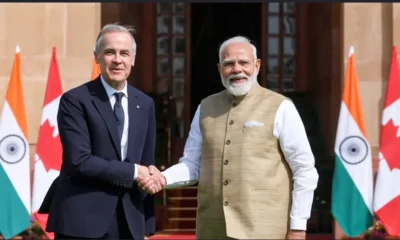
Canadian Prime Minister Mark Carney has said he is looking forward to hosting Prime Minister Narendra Modi, as India and Canada continue efforts to advance their bilateral relationship and conclude ongoing trade negotiations.

The two countries have been working towards a Comprehensive Economic Partnership Agreement (CEPA), with both sides previously setting a target to conclude the negotiations in 2026.

Carney and Modi have held discussions on strengthening economic ties between India and Canada, including trade and investment. Their engagement has gained momentum following Carney’s visit to India earlier this year.

India-Canada trade talks

India and Canada formally resumed efforts towards a broader trade agreement after a period of strained bilateral ties. The two sides have committed to advancing negotiations on a CEPA covering their economic relationship.

In June, Carney and Modi reviewed progress in bilateral economic cooperation during their meeting on the sidelines of the G7 Summit in France. They expressed satisfaction with the progress in CEPA negotiations and reaffirmed their shared objective of concluding the talks in 2026.

During Carney’s visit to India in March, the two leaders had also agreed to accelerate negotiations on the CEPA and work towards finalising the agreement during 2026.

Modi’s proposed Canada visit

Carney had invited PM Modi to visit Canada in 2026, and the two leaders agreed to remain engaged through diplomatic channels to work towards a mutually convenient date for the visit.

The proposed visit comes as New Delhi and Ottawa seek to build on renewed diplomatic and economic engagement, with trade negotiations remaining a key part of the relationship.

The focus on completing the trade talks comes as both countries look to expand commercial ties and establish a broader economic framework through the proposed CEPA.

Continue Reading

Latest world news

Trump issues fresh Iran warning at UN General Assembly, signals deal after midterms

US President Donald Trump issued a fresh warning to Iran during his UN General Assembly address, saying he faces a choice between a deal and further escalation.

Published

on

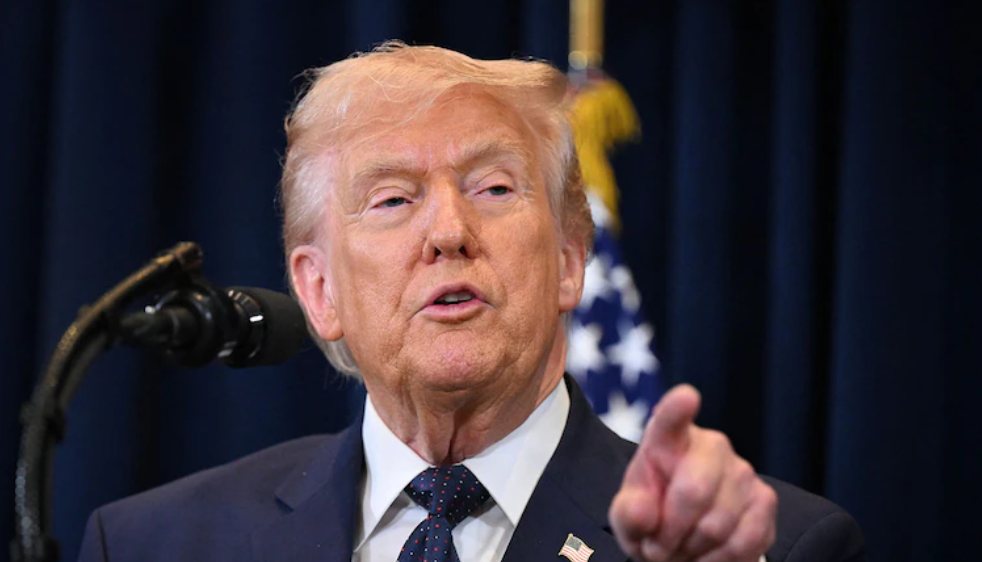
US President Donald Trump used his address to the United Nations General Assembly on Tuesday to outline what he described as a major decision over Iran, putting the possibility of a deal against further military escalation.

Speaking at the UN in New York, Trump said he had a “big decision” to make. He questioned whether the United States should pursue an agreement that would allow Iran to rebuild or instead take further action against the Islamic Republic.

Trump later indicated that he believed an agreement with Iran could be reached after the US midterm elections, which are scheduled for November 3.

Trump says deal with Iran remains possible

During his speech, Trump presented two possible paths. He said a deal could allow Iran to rebuild and become a stronger country, while also raising the possibility of destroying the Islamic Republic if an agreement was not reached.

Trump said he believed a deal could eventually be reached, arguing that Iran was waiting to see the outcome of the US midterm elections.

His comments came amid the continuing US-Iran conflict and renewed diplomatic activity surrounding the confrontation. Trump’s UN appearance came as Washington was also engaged in discussions with multiple international leaders over the Iran conflict and other global issues.

Iranian delegation walks out during Trump’s speech

The Iranian delegation reportedly left the General Assembly chamber as Trump began describing the military confrontation with Iran.

According to the report, only one person from the Iranian delegation remained seated as Trump spoke about the conflict and the military strikes of the past six months.

The walkout came as tensions between Washington and Tehran remained high, with both sides facing pressure over the continuation of the conflict.

Trump’s latest warning follows earlier comments

Trump’s UN remarks came days after he said he was approaching a major decision over whether to intensify military action against Iran or pursue another route.

He had also indicated before his UN appearance that he could be open to meeting Iranian President Masoud Pezeshkian during the UN General Assembly in New York.

The possibility of renewed negotiations comes against the backdrop of continuing military and diplomatic tensions between the two countries.

Continue Reading

Latest world news

Visegrad Group backs India’s bid for permanent UN Security Council seat

India’s bid for a permanent UN Security Council seat received collective backing from the four Visegrad Group countries at a meeting in New York.

Published

on

India’s campaign for a permanent seat on the United Nations Security Council received fresh backing from four Central European countries at a meeting on the sidelines of the 81st UN General Assembly in New York.

The Visegrad Group, comprising Poland, Hungary, Slovakia and the Czech Republic, backed India’s call for permanent membership of the UN Security Council.

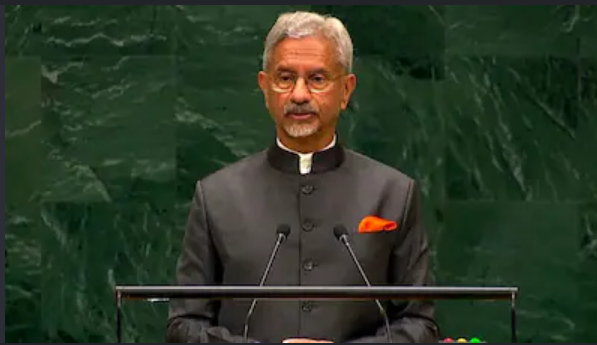
The support came during the first V4+India foreign ministers’ meeting involving External Affairs Minister S Jaishankar and his counterparts from the four-member grouping.

What Slovakia said on India’s UNSC bid

Slovak Foreign and European Affairs Minister Juraj Blanar said the four Visegrad countries agreed that India should have a permanent place on the UN Security Council.

Blanar described India as a country from the Global South and an emerging power in the Indo-Pacific region while expressing the group’s support for India’s permanent membership.

The statement was made after the meeting with Jaishankar in New York.

India has been seeking reform of the Security Council, including permanent membership, arguing for greater representation of today’s global political landscape.

India and V4 agree to deepen cooperation

The meeting was not limited to the Security Council issue. Jaishankar said India and the four Visegrad countries agreed to strengthen cooperation across several areas.

The countries agreed to hold annual meetings of foreign ministers and establish an annual business forum to deepen economic engagement.

The discussions also covered technology and innovation, research and education, defence, space, connectivity, culture and people-to-people relations.

Jaishankar described the first V4+India meeting as a “new historic occasion” and said India had very good relations with the four countries.

The ministers also discussed major international developments, including the conflict in Ukraine and developments in the Gulf.

What is the Visegrad Group?

The Visegrad Group, also known as V4, is a regional grouping of four Central European countries — Poland, Hungary, Slovakia and the Czech Republic.

The group was established in 1991 and provides a platform for cooperation in areas including political, economic, security and other matters.

India seeks permanent seat on UN Security Council

The UN Security Council currently has 15 members, including five permanent members — China, France, Russia, the United Kingdom and the United States — and 10 non-permanent members elected for two-year terms.

India has been seeking comprehensive reform of the Security Council and a permanent seat as part of that process.

The backing from the Visegrad Group adds four more countries to the list of nations supporting India’s permanent-membership demand. However, the V4 countries’ support by itself does not change the existing structure of the Security Council or complete the UN reform process. Any expansion would require the necessary agreement among UN member states and changes to the UN Charter.

Continue Reading

Trending

© Copyright 2022 APNLIVE.com