English हिन्दी
Connect with us

Latest world news

India says all permanent UN Security Council members must have veto

India has called for equal veto rights for all permanent members of a reformed UN Security Council, warning against creating a separate category of permanent members without veto powers.

Published

on

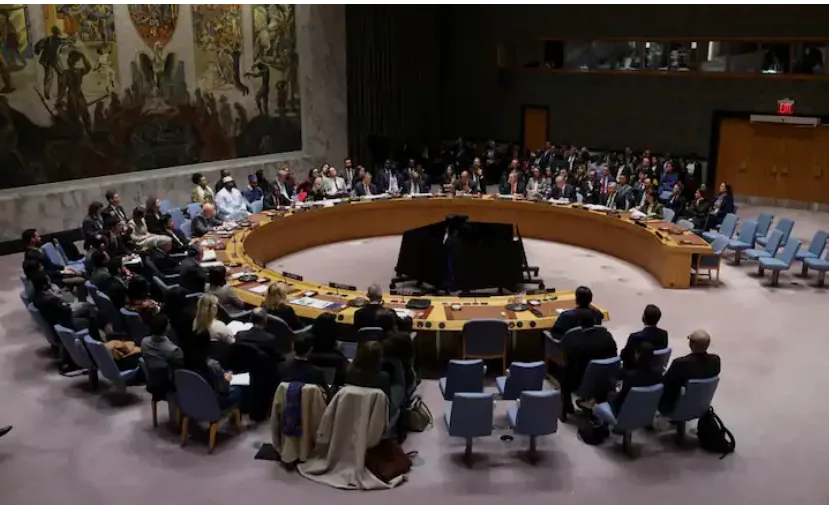
India has reiterated its position that all permanent members of a reformed United Nations Security Council must have veto power for as long as the provision exists. New Delhi has opposed proposals to create a separate category of permanent members without the same privileges as the existing five permanent members.

India’s Permanent Representative to the United Nations, Ambassador Parvathaneni Harish, outlined the country’s position during a debate on veto powers at the UN General Assembly on October 26.

India argued that granting permanent membership without veto rights would create unequal categories within the Council rather than address the existing imbalance in its decision-making structure.

India opposes unequal permanent membership

India said that any expansion of the Security Council should ensure that all permanent members enjoy equal rights and responsibilities.

In his statement, Harish said that a new category of permanent members, whether with or without veto powers, would complicate an already difficult reform process and risk reinforcing existing inequalities.

He also argued that creating long-term or permanent positions without veto rights would effectively leave the new members with second-class status, without fundamentally changing the decision-making influence of the existing permanent members.

India’s position is aligned with the Common African Position on Security Council reform, according to the statement delivered by its representative.

India calls for comprehensive UN Security Council reforms

India has called for a broader reform process that addresses the Council’s membership categories, veto powers, regional representation, size and working methods.

Harish said negotiations should begin at the earliest, with clearly defined timelines and milestones. India also called for text-based negotiations, which would allow member states to work towards a formal negotiating text.

India maintained that addressing veto powers in isolation would not be sufficient to change the Council’s existing decision-making dynamics.

The country has long called for an expansion of both permanent and non-permanent membership, arguing that the Council’s structure should reflect contemporary geopolitical realities rather than the international order established after the Second World War.

India highlights concerns over the use of veto power

India also stressed that veto power carries significant responsibility and should be exercised with restraint, particularly on matters concerning international peace and security.

Harish said the veto should not become an instrument of narrow political expediency.

According to his statement, the veto had been exercised 331 times on around 200 resolutions over the United Nations’ history. He also noted that most vetoes, or threats to use them, had come from three of the five permanent members.

India further highlighted what it described as an effective or de facto veto, in which the practice of consensus can allow a single Council member to block certain proposals, including presidential statements, press statements and decisions of sanctions committees.

The Indian representative argued that such practices can obstruct decisions without a formal veto being cast.

Which countries currently hold veto power?

The UN Security Council has 15 members, including five permanent members and 10 non-permanent members elected for two-year terms.

The five permanent members are China, France, Russia, the United Kingdom and the United States. They hold veto power under the Council’s existing voting arrangements.

Under Article 27 of the UN Charter, substantive decisions require at least nine affirmative votes, including the concurring votes of the permanent members, subject to the applicable rules on abstentions.

India’s latest statement reiterates that any future expansion of permanent membership should not create a new group of permanent members with fewer rights than the existing five.

The country has called for comprehensive negotiations to reform the Council’s composition and decision-making system.

Latest world news

Microsoft outage hits Outlook, Teams and other 365 services

A widespread Microsoft outage affected Outlook, Teams, Copilot and other Microsoft 365 services, leaving users unable to access inboxes or send and receive emails.

Published

on

Microsoft

A widespread outage disrupted several Microsoft platforms, including Outlook, Teams and Copilot, leaving users facing problems with email access and other Microsoft 365 services.

The disruption affected Outlook users who reported difficulty loading their inboxes and sending or receiving emails. According to outage tracker Downdetector, nearly 130,000 users reported problems accessing Outlook shortly after 1 pm ET on Thursday. The number of reports later declined, although issues continued for some users. 

Microsoft investigates Exchange Online disruption

Microsoft said it was investigating problems affecting its email and Teams services. The company acknowledged that users were experiencing difficulties accessing Exchange Online mailboxes through multiple connection methods in the Americas.

Microsoft later said part of its infrastructure was experiencing elevated load, which it believed was contributing to connectivity problems. It also identified servers that had become unexpectedly unavailable after failing automated checks.

The company said it was testing a fix and working to reduce the impact of the disruption.

Teams, Copilot and Microsoft 365 also affected

The outage was not limited to Outlook. Thousands of users also reported problems with Microsoft Teams and Copilot, while other Microsoft 365 services experienced disruptions.

Microsoft had earlier said that issues affecting Teams in North America had been successfully restored, although some users continued to report connectivity problems.

The wider disruption was linked to Exchange Online and shared Microsoft 365 infrastructure, affecting users across multiple regions. More recent Microsoft updates indicated that some restored servers could become unresponsive again after receiving traffic, prompting the company to explore additional recovery measures.

No confirmed cause announced

Microsoft had not provided a definitive root cause for the server failures in the initial updates. The company was continuing to investigate the infrastructure problems and test measures to restore affected services.

Continue Reading

India News

Nvidia CEO Jensen Huang resigns amid affair scandal, Colette Kress takes over

Nvidia CEO Jensen Huang has resigned amid an affair-related controversy. The company’s CFO, Colette Kress, will serve as interim CEO while the board looks for a permanent successor.
Published

on

colette kress

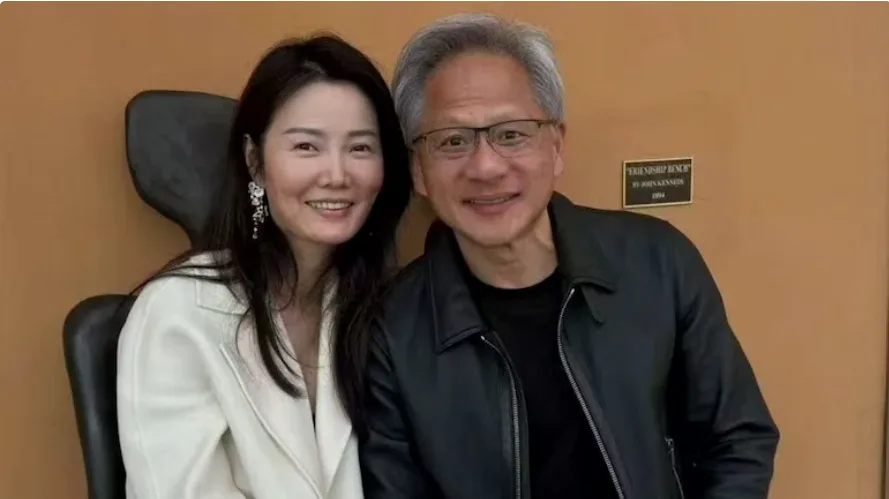
Nvidia CEO Jensen Huang has resigned from his position, marking a major leadership change at the world’s leading artificial intelligence chipmaker. The company’s board has appointed Chief Financial Officer Colette Kress as interim CEO while it begins the process of finding a permanent successor.

The development comes amid controversy surrounding reports of Huang’s alleged extramarital relationships, including one involving a Chinese businesswoman suspected by US authorities of having links to espionage activities.

Huang’s departure comes after more than three decades at the helm of Nvidia, the company he co-founded in 1993. His leadership helped transform the business from a graphics chip manufacturer into a dominant supplier of processors powering the global artificial intelligence industry.

Colette Kress appointed interim Nvidia CEO

Following Huang’s resignation, Nvidia’s board appointed Colette Kress as interim chief executive officer.

Kress, who has served as Nvidia’s executive vice president and CFO since September 2013, will continue to hold the finance portfolio alongside her interim leadership responsibilities until a permanent successor is appointed.

Before joining Nvidia, she spent nearly 25 years working in finance roles at major technology companies, including Cisco and Microsoft.

The board has said it will consider both internal and external candidates as part of its search for a permanent CEO.

Nvidia has also appointed Harvey C. Jones as the company’s first-ever chairman of the board.

Affair controversy surrounding Jensen Huang

Huang’s resignation follows a series of reports about alleged extramarital relationships that have raised questions about his position at the company.

One of the controversies involves Alice Huang, a Chinese businesswoman whom US intelligence agencies reportedly suspect of involvement in facilitating shipments of Nvidia chips to Chinese companies.

Another report alleged that Huang had a relationship with Kimberly Powell, Nvidia’s vice president of healthcare, who reportedly worked under him.

Huang had earlier acknowledged being unfaithful to his wife in a message to Nvidia employees, taking responsibility for his actions and apologising to his family and colleagues.

The company’s board had also initiated an independent investigation into whether Huang had been targeted as part of a foreign intelligence operation.

Jensen Huang’s departure marks a major change for Nvidia

Huang co-founded Nvidia in 1993 alongside Curtis Priem and Chris Malachowsky. Under his leadership, the company evolved from a graphics processing unit manufacturer primarily associated with gaming into a central player in the global AI industry.

Nvidia’s processors have become critical to companies developing and operating artificial intelligence systems, making the company one of the most influential businesses in the technology sector.

His departure also comes at a crucial time for Nvidia, with investors closely watching the company’s leadership transition and its ability to maintain its position in the rapidly expanding AI market.

Continue Reading

Latest world news

India, Canada discuss trade pact to boost bilateral commerce

India and Canada discussed advancing negotiations on a proposed Comprehensive Economic Partnership Agreement aimed at expanding trade, investment and market access between the two countries.

Published

on

India canada trade pacts

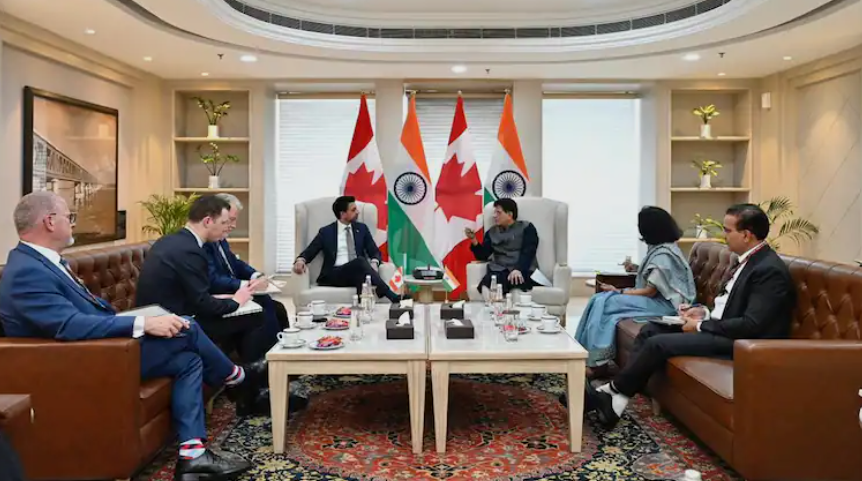
India and Canada discussed advancing negotiations on a proposed trade agreement as the two countries seek to strengthen their economic and commercial ties.

Commerce and Industry Minister Piyush Goyal met Canada’s Minister of International Trade Maninder Sidhu, who is leading a Canadian delegation to India. The discussions focused on advancing negotiations for the proposed India-Canada Comprehensive Economic Partnership Agreement (CEPA).

The proposed pact is aimed at creating greater market access and opening up new opportunities for trade and investment between the two countries.

India-Canada CEPA talks

Both sides discussed the importance of a balanced and mutually beneficial agreement that can make use of the complementary strengths of the two economies.

The discussions also focused on deepening commercial engagement and creating new opportunities for businesses in both countries.

Goyal said the two sides reaffirmed their commitment to taking the India-Canada economic partnership to a higher level, with CEPA serving as a catalyst for deeper commercial engagement.

India and Canada are working towards concluding the CEPA negotiations by the end of 2026.

India-Canada trade

The proposed CEPA is aimed at improving market access and creating opportunities across sectors while strengthening the broader economic relationship between India and Canada.

The agreement is expected to provide greater opportunities for businesses in both countries and support deeper trade and investment ties.

Continue Reading

Trending

© Copyright 2022 APNLIVE.com