English हिन्दी
Connect with us

Latest Politics News

Israel election exit polls show Netanyahu and rival blocs in deadlock

Israel’s general election has produced no clear winner in exit polls, with Prime Minister Benjamin Netanyahu’s bloc and the opposition led by Gadi Eisenkot both falling short of a parliamentary majority.

Published

on

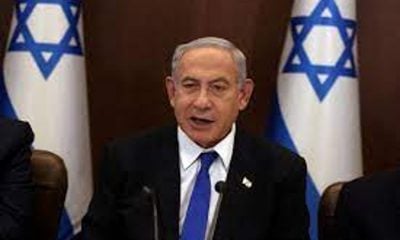
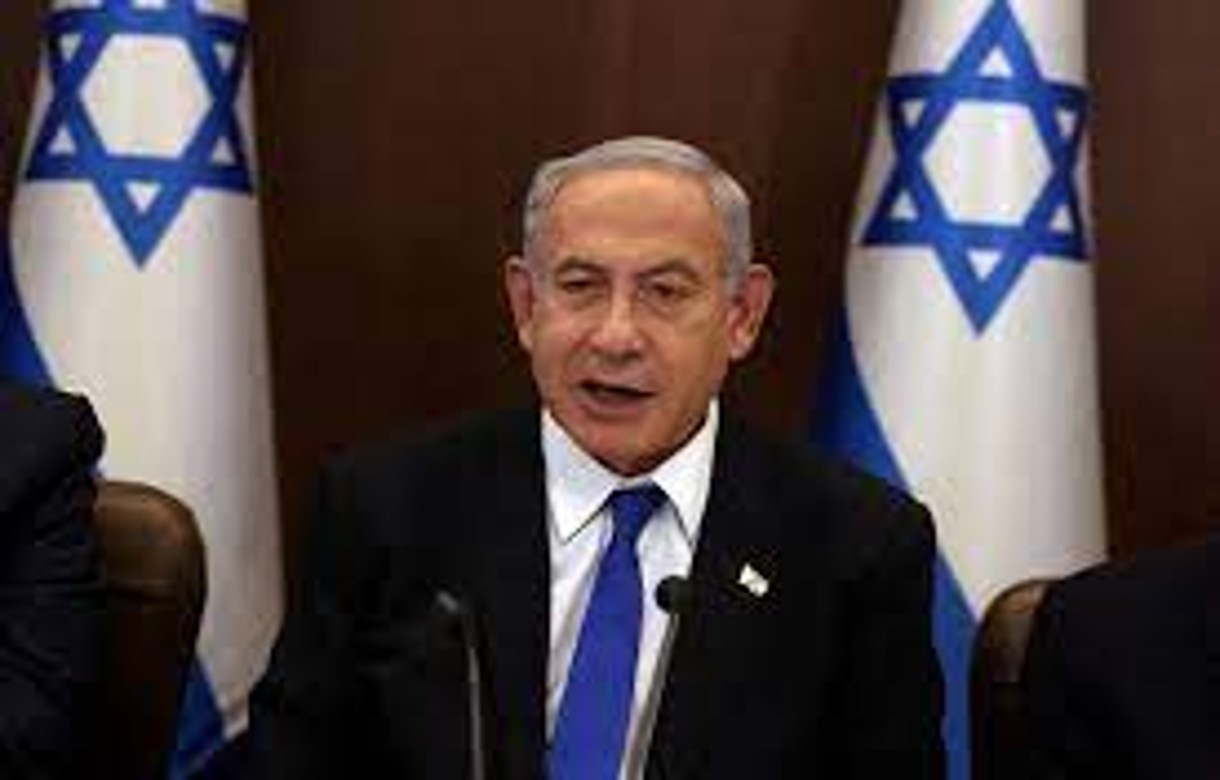
PM Benjamin Netanyahu

Israel’s general election has produced no clear winner, with exit polls indicating that Prime Minister Benjamin Netanyahu’s governing bloc and the opposition led by former military chief Gadi Eisenkot are both short of the numbers required to form a majority government.

Projections released by Israeli broadcasters Kan 11 and Channel 13 put the two rival blocs at 51 seats each in the 120-member Knesset, Israel’s parliament. Arab parties are projected to win around 18 seats, potentially making them important to efforts to form the next government.

A majority requires 61 seats, leaving both sides facing uncertainty over whether they can secure sufficient support to govern. The exit poll figures also differ between broadcasters, highlighting that the final outcome remains unsettled.

Netanyahu and Eisenkot face a difficult path to government

The projections point to a closely contested election, with neither Netanyahu’s coalition nor Eisenkot’s opposition bloc demonstrating a clear route to a parliamentary majority.

The Channel 12 exit poll presented a slightly different picture, placing Netanyahu’s bloc at 50 seats and Eisenkot’s bloc at 52. Other projections showed the two sides level, underscoring the differences between the broadcasters’ estimates.

Netanyahu’s political future will depend on the final seat count and the negotiations that follow. Even if one bloc performs better than projected, it would still need sufficient parliamentary backing to form a government.

The results could lead to an extended period of political uncertainty as parties explore possible alliances. If neither side can assemble a viable coalition, another election could become a possibility.

Arab parties could influence coalition negotiations

Arab parties are projected to win approximately 18 seats, giving them potential influence in the post-election negotiations.

One possible route for Eisenkot’s camp would involve cooperation with Arab-led parties. However, such an arrangement could face political obstacles and risk alienating other opposition groups.

The extent to which these parties can influence the next government will depend on the final results and the willingness of rival political factions to negotiate.

Final results remain uncertain

The exit polls are preliminary estimates and may differ from the official results. The final seat distribution will determine which political leader has the strongest opportunity to form a governing coalition.

The election has therefore left Israel facing uncertainty over its next government, with both major blocs short of the majority required to govern independently.

Until the final count and coalition discussions clarify the numbers, Netanyahu’s return to power and the opposition’s ability to replace his government remain unresolved.

India News

Rahul Gandhi shares Shiva-Parvati image after BJP mocks Papa’s lap remark

Rahul Gandhi responded to BJP criticism of his remarks about Sonia and Rajiv Gandhi by sharing an image of Lord Shiva and Goddess Parvati and speaking about love and belonging.
Published

on

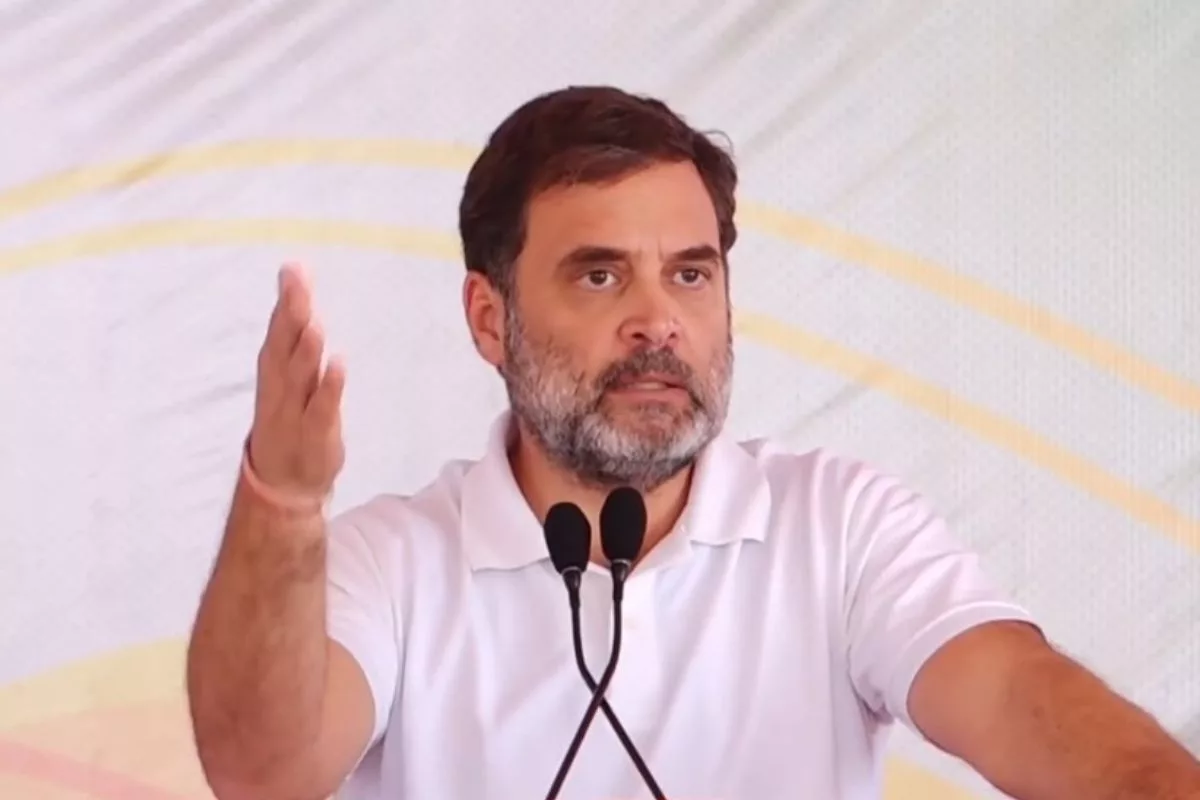
Rahul-Gandhi

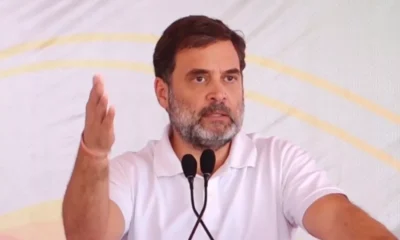
Congress leader and Leader of Opposition in the Lok Sabha Rahul Gandhi on Tuesday responded to criticism from the BJP over his remarks about the relationship between his parents, Sonia Gandhi and former Prime Minister Rajiv Gandhi.

Rahul Gandhi shared an image depicting Lord Shiva and Goddess Parvati in an affectionate embrace and wrote about love, saying that fear, anger and hatred prevent BJP and RSS supporters from experiencing and expressing it.

He said it was his duty, as a “true Hindu”, to help free people from what he described as a “web” of fear, anger and hatred. He ended the post with the words “Satyam Shivam Sundaram.”

What Rahul Gandhi said in his post

In his post on X, Rahul Gandhi said that fear, anger and hatred had created a barrier in the hearts of BJP and RSS supporters.

He said this prevented them from experiencing and expressing love and added that he wanted them to experience the “beauty and joy of love and belonging”.

The post came a day after Rahul Gandhi spoke at the launch of Sonia Gandhi’s memoir, Belonging: A Journey of Love, in New Delhi.

BJP targets Rahul Gandhi over Sonia-Rajiv anecdote

At the memoir launch on Monday, Rahul Gandhi spoke about the affection between his parents and recalled that his mother would sit on his father’s lap during family meals.

He said he had assumed this was normal while growing up and was surprised when he visited friends’ homes and found that their parents did not behave similarly.

Rahul also told his mother that Rajiv Gandhi had loved her and that he was proud of her.

The remarks drew criticism from BJP leaders, including Assam Chief Minister Himanta Biswa Sarma.

Sarma took a swipe at Rahul Gandhi while addressing Sonia Gandhi and said Rahul’s comments had caused embarrassment on the occasion of her memoir launch.

Himanta Sarma reacts to Shiva-Parvati post

Rahul Gandhi’s subsequent Shiva-Parvati post also drew a response from Himanta Biswa Sarma.

Sarma criticised the use of the image and said portraying mortals as Shiva and Parvati was not devotion. He argued that no human being could be equated with God.

The exchange has turned Rahul Gandhi’s personal recollection about his parents at Sonia Gandhi’s memoir launch into a fresh political dispute between the Congress and BJP.

Continue Reading

India News

UP Chief Electoral Officer responds to CM Yogi Adityanath claim of 1.27 crore Hindu voters missing from rolls

Uttar Pradesh Chief Electoral Officer responds to CM Yogi Adityanath’s claim that 1.27 crore Hindu voters are missing from the electoral rolls.
Published

on

Yogi Adityanath

Uttar Pradesh Chief Electoral Officer Navdeep Rinwa has responded to Chief Minister Yogi Adityanath’s claim that 1.27 crore Hindu voters are missing from the state’s electoral rolls amid the Special Intensive Revision (SIR).

The CEO’s response centres on the fact that electoral rolls do not contain information about an elector’s religion. This means the official voter database does not provide a religion-wise count of voters.

What did Yogi Adityanath claim?

Yogi Adityanath had raised concerns over the number of voters allegedly missing from the electoral rolls during a discussion on the ongoing revision exercise in Uttar Pradesh.

The Chief Minister claimed that around 1.27 crore Hindu voters were missing from the rolls. He also raised questions over the gap between the state’s population and the number of voters currently reflected in the electoral database.

Yogi urged BJP workers and other party functionaries to coordinate with Booth Level Officers (BLOs) and work to ensure that eligible voters are included in the electoral rolls.

UP CEO’s response

Responding to the claim, UP Chief Electoral Officer Navdeep Rinwa said electoral rolls contain details of electors but do not record their religion.

As a result, the Election Commission’s voter database does not have a separate category showing how many Hindu voters are present or missing from the electoral rolls.

The clarification is significant because the figure cited by Yogi specifically refers to Hindu voters, while the electoral-roll data itself is not maintained on the basis of religion.

The issue comes amid UP’s SIR

The exchange comes amid the Special Intensive Revision of electoral rolls in Uttar Pradesh ahead of the 2027 Assembly election.

The revision process has become a major political issue in the state, with parties raising concerns over names being removed or excluded from voter lists and the Election Commission maintaining that the exercise is aimed at ensuring accurate electoral rolls.

The controversy over the 1.27 crore figure is therefore separate from the broader question of whether eligible voters’ names have been left out of the electoral rolls.

Why the CEO’s clarification matters

The UP CEO’s response does not amount to an assessment of whether the 1.27 crore figure is correct or incorrect. Instead, it points to a limitation in the electoral-roll data: voter lists do not identify electors by religion.

Therefore, a religion-specific figure for missing voters cannot be established from the electoral-roll database simply by looking at the official voter records.

The dispute over Yogi’s claim is likely to remain part of the wider political debate surrounding the voter-list revision in Uttar Pradesh ahead of the 2027 Assembly election.

Continue Reading

India News

Akhilesh Yadav’s Yamuna dig after BJP’s Mathura temple challenge

Akhilesh Yadav responded to Keshav Prasad Maurya’s Mathura challenge by sarcastically advising BJP leaders to take a dip in the Yamuna and arrange a doctor if anyone fell ill.

Published

on

Samajwadi Party chief Akhilesh Yadav took a sarcastic swipe at the BJP after Uttar Pradesh Deputy Chief Minister Keshav Prasad Maurya challenged him to visit Mathura and participate in the proposed kar seva for a grand Krishna temple.

The exchange came as senior BJP leaders gathered in Mathura for a two-day brainstorming meeting ahead of the 2027 Uttar Pradesh Assembly election.

Asked about the BJP’s meeting in the temple town, Akhilesh Yadav suggested that those attending should begin their programme by taking a dip in the Yamuna and performing aachman with its water.

He added sarcastically that if anyone fell ill, they should arrange for a good doctor.

Yadav’s remarks were seen as a dig at the BJP over the condition and pollution of the Yamuna.

Keshav Maurya’s Mathura challenge to Akhilesh Yadav

Maurya had challenged Akhilesh Yadav to come to Mathura and participate in kar seva for the proposed Krishna Janmabhoomi temple.

Speaking after the first session of the BJP meeting, Maurya said the party had already achieved its objective in Ayodhya and that Mathura was next.

He also said that if Akhilesh Yadav was a true Krishna devotee, he should participate in the kar seva and offered to join him.

Maurya’s remarks came as the BJP held its two-day Chintan Shivir in Mathura, with 54 senior party leaders, including leaders from western Uttar Pradesh, attending the meeting.

Chief Minister Yogi Adityanath and Uttar Pradesh BJP president Pankaj Chaudhary were among those present.

BJP’s Mathura push ahead of UP polls

The Mathura meeting has put the Krishna Janmabhoomi issue in focus ahead of the Uttar Pradesh Assembly election.

Maurya said a grand temple would be built at Lord Krishna’s birthplace along the lines of the Ram Temple in Ayodhya. His remarks added a clear political dimension to the BJP’s Mathura meeting.

The BJP’s challenge to Akhilesh also followed his announcement of a proposed visit to the Ram Temple in Ayodhya on December 12 with his wife and MP Dimple Yadav. He has also indicated that he would visit Vrindavan.

Mathura is part of western Uttar Pradesh, where the BJP has remained strong in the last two Assembly elections. The region is also gaining political importance with the entry of the Asaduddin Owaisi-Chandrashekhar Azad alliance, which is seeking support among Muslim and Dalit voters.

Continue Reading

Trending

© Copyright 2022 APNLIVE.com