
Latest world news
Israel intercepts Flotilla boats off Gaza coast


The Israel Navy has, once again, intercepted the flotilla boat Al Awda on Sunday after it disobeyed commands to stop sailing toward the Gaza Strip, facing siege for years causing food and medicine shortage.
According to the Jerusalem Post, “The Freedom Flotilla Coalition calls on the Norwegian Government, the national governments of those aboard Al Awda and the Freedom [Flotilla], other national governments, and relevant international organizations to act immediately,” said Torstein Dahle of Ship to Gaza Norway, part of the Freedom Flotilla Coalition.
Read More: Supporting Israel: US more isolated on Palestine at UNSC
 He further said, “The international community must assume its responsibilities and demand that Israeli authorities ensure the safety of those on board, the speedy delivery of our gifts to the Palestinian people in Gaza, an end to the illegal blockade of Gaza, and to stop impeding our legal right of innocent passage to Gaza to deliver our gift of much-needed medical supplies.”
#FreedomFlotilla boat carrying medical supplies for #Gaza hijacked by Israeli forces. Please contact your governments & demand #FreePassage #FreedomOfMovement for #AlAwda with her cargo of solidarity & hope for a Just Future for #Palestinehttps://t.co/Dv7lDa2nSZ #CountdowntoGaza pic.twitter.com/HlHhnKO7jy
— Freedom Flotilla (@GazaFFlotilla) July 29, 2018
On Monday morning, the official @GazaFFlotilla handle posted the following message.
Israeli forces attack #FreedomFlotilla near Gaza’s shore https://t.co/ejEc5lUUaX pic.twitter.com/Hl2bnR2kQa
— Freedom Flotilla (@GazaFFlotilla) July 30, 2018
Earlier they tweeted
.@rogerwaters #SOSjustfuture4Palestine Thanks for your support for the #FreedomFlotilla to #Gaza . Today, communications were cut to our lead boat ‘Al Awda’ (The Return) and the boat was attacked in international waters and hijacked. Take action here: https://t.co/oKWb89g1Jl pic.twitter.com/EcIrE3XtH9
— Freedom Flotilla (@GazaFFlotilla) July 29, 2018
The boat, carrying aid and €13,000 worth of medical supplies, was expected to reach Gaza Sunday evening but, according to activists, the Israel Navy intercepted Al Awda (“The Return”) less than 60 nautical miles from the blockaded coastal enclave.
The former fishing boat was sailing under a Norwegian flag and took off from Italy with 22 activists on board, including Israeli activist Yonatan Shapira.
Read More: India supports sovereign and independent Palestine
Other activists came from other countries including Australia, Canada, France, Germany, Israel, Malaysia, New Zealand, Norway, Spain, Sweden, UK and the United States.
Israeli Ynet news reports that Shapirahas said, “Our goal is to lift the blockade over Gaza. When a civilian group is fighting against a bigger body like a state, it has to develop creative ideas to succeed, and I’d be happy to hear such ideas from people.”
Following Al Awda was a Swedish- flagged yacht called Freedom Italy, with 36 activists from 15 different countries, said Zaher Birawi, head of the International Committee for Breaking the Siege of Gaza based in London.
Read More: Palestine to ask India to replace US as sole mediator in negotiations with Israel, says official
Birawi also heads the “International Coordination Committee for the Great Return March.” He was designated by Israel’s Justice Ministry in 2013 as being a member of, what they call a terrorist organization, the Hamas Headquarters in Europe.
The two ships have taken about two months to reach the coast of Gaza, after setting sail from Scandinavia and stopping along the way at several port cities in Europe.
Read More: PLO Central Council: Palestine to revoke Israel’s recognition
They are part of the wider Freedom Flotilla, consisting of several boats with pro-Palestinian activists aboard who regularly attempt to break the blockade around Gaza, administered by Hamas, a pro-Iranian resistance group.
During last four years of the Flotilla campaign, most boats have been stopped by the Israeli Navy several miles away from Gaza coast and then towed to the Ashdod Port, where activists are detained, questioned and then deported from Israel.
In 2010, Israel raided six civilian ships of the “Gaza Freedom Flotilla” in international waters in the Mediterranean sea, killing nine activists. Three of six flotilla ships, organized by the Free Gaza Movement and the Turkish Foundation for Human Rights and Freedoms and Humanitarian Relief were carrying humanitarian aid and construction materials, with the intention of breaking Israeli blockade of Gaza strip.
The ongoing Gaza strip blockade; including land, air, and sea, was imposed by Israel and Egypt since 2007. One year after the 2005 disengagement from the Gaza Strip by Israel, Hamas won the Palestinian legislative election in 2006. However, the first democratically government of Palestine was not recognised by US and Israel.








Latest world news
Netanyahu dismisses death rumours in video with US envoy, says I’m alive
Israel PM Benjamin Netanyahu has denied viral claims about his death, appearing in a video with US envoy Mike Huckabee and mocking online conspiracy theories.


Latest world news
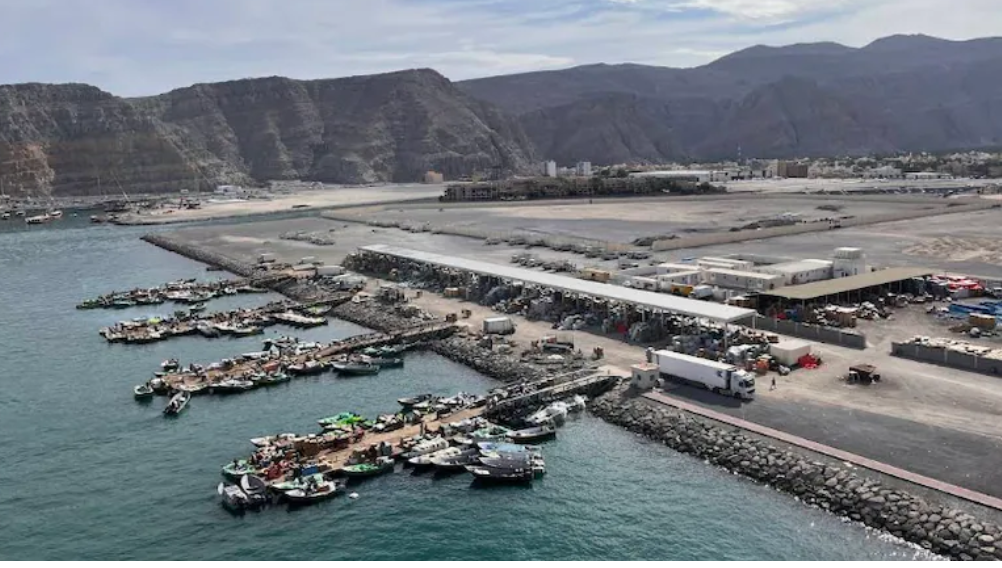
US strikes Iranian missile sites near Hormuz with 5,000-pound bunker buster bombs
US forces hit Iranian missile positions near the Strait of Hormuz using deep penetrator bombs to counter threats to global shipping.
Latest world news
Top US counterterrorism official resigns over Iran war, cites conscience
Joseph Kent steps down as US counterterrorism chief, questioning the justification for the Iran war and citing moral concerns.


US strikes Iranian missile sites near Hormuz with 5,000-pound bunker buster bombs

Netanyahu dismisses death rumours in video with US envoy, says I’m alive

Centre mandates 60% free seat allocation on flights, caps selection fees

Delhi Palam fire leaves 6 dead, massive rescue operation underway

Centre pushes states to cut levies to boost PNG adoption

Delhi-NCR sees second spell of rain and thunderstorms in four days
Centre pushes states to cut levies to boost PNG adoption

BJP seals Assam seat-sharing pact, Modi to hold 3 rallies in April
Delhi Palam fire leaves 6 dead, massive rescue operation underway
Centre mandates 60% free seat allocation on flights, caps selection fees

Afghan Men Try To Hang With The Jet Engine Of The Aircraft in Kabul- Afghanistan News – Kabul News
Trending Top 10 News: 10000 Crore Fine on Flipkart, Apple to Launch Unique Feature, Hdfc Bank Job Ad

Trending Top 10 News: Nokia 6310, Apple sales, Bachpan ka Pyar Video Kid, Dainik Bhaskar IT Raid

Trending Top 10 News: Canada bans Indian flights, Rain in Delhi NCR, AIMIM Twitter hacked, Raj Kundra case

Trending Top 10 News: Shein India, Apple New Service, Pocket Oxygen, Oppo Launched New Phone
-
 Latest world news12 hours ago
US strikes Iranian missile sites near Hormuz with 5,000-pound bunker buster bombs
-
 Latest world news12 hours ago
Netanyahu dismisses death rumours in video with US envoy, says I’m alive
-
 India News11 hours ago
Centre mandates 60% free seat allocation on flights, caps selection fees
-
 India News10 hours ago
Delhi Palam fire leaves 6 dead, massive rescue operation underway
-
 India News3 hours ago
Centre pushes states to cut levies to boost PNG adoption
-
 India News3 hours ago
BJP seals Assam seat-sharing pact, Modi to hold 3 rallies in April
-
 India News45 mins ago
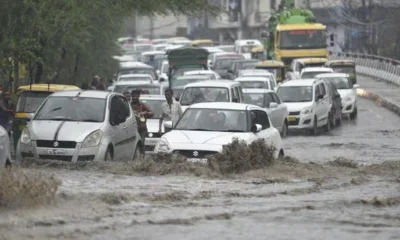
Delhi-NCR sees second spell of rain and thunderstorms in four days
