English हिन्दी
Connect with us

Latest world news

Myanmar-Thailand earthquake leaves over 1,000 dead, massive destruction across region

Published

on

Delhi earthquake tremors force residents to evacuate buildings

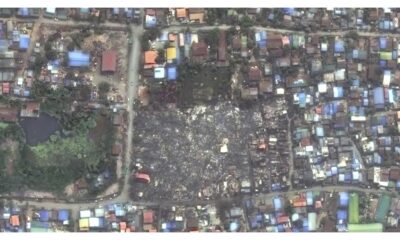
A powerful 7.7-magnitude earthquake struck Myanmar on Friday, shaking parts of Southeast Asia and eastern India and causing large-scale devastation. The earthquake and its subsequent aftershocks, including one measuring 6.7 in magnitude, have resulted in the deaths of over 1,000 people and injured more than 2,376 across Myanmar and Thailand.

Myanmar reels under quake amid ongoing civil conflict

The epicentre was located northwest of Sagaing in Myanmar and struck at a shallow depth of 10 km around 12:50 pm local time. The tremors were felt as far as eastern India, China, Cambodia, and Laos. Myanmar’s military administration confirmed that over 1,000 people have died due to the quake, with rescue and relief efforts severely hampered by the country’s ongoing civil war and under-resourced emergency response system.

In Mandalay, major buildings collapsed, leaving behind mangled steel and concrete. Emergency workers and local residents continue to dig through rubble to rescue those trapped. The Ava Bridge, an almost century-old structure across the Irrawaddy River, also gave way during the tremors.

Thailand reports deaths, dozens feared trapped

In neighbouring Thailand, the quake led to the collapse of a high-rise building under construction near Bangkok’s Chatuchak market, killing 10 people. Authorities fear up to 100 workers may still be trapped in the debris.

Thai Prime Minister Paetongtarn Shinawatra convened an emergency meeting to assess the situation and coordinate rescue efforts.

International aid begins to arrive

Myanmar’s military junta made a rare appeal for global assistance, with General Min Aung Hlaing calling on “any country, any organisation” for support. India promptly responded, with Prime Minister Narendra Modi expressing concern and offering help.

India’s Air Force dispatched 15 tonnes of relief supplies — including blankets, tents, medicines, and water purifiers — from the Hindon air base to Myanmar.

The United States and European Union also pledged support. US President Donald Trump confirmed communication with Myanmar officials and assured assistance, calling the situation “a real bad one.”

The Indian embassy in Thailand reported no casualties among Indian nationals and advised caution amid aftershocks.

Latest world news

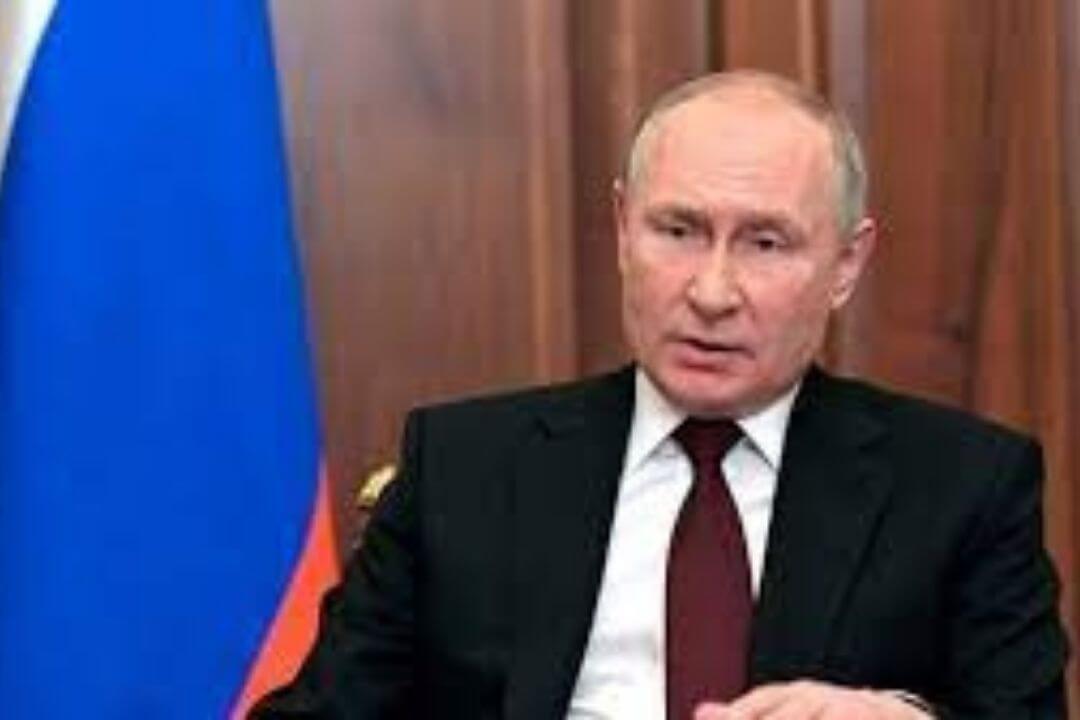
Putin praises PM Modi, says he has very good ideas on Ukraine war

Russian President Vladimir Putin has praised Prime Minister Narendra Modi for repeatedly raising the need to end the Ukraine war, describing his ideas for a settlement as “very good”.

Published

on

Vladimir Putin

Russian President Vladimir Putin has praised Prime Minister Narendra Modi for his continued efforts to promote an end to the Russia-Ukraine war, saying the Indian leader has “very good ideas” aimed at finding a mutually acceptable solution.

Putin made the remarks while addressing the Valdai Forum of international Russia experts, where he spoke about Modi’s repeated efforts to raise the issue of ending the conflict.

What Putin said about PM Modi

Putin said Modi has continued to raise the question of ending the conflict despite the close and friendly relationship between India and Russia.

According to Putin, the Prime Minister has shown a strong interest in finding a solution and has ideas that could help identify mutually acceptable ways to resolve the conflict.

Putin also described India’s position as neutral while highlighting Modi’s interest in bringing the conflict to an end through peaceful means.

The Russian president expressed gratitude to Modi for his ideas and his desire to see the conflict end as soon as possible.

Modi’s position on the Ukraine war

PM Modi has repeatedly called for dialogue and diplomacy to resolve conflicts, including during his meetings with Putin.

During their September 11 meeting in New Delhi, Modi reiterated that dialogue and diplomacy are the way forward for resolving conflicts.

Modi had also told Putin during their meeting on the sidelines of the Shanghai Cooperation Organisation summit in Bishkek that the situation needed to move from “endless war” towards an end to the war.

India has consistently maintained that conflicts should be addressed through dialogue and peaceful means, with Modi previously describing the present period as not being an era of war.

The Russia-Ukraine conflict began in February 2022 and has continued despite repeated diplomatic efforts to seek a resolution.

Continue Reading

Latest world news

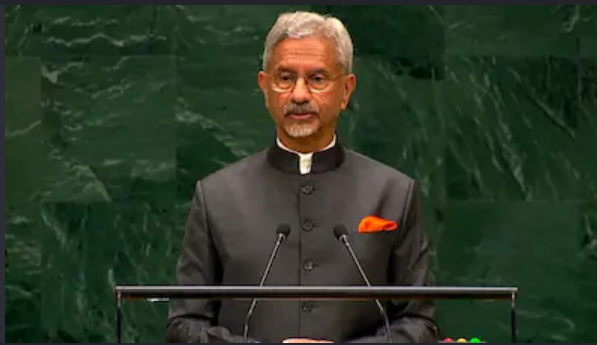
S Jaishankar calls Pakistan a “serial practitioner of terrorism” at UN

S Jaishankar criticised Pakistan at the UN General Assembly, referring to a “serial practitioner of terrorism” and warning against attempts to normalise terrorism.
Published

on

S Jayshankar

External Affairs Minister S Jaishankar criticised Pakistan during his address to the 81st session of the United Nations General Assembly in New York, saying that a “serial practitioner of terrorism” had misrepresented facts and that arguments were being made to normalise terrorism. 

Jaishankar’s remarks came a day after Pakistan Prime Minister Shehbaz Sharif addressed the UN General Assembly and spoke about the 2025 military confrontation between India and Pakistan.

Jaishankar’s message to Pakistan

Referring to Pakistan without naming it directly in that remark, Jaishankar said a “serial practitioner of terrorism” had misrepresented facts before the UN General Assembly.

He said arguments were being made to normalise terrorism and claim immunity from its consequences, adding that such an approach would not stand. 

Jaishankar reiterated India’s position that the country would exercise its right to defend itself against terrorism.

He also said that friendship and goodwill could not coexist with terrorism and that understandings based on such circumstances would naturally be called into question. 

“It is for the perpetrator of terrorism to mend its ways,” Jaishankar said.

India stresses zero tolerance on terrorism

Jaishankar described terrorism as a persistent threat to peace and called for governments involved in cross-border terrorism to be held accountable.

He also stressed that there should be no dilution in India’s zero-tolerance approach towards terrorism and particularly called for greater attention to its financial aspects.

His remarks came a day after Pakistan Prime Minister Shehbaz Sharif referred to the 2025 India-Pakistan military confrontation during his UN General Assembly address. 

Jaishankar backs two-state solution for Palestine

During his UN address, Jaishankar also spoke about the situation in West Asia and said India was prepared to contribute to efforts addressing food and energy security amid continuing tensions and violence.

On the Palestine issue, he reiterated India’s longstanding support for a two-state solution.

Jaishankar said India was also contributing humanitarian assistance and relief efforts for the Palestinian people.

He also warned about continuing threats and pressures around the world and stressed the need for greater stability, security and predictability.

Continue Reading

Latest world news

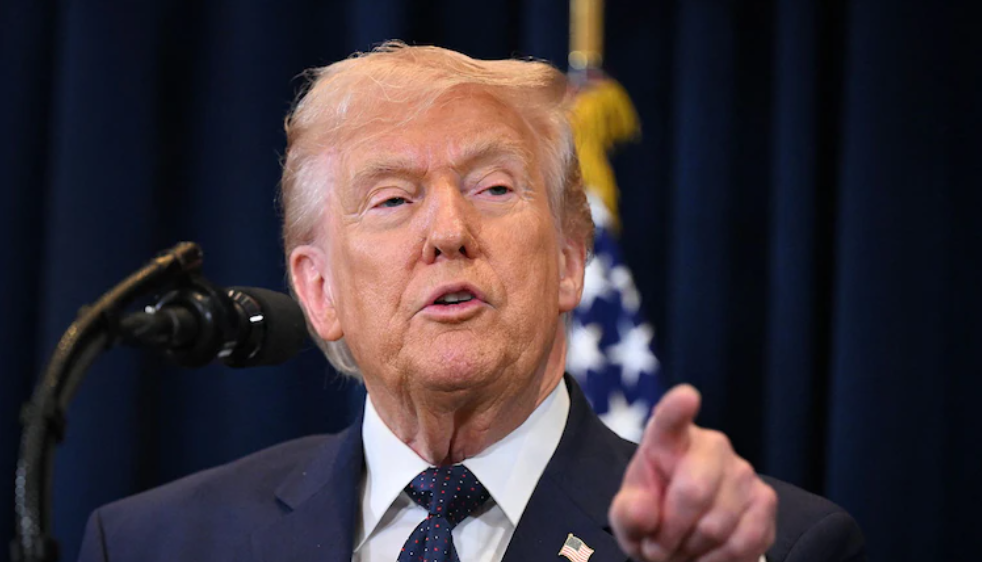
Trump rejects Iran’s 7-day peace plan, says deal can come after US polls

US President Donald Trump rejected Iran’s seven-day proposal to end hostilities and indicated that a deal could come after the US midterm elections in November.
Published

on

Donald Trump

US President Donald Trump has rejected Iran’s latest proposal aimed at bringing an end to the ongoing conflict, while indicating that a possible agreement could come after the US midterm elections in November.

Iran had proposed a seven-day framework under which hostilities could be brought to an end, the Strait of Hormuz could be reopened and negotiations over its nuclear programme could resume.

Iran’s seven-day proposal

Iranian Foreign Minister Abbas Araghchi said Tehran had put forward the proposal through intermediaries. Under the plan, the Strait of Hormuz would be reopened by the end of the seventh day if specified conditions were met, while broader nuclear discussions would restart.

The proposal was based largely on an earlier understanding reached between Washington and Tehran, but Iran sought to implement the latest framework much faster. The earlier arrangement had provided a longer period for negotiations.

The Strait of Hormuz is a strategically important waterway for global energy shipments, making its reopening a key element of any effort to ease the wider conflict.

Trump points to US midterm elections

Trump, speaking at the United Nations, showed no indication that he was ready to immediately resume negotiations on the terms proposed by Tehran.

He called for the economic isolation of Iran and said he believed a deal could be reached after the US midterm elections in November. Trump also said Iran was waiting to see how he performed in the midterm elections.

The remarks came as Iranian officials signalled that they remained open to diplomacy and described the UN General Assembly as an opportunity to revive negotiations.

Nuclear talks remain part of Iran proposal

Iran’s latest plan links the easing of hostilities with the resumption of negotiations over its nuclear programme.

The proposal follows the collapse of an earlier US-Iran arrangement. According to reporting on the latest proposal, the new framework is intended to compress the timeline for implementing commitments that had previously been discussed by the two sides.

For now, Trump’s remarks indicate that Washington is not accepting Tehran’s seven-day framework as presented, while Iran continues to put diplomacy and negotiations forward as part of its proposal.

Continue Reading

Trending

© Copyright 2022 APNLIVE.com