English हिन्दी
Connect with us

Latest world news

If Pakistan is a ‘naya Pakistan’ it should show this in ‘naya action’, says India

Published

on

MEA spokesperson Raveesh Kumar

[vc_row][vc_column][vc_column_text]

If Pakistan claims to be a ‘naya Pakistan’ with ‘nayi soch‘, it should demonstrate ‘naya action‘ against terrorism, said Ministry of External Affairs spokesperson Raveesh Kumar today (Saturday, March 9).

Speaking at a media briefing, Kumar said that Pakistan has not shown any serious intent to address legitimate concerns of India and the international community.

“If Pakistan claims to be naya Pak with nayi soch, it should demonstration naya action against terrorist groups and terror infrastructure on its soil and end cross-border terrorism,” he said.

Kumar said, “It is regrettable that Pakistan still continues to deny Jaish-e-Mohammed’s claim of taking ownership of Pulwama attack. Pakistan Foreign Minister said they (JeM) have not claimed responsibility of the attack. Is there some confusion or is Pakistan defending the Jaishe-Mohammed?” He added that widespread terrorist camps in Pakistan is public knowledge.

Referring to a report on Jaish-e-Mohammad (JeM) chief Masood Azhar’s presence in Islamabad, Kumar said, “We are seeing the same script that has been played out earlier, after the terror attack on Parliament in 2001, the Mumbai attack in 2008 and the attack on Pathankot airbase in 2016. Pakistan claims to proscribe groups and individuals, but this is confined only to paper. Terror groups and individuals continue their activities without hindrance.”

He added that Pakistan should explain why it continues to deny that its F-16 fighter aircraft was shot down, adding that it has asked the United States to explain whether the use of F-16 by the country was in according to terms and conditions of the sale.

The MEA spokesperson also said that since the deadly Pulwama attack, which killed 40 CRPF soldiers on February 14, international communities have stood with India in condemning Pakistan and urging the country to take action against terrorists.

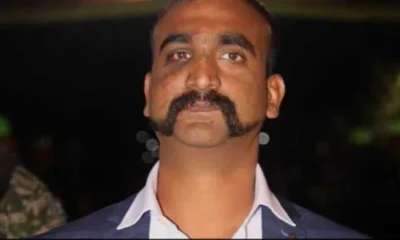
Kumar recalled that the US, UK and France have moved a fresh petition in the United Nation Security Council (UNSC) to designate Azhar as a global terrorist. He also said India’s non-military strike on JeM camp in Pakistan’s Balakot achieved its desired objective and demonstrated the country’s firm resolve to take decisive action against cross border terrorism. He also said that an Indian Air Force MiG-21 Bison, piloted by Wing Commander Abhinandan Varthaman, shot down a Pakistan Air Force F-16 fighter aircraft and there were eyewitness accounts and electronic evidence for it.

“Our non-military counter-terrorism strike achieved the desired objective. It has demonstrated our firm resolve to take decisive action against cross border terrorism. We have also shared evidence in the form of parts of AMRAAM missile which were recovered from the site and are only carried by F-16 aircraft of the PAF. Only one aircraft was lost by India during Pakistan’s unsuccessful attempt at targeting Indian military installations,” he said.

Kumar added, “Pakistan is spreading false propaganda. If Pakistan has a video recording of shooting down two aircraft of the Indian Air force, why it has not shared the evidence with the international media?”

On Pakistan using F-16s, he said, “We have asked USA to also examine whether the use of F-16 against India is in accordance with terms and conditions of sale.”

Asked about the implications of Kartarpur Corridor talks on bilateral relations, Kumar said, “I would like to make it clear that holding Kartarpur Corridor talks doesn’t mean the resumption of bilateral ties. This is related to the emotions and sentiments of our Indian citizens of Sikh faith.”

The MEA spokesperson’s statement comes a day after Pakistan Prime Minister Imran Khan said that his government would not allow the country’s soil to be used for terror purposes against any country.

Paksitan’s behaviour towards terrorist groups ‘contradictory’, ‘self-defeating’: US Congressman

Meanwhile, an influential US Congressman has warned that Pakistan will continue to slide into international isolation if it does not take actions against terrorist groups operating from its soil, reported NDTV.

Ami Bera, the Chairman of the House Foreign Affairs Subcommittee on Oversight and Investigations, also urged China to play a constructive role by lifting its veto over UNSC resolution to designate Pakistan-based terror group Jaish-e-Mohammed (JeM) chief Masood Azhar a global terrorist.

“The United States’ Congress stands ready to support Pakistan should Prime Minister (Imran) Khan begin cracking down on terrorist groups in earnest. This will only help improve his nation’s economy,” Bera, an Indian-American, wrote in an op-ed published in News India Times on Friday

In his op-ed titled “’Time For Pakistan to Chart a New Course”, the four-time Indian-American Congressman from California said that Pakistan did the right thing by releasing Indian Air Force pilot Abhinandan Varthaman.

“This de-escalated a dangerous situation but more has to be done. Prime Minister Imran Khan should use this opportunity to reset his country’s relationship with the world and chart a new course for Pakistan,” he said.

This starts with cracking down on the JeM and other terrorist groups such as Lashkar-e-Taiba (LeT) which was responsible for the 2008 Mumbai terror attack, Bera said, adding that unfortunately, Pakistan’s behaviour towards these terrorist groups have been contradictory and self-defeating.

“Pakistan has banned many of these terrorist groups, including adding two more groups on March 5, but at the same time tolerates them operating within its own borders. This has caused the international community to isolate Pakistan,” Bera said.

Pakistan says it has taken some initial steps, like detaining 44 suspected terrorists, including the brother of JeM chief Masood Azhar. It is, however, unclear whether this “preventative detention”, as Pakistan described it, will lead to criminal prosecutions and justice being served, he said.

“Prime Minister (Imran) Khan can help Pakistan earn enormous goodwill by tracking down and bringing to justice Masood Azhar, whom the Pakistani Foreign Minister indicated was alive, with his whereabouts known. They can further that goodwill by dismantling the terrorist networks that operate within Pakistan.

“These actions are in accordance with UN Security Council Resolution 1267. If Imran Khan does not take these steps, I’m afraid Pakistan will continue to slide into international isolation, which will only serve to increase economic hardship on the Pakistani people,” the Congressman said.

“I also call on China to play a constructive role in India and Pakistan relations. A good first step would be for China to cease blocking a UN Security Council resolution designating Masood Azhar a global terrorist,” said Bera.[/vc_column_text][/vc_column][/vc_row]

Latest world news

US hits Iranian missile sites and mine-laying boats near Strait of Hormuz amid peace talks

US Central Command executed targeted strikes against Iranian missile launch sites and mine-laying vessels near Bandar Abbas, testing a fragile ceasefire even as high-stakes diplomatic talks continue in the region.

Published

on

In a major development testing a fragile regional ceasefire, the United States military carried out targeted strikes in southern Iran on Monday. The operation hit missile launch sites and vessels allegedly attempting to lay mines near the crucial Strait of Hormuz, according to statements from the US Central Command (CENTCOM).

The military action took place near Bandar Abbas, a prominent southern port city hosting a primary Iranian naval base. Media reporting indicated that explosions were heard across multiple coastal locations, including Sirik and Jask.

Focus on ‘Self-Defense’ Amid Active Ceasefire

A spokesperson for CENTCOM, Capt. Tim Hawkins, confirmed that the engagement was defensive in nature. “US forces conducted self-defense strikes in southern Iran today to protect our troops from threats posed by Iranian forces,” Hawkins stated. He noted that the operational targets included active missile launch sites alongside Iranian boats attempting to emplace naval mines. Despite the escalation, CENTCOM emphasized that it continues to exercise restraint under the parameters of the ongoing ceasefire brokered in early April.

According to media reports, the tactical response was triggered when two Islamic Revolution Guard Corps (IRGC) boats were detected laying mines in the strategic shipping lane. Additionally, a surface-to-air missile site reportedly targeted American warplanes, prompting US forces to neutralize both the vessels and the missile installations. Media channels citing local updates indicated that four individuals were killed in the strikes, though the complete casualty figures remain unverified.

Diplomatic Dialogue Continues in Parallel

The strikes coincide with a critical phase of diplomatic negotiations aimed at extending the current truce. Top Iranian negotiators traveled to Qatar early this week to discuss a potential 60-day extension of the ceasefire, alongside provisions to keep the Strait of Hormuz fully operational for global trade.

US officials maintain that the military action does not signal an end to the active truce. A senior administration source clarified that the specific operations are “over for now”. US Secretary of State Marco Rubio, speaking from India, affirmed that diplomatic channels remain open and active. Rubio stated that intensive language discussions regarding the initial documents are ongoing, reiterating that the opening of the strategic strait remains a core objective.

Meanwhile, political leaders in Washington have separately reiterated demands for the secured disposal or international transfer of enriched uranium stockpiles as part of any comprehensive long-term agreement.

Continue Reading

Latest world news

US announces new America First visa schedule to boost business ties with India

During his official state visit to New Delhi, US Secretary of State Marco Rubio announced a new America First visa schedule designed to prioritise business professionals and boost bilateral trade efficiency.

Published

on

In a significant development aimed at strengthening bilateral cooperation, the United States has introduced a new “America First” visa schedule. The policy update was announced by US Secretary of State Marco Rubio during his official four-day visit to India. The new schedule is specifically designed to prioritise business professionals who play a key role in fortifying trade and strategic connections between the two nations.

Speaking about the initiative in the national capital, the top US diplomat clarified that the updated framework will not only assist visa applicants but will also significantly enhance operational productivity for the diplomatic mission. “We’re introducing a new America First visa schedule that prioritises business professionals that strengthen these ties,” Rubio stated. He added that the arrangement will enable the system to process applications with greater accuracy, speed, and efficiency.

Focus on Indo-Pacific and regional security

The announcement coincided with high-level discussions between the visiting diplomat and Prime Minister Narendra Modi. The meeting, which lasted for over an hour, covered critical areas of bilateral interest, including trade, energy security, strategic technologies, defence cooperation, and the ongoing West Asia crisis. During the interaction, Rubio extended an official invitation from US President Donald Trump for PM Modi to visit the White House in the near future.

The US Secretary of State described the partnership between New Delhi and Washington as a foundational cornerstone of America’s overarching strategy for the Indo-Pacific region. Highlighting India’s central role, Rubio noted that his very first official engagement upon taking office was a meeting of the Quadrilateral Security Dialogue (Quad), emphasizing that hosting the upcoming foreign ministers’ meeting in India acts as a tangible sign of the deep commitment to this framework.

Clarification on immigration rules

Addressing separate concerns regarding recent shifts in American immigration policies, the top diplomat provided a crucial clarification regarding the new guidelines for permanent residency. Media reports had previously highlighted anxieties surrounding a newly instituted rule that requires many legal immigrants to exit the US and apply for green cards from their home countries.

Rubio explicitly stated to the media that these measures are universal regulatory updates rather than policy shifts targeted at any specific nation. He reassured that the rule is applicable globally to all international applicants and is not directed exclusively at Indian citizens.

The visit marks Rubio’s first official trip to India since assuming office. His comprehensive itinerary began in Kolkata and includes a scheduled bilateral dialogue with External Affairs Minister S Jaishankar, alongside participation in the Quad Foreign Ministers’ meeting alongside international counterparts.

Continue Reading

Latest world news

High stakes for India-US ties as top American diplomat arrives for critical bilateral talks

US Secretary of State Marco Rubio has arrived in India for a vital four-day tour aimed at reinforcing bilateral cooperation amid global energy challenges, tariff disputes, and shifting regional security dynamics.

Published

on

US Secretary of State Marco Rubio has landed in Kolkata to begin an extensive four-day diplomatic tour of India, marking his first official visit to the country since assuming office. The visit arrives at a crucial juncture for bilateral relations, with both nations navigating complex global alignments, ongoing geopolitical conflicts, and shifting economic dynamics.

Upon arriving in Kolkata, the top diplomat broke a 14-year hiatus since a US secretary of state last traveled to the eastern metropolis. Accompanied by his wife, Jeanette D. Rubio, and the US Ambassador to India, Sergio Gor, the delegation commenced the tour by visiting the Missionaries of Charity headquarters, the historical Mother House founded by Mother Teresa.

Strategic energy shifts and regional security on the table

The four-day visit carries elevated strategic significance as the two major global partners look to address critical geopolitical challenges. Headlining the bilateral talks are the economic ripples of the US-Iran war, particularly its immediate fallout on international energy security and commercial trade routes.

The energy partnership remains a key focal point. While India continues to procure substantial volumes of discounted Russian crude oil to stabilize its domestic market, Washington is actively attempting to diversify New Delhi’s energy footprint by expanding American liquefied natural gas (LNG) and crude exports to the South Asian nation. Additionally, the leadership will deliberate on resolving recent trade frictions arising from tariffs imposed by the US on Indian goods.

Strengthening the bilateral roadmap

Prior to starting his engagements, the Secretary of State underlined the strength of the relationship, characterizing India as an invaluable partner and ally with whom Washington shares a robust and extensive collaborative framework. The visit serves as a top-level initiative to stabilize and accelerate the momentum of the bilateral partnership, backed by the personal investment of both US President Donald Trump and Prime Minister Narendra Modi.

The diplomat’s packed itinerary includes a high-profile meeting with Prime Minister Narendra Modi, followed by extensive bilateral discussions with External Affairs Minister S. Jaishankar. Furthermore, the tour will culminate in New Delhi, where the Secretary of State will join regional partners for a meeting of the Quad foreign ministers. Cultural stops in Agra and Jaipur are also scheduled during the four-day visit.

Continue Reading

Trending

© Copyright 2022 APNLIVE.com