English हिन्दी
Connect with us

Latest world news

PM Modi to begin two-day Israel visit, defence and trade in focus

PM Narendra Modi begins a two-day Israel visit aimed at strengthening defence cooperation, trade ties and upgrading bilateral relations to a special strategic partnership.

Published

on

pm modi

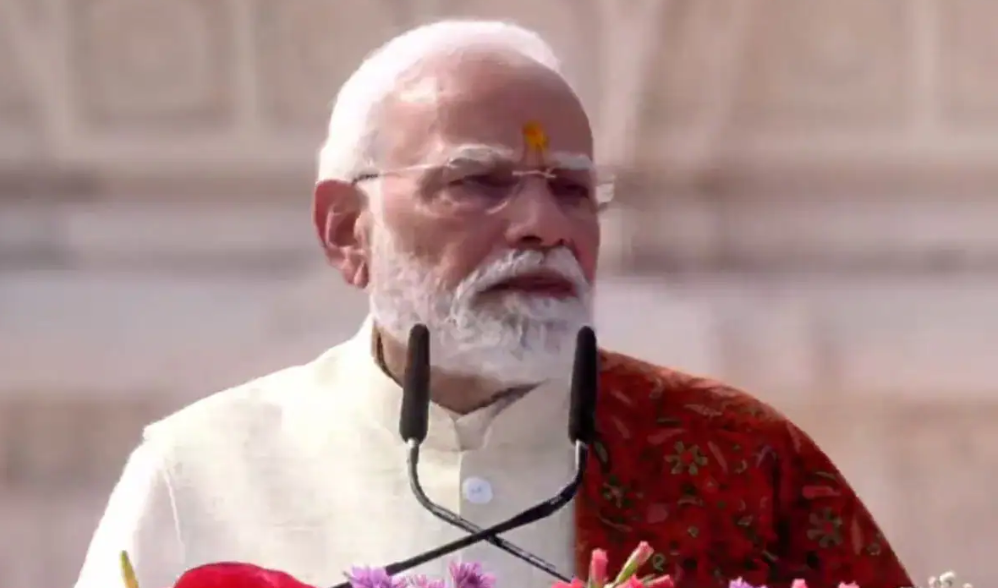
Prime Minister Narendra Modi will begin a two-day visit to Israel on Wednesday, with defence and trade cooperation high on the agenda. The visit is expected to further deepen the growing strategic engagement between the two countries.

During the trip, India and Israel are set to upgrade their relationship to a “special strategic partnership”, marking a significant step beyond the strategic partnership established in July 2017 during the Prime Minister’s first visit to the country.

Sources indicated that the new framework would enable expanded collaboration, including joint development of advanced defence systems and a strengthened understanding to support each other during times of need.

High-level engagements in Jerusalem

Mr Modi will be received at the airport by Israeli Prime Minister Benjamin Netanyahu and his wife Sara. The two leaders are scheduled to hold a one-on-one meeting shortly after his arrival.

In Jerusalem, the Prime Minister will interact with members of the Indian community before addressing lawmakers at the Knesset, a distinction reserved for select global leaders.

On Wednesday evening, he will attend a technology exhibition showcasing Israel’s advancements, with leading Israeli industry executives expected to be present. Mr Netanyahu will also host a private dinner in his honour.

Tribute at Yad Vashem and presidential meeting

On Thursday morning, Mr Modi will pay tribute to Holocaust victims at Yad Vashem. He is also scheduled to meet Israeli President Isaac Herzog during the visit.

Defence cooperation and technology partnerships

Several memorandums of understanding are expected to be signed, including a widely discussed agreement in the defence sector. As part of the proposed arrangement, a secrecy mechanism will reportedly be created to facilitate expanded cooperation in previously restricted areas.

Local media reports have indicated discussions around air defence systems and possible integration of India into Israel’s laser-based air defence system, Or Eitan.

Beyond defence, the two nations are expected to formalise cooperation in emerging and disruptive technologies such as artificial intelligence, quantum research and cybersecurity.

In New Delhi, the Ministry of External Affairs said the visit would reaffirm the deep-rooted strategic partnership and provide an opportunity to align efforts in addressing shared challenges while strengthening collaboration between the two democracies.

Defence cooperation has been a cornerstone of India-Israel relations, with Israel supplying a range of military platforms and weapon systems to India in recent years. Bilateral ties have also expanded in fields including scientific research, innovation and cybersecurity.

Latest world news

India-France ties reach new heights, says PM Modi at Paris temple event

PM Modi said India-France relations have reached new heights while highlighting strategic cooperation and cultural ties at the Paris temple inauguration.

Published

on

Prime Minister Narendra Modi on Sunday said India-France relations have reached “new heights”, highlighting the expanding strategic partnership between the two countries and their longstanding cultural connections.

Addressing the inauguration of the BAPS Swaminarayan Hindu Mandir in Paris virtually, PM Modi said India and France are moving ahead with new momentum across several areas, including technology, artificial intelligence, defence, space and climate action.

He said the India-France strategic partnership is particularly significant because it is built on longstanding cultural and political ties.

PM Modi highlights India-France strategic partnership

PM Modi said India and France are building a Special Global Strategic Partnership with French President Emmanuel Macron.

He also noted that 2026 is being celebrated as the India-France Year of Innovation, underlining the importance of innovation and cooperation between the two countries.

The prime minister said there is also growing discussion around joint venture possibilities between India and France.

He linked the relationship between the two nations not only to contemporary strategic cooperation but also to historical and cultural connections.

Paris temple seen as symbol of cultural ties

PM Modi described the newly inaugurated Swaminarayan temple in Paris as another milestone in India’s cultural relationship with France.

He said the temple is “Made in India” and “Built in France”, noting that several of its stones were carved in India before being incorporated with modern engineering in France.

According to PM Modi, the temple could become a symbol of cooperation and opportunity between the two countries and help strengthen cultural ties across Europe.

He said the values associated with Indian culture could reach people across Europe through the temple.

PM Modi recalls historical India-France connections

The prime minister also referred to the contribution of Indian soldiers in France and said their sacrifices remain remembered.

He highlighted the role of French scholars in popularising Sanskrit and referred to French writer Romain Rolland’s writings on Ramakrishna Paramahamsa and Swami Vivekananda.

PM Modi also mentioned the spiritual journey of ‘The Mother’ from Paris to the Sri Aurobindo Ashram in Puducherry, as well as Srila Prabhupada Swami’s visit to France and the subsequent development of spiritual connections through ISKCON.

He said yoga has also emerged as an important bridge between people in India and France, pointing to its popularity in France.

Temple to support service activities

PM Modi said Swaminarayan temples have traditionally served as centres of service alongside devotion.

He said he had been informed that the newly inaugurated Paris temple would also become a centre for service projects.

The prime minister expressed confidence that the temple would enrich France’s diversity while giving further momentum to cultural relations between India and France.

PM Modi also said he would try to visit the temple in the future whenever his schedule permits.

Continue Reading

Latest world news

S Jaishankar defends Russian oil imports, says it won’t end Ukraine war

S Jaishankar defended India’s Russian oil purchases, saying the Ukraine war can only be resolved through dialogue, diplomacy and negotiations

Published

on

External Affairs Minister S Jaishankar has defended India’s continued purchase of Russian crude oil, saying that stopping the trade would not bring an end to the war in Ukraine.

Speaking to the media during his official visit to Kyiv, Jaishankar said the conflict, now in its fifth year, can only be resolved through dialogue, diplomacy and negotiations. He was responding to questions about Western pressure on India to reduce its purchases of Russian energy.

“This conflict, which is today in its fifth year, will not be solved because somebody is buying or not buying oil or alumina or minerals or metals or fertiliser,” Jaishankar said. He added that dialogue, diplomacy and negotiation were the way to resolve the conflict.

Jaishankar stresses India’s energy security

Jaishankar also highlighted the challenge of ensuring energy security for India’s 1.4 billion people amid difficult global energy conditions.

He said India respects Ukraine’s perspective on the issue but expects other countries to respect New Delhi’s position as well.

India imports around 88 per cent of its crude oil requirement from overseas. According to the report, about one-third of those imports currently come from Russia.

Western pressure over Russian oil

Jaishankar’s comments came amid continued pressure from Western countries over India’s purchases of Russian crude.

The United States and the United Kingdom have backed the argument that restricting Russia’s energy revenues could reduce the funds available to support its military operations in Ukraine.

Last month, the US Senate passed a bipartisan bill that could allow President Donald Trump to impose tariffs of up to 100 per cent on goods from countries, including India and China, that continue importing Russian oil and gas.

India remains a major buyer of Russian crude

Russia has remained India’s largest source of crude oil despite pressure from Washington. However, Indian imports of Russian crude declined in August after reaching record levels in June and July.

Before Russia’s invasion of Ukraine in February 2022, Russian crude accounted for only around 0.2 per cent of India’s crude imports. After Western countries moved away from Russian oil following the invasion, India emerged as the largest buyer of discounted Russian crude.

India imported around 2.1 million barrels of Russian crude per day in August, according to data cited in the report. That represented more than 40 per cent of India’s crude imports, down from around 2.6 million barrels per day in June and July.

Russian exporters increasingly rely on Asian buyers

Russia has also become more dependent on Asian markets after European sanctions disrupted its traditional energy trade.

Countries such as India and China have emerged as important buyers of Russian crude. Continued demand from Indian refiners has helped Russian exporters maintain significant volumes despite restrictions affecting Western shipping, insurance and financial services.

Jaishankar, meanwhile, maintained that the Ukraine conflict requires a diplomatic solution rather than an attempt to resolve it through decisions by individual countries over oil purchases.

Continue Reading

Latest world news

Nepal seeks climate compensation from India, China and US for deadly floods

Nepal has sought climate compensation from India, China and the US after a devastating flash flood killed more than 1,100 people and left nearly 4,500 missing.

Published

on

Nepal has sought climate-related compensation from India, China and the United States following the devastating flash floods that struck the country last week.

Nepal Foreign Minister Shishir Khanal said the country wants its diplomatic approach to move beyond conventional disaster aid towards what he described as justice and compensation. He argued that major greenhouse gas emitters have a responsibility towards vulnerable countries facing severe climate-related losses.

The flash flood struck the Bhotekoshi River basin on August 26 after a high-altitude glacial collapse along the Tibet-Nepal border. The disaster sent water, rocks and debris downstream, affecting villages across at least three districts.

More than 1,100 bodies have been recovered, while nearly 4,500 people remain missing, according to the report.

Nepal seeks accountability from major emitters

Khanal said Nepal’s contribution to global greenhouse gas emissions is “virtually negligible”, yet the country is facing severe consequences associated with global warming, including glacier melt and extreme mountain disasters.

He said Nepal considers the response to such climate-related losses a matter of “legal and moral liability” rather than charity.

According to Khanal, Nepal intends to raise the issue at international forums and seek compensation for climate-related losses suffered by vulnerable countries.

He also highlighted the importance of Himalayan glaciers for South Asia’s water security, saying their disappearance could have consequences for billions of people dependent on rivers including the Ganges and Trishuli.

Nepal’s finance ministry has also sent a formal climate compensation claim letter to its international partners, Khanal said.

India has backed climate equity

India has consistently highlighted the principle of climate equity and pointed to its relatively low per capita greenhouse gas emissions.

New Delhi has argued that climate responsibilities should consider countries’ historical emissions, development requirements and respective capacities. India has also supported efforts to address loss and damage suffered by vulnerable developing countries.

India maintains that developed nations should provide financial resources to countries dealing with the effects of climate change.

Nepal approaches loss and damage fund

Nepal has formally approached the board of the Fund for Responding to Loss and Damage for urgent financial assistance following the August 26 flash flood.

The fund was established at COP27 in 2022 and operationalised at COP28.

A letter jointly signed by Nepal’s Finance Minister Swarnim Wagle and Forests and Agriculture Minister Geeta Chaudhary sought an urgent response to the disaster, citing extensive loss of life, displacement and destruction of homes and critical infrastructure.

The letter said the full extent of the economic and non-economic losses was yet to be determined, but preliminary information indicated that the impact had exceeded Nepal’s immediate response capacity.

Continue Reading

Trending

© Copyright 2022 APNLIVE.com