English हिन्दी
Connect with us

Latest world news

Putin Expels Over 750 US Diplomats against New Sanctions

Published

on

Vladimir Putin

[vc_row][vc_column][vc_column_text]Washington says it was uncalled-for act

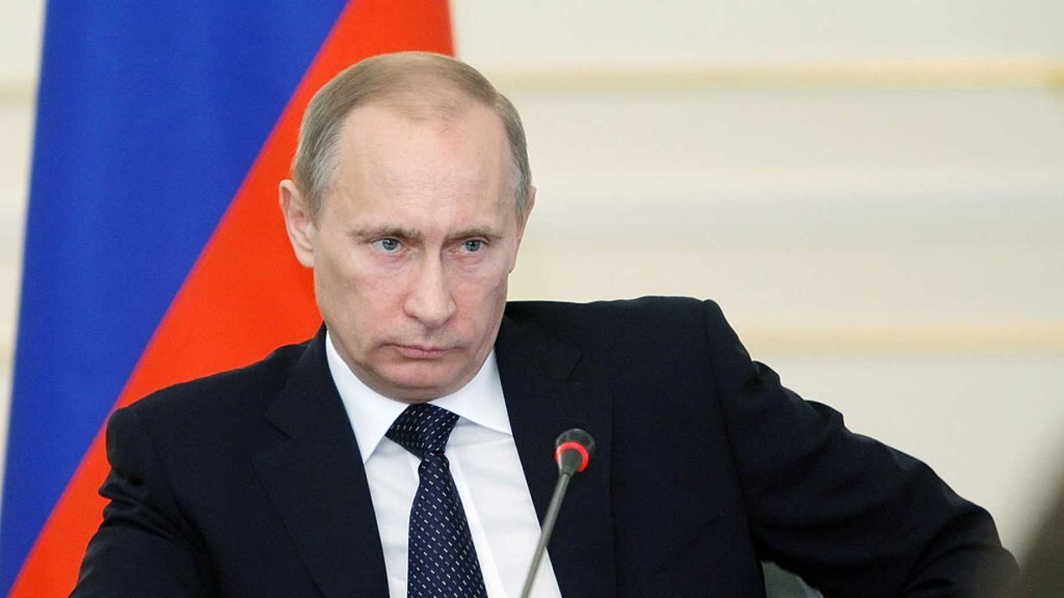
In the largest diplomats’ expulsion witnessed in the modern history, Russian President Vladimir Putin has announced that 755 staff must leave US diplomatic missions from his country. This came after US Congress passed a bill imposing sanctions against Russia, Iran and North Korea.

President Putin, while speaking in an exclusive interview with Rossiya 1 TV channel, on Sunday said that more than 750 American diplomats will have to leave Russia as a result of Washington’s own policies.

The American side has made a move which, it is important to note, hasn’t been provoked by anything, to worsen Russian-US relations. [It includes] unlawful restrictions, attempts to influence other states of the world, including our allies, who are interested in developing and keeping relations with Russia,he said. 

Vladimir Putin, who recently held friendly meetings with Donald Trump during G-20 Summit in Hamburg, Germany, said, We’ve been waiting for quite a long time that maybe something would change for the better, we had hopes that the situation would change. But it looks like it’s not going to change in the near future… I decided that it is time for us to show that we will not leave anything unanswered. 

However Russian President said that there were a number of “important spheres of cooperation” between Moscow and Washington, which he hoped would not suffer because of America’s anti-Russia policies. “Those include the joint fight against terrorism, obligations to nuclear arms control ad space projects rather than economic relations,” he said.

According to RT, an official Russian television network, earlier this week, following the US Congress’ approval of new sanctions against Russia, Iran and North Korea, the Russian Foreign Ministry announced that Moscow told Washington to reduce the number of its diplomatic staff in Russia to 455 people.

This order was aimed to equal the number of Russian diplomats in US by September 1. As of now, it “greatly exceeds” the number of Russia’s embassy staff in the US, the ministry said. Presently more than 1200 US personnel were posted in US missions in Russia.

The US administration expelled 35 Russian diplomats and seized two Russian diplomatic compounds in their territory in December last year, under the Barak Obama administration. The move was reportedly undertaken in response to alleged hacking of the US Democratic Party and Hillary Clinton’s campaign.

The US State department, while reacting to the Russian move, expressed regret arguing it was “uncalled-for act”.  The statement further said, “We are assessing the impact of such a limitation and how we will respond to it.”

The new US sanctions on Russia were overwhelmingly approved by both the houses of Congress, despite objections by President Donald Trump who wants warmer ties between the two countries. Trump had indicated his concerns about a provision in the new bill that limits his ability to lift sanctions – forcing him to consult Congress first.

The US sanctions were in part a response to conclusions by US intelligence agencies that Russia meddled in 2016 presidential elections in favor of Donald Trump and also to further punish Russia for its annexation of Crimea in 2014.

Russia has always denied interfering in the 2016 elections and Donald Trump also insists there was no collusion with Kremlin.

There are reports that some European countries were also angry because the new law imposing sanctions against Russia could penalize European companies for investing in some big Russian oil and gas projects.[/vc_column_text][/vc_column][/vc_row]

Latest world news

H-1B visa renewal delays leave hundreds of Indian workers stranded amid US social media checks

Hundreds of Indian H-1B visa holders remain stranded after US consular interviews were delayed due to enhanced social media screening.

Published

on

visa apply

Hundreds of Indian professionals holding H-1B visas are facing unexpected uncertainty after travelling to India for routine visa renewals, only to find their US consular interviews postponed to next year due to a new social media vetting policy introduced by the US administration

Many of these workers had scheduled appointments between December 15 and 26, a window that coincided with the US holiday season. However, interviews planned for mid to late December have now reportedly been pushed to as late as March, leaving employees unable to return to their jobs in the United States.

Appointments postponed without clarity

Immigration law firms say they are dealing with a large number of affected clients. Some attorneys have described the situation as unprecedented, highlighting the lack of clarity around how long the delays may last. Workers who travelled for personal reasons, including family events, now face the risk of prolonged stays in India while their employment continues overseas.

In one reported case, a US-based professional who returned to India this month had two consular appointments scheduled in December, both of which have since expired. Experts have raised concerns over how long US employers may be willing to wait for employees whose return timelines remain uncertain.

US embassy advisory and vetting policy

Earlier this month, the US Embassy in India issued an advisory stating that applicants who arrive at a consulate on a previously scheduled interview date, after being informed of a reschedule, will not be allowed entry. Applicants have been asked to wait for their new appointment dates.

According to official communication, the delays are linked to enhanced social media screening. The policy requires visa applicants to keep their social media profiles public so authorities can assess whether any applicant poses a risk to national security or public safety. While such scrutiny earlier applied to students and exchange visitors, it has now been extended to H-1B and dependent H-4 visa applicants.

Impact on Indian professionals and tech firms

India accounts for nearly three-fourths of all H-1B visa holders, according to data released earlier this year by US immigration authorities. The current delays therefore have a disproportionate impact on Indian professionals working in the US technology and services sectors.

Some US-based technology companies have reportedly cautioned employees against international travel after learning that visa re-entry processing delays at American embassies and consulates could stretch for several months. Legal advisers have warned that overseas travel at this stage could result in extended stays outside the US.

Growing scrutiny of the H-1B programme

The social media vetting requirement is part of a broader tightening of the H-1B programme under the Donald Trump administration. The skilled worker visa pathway has faced increased scrutiny in recent months, including the imposition of a one-time fee on new H-1B visas. The US has also paused certain immigration applications from select countries following security-related concerns.

For now, affected workers and their employers are left waiting, as uncertainty continues over when regular visa processing timelines will resume.

Continue Reading

Latest world news

Hindu man lynched and set on fire in Bangladesh during anti-India protests

A Hindu man was lynched and set on fire in Bangladesh’s Mymensingh district amid rising anti-India protests after the death of a radical student leader.

Published

on

Hindu man set to fire in Bangladesh

A disturbing incident of mob violence against a minority community has been reported from Bangladesh, where a Hindu man was lynched and his body set on fire amid escalating anti-India protests following the death of a radical student leader.

Mob lynching reported from Mymensingh district

A 30-year-old Hindu man, Dipu Chandra Das, was lynched by a mob in Bhaluka Upazila of Mymensingh district after allegations surfaced that he had insulted Islam. According to media reports, the incident took place on Thursday night at an industrial area where Das was employed.

Das was accused of making derogatory remarks about Islam and Prophet Muhammad during an event organised at his workplace to mark World Arabic Language Day. The allegations spread rapidly within the factory premises and nearby areas, leading to heightened tension.

Eyewitness accounts cited in media reports said Das was assaulted by an angry crowd and died on the spot. After his death, the mob allegedly tied his body to a tree, beat it while raising slogans, and later set it on fire.

Body burnt at multiple locations, traffic disrupted

The violence did not stop there. Reports suggest the mob later moved Das’s body to a nearby bus stand area and again set it ablaze. Subsequently, the body was taken to the Dhaka–Mymensingh highway, where it was burned once more, leading to panic among locals and a temporary disruption of traffic on the busy stretch.

Confirming the incident, the local administration said a person was killed following allegations of insulting the Prophet. Officials added that the body has been taken into police custody and the situation is being monitored.

Interim government condemns violence

The lynching took place against the backdrop of widespread protests across Bangladesh following the death of Sharif Osman Hadi, a prominent leader linked to the July Uprising. The Muhammad Yunus-led interim government strongly condemned the killing, stating that there is no place for such violence in the country.

In an official statement, the government appealed to citizens to reject hatred and violence, stressing that those responsible for the crime would not be spared.

Anti-India sentiment intensifies after Hadi’s death

Tensions have been high in Bangladesh since Hadi’s death, with protests, vandalism and arson reported in several cities. Demonstrators targeted prominent media offices and symbolic locations linked to the country’s political history.

Hadi was known for his sharp criticism of India and the former prime minister, whose government was ousted during last year’s uprising. Groups formed after the political upheaval have been actively mobilising street protests and campaigns that fuel anti-India sentiment, particularly after the former premier went into exile in India.

The lynching of Dipu Chandra Das has further raised concerns over the safety of minority communities amid the ongoing unrest in the country.

Continue Reading

Latest world news

Bangladesh rocked by violent protests after student leader Sharif Osman Hadi’s death, anti-India slogans raised

Bangladesh has witnessed widespread violence and protests following the death of student leader Sharif Osman Hadi, with arson, anti-India slogans and a nationwide security clampdown.

Published

on

Bangladesh

Violent protests erupted across Bangladesh after the death of student leader and political figure Sharif Osman Hadi, triggering fresh instability in the country and a sharp rise in anti-India sentiment. The situation turned volatile in Dhaka and several other cities as thousands of demonstrators poured onto the streets demanding swift action against those responsible for his killing.

Hadi, 32, was shot in the head by masked assailants while launching his election campaign in Dhaka last Friday. He was later airlifted to Singapore for treatment, where he succumbed to his injuries. Known for his polarising views and strong anti-India rhetoric, Hadi had emerged as a prominent face during the 2024 student uprising that led to the ouster of former prime minister Sheikh Hasina.

Fires, arson and tense streets in Dhaka

Soon after news of Hadi’s death broke, protests intensified in the Bangladeshi capital. Several buildings, including those housing leading media organisations, were set on fire, with authorities confirming that staff members were trapped inside during the blaze. Fire services later said the situation was brought under control, while security forces were deployed in large numbers to prevent further violence.

Demonstrators were seen chanting slogans invoking Hadi’s name, vowing to continue protests until those behind the attack were arrested. Multiple areas in Dhaka remained tense late into the night as police and paramilitary units attempted to restore order.

Protests spread, Indian mission targeted in Chittagong

Violence was not limited to the capital. In the port city of Chittagong, protesters gathered outside the Indian Assistant High Commission, raising anti-India slogans amid heightened anger on the streets. Similar unrest was reported from other parts of the country, signalling the widening scale of the crisis.

In Rajshahi, demonstrators torched Bangabandhu Sheikh Mujibur Rahman’s residence and an Awami League office, causing extensive damage. Authorities have not yet released a detailed assessment of losses, but security has been tightened across sensitive locations.

Anti-India sentiment deepens diplomatic strain

The latest unrest comes amid deteriorating ties between India and Bangladesh following Sheikh Hasina’s flight to Delhi. Earlier in the week, protesters under the banner of “July Oikya” marched towards the Indian High Commission in Dhaka, demanding Hasina’s return and raising hostile slogans against India.

India has formally conveyed its concerns to Dhaka over threats to its diplomatic missions and inflammatory statements by Bangladeshi political figures. New Delhi has rejected allegations linking India to the attack on Hadi, calling such claims false and misleading.

Yunus calls for calm, state mourning announced

In a televised address, interim chief Muhammad Yunus described Hadi’s death as an “irreparable loss” to Bangladesh’s political and democratic space. He urged citizens to exercise restraint, warning that continued violence could derail the country’s path towards a credible election.

The interim administration has announced a day of state mourning in Hadi’s honour, with national flags to fly at half-mast and special prayers planned nationwide. Bangladesh has been under an interim government led by Yunus since August 2024, with national elections scheduled for February 12.

India issues advisory for its nationals

Amid the unrest, the Indian High Commission in Dhaka issued an advisory asking Indian nationals in Bangladesh to avoid non-essential travel and limit movement outside their residences. Emergency contact details of Indian missions have been shared for assistance.

Manhunt launched for attackers

Bangladesh police have launched a manhunt for those behind Hadi’s killing, releasing photographs of two suspects and announcing a reward of five million taka for information leading to their arrest. Yunus has described the attack as a premeditated attempt by a powerful network to sabotage the electoral process.

Continue Reading

Trending

© Copyright 2022 APNLIVE.com