English हिन्दी
Connect with us

Latest Politics News

PM Modi asks Stalin where is Tamil pride when sending letter signed off in English

Speaking at the event, he highlighted that Tamil Nadu’s railway budget has surged sevenfold. “Some people just complain unnecessarily,” he said.

Published

on

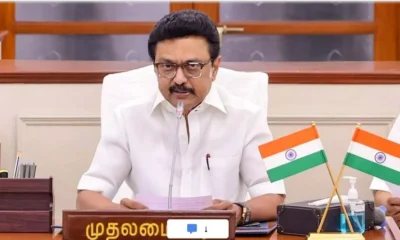
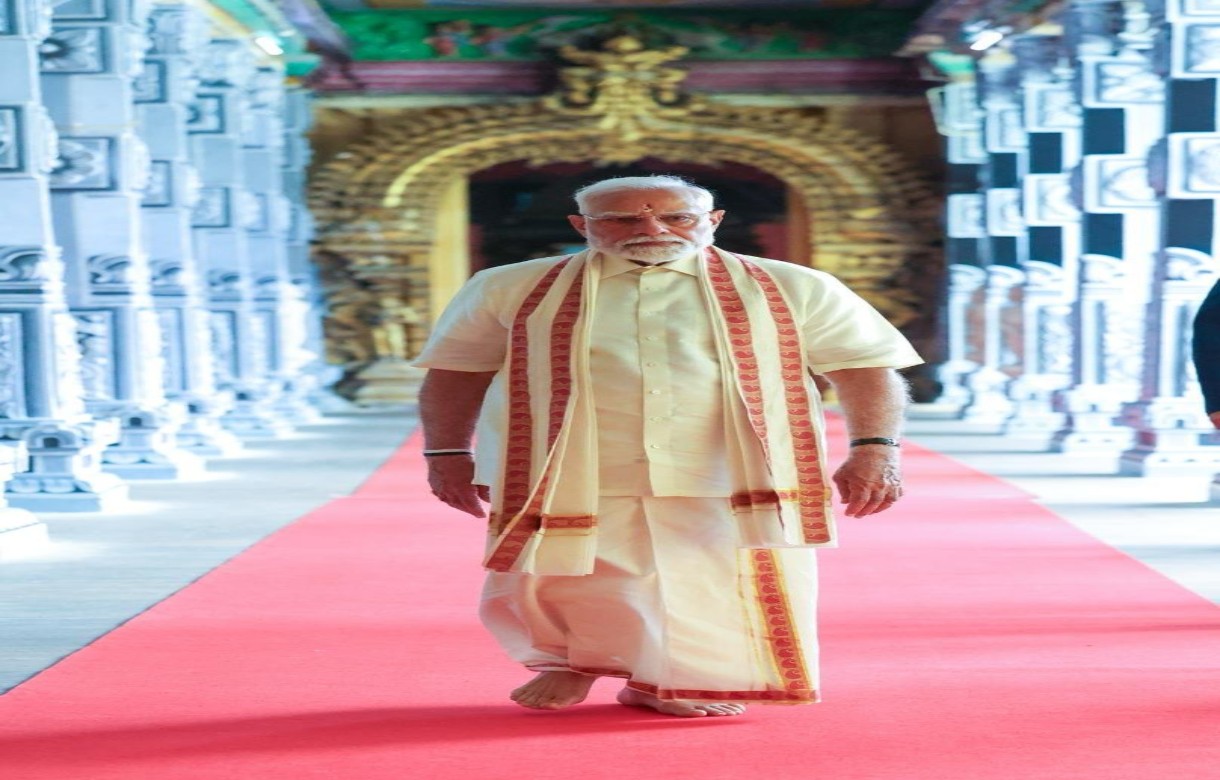
Prime Minister Narendra Modi on Sunday brutally needled Tamil Nadu Chief Minister MK Stalin, asking where was Tamil pride when DMK leaders were sending him letters signed off in the English language instead of Tamil.

Pointing to a discrepancy in Stalin’s actions versus his rhetoric about Tamil pride during a public gathering in Rameshwaram, Modi said, “These leaders from Tamil Nadu boast about their language’s pride, yet their letters to me are always signed in English. Why not use Tamil? Where is their Tamil pride?” This comment alluded to Stalin’s recent correspondence urging the central government to release education funds.

Modi countered claims of insufficient funding, asserting that since 2014, his government has allocated three times more development funds to Tamil Nadu than the previous UPA regime, in which the DMK was a partner.

Speaking at the event, he highlighted that Tamil Nadu’s railway budget has surged sevenfold. “Some people just complain unnecessarily,” he said.
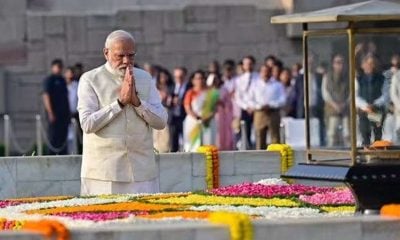
Earlier in the day, Modi inaugurated the first train on the New Pamban Bridge. He also outlined central government initiatives in Tamil Nadu, noting that the railway budget rose from ₹900 crore annually before 2014 to over ₹6,000 crore now.

Additionally, he mentioned that 12 lakh families in Tamil Nadu received sturdy homes, and 1.1 crore families gained tap water connections for the first time, significantly benefiting women.

The exchange reflects ongoing tensions between Tamil Nadu’s DMK-led government and the Centre, particularly over the National Education Policy 2020’s three-language formula.

Stalin has accused the policy of imposing Hindi and eroding linguistic diversity and Tamil heritage, while also claiming the Centre withheld education funds due to the state’s rejection of the NEP.

Following his three-day visit to Sri Lanka, PM Modi, upon arriving in Tamil Nadu, planned to offer prayers at the Ramanathaswamy temple in Rameswaram and lay the foundation for several rail and road projects valued over Rs 8,300 crore in the state.

En route from Sri Lanka, PM Modi captured an aerial view of the Ram Setu, also known as Adams Bridge, and shared it online.

“On the way back from Sri Lanka a short while ago, was blessed to have a Darshan of the Ram Setu. And, as a divine coincidence, it happened at the same time as the Surya Tilak was taking place in Ayodhya. Blessed to have the Darshan of both. Prabhu Shri Ram is a uniting force for all of us. May His blessings always remain upon us,” he posted on X.

India News

MDMK ends nine-year alliance with DMK, keeps options open on joining Vijay-led front

MDMK has formally severed ties with the DMK after nine years, while refraining from immediately joining Chief Minister Joseph Vijay’s alliance.

Published

on

The Marumalarchi Dravida Munnetra Kazhagam (MDMK), led by Vaiko, has formally ended its nine-year association with the Dravida Munnetra Kazhagam (DMK), marking a significant shift in Tamil Nadu’s political landscape. The decision was taken during the party’s general council meeting held on Friday.

MDMK cites attempts to weaken party

In resolutions adopted at the meeting, the MDMK alleged that efforts had been made to weaken the party within the DMK-led alliance, making it difficult to continue the association. The party also claimed there were attempts aimed at facilitating an AIADMK return to power, allegations that were rejected by the DMK.

Although political observers have speculated about the MDMK moving closer to Chief Minister Joseph Vijay’s Tamilaga Vettri Kazhagam (TVK), the party did not formally announce any alliance with the ruling front. Instead, it said decisions regarding future political alignments would be taken at an appropriate time.

Warm remarks for Vijay government fuel speculation

The MDMK’s resolutions welcomed the state government’s functioning under Chief Minister Joseph Vijay and urged it to remain committed to key promises, including ensuring corruption-free governance and safeguarding Tamil Nadu’s interests on issues such as the Mekedatu dam project. These remarks have intensified speculation about a possible future understanding between the two sides.

The development comes amid broader political realignments in Tamil Nadu following the 2026 Assembly elections, with several parties reassessing their alliances in the changed political scenario.

Continue Reading

India News

Fadnavis, Uddhav Thackeray share Mumbai-Nagpur flight amid Maharashtra political developments

Devendra Fadnavis and Uddhav Thackeray shared a Mumbai-Nagpur flight, drawing attention amid ongoing political developments in Maharashtra.

Published

on

Uddhav Thackeray

Maharashtra Chief Minister Devendra Fadnavis and Shiv Sena (UBT) chief Uddhav Thackeray were seen travelling on the same commercial flight from Mumbai to Nagpur, triggering fresh political discussions in the state.

The two leaders, who have remained political rivals in recent years, reportedly exchanged greetings and briefly interacted during the journey. Reacting to the unexpected encounter, Fadnavis remarked that the meeting of the leaders had become the “biggest news of the day”.

Thackeray was accompanied by his son and MLA Aaditya Thackeray, Rajya Sabha MP Sanjay Raut and other senior leaders of the Shiv Sena (UBT). The flight came at a time when Maharashtra politics has witnessed significant developments, including recent defections from the Thackeray-led party.

The shared journey quickly sparked speculation in political circles. However, leaders from the ruling alliance played down the development, describing it as a routine interaction between political opponents rather than an indication of any new political understanding.

While the brief interaction generated considerable attention, no political discussions or meetings beyond customary greetings were officially reported.

Continue Reading

India News

Amit Shah says Centre will amend NDPS Act to tighten crackdown on drug syndicates

Amit Shah said the Centre is relooking the NDPS Act to plug loopholes exploited by narco syndicates and strengthen anti-drug enforcement across India.

Published

on

Union Home Minister Amit Shah on Friday said the Centre is preparing amendments to the Narcotic Drugs and Psychotropic Substances (NDPS) Act to close loopholes allegedly exploited by drug trafficking networks and strengthen India’s anti-narcotics framework.

Addressing the 10th apex-level meeting of the Narco-Coordination Centre (NCORD) in New Delhi, Shah said the government is re-examining the existing law and invited states to submit suggestions for the proposed changes. The amendments are being worked on by the Ministry of Finance to make the legislation more effective in tackling organised drug syndicates.

Centre seeks stronger legal framework against narcotics

Shah stressed the need for a tougher approach towards drug traffickers and peddlers, while advocating a compassionate stance towards victims of addiction. He outlined a three-pronged strategy against drug trafficking — “detect, disrupt and destroy” — and urged all stakeholders to intensify efforts against the narcotics menace.

The Home Minister also asked state governments to share suggestions on strengthening the NDPS Act. Directors General of Police have been asked to forward recommendations to the Ministry of Home Affairs, while Chief Secretaries can submit their inputs to the Department of Revenue under the Ministry of Finance.

Seizures of synthetic drugs rise over past decade

Highlighting the government’s anti-drug campaign, Shah said that between 2004 and 2014, around 26 lakh kilograms of synthetic drugs were seized across the country. In comparison, agencies confiscated approximately 1.18 crore kilograms of synthetic drugs between 2014 and 2026.

He further said the estimated value of drugs seized during 2014-2026 stood at around Rs 1.84 lakh crore, significantly higher than the nearly Rs 40,000 crore worth of narcotics seized during the previous decade. According to Shah, these figures reflect the expanded scale and effectiveness of anti-drug enforcement efforts.

The minister also called for real-time information sharing among states through digital platforms developed by the Narcotics Control Bureau and urged authorities to ensure NCORD meetings deliver measurable outcomes. He unveiled the “Vision Document on Drug Control (2026-2029)”, which aims to provide a roadmap for reducing drug demand, curbing supply and minimising harm caused by substance abuse.

Continue Reading

Trending

© Copyright 2022 APNLIVE.com