English हिन्दी
Connect with us

Latest world news

Russia-Ukraine Conflict: Ukraine President Zelenskyy imposes martial law, know what is it, when it is used | FAQ

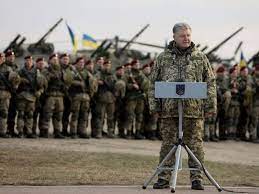
The President of Ukraine Volodymyr Zelenskyy has announced that martial law will be imposed in the country. This order came after Russian President Vladimir Putin declared war on Ukraine on the morning of February 24.

Published

on

Russia-Ukraine Conflict

The President of Ukraine Volodymyr Zelenskyy has announced that martial law will be imposed in the country. This order came after Russian President Vladimir Putin declared war on Ukraine on the morning of February 24.
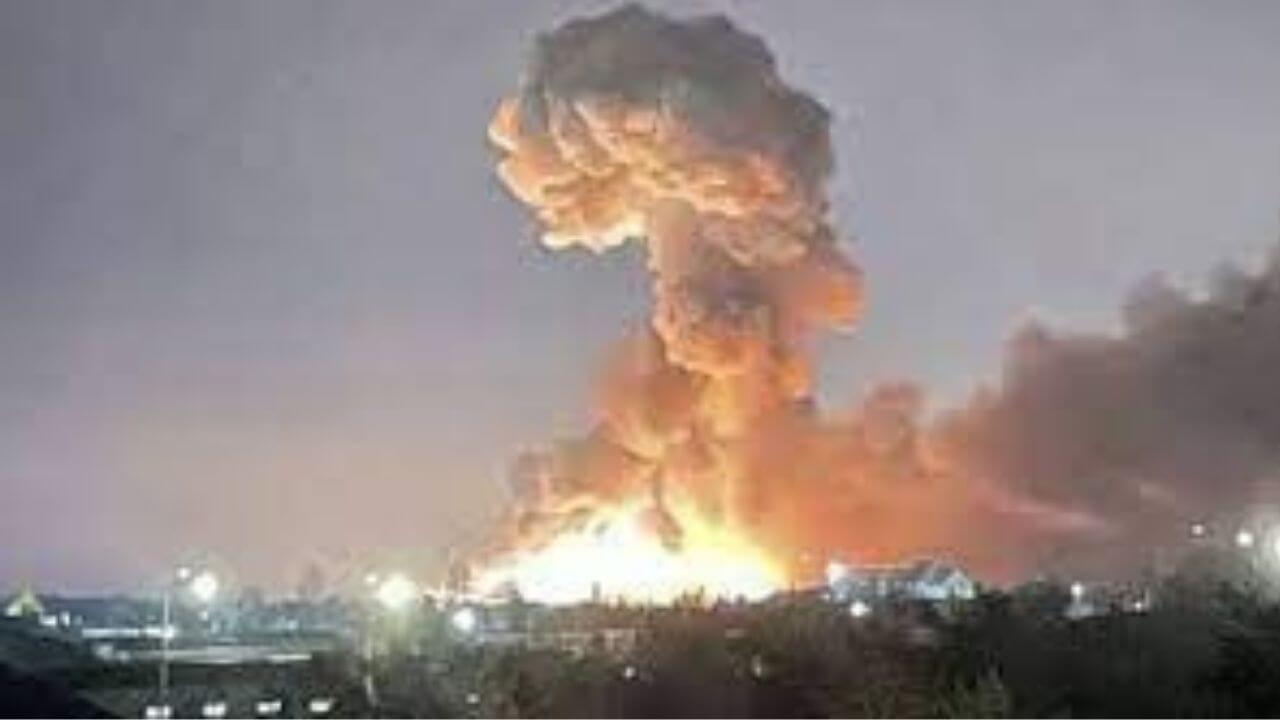
Why has martial law been imposed in Ukraine?

The imposition of martial law in Ukraine will most likely result in harder curbs that could include bans on meetings, movements and political parties. President Volodymyr Zelenskyy held a televised address on Wednesday morning to make the announcement. However, it is still not known what restrictions would be imposed.

How is a warlike situation determined in Ukraine?

Martial law can be imposed if there is a case of armed aggression, the threat of attack to the state independence of Ukraine, its territorial integrity and restriction of constitutional rights and freedoms of man and citizen, rights and legitimate interests of legal entities. If any of the above occurs, the powers necessary are used for the prevention of threat, the repulse of the armed aggression and ensuring national security, elimination of the threat of danger of the state independence of Ukraine, its territorial integrity.

What is the legal basis of the introduction of warlike situation in Ukraine?

The Constitution of Ukraine, the Law of Ukraine, and a presidential decree on the introduction of martial law serve as the legal foundation for the implementation of martial law in Ukraine. The Law of Ukraine states the legal regime of warlike situation in the country.

Military authorities during martial law in Ukraine

Military authorities can be imposed in territories where martial law is imposed. The President of Ukraine decides on the formation of military authorities based on the representation of regional civil administrations or military command.

The settlement’s military authorities are led by a chief who is appointed to the position and dismissed by the President of Ukraine depending on the recommendation of the General Staff of Ukraine’s Armed Forces or the relevant regional public administration. On behalf of the commander of the relevant military authorities, the Commander-in-Chief of the Armed Forces of Ukraine approves the structure and staff list of military authorities of settlements.

When a decision is made to create a district, regional military authorities get the status of district, regional public administrations, and district, regional public administrations chairmen assume the status of chiefs of the relevant military authorities.

Read Also: Ukraine imposes nationwide state of emergency amid threat of Russian invasion: What happens when state of emergency is declared?

Martial Law in Ukraine in 2019

Martial law was introduced in Ukraine previously on November 26, 2019, by the presidential decree. The implementation was done in 10 regions of the country for a period of 30 days. The intent was to enhance Ukraine’s defences against the backdrop of rising tensions with Russia.

Latest world news

Byju’s founder Byju Raveendran sentenced to six months in jail by Singapore court over asset orders

In a major setback, a Singapore court has sentenced Byju’s founder Byju Raveendran to six months in prison for contempt after he failed to comply with multiple court orders regarding his assets.

Published

on

In a massive legal blow to the founder of the failed Indian educational technology firm Think & Learn Pvt (better known as Byju’s), a Singapore court has sentenced Byju Raveendran to six months in jail for contempt of court.

The court ordered the jail term after concluding that Raveendran had deliberately disobeyed multiple judicial directives regarding his personal assets, dating as far back as April 2024.

Disobedience of asset orders leads to prison sentence

According to people familiar with the matter, the Singapore court has instructed Raveendran to immediately surrender himself to the officials. Alongside the six-month prison sentence, the Byju’s founder has been ordered to pay legal costs amounting to S$90,000 (approximately $70,500). Furthermore, he has been mandated to provide documents verifying his official legal ownership of Beeaar Investco Pte, a corporate entity that holds equity shares in a related firm.

At the time of reporting, it remains unclear whether Raveendran is currently residing in Singapore or located elsewhere, and he did not immediately respond to requests for comment.

Escalating global legal battles

This sentencing marks the latest and perhaps most severe setback for the entrepreneur, who once achieved billionaire status amid a massive wave of global capital flowing into Indian start-ups. Today, Raveendran is being rigorously pursued by foreign investors across international jurisdictions. This includes intensifying legal battles in the United States, where global lenders are actively trying to recover heavy financial losses stemming from a defaulted $1.2 billion loan.

Media reports indicate that the ongoing Singapore court proceedings represent a broadening web of legal and financial crises following the operational collapse of the once-celebrated edtech giant.

Continue Reading

Latest world news

US hits Iranian missile sites and mine-laying boats near Strait of Hormuz amid peace talks

US Central Command executed targeted strikes against Iranian missile launch sites and mine-laying vessels near Bandar Abbas, testing a fragile ceasefire even as high-stakes diplomatic talks continue in the region.

Published

on

In a major development testing a fragile regional ceasefire, the United States military carried out targeted strikes in southern Iran on Monday. The operation hit missile launch sites and vessels allegedly attempting to lay mines near the crucial Strait of Hormuz, according to statements from the US Central Command (CENTCOM).

The military action took place near Bandar Abbas, a prominent southern port city hosting a primary Iranian naval base. Media reporting indicated that explosions were heard across multiple coastal locations, including Sirik and Jask.

Focus on ‘Self-Defense’ Amid Active Ceasefire

A spokesperson for CENTCOM, Capt. Tim Hawkins, confirmed that the engagement was defensive in nature. “US forces conducted self-defense strikes in southern Iran today to protect our troops from threats posed by Iranian forces,” Hawkins stated. He noted that the operational targets included active missile launch sites alongside Iranian boats attempting to emplace naval mines. Despite the escalation, CENTCOM emphasized that it continues to exercise restraint under the parameters of the ongoing ceasefire brokered in early April.

According to media reports, the tactical response was triggered when two Islamic Revolution Guard Corps (IRGC) boats were detected laying mines in the strategic shipping lane. Additionally, a surface-to-air missile site reportedly targeted American warplanes, prompting US forces to neutralize both the vessels and the missile installations. Media channels citing local updates indicated that four individuals were killed in the strikes, though the complete casualty figures remain unverified.

Diplomatic Dialogue Continues in Parallel

The strikes coincide with a critical phase of diplomatic negotiations aimed at extending the current truce. Top Iranian negotiators traveled to Qatar early this week to discuss a potential 60-day extension of the ceasefire, alongside provisions to keep the Strait of Hormuz fully operational for global trade.

US officials maintain that the military action does not signal an end to the active truce. A senior administration source clarified that the specific operations are “over for now”. US Secretary of State Marco Rubio, speaking from India, affirmed that diplomatic channels remain open and active. Rubio stated that intensive language discussions regarding the initial documents are ongoing, reiterating that the opening of the strategic strait remains a core objective.

Meanwhile, political leaders in Washington have separately reiterated demands for the secured disposal or international transfer of enriched uranium stockpiles as part of any comprehensive long-term agreement.

Continue Reading

Latest world news

US announces new America First visa schedule to boost business ties with India

During his official state visit to New Delhi, US Secretary of State Marco Rubio announced a new America First visa schedule designed to prioritise business professionals and boost bilateral trade efficiency.

Published

on

In a significant development aimed at strengthening bilateral cooperation, the United States has introduced a new “America First” visa schedule. The policy update was announced by US Secretary of State Marco Rubio during his official four-day visit to India. The new schedule is specifically designed to prioritise business professionals who play a key role in fortifying trade and strategic connections between the two nations.

Speaking about the initiative in the national capital, the top US diplomat clarified that the updated framework will not only assist visa applicants but will also significantly enhance operational productivity for the diplomatic mission. “We’re introducing a new America First visa schedule that prioritises business professionals that strengthen these ties,” Rubio stated. He added that the arrangement will enable the system to process applications with greater accuracy, speed, and efficiency.

Focus on Indo-Pacific and regional security

The announcement coincided with high-level discussions between the visiting diplomat and Prime Minister Narendra Modi. The meeting, which lasted for over an hour, covered critical areas of bilateral interest, including trade, energy security, strategic technologies, defence cooperation, and the ongoing West Asia crisis. During the interaction, Rubio extended an official invitation from US President Donald Trump for PM Modi to visit the White House in the near future.

The US Secretary of State described the partnership between New Delhi and Washington as a foundational cornerstone of America’s overarching strategy for the Indo-Pacific region. Highlighting India’s central role, Rubio noted that his very first official engagement upon taking office was a meeting of the Quadrilateral Security Dialogue (Quad), emphasizing that hosting the upcoming foreign ministers’ meeting in India acts as a tangible sign of the deep commitment to this framework.

Clarification on immigration rules

Addressing separate concerns regarding recent shifts in American immigration policies, the top diplomat provided a crucial clarification regarding the new guidelines for permanent residency. Media reports had previously highlighted anxieties surrounding a newly instituted rule that requires many legal immigrants to exit the US and apply for green cards from their home countries.

Rubio explicitly stated to the media that these measures are universal regulatory updates rather than policy shifts targeted at any specific nation. He reassured that the rule is applicable globally to all international applicants and is not directed exclusively at Indian citizens.

The visit marks Rubio’s first official trip to India since assuming office. His comprehensive itinerary began in Kolkata and includes a scheduled bilateral dialogue with External Affairs Minister S Jaishankar, alongside participation in the Quad Foreign Ministers’ meeting alongside international counterparts.

Continue Reading

Trending

© Copyright 2022 APNLIVE.com