English हिन्दी
Connect with us

Latest world news

Trump signals possible wind-down of Iran war as oil tensions rattle global markets

Trump indicates the US may scale down military operations against Iran as oil market concerns intensify.

Published

on

Donald Trump

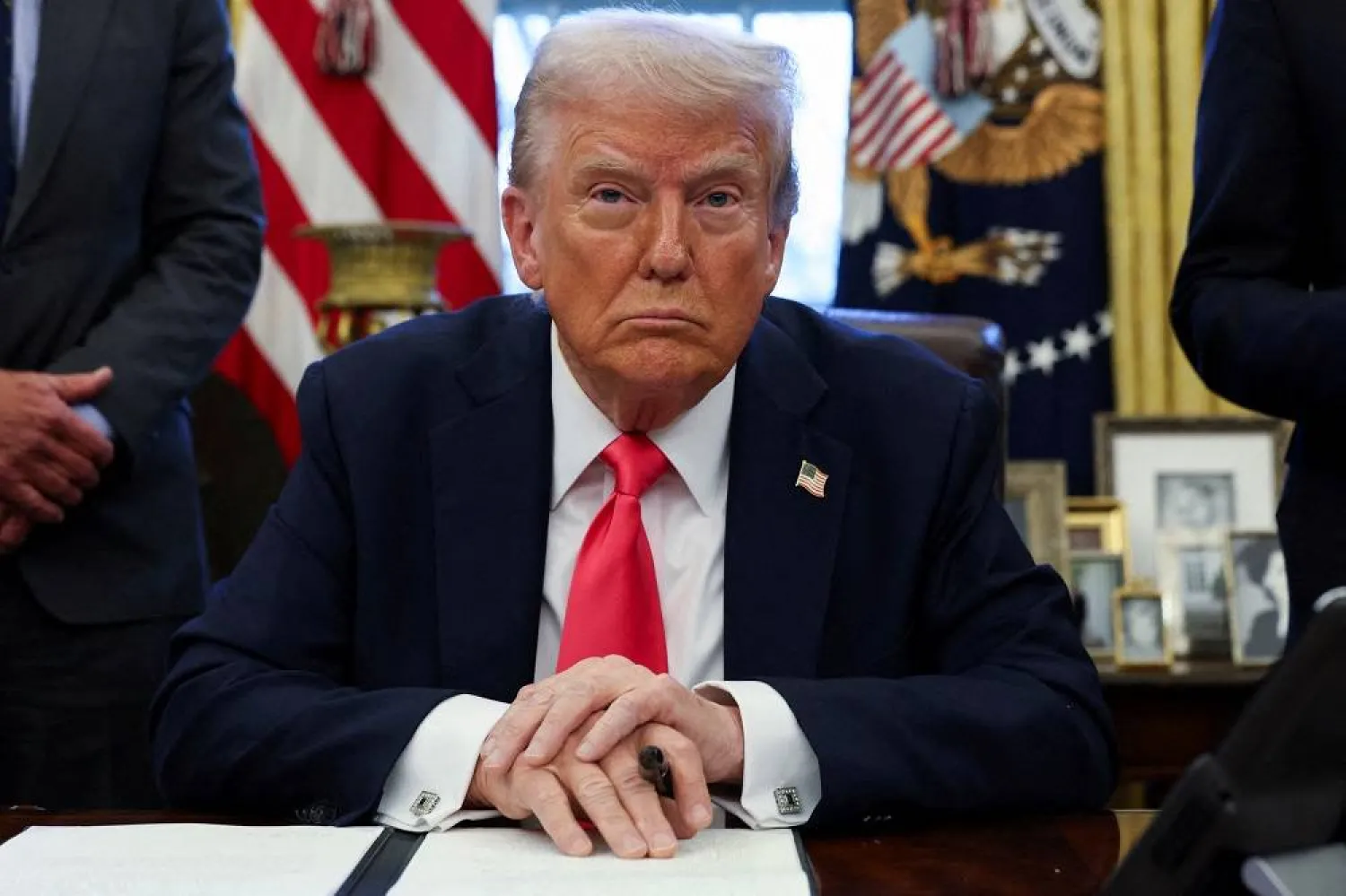
Donald Trump has indicated that the United States may consider scaling down its military operations against Iran, saying the country is “getting very close” to achieving its objectives in the ongoing conflict in West Asia.

In a post on Truth Social, Trump highlighted the progress made by US forces and suggested that a potential wind-down of operations could be under consideration. His remarks are among the clearest signals so far that Washington may be looking at reducing its military engagement.

The statement comes at a time when the US has temporarily eased restrictions on Iranian oil shipments. The move is aimed at addressing concerns over global supply disruptions and stabilising rising oil prices amid continued tensions in the region.

White House Press Secretary Karoline Leavitt said the administration had anticipated a timeline of around four to six weeks for the operation. With the conflict now entering its third week, she noted that developments were being closely monitored.

Oil markets in focus

Global oil markets have come under pressure due to the ongoing tensions. The temporary relaxation allows certain Iranian oil shipments that were already in transit to reach markets, helping ease supply concerns.

The situation has contributed to volatility in oil prices, with investors closely watching developments in the Middle East for further signals on supply stability.

Rising regional tensions

The conflict continues to see exchanges of attacks in parts of the region. Iran has carried out drone and missile strikes targeting Israel and Saudi Arabia, contributing to the escalation.

At the same time, concerns remain high over the security of key energy routes.

Strait of Hormuz concerns

The Strait of Hormuz, a crucial global oil transit route, remains a focal point of concern. A significant portion of the world’s oil supply passes through the strait, making it highly sensitive to any disruption.

Trump suggested that countries dependent on the route should also take responsibility for its security, while indicating that the US could assist if required.

No ceasefire signal

Despite hinting at a possible wind-down of operations, Trump said he is not currently seeking a ceasefire, indicating that the US position remains firm as the situation evolves.

The developments highlight the close link between geopolitical tensions, global energy markets, and the broader economic outlook.

Latest world news

Trump rejects Iran’s 7-day peace plan, says deal can come after US polls

US President Donald Trump rejected Iran’s seven-day proposal to end hostilities and indicated that a deal could come after the US midterm elections in November.

Published

on

Donald Trump

US President Donald Trump has rejected Iran’s latest proposal aimed at bringing an end to the ongoing conflict, while indicating that a possible agreement could come after the US midterm elections in November.

Iran had proposed a seven-day framework under which hostilities could be brought to an end, the Strait of Hormuz could be reopened and negotiations over its nuclear programme could resume.

Iran’s seven-day proposal

Iranian Foreign Minister Abbas Araghchi said Tehran had put forward the proposal through intermediaries. Under the plan, the Strait of Hormuz would be reopened by the end of the seventh day if specified conditions were met, while broader nuclear discussions would restart.

The proposal was based largely on an earlier understanding reached between Washington and Tehran, but Iran sought to implement the latest framework much faster. The earlier arrangement had provided a longer period for negotiations.

The Strait of Hormuz is a strategically important waterway for global energy shipments, making its reopening a key element of any effort to ease the wider conflict.

Trump points to US midterm elections

Trump, speaking at the United Nations, showed no indication that he was ready to immediately resume negotiations on the terms proposed by Tehran.

He called for the economic isolation of Iran and said he believed a deal could be reached after the US midterm elections in November. Trump also said Iran was waiting to see how he performed in the midterm elections.

The remarks came as Iranian officials signalled that they remained open to diplomacy and described the UN General Assembly as an opportunity to revive negotiations.

Nuclear talks remain part of Iran proposal

Iran’s latest plan links the easing of hostilities with the resumption of negotiations over its nuclear programme.

The proposal follows the collapse of an earlier US-Iran arrangement. According to reporting on the latest proposal, the new framework is intended to compress the timeline for implementing commitments that had previously been discussed by the two sides.

For now, Trump’s remarks indicate that Washington is not accepting Tehran’s seven-day framework as presented, while Iran continues to put diplomacy and negotiations forward as part of its proposal.

Continue Reading

Latest world news

Iranian President Pezeshkian at UN says Iranians have been victims of US terrorism

Iranian President Masoud Pezeshkian said at the UN General Assembly that Iranians had been victims of US terrorism and insisted that Iran had acted in self-defence.

Published

on

Iranian President Masoud Pezeshkian accused the United States of subjecting Iranians to what he described as terrorism while addressing the United Nations General Assembly on Wednesday.

Pezeshkian said Iran had defended itself against attacks and rejected the characterisation of the country as a terrorist actor. His remarks came during a rare wartime appearance at the UN as tensions between Iran and the United States remain high.

Pezeshkian accuses US and Israel of attacks

Speaking at the General Assembly, Pezeshkian said Iranian civilians had been targeted by attacks and described the actions against his country as aggression.

“We have only defended ourselves. We are not terrorists,” he said, according to the report.

Pezeshkian also accused the United States and Israel of attacking Iran, while maintaining that Tehran’s response was an act of self-defence.

The Iranian president displayed photographs of former Supreme Leader Ali Khamenei and more than 150 schoolchildren who, according to his account, were killed during the early days of the conflict.

Iran’s message at the UN

Pezeshkian’s address came against the backdrop of the ongoing conflict between Iran and the United States and heightened tensions in the region.

Iranian officials had indicated ahead of the UN visit that they intended to highlight what Tehran considers attacks against its people and raise concerns over the international response to the conflict.

The Iranian delegation’s visit to New York also comes amid restrictions imposed by the United States on the delegation’s movement and other aspects of its stay, according to reporting ahead of the address.

Pezeshkian says Iran defended itself

Pezeshkian’s central message at the UN was that Iran’s military actions should be viewed as a response to attacks rather than terrorism.

His description of the conflict and the allegations against the United States and Israel represent the Iranian government’s position. They should therefore be attributed to Pezeshkian rather than presented as independently established facts.

Continue Reading

Latest world news

PM Modi’s Canada visit could help wrap trade talks, says Canada PM Mark Carney

Canadian PM Mark Carney said he is looking forward to hosting PM Narendra Modi, with both countries aiming to conclude their ongoing trade negotiations.

Published

on

Canadian Prime Minister Mark Carney has said he is looking forward to hosting Prime Minister Narendra Modi, as India and Canada continue efforts to advance their bilateral relationship and conclude ongoing trade negotiations.

The two countries have been working towards a Comprehensive Economic Partnership Agreement (CEPA), with both sides previously setting a target to conclude the negotiations in 2026.

Carney and Modi have held discussions on strengthening economic ties between India and Canada, including trade and investment. Their engagement has gained momentum following Carney’s visit to India earlier this year.

India-Canada trade talks

India and Canada formally resumed efforts towards a broader trade agreement after a period of strained bilateral ties. The two sides have committed to advancing negotiations on a CEPA covering their economic relationship.

In June, Carney and Modi reviewed progress in bilateral economic cooperation during their meeting on the sidelines of the G7 Summit in France. They expressed satisfaction with the progress in CEPA negotiations and reaffirmed their shared objective of concluding the talks in 2026.

During Carney’s visit to India in March, the two leaders had also agreed to accelerate negotiations on the CEPA and work towards finalising the agreement during 2026.

Modi’s proposed Canada visit

Carney had invited PM Modi to visit Canada in 2026, and the two leaders agreed to remain engaged through diplomatic channels to work towards a mutually convenient date for the visit.

The proposed visit comes as New Delhi and Ottawa seek to build on renewed diplomatic and economic engagement, with trade negotiations remaining a key part of the relationship.

The focus on completing the trade talks comes as both countries look to expand commercial ties and establish a broader economic framework through the proposed CEPA.

Continue Reading

Trending

© Copyright 2022 APNLIVE.com