
Latest world news
US: Contradictory reports on impact of anti-Iran sanctions on India


Indian and Pakistani media quote same US official with different vesrions
The US administration has been given contradictory signals on the future course of implementing anti-Iran sanctions while dealing India. An Indian media outlet reports that US has not taken any decision on sanctioning India for importing oil from Iran and investing in the Chabahar port, or buying the S-400 air defence missile system from Russia.
However, another report say that Washington is not offering waiver to any country from curbs on commercial deals with Iran so far, the restriction applies to India as well, which is a major importer of oil from Iran.
Elizabeth Roche, a well known writer associated with Livemint, quoting Alice G. Wells, the principal deputy assistant secretary of State for South and Central Asia, reported that US has not taken any decision on sanctioning India for importing Oil from Iran, investing in Chabahar seaport or buying S-400 air defence missile system from Russia.
Read More: India, US Sign Key Defense Agreement
Wells was in New Delhi last week as part of the delegation accompanying US Secretary of State Mike Pompeo for the India-US 2+2 dialogues. Livemint reports that Wells said that the dialogue was aimed at laying the foundation of the US-India relationship for the next decade.
The Indian media outlet reports that Wells said the sanctions that come into force on 4 November were designed to bring Tehran to book and non penalize India, which meets 83% of its crude oil requirements from outside. Of this, close to 25% comes from Iran.
 The report further said that Wells added that Washington’s aim was also not to penalize India for buying the missile defence the missile defence systems or sourcing spares from Russia, reports Livemint.
She said the sanctions on Iran that come into force on Nov 4 are not specific to India, which imports 25 per cent of its oil from Tehran. Iran is India’s third largest supplier of oil, after Iraq and Saudi Arabia. Between April 2017 and January 2018, Iran supplied 18.4 million tonnes of crude oil to India.
The report, however, incorporated Wells quote saying there was no “blanket waiver or country-specific waiver” from US sanctions on trading with or investing in Iran or buying arms from Russia.
Read More: Trump: India Called Us Wanting Trade Deal despite Tough Talks
On the contrary, Anwar Iqbal, Washington based journalist working for Dawn, quoted the same official from State Department, saying that Washington is not offering waiver to any country from curbs on commercial deals with Iran and so far, the restriction applies to India as well. Alice G. Wells reportedly said that the restrictions also apply to investments in Iran’s Chabahar port, a project built with India’s cooperation.
Alice G. Wells, Principal Deputy Assistant Secretary of State for South and Central Asia, said in a conference call with journalists on Monday that restrictions also apply to investments in Iran’s Chahbahar port, a project built with India’s cooperation.
Wells, who was briefing journalists on the two-plus-two talks between the US and India, held in New Delhi on Sep 6- said there was no “blanket waiver or country-specific waiver” from US sanctions on trading or investing in Iran.
Read More: Russia expect inking S-400 missile contract with India in 2018
Dawn reports further that while answering a question on whether US restrictions on trade with Iran were discussed at the US-India talks, she said that there was a discussion in general over the sanctions and on Trump administration’s goal to hold Iran accountable for its alleged ‘maligned behaviour.’
She further said that the two sides also talked about how US expects other countries to bring their oil imports from Iran “down to zero as quickly as possible” and on US efforts to ensure that the restrictions do not disrupt the market, she said. The US has assured the Indians that adequate supplies are readily available that could be easily substituted for Iranian oil, the US official added.
Wells said, “With respect to Chahbahar, we have heard the Indian government’s assertion for Chahbahar both as a means of route to Afghanistan, a means for delivering wheat supplies, for instance, and of opening-up trade to Central Asia.”
“The US officials were clear that we were still in process of reviewing the implementation of sanctions and that we were taking this under advisement. So it was an informational conversation between the parties,” she said.
The US secretary said that, in New Delhi, the Indian and American leaders committed themselves to resolving trade issues and reaching an agreement to promote bilateral trade. US was now India’s top market for exports and the US-Indian bilateral trade expanded by $12 billion in 2017 totalling to $126bn, whereas two-way investment expanded almost $57bn.
She also said that, so far, the US had not taken any decision on giving a waiver to India to purchase S-400 Triumf missile system from Russia. “We continue to have conversations with the Indian leadership. We are working to hold Russia accountable for its behaviour and Secretary of State Michael Pompeo said these sanctions are not intended to adversely impact countries like India. They are designed to impact Russia”, she said.
India and US had signed an agreement known as Communications, Compatibility, Security Agreement (Comcasa) at the end of the “2+2” talks between the external affairs minister Sushma Swaraj and defence minister Nirmala Sitharaman with their US counterparts Micheal Pompeo and James Mattis in New Delhi on September 6.
Russia is also facing US sanctions. President Donald Trump is expected to sign an executive order on Wednesday that would authorise sanctions against countries or foreigners who try to interfere in American elections. Investigations are continuing against the alleged Russian meddling in the US presidential elections held in 2016.
A report from Washington say that US intelligence agencies now believe that Russians would again try to interfere the mid-term polls this year and also 2020 presidential elections.







Latest world news
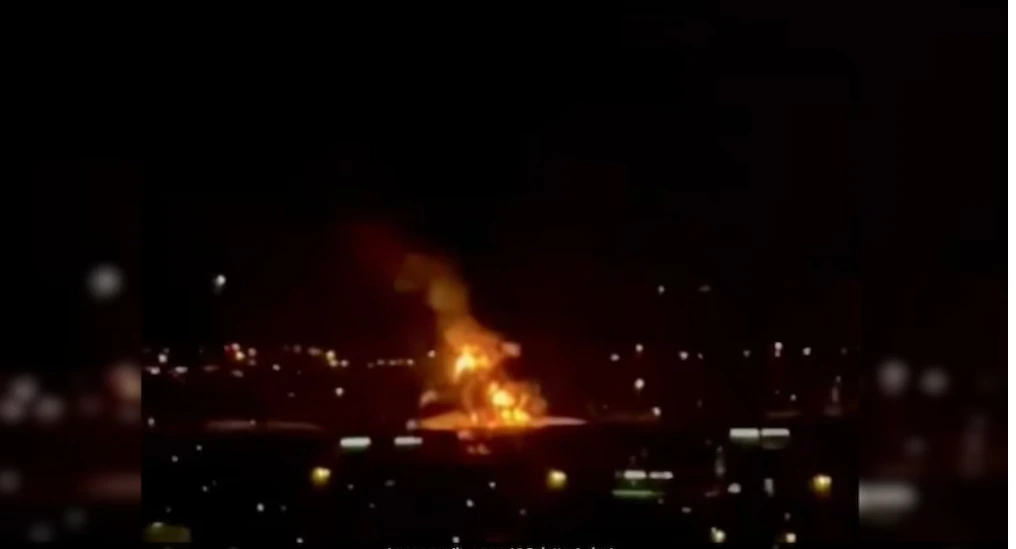
Fire near Dubai International Airport after drone incident, flights temporarily suspended
Flights at Dubai International Airport were temporarily suspended after a drone-related incident caused a fuel tank fire near the facility. Authorities confirmed the blaze was contained and no injuries were reported.

Latest world news
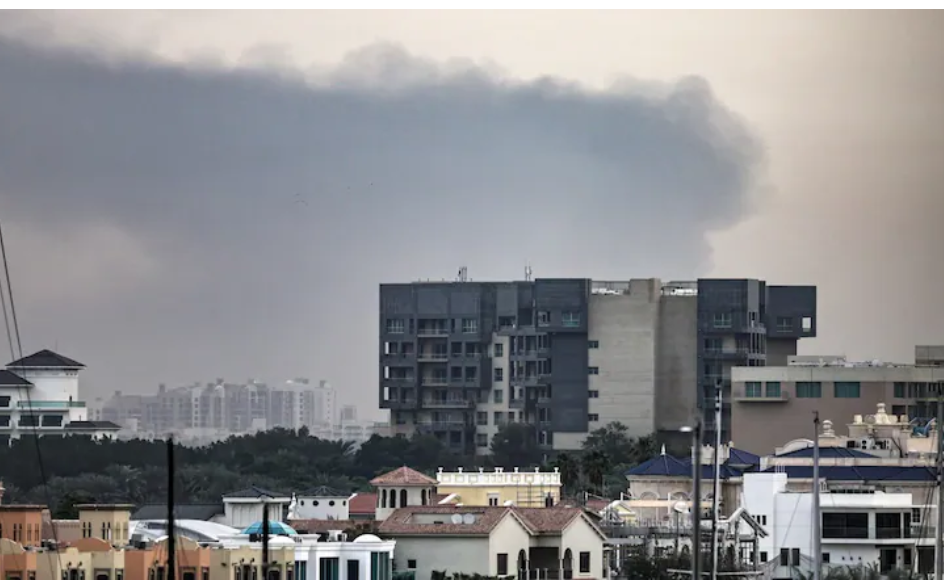
Dubai hit again within 24 hours as debris strikes building, drone targets US embassy in Baghdad
A building in Dubai’s financial hub was struck by debris from an intercepted attack while a drone targeted the US embassy in Baghdad, officials said.
Latest world news
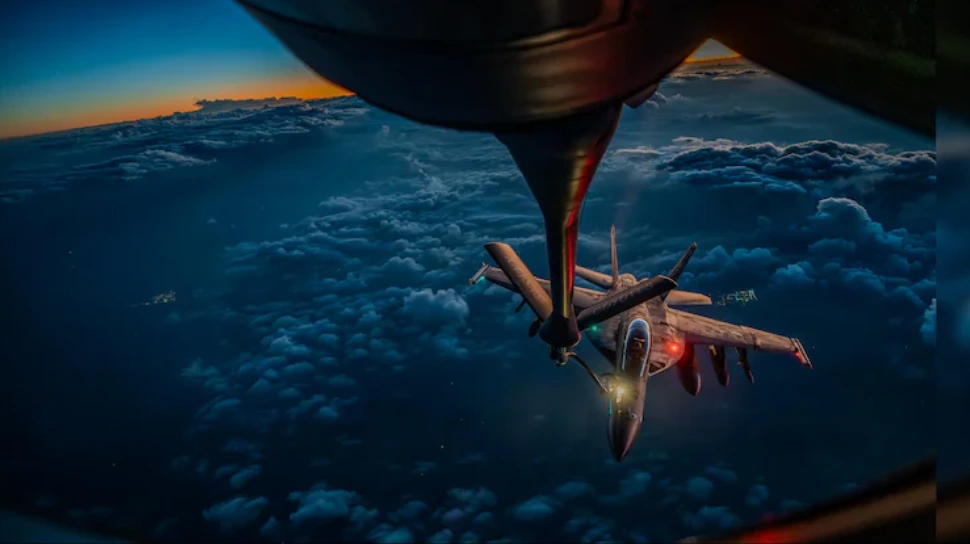
US KC-135 refuelling aircraft crashes in Iraq amid ongoing Iran war
A US KC-135 refuelling aircraft crashed in western Iraq during the ongoing Iran war, marking the fourth American aircraft lost in the conflict, according to the US military.

Fire near Dubai International Airport after drone incident, flights temporarily suspended

Arvind Kejriwal moves Supreme Court against Delhi High Court order in excise policy case

Fire in ICU at SCB medical college hospital in Cuttack kills 10 patients

Rajya Sabha elections Voting begins for 37 seats across 10 states

BJP releases first list of 47 candidates for Kerala assembly polls
BJP releases first list of 47 candidates for Kerala assembly polls
Fire in ICU at SCB medical college hospital in Cuttack kills 10 patients
Arvind Kejriwal moves Supreme Court against Delhi High Court order in excise policy case
Rajya Sabha elections Voting begins for 37 seats across 10 states
Fire near Dubai International Airport after drone incident, flights temporarily suspended

Afghan Men Try To Hang With The Jet Engine Of The Aircraft in Kabul- Afghanistan News – Kabul News
Trending Top 10 News: 10000 Crore Fine on Flipkart, Apple to Launch Unique Feature, Hdfc Bank Job Ad

Trending Top 10 News: Nokia 6310, Apple sales, Bachpan ka Pyar Video Kid, Dainik Bhaskar IT Raid

Trending Top 10 News: Canada bans Indian flights, Rain in Delhi NCR, AIMIM Twitter hacked, Raj Kundra case

Trending Top 10 News: Shein India, Apple New Service, Pocket Oxygen, Oppo Launched New Phone
-
 Latest world news23 hours ago
Fire near Dubai International Airport after drone incident, flights temporarily suspended
-
 India News22 hours ago
Arvind Kejriwal moves Supreme Court against Delhi High Court order in excise policy case
-
 India News22 hours ago
Fire in ICU at SCB medical college hospital in Cuttack kills 10 patients
-
 India News23 hours ago
Rajya Sabha elections Voting begins for 37 seats across 10 states
-
 India News12 hours ago
BJP releases first list of 47 candidates for Kerala assembly polls
