English हिन्दी
Connect with us

Latest world news

US officials; UAE orchestrated Qatar crisis

Published

on

US officials; UAE orchestrated Qatar crisis
[vc_row][vc_column][vc_column_text]Abu Dhabi denies involvement

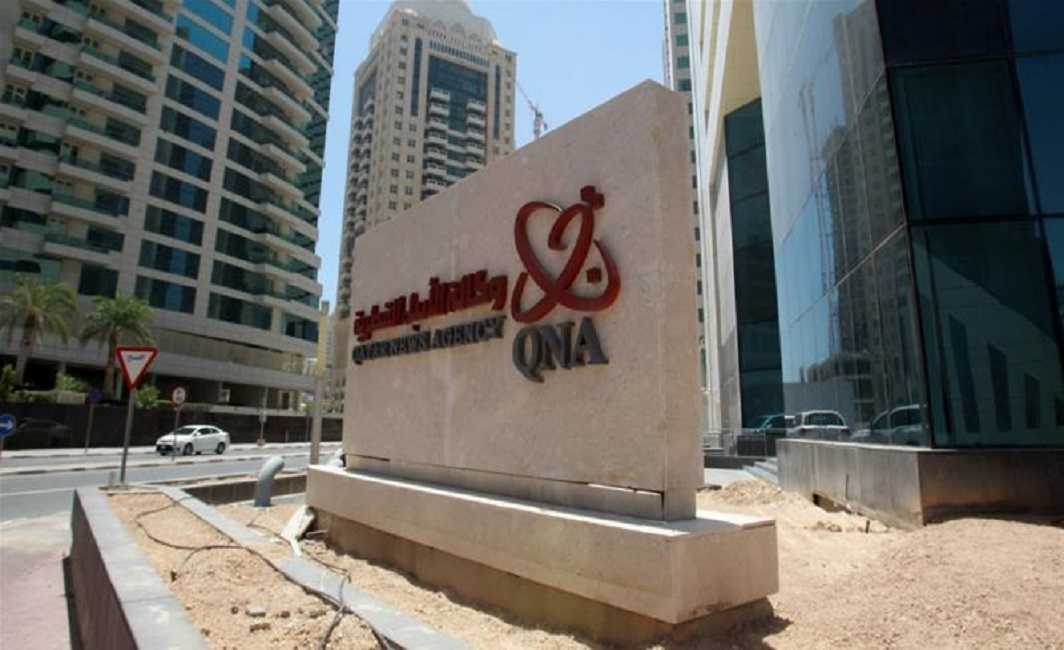
The conspiracy behind the ongoing Qatar crisis seems to be uncovered. The United Arab Emirates (UAE) orchestrated the hacking of Qatari News site in May for planting the false story about Emir Al-Thani’s speech praising Iran and revealing of having friendly relations with Israel. The story was used as a pretext for the current crisis between Qatar and several Arab countries. The hacking incident took place on May 24 this year.

Washington Post in its Sunday report quoted unanimous US intelligence officials saying that senior members of the Emirati government discussed the plan on May 23. On the following day a story appeared on Qatari News Agency (QNA)’s website, quoting Emir Sheikh Tamim Bin Hamad Al-Thani allegedly praising Iran and saying Qatar has friendly relations with Israel. Similar statements were also appeared on agency’s twitter account.

The US officials said it was unclear if the UAE backed the websites or paid for them to be carried out.

QNA had quickly claimed their site was hacked and removed the particular article. Despite that, on June 5, Saudi Arabia, UAE, Bahrain and Egypt severed diplomatic ties with Doha and blocked air and land routes connecting with Qatari territory. These countries also blocked Qatari media in their respective territories.

However, UAE State Minister for Foreign Affairs Anwar Gargash has  said that his country was not responsible for any alleged hacking. In a reconciling note, he also said that UAE would not escalate its blockade on Qatar by asking companies to choose between doing business with it or Qatar. In Washington UAE Ambassador to the US Yousef al-Otaiba had quickly released a statement calling the report “false” and insisted that UAE “had no role whatsoever” in the alleged hacking.

Qatar’s Attorney General Ali Bin Fetais al-Marri, while talking to journalists on June 21, claimed of having proof that the hacking was linked to countries that have recently cut ties with Doha. He said, “Qatar has evidence that certain iPhones originating from countries laying siege to Qatar were used in the hack.”

Initially US security agencies indicated that Russian hackers were behind the incident. However, a US official was quoted by New York Times saying that it “was unclear whether the hackers were state sponsored.” Later FBI sent a team of investigators to Doha to help Qatari government investigate the hacking incident.

Later New York Times reported that hacking incident may be part f the long running cyber war between Qatar and other Gulf countries that was only revealed to the public during the recent incident.

They noted how Saudi and UAE media picked up the statement made by the hacked media in less than 20 minutes and began interviewing many well prepared commentators against Qatar.

Observers in Washington believe that the ongoing crisis has threatened to complicate the US-led coalition’s fight against IS as all participants are US allies and members of the anti-IS coalition. Qatar is home to more than ten thousand US troops and the regional headquarters of US Central Command while Bahrain, on the other side of the fence in the crisis, is home to the US Navy’s 5th fleet.

US President Donald Trump has sided with Saudi Arabia and the UAE in the dispute. However he has also reiterated to continue relations with Qatar. Secretary of State Rex Tillerson has recently concluded shuttle diplomacy in the Gulf without achieving any breakthrough.

British, German and French foreign ministers have also visited the rival capitals without finding any solution to the tangle.

Qatar has denied to accept Saudi Arabia led quartet 13 point demands including severing ties with Iran, shutting down Al-Jazeera News network and closing Turkish army base in its territory. Both sides have recently indicated that the ongoing crisis may continue for a long period.[/vc_column_text][/vc_column][/vc_row]

Latest world news

Iran set to execute anti-Khamenei protester as Trump warns of strong US action

Iran is preparing to execute a protester linked to anti-regime demonstrations as US President Donald Trump warns of strong action amid a deadly crackdown.

Published

on

unrest in iran

Iran is reportedly preparing to execute an anti-government protester on Wednesday, triggering sharp warnings from US President Donald Trump, who said Washington would take “very strong action” if the hanging goes ahead. The development comes amid a sweeping crackdown on nationwide protests that rights groups say has killed more than 2,000 people.

According to human rights groups, 26-year-old Erfan Soltani, arrested last week during protests in Karaj near Tehran, has been sentenced to death and faces execution without a proper trial. Iranian authorities have not publicly detailed the charges or judicial process in his case.

Trump urges Iranians to keep protesting

Trump has publicly encouraged Iranians to continue protesting, saying “help is on its way”, while warning Tehran against executing demonstrators. Speaking to media, the US president said the United States would respond forcefully if Iran began hanging protesters arrested during the unrest.

Earlier, Trump posted messages urging people in Iran to continue demonstrations and said he had cancelled meetings with Iranian officials until the killing of protesters stops. He did not specify what assistance the US might provide or which meetings had been cancelled.

Iranian prosecutors have reportedly threatened capital punishment under charges of “moharebeh”, or waging war against God, for some detainees linked to the protests.

Rising death toll and reports from morgues

Rights groups say the crackdown has been one of the deadliest in recent years. According to activist organisations, the death toll has crossed 2,500, including civilians and members of the security forces. Iranian officials, however, have blamed what they described as “terrorists” for the deaths and have not provided a clear breakdown.

Videos circulating on social media show bodies lined up at the Kahrizak mortuary near Tehran, wrapped in black bags, as families search for missing relatives. Authorities have declared national mourning for security personnel killed during the unrest and announced mass funeral ceremonies in the capital.

Internet blackout and Starlink access

Iran has imposed a widespread internet blackout, now extending beyond five days, limiting communication and information flow. Amid the restrictions, SpaceX has reportedly waived subscription fees for its Starlink satellite service in Iran, allowing users with receivers to access the internet without payment, according to groups working to restore connectivity.

Some international phone links were partially restored, but reports indicate services remain unstable and limited.

Political tensions and international reaction

Iranian leaders have insisted that control has been restored following days of protests described as one of the biggest challenges to the clerical leadership since the 1979 revolution. Supreme Leader Ayatollah Ali Khamenei has hailed pro-government rallies as evidence that the protest movement has failed.

Senior Iranian officials have accused Trump and Israeli leadership of responsibility for violence in Iran. Meanwhile, Western leaders have condemned the use of force against protesters, with some warning that sustained repression could further destabilise the country.

Analysts note that while the protests represent a serious challenge to Iran’s leadership, the government retains powerful security and enforcement mechanisms, making the outcome uncertain.

Continue Reading

Latest world news

Nearly 2,000 killed as Iran acknowledges high death toll in nationwide protests

Iran has for the first time acknowledged that nearly 2,000 people were killed during nationwide protests sparked by economic distress, as authorities continue a strict security crackdown.

Published

on

unrest in iran

Iran has acknowledged for the first time that close to 2,000 people, including members of the security forces, have been killed during two weeks of widespread protests across the country, according to an Iranian official.

The official said the deaths occurred amid violent clashes during nationwide unrest that erupted over worsening economic conditions. The figure marks the highest acknowledged toll so far from the current wave of demonstrations, which has posed one of the most serious internal challenges to Iran’s leadership in recent years.

Official blames “terrorists” for violence

According to the official, those described as “terrorists” were responsible for the deaths of both protesters and security personnel. However, no detailed breakdown was provided regarding how many civilians or security forces were killed.

Iran’s clerical leadership has accused the United States and Israel of instigating unrest in the country, alleging that external actors exploited public anger and escalated the demonstrations into violent confrontations.

Dual approach to protests

Authorities have attempted to balance their response by distinguishing between what they describe as legitimate protests over economic hardship and acts of violence. While acknowledging public frustration over living conditions, the government has simultaneously enforced a strict security crackdown to contain the unrest.

The protests are reported to be the most significant challenge to the Iranian establishment in at least three years and come at a time of heightened international pressure following military strikes by the US and Israel last year.

Rights groups cite arrests and casualties

Human rights organisations had earlier reported that hundreds of people were killed during the protests and said thousands were detained as security forces moved to suppress demonstrations across several cities.

The flow of information from inside Iran has been severely restricted due to communications curbs, including recent internet blackouts, making independent verification difficult.

Clashes captured on video

Despite restrictions, multiple videos circulating online have shown intense nighttime clashes between demonstrators and security forces. Some of these visuals, verified by media, depict gunfire, burning vehicles, and damage to buildings, highlighting the scale of violence during the unrest.

Continue Reading

Latest world news

Khamenei warns US against deceitful actions as Trump announces 25% tariff threat

Ayatollah Ali Khamenei has warned the United States against “deceitful actions” after Donald Trump announced a 25% tariff threat, as protests continue to challenge Iran’s leadership.

Published

on

khamenei

Iran’s Supreme Leader Ayatollah Ali Khamenei has warned the United States to stop what he described as “deceitful actions” and reliance on “traitorous hirelings,” responding to escalating pressure from US President Donald Trump, including a proposed 25 per cent tariff on countries trading with Iran.

In a post on X, Khamenei said the Iranian nation had demonstrated its resolve in the face of external pressure and issued a warning to American politicians. He asserted that Iran remained strong, aware of its adversaries, and firmly present on the political stage.

Protests pose major challenge to Iran’s leadership

Khamenei’s remarks come amid more than two weeks of nationwide demonstrations that began over economic grievances and have since grown into one of the most serious challenges to Iran’s theocratic system since the 1979 Islamic revolution.

Rights groups have claimed that at least 646 people have been killed during the protests, which have spread across several cities. The unrest has intensified international scrutiny of Tehran’s response and further strained relations with Washington.

Trump signals economic and military options

President Trump has repeatedly warned Iran over its handling of the protests, stating that the United States was prepared to act if demonstrators were killed. He has said possible US responses range from low-risk to high-risk options, depending on the ultimate objective.

While Trump has previously criticised “regime change” as a foreign policy goal, citing past US involvement in Iraq, he has continued to apply economic pressure on Tehran. On Monday, he announced a 25 per cent tariff on countries that trade with Iran, marking a significant escalation in sanctions-linked measures.

Trump has also spoken about efforts to restore internet access in Iran after authorities imposed shutdowns during the protests.

Limited communication revealed

Despite the sharp public rhetoric, both governments have acknowledged that some level of communication has taken place. These contacts were reportedly coordinated through Trump’s envoy Steve Witkoff.

Iran and the United States have remained adversaries since the 1979 revolution that overthrew the pro-Western shah. Any major shift in Iran’s political system would have far-reaching consequences for the Middle East, making the current standoff closely watched across the region.

Continue Reading

Trending

© Copyright 2022 APNLIVE.com