English हिन्दी
Connect with us

Latest world news

US warns Assad not to attack with Chemical weapons

Published

on

US warns Assad not to attack with Chemical weapons
[vc_row][vc_column][vc_column_text]Russia calls it provocative

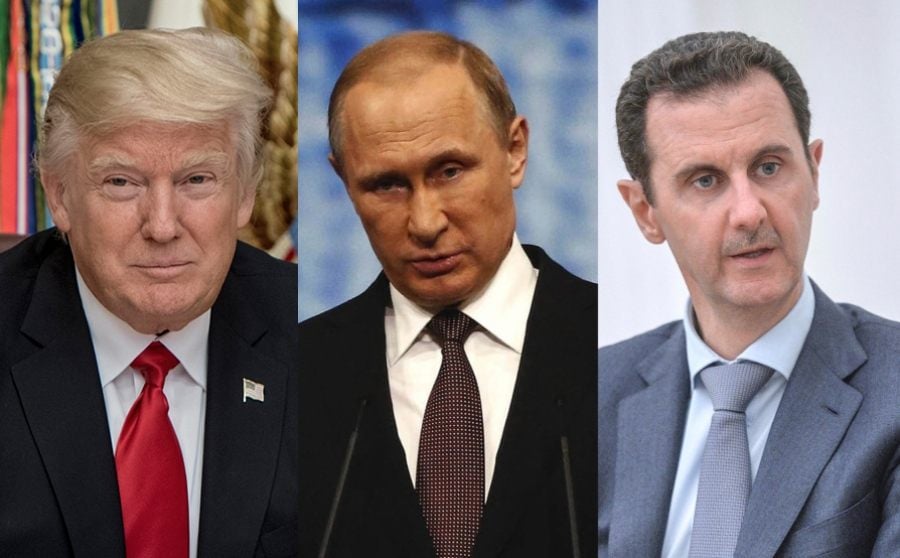
The decisive battle against IS in Syria and Iraq has larger consequences all over the Middle East. The White House has issued a warning to Syrian President Bashar al-Assad on Monday night that his regime would pay a “heavy price” if it carried out another chemical attack this year.

White House Press Secretary Sean Spicer, in a statement, said that US has identified potential preparations for another chemical weapons attack by the Assad regime that would likely result in the mass murder of civilians, including innocent children. The activities are similar to the preparations the regime made before its April 2, 2017 chemical attack, claimed the statement.

The statement further said “As we have previously stated, the US is in Syria to eliminate the Islamic State of Iraq and Syria (ISIS). However, if Mr Assad conducts another mass murder attack using chemical weapons, he and his military will pay a heavy price”.

In April this year Syrian President Bashar al-Assad denied the use of chemical weapons saying that reports were “100% fabricated”. In an exclusive interview with a French news agency, he said that his country doesn’t   have chemical weapons and that it was an excuse being used by the US to attack his country.

US had accused Syrian government of a reported “chemical attack” in the rebel held Idlib province that killed dozens of people. Trump administration authorized a missile strike on Syrian government controlled air base from which US officials said that Syrian military launched the chemical attack. Fifty nine cruise missiles, each carrying a 1000 pound warheads destroyed the airfield along with dozens of Syrian warplanes.

Meanwhile a Russian Lawmaker Tuesday dismissed the US warning about a potential chemical weapons attack in Syria as an “unprecedented provocation”, and the Kremlin called the accusations against Syria “unacceptable”.

In December 2016, Turkey had accused US of backing what they call “terrorist groups” in Syria. President Recep Erdogan claimed he had evidence that US led coalition forces give support to the ISIS and Kurdish groups including People’s Protection Units and Democratic Union Party.

However, the US state department dismissed Erdogan’s claims as “ludicrous”.[/vc_column_text][/vc_column][/vc_row]

Latest world news

S Jaishankar says India is a natural option for Russia amid Europe tensions

External Affairs Minister S Jaishankar said India remained a natural option for Russia as Moscow increasingly turned towards Asia amid strained relations with Europe. He highlighted the continuity of India-Russia ties and their significance for the balance of power in Asia.


Published

on

External Affairs Minister S Jaishankar has described India as a natural option for Russia as Moscow increasingly looks towards Asia amid deteriorating relations with Europe. He said India’s longstanding relationship with Russia had remained steady despite significant changes in the international strategic landscape.

Jaishankar made the remarks during a conversation with John Micklethwait, editor-in-chief of the Bloomberg New Economy Forum. He discussed how the Russia-Ukraine war had affected Moscow’s relationship with Europe and contributed to Russia’s growing focus on Asia.

Jaishankar highlights Russia’s shift towards Asia

Jaishankar said Russia’s relationship with Europe had become deeply strained following the Ukraine war. He noted that Russia had historically viewed itself as a European country and placed considerable importance on its relations with Europe and the United States.

However, the conflict had pushed Moscow to look increasingly towards Asia,with much of that shift directed towards China.

The minister said it was in India’s interest, as well as the wider world’s interest, for Russia to maintain multiple relationships in Asia rather than having its options concentrated in one direction.

Against this backdrop, he described India as a natural partner for Russia, pointing to the longstanding nature of the relationship between the two countries.

India-Russia ties remain steady despite global changes

Jaishankar said India and Russia had maintained a consistent relationship over several decades. He emphasised that New Delhi continued to engage with Moscow even as the global order and Russia’s strategic calculations evolved.

According to the minister, India was reassuring Russia that the relationship built over nearly eight decades remained steady despite the changes in Moscow’s relations with Europe and the wider West.

He stressed that India was not passing a value judgment on those changes but was continuing its bilateral engagement with Russia.

Jaishankar said the relationship had benefited both countries and contributed to the balance of power and the broader status quo in Asia. 

Why the relationship matters for Asia

Jaishankar’s remarks highlighted India’s position in Russia’s changing regional outlook. As Moscow increasingly turns towards Asia, India continues to maintain its longstanding ties with Russia while navigating a changing international environment.

The minister’s comments underscored the importance he placed on preserving India-Russia ties and ensuring that Russia maintained multiple relationships in Asia. 

His assessment came against the backdrop of strained Russia-Europe relations following the war in Ukraine, which has reshaped Moscow’s engagement with Western countries and increased its focus on Asian partners.

Continue Reading

Latest world news

Putin praises PM Modi, says he has very good ideas on Ukraine war

Russian President Vladimir Putin has praised Prime Minister Narendra Modi for repeatedly raising the need to end the Ukraine war, describing his ideas for a settlement as “very good”.

Published

on

Vladimir Putin

Russian President Vladimir Putin has praised Prime Minister Narendra Modi for his continued efforts to promote an end to the Russia-Ukraine war, saying the Indian leader has “very good ideas” aimed at finding a mutually acceptable solution.

Putin made the remarks while addressing the Valdai Forum of international Russia experts, where he spoke about Modi’s repeated efforts to raise the issue of ending the conflict.

What Putin said about PM Modi

Putin said Modi has continued to raise the question of ending the conflict despite the close and friendly relationship between India and Russia.

According to Putin, the Prime Minister has shown a strong interest in finding a solution and has ideas that could help identify mutually acceptable ways to resolve the conflict.

Putin also described India’s position as neutral while highlighting Modi’s interest in bringing the conflict to an end through peaceful means.

The Russian president expressed gratitude to Modi for his ideas and his desire to see the conflict end as soon as possible.

Modi’s position on the Ukraine war

PM Modi has repeatedly called for dialogue and diplomacy to resolve conflicts, including during his meetings with Putin.

During their September 11 meeting in New Delhi, Modi reiterated that dialogue and diplomacy are the way forward for resolving conflicts.

Modi had also told Putin during their meeting on the sidelines of the Shanghai Cooperation Organisation summit in Bishkek that the situation needed to move from “endless war” towards an end to the war.

India has consistently maintained that conflicts should be addressed through dialogue and peaceful means, with Modi previously describing the present period as not being an era of war.

The Russia-Ukraine conflict began in February 2022 and has continued despite repeated diplomatic efforts to seek a resolution.

Continue Reading

Latest world news

S Jaishankar calls Pakistan a “serial practitioner of terrorism” at UN

S Jaishankar criticised Pakistan at the UN General Assembly, referring to a “serial practitioner of terrorism” and warning against attempts to normalise terrorism.
Published

on

S Jayshankar

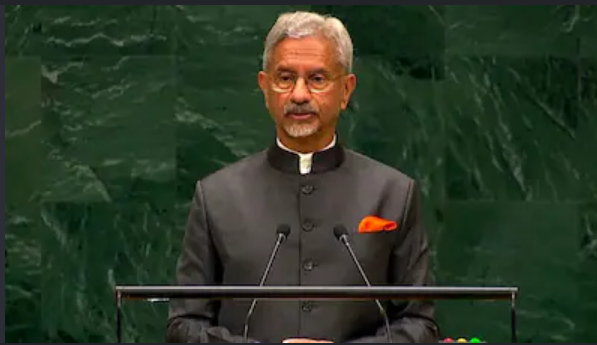
External Affairs Minister S Jaishankar criticised Pakistan during his address to the 81st session of the United Nations General Assembly in New York, saying that a “serial practitioner of terrorism” had misrepresented facts and that arguments were being made to normalise terrorism. 

Jaishankar’s remarks came a day after Pakistan Prime Minister Shehbaz Sharif addressed the UN General Assembly and spoke about the 2025 military confrontation between India and Pakistan.

Jaishankar’s message to Pakistan

Referring to Pakistan without naming it directly in that remark, Jaishankar said a “serial practitioner of terrorism” had misrepresented facts before the UN General Assembly.

He said arguments were being made to normalise terrorism and claim immunity from its consequences, adding that such an approach would not stand. 

Jaishankar reiterated India’s position that the country would exercise its right to defend itself against terrorism.

He also said that friendship and goodwill could not coexist with terrorism and that understandings based on such circumstances would naturally be called into question. 

“It is for the perpetrator of terrorism to mend its ways,” Jaishankar said.

India stresses zero tolerance on terrorism

Jaishankar described terrorism as a persistent threat to peace and called for governments involved in cross-border terrorism to be held accountable.

He also stressed that there should be no dilution in India’s zero-tolerance approach towards terrorism and particularly called for greater attention to its financial aspects.

His remarks came a day after Pakistan Prime Minister Shehbaz Sharif referred to the 2025 India-Pakistan military confrontation during his UN General Assembly address. 

Jaishankar backs two-state solution for Palestine

During his UN address, Jaishankar also spoke about the situation in West Asia and said India was prepared to contribute to efforts addressing food and energy security amid continuing tensions and violence.

On the Palestine issue, he reiterated India’s longstanding support for a two-state solution.

Jaishankar said India was also contributing humanitarian assistance and relief efforts for the Palestinian people.

He also warned about continuing threats and pressures around the world and stressed the need for greater stability, security and predictability.

Continue Reading

Trending

© Copyright 2022 APNLIVE.com