Khudiram Bose: Why did Judge Douglas Kingsford become a target of him? how he was caught? all you need to know about Muzaffarpur conspiracy case
During his time Bengal was a hotbed of revolutionaries and freedom fighters, and freedom movements were more visible in Bengal than other regions. Reason was being the presence of a large number of British officials in Calcutta which was then the capital of British India.
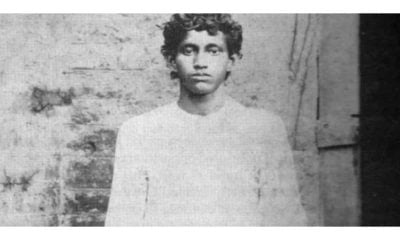
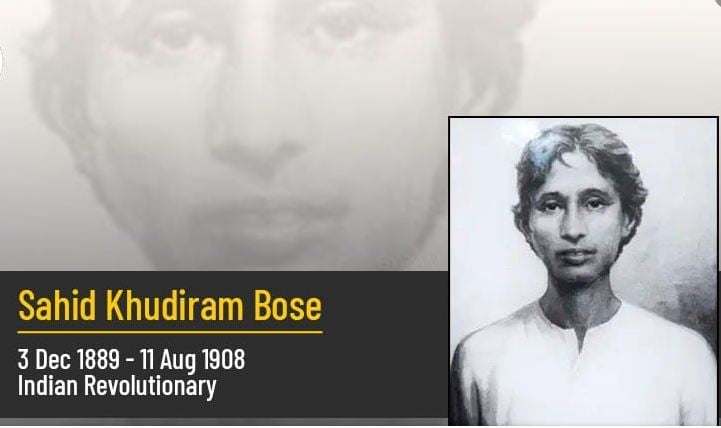
Khudiram Bose, India’s youngest freedom fighter was born on December 3, 1889, and hanged to death in Bihar’s Muzaffarpur jail at the age of 18 for planning to assassinate the British judge Douglas Kingsford. He had executed to death on August 11, 1908.
At the age of 18, Bose, and his friend Prafulla Chaki made a plan to assassinate judge Kingsford. They threw a bomb on a vehicle of the judge but he escaped the attack and unfortunately, two British women Mrs Kennedy, the wife of Pringle Kennedy, a leading pleader of the Muzaffarpur Bar, and her daughter were killed in an unsuccessful attempt to kill judge Kingsford.
Muzaffarpur Conspiracy Case
Prafulla Chaki and Khudiram Bose were chosen in 1908 by the revolutionaries based in Calcutta – Anushilan Samiti to get the job done. The two young revolutionaries landed in Muzaffarpur in the third week of April 1908 with some weapons. They stayed in a free, charitable inn of a Bihari zamindar at Dharmashala and carefully watched the daily activities of judge Kingsford.
On the evening of 30 April 1908, Prafulla and Bose reached the European Station Club with the bomb and lay ambushed under the shade of a tree in front of the club gate. They went inside the club after the arrival of Kingsford. Both the youngsters did not realize that they had chosen the wrong place for ambushing. It is said that Khudiram and Prafulla had waited in front of Kingsford’s house, not the European Station Club, where Kingsford and his wife were playing bridge with Mr and Mrs Kennedy.
Soon Khudiram was apprehended by the police and hanged to death in Muzaffarpur jail after the trial. He was not afraid when the noose was around his neck while the other accused Prafulla escaped from the scene and shot himself to death before being caught by the police.
Why did Bose want to kill Judge Kingsford?
Bose, an epitome of fearlessness, had decided to kill the Magistrate of Calcutta Douglas Kingsford because of his unjust, biased and harsh judgments on Indian nationalists.
Douglas Kingsford, former Chief Presidency Magistrate of Calcutta was a colonial British judicial officer and was dealing with lots of cases against freedom fighters and revolutionaries in his court in Calcutta.
His judgments on Indian nationalists were not based on merit but on hate and partiality. His inhuman, unjustified and vindictive verdicts against the ”Swadeshi and anti-Partition activists” earned him a bad name and later the people across Bengal considered him ruthless and cruel.
When Kingsford was the presiding judge in a sensational case against Aurobindo Ghosh, editor of Vandemataram and its publisher Bipin Chandra Pal, a young 15-year-old boy revolted against the police who ill-treated the Indians in the court.
Judge Kingsford, without any remorse or any consideration for the age of the boy, ordered 15 lashes. The boy shouted Vande Mataram after every lash.
This news appeared on the front page of every newspaper of Bengal that led to resentment and anger in revolutionaries. This act was deeply embedded in the mind of Jugantar group revolutionaries and then they have decided to kill inhuman judge Kingsford.
The local newspapers like Yugantar, Vandemataram, etc run by natives carried lots of news items about the oppressive British rule and their high-handedness in dealing with the natives and giving them scant respect for their free India concept. His antipathy toward Indians was quite well-known and he was highly critical of the Bengali newspaper Jugantar.
What was the situation of Bengal during 19s
During his time Bengal was a hotbed of revolutionaries and freedom fighters, and freedom movements were more visible in Bengal than other regions. Reason was being the presence of a large number of British officials in Calcutta which was then the capital of British India.
Bengal was first seized by the East India Company in an unethical manner under the direction of Robert Clive. The murder of the Nawab of Bengal Siraj-ud-daulah was carried out by Clive and his co-worker James Watts. The British had been in Bengal since the later part of the 1700s, exploiting the land, people and natural resources. However, Britain had received vast revenue from the Indian subcontinent and extended, improved their economy at the cost of reducing Indians to poverty.
Former Rajya Sabha Deputy Chairman Harivansh is set to be re-elected to the same post unopposed in the election due to be held later today. The date has been fixed by the Chairman under the relevant rules governing the conduct of business in the Upper House. According to sources, the deadline for submitting motions for the election was 12 noon on April 16. A total of five notices were received within the stipulated time, all proposing Harivansh for the post.
Multiple nominations, single candidate The motions were submitted by members across parties, including Jagat Prakash Nadda, Nitin Nabin, Nirmala Sitharaman, Sanjay Kumar Jha, and Jayant Chaudhary, each backed by seconding members. All five motions explicitly state that Harivansh be chosen as the Deputy Chairman of the Rajya Sabha.
No opposition nomination filed
Notably, no motion was submitted by the Opposition before the deadline. This effectively clears the path for a unanimous election, as there is no contest for the position. As per parliamentary procedure, motions will be taken up one by one. Once any one motion is adopted by the House, the remaining motions will not be put to vote.
Likely to be elected by voice vote In line with established practice, the first motion — expected to be moved by Nadda — may be adopted through a voice vote. Following this, the Chairman will formally declare Harivansh as elected Deputy Chairman. After the declaration, Harivansh will be escorted to the Chair by members from both the Treasury and Opposition benches, adhering to parliamentary convention.
Amit Shah counters delimitation concerns, says southern states to gain Lok Sabha seats
Amit Shah assures Parliament that southern states will gain Lok Sabha seats after delimitation, countering opposition criticism during the women’s reservation debate.
Union Home Minister Amit Shah on Thursday addressed concerns over the proposed delimitation exercise, asserting in the Lok Sabha that southern states will not lose representation but instead see an increase in their number of seats.
His remarks came during a heated debate linked to the implementation of women’s reservation, where opposition parties have raised fears that population-based delimitation could reduce the political weight of southern states.
Shah rejected these claims, calling them misleading, and said the proposed framework ensures fairness while expanding the overall strength of the Lok Sabha.
Seat count to rise with expansion of Lok Sabha
The government has indicated that the total number of Lok Sabha seats could increase significantly as part of the delimitation process. In this expanded House, the combined representation of southern states is expected to rise from 129 seats at present to around 195 seats.
Shah emphasised that no state will lose seats in absolute terms, and the exercise is designed to reflect population changes while maintaining balance across regions.
State-wise projections shared in Parliament
During his address, Shah also provided indicative figures for individual southern states, suggesting notable increases in representation. According to the projections:
Tamil Nadu could see its seats rise substantially
Kerala, Telangana, and Andhra Pradesh are also expected to gain additional seats
Karnataka’s representation may increase as well
These figures were presented to counter the argument that delimitation would disproportionately favour northern states.
Political debate intensifies over linkage with women’s quota
The delimitation exercise has been closely linked to the rollout of women’s reservation, which proposes one-third seats for women in Parliament and state assemblies.
Opposition leaders have questioned this linkage, arguing that tying reservation to delimitation could delay its implementation and raise federal concerns. Some leaders have also warned that the move could impact national unity if apprehensions among states are not addressed.
The government, however, maintains that the reforms are necessary to ensure equitable representation and to align the electoral system with demographic realities.
Centre dismisses ‘false narrative’ on southern states
Shah reiterated that concerns about southern states losing influence are unfounded. He said the delimitation process will increase representation across regions and described the criticism as a “false narrative” aimed at creating confusion.
The issue is expected to remain a key flashpoint as Parliament continues discussions on the women’s reservation framework and related legislative changes.
PM Modi assures no discrimination in women’s quota, delimitation debate intensifies in Parliament
PM Narendra Modi has assured that women’s reservation will be implemented without discrimination, amid a heated debate over delimitation in Parliament.
Prime Minister Narendra Modi has assured that there will be no discrimination in the implementation of women’s reservation, as Parliament witnessed a sharp debate over the proposed linkage between the quota and delimitation exercise.
During the ongoing special session, the government reiterated its commitment to ensuring fair representation while addressing concerns raised by opposition parties regarding the timing and structure of the legislation.
The proposed framework aims to reserve 33 percent of seats for women in the Lok Sabha and state assemblies. However, its implementation is tied to a fresh delimitation exercise, which is expected after the next census.
Opposition questions timing and intent
Opposition leaders have raised concerns that linking the women’s quota to delimitation could delay its implementation. They argue that the process of redrawing constituencies may push the actual rollout further into the future.
The issue has triggered a broader political confrontation, with multiple parties questioning whether the move could alter representation across states.
Some critics have also alleged that the delimitation exercise could disproportionately benefit certain regions based on population, a charge the government has rejected.
Government reiterates commitment to fair implementation
Responding to these concerns, the Centre has maintained that the reforms are necessary to ensure accurate and updated representation based on population data.
Leaders from the ruling side have repeatedly emphasized that the process will be carried out transparently and without bias. The assurance that there will be “no discrimination” is aimed at addressing fears among states and opposition parties.
The debate marks a key moment in Parliament, with both sides engaging in intense exchanges over one of the most significant electoral reforms in recent years.
APN News is today the most watched and the most credible and respected news channel in India. APN has been at the forefront of every single news revolution. The channel is being recognized for its in-depth, analytical reportage and hard hitting discussions on burning issues; without any bias or vested interests.