
India News
International Tiger Day – WWF warns against tiger snares; asks for stringent monitoring of tiger reserves


[vc_row][vc_column][vc_column_text]Rs 12000 crore spent on tiger conservation in India but NTCA has little to show for results as challenge of poaching continues
By Deepti Jain
On the seventh International Tiger day, World Wildlife Fund (WWF) is encouraging the tiger-range countries to strengthen their anti-poaching policies and take stringent actions on a crisis that is threatening wildlife across the Asian continent, especially the world’s remaining wild tigers, which presently number around 3,900 – a significant population of which is found in India.
The National Tiger Conservation Authority of India (NTCA) till today has spent a whopping Rs 12,000 crore on tiger conservation, but has failed to curb the poaching menace of the endangered striped beasts. Though NTCA has rolled out several guidelines and protocols to save tigers, the challenge continues to lie in their implementation as these are often ignored even by authorities concerned.
Take the recent case of Uttarakhand where the NTCA has directed the state government to maintain a beat level ID file of individual tigers, incorporating all information including the kill data, photograph and pug marks. But officials working in Corbett National Park – India’s oldest tiger reserve – are yet to even start work on this instruction. Reportedly, on March 14, 2016, the Uttrakhand police seized five tiger carcasses from Haridwar. An analysis of the skin pattern of the animal by the Wildlife Institute of India revealed that four of the hides were tigers from Corbett.
Illegal trade of tiger body parts, especially the skin, bones and nails, is a lucrative business around the world. According to a report by the New Indian Express, the illicit wildlife trade has now reached an estimated worth of USD 20 billion annually – making this business the world’s fourth largest illegal activity in terms of its monetary value, after narcotics, human trafficking and counterfeit goods.
“Snares are dangerous, insidious and quickly becoming a major contributor to the wave of extinction that is spreading throughout Southeast Asia – and tigers are being swept up in this crisis. All efforts to recover wild tigers are now imperiled by snaring on a massive scale. We cannot over emphasize the need for strong government commitment and investment in rangers who are on the frontline of conservation, clearing snares and apprehending those who set them,” Mike Baltzer, leader of WWF Tigers Alive, said in an appeal.
According to WWF, it is impossible to know how many snares are being set up every day and threatening wildlife in critical habitats. “Hundreds of thousands of deadly snares are removed by rangers from Asia’s protected areas annually,” claims Rohit Singh, wildlife law enforcement expert at WWF.[/vc_column_text][/vc_column][/vc_row][vc_row][vc_column][vc_column_text css=”.vc_custom_1501328283464{border-top-width: 10px !important;border-right-width: 10px !important;border-bottom-width: 10px !important;border-left-width: 10px !important;padding-top: 5px !important;padding-right: 5px !important;padding-bottom: 5px !important;padding-left: 5px !important;background-color: #e0e0e0 !important;border-radius: 10px !important;}”]The dividends that we reap from tigers
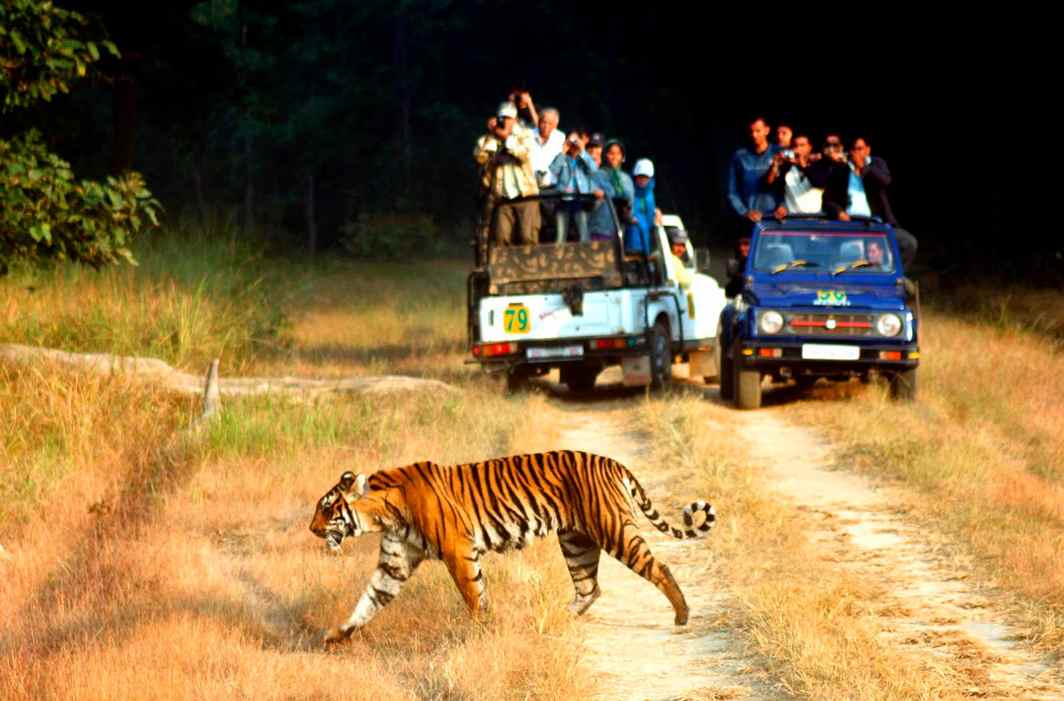 At present, India is home to 49 tiger reserves each of which is frequented by wildlife lovers and results in massive monetary gains for the respective state’s tourism industry. Karnataka has the largest number of tigers in the country (408) while the Nagarjunsagar-Srisailam reserve is the largest in terms of area (3,568 sq km). When it comes to the largest density of tigers in protected areas, Kaziranga National Park in Assam leads the list with 106 tigers.
Interestingly, a study conducted by Indian Institute of Forest Management (IIFM) has revealed that saving one tiger yields a capital benefit of about Rs 260 crore. The economic benefits from six tiger reserves namely – Corbett Tiger Reserve, Kaziranga, Periyar Reserve, Ranthambore and the Sundarbans Tiger Reserve analysed were found to be at Rs 1.5 lakh crore per year.[/vc_column_text][/vc_column][/vc_row][vc_row][vc_column][vc_column_text css=”.vc_custom_1501328347328{border-top-width: 10px !important;border-right-width: 10px !important;border-bottom-width: 10px !important;border-left-width: 10px !important;padding-top: 5px !important;padding-right: 5px !important;padding-bottom: 5px !important;padding-left: 5px !important;background-color: #e0e0e0 !important;border-radius: 10px !important;}”]Things aren’t too rosy for the tiger on foreign land too
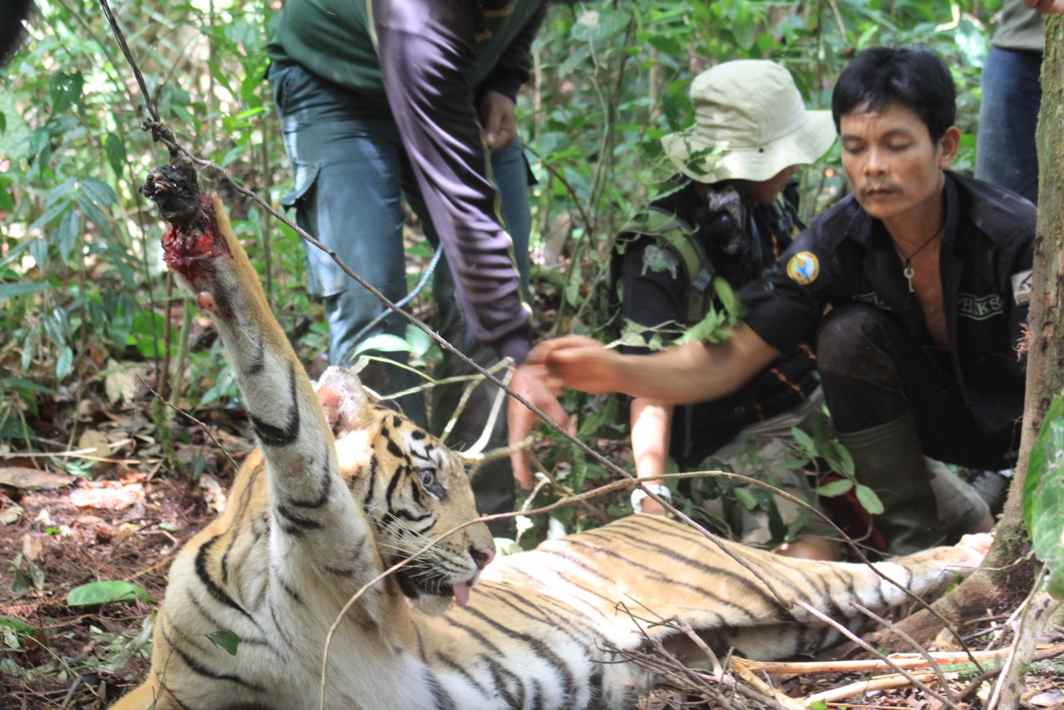 In a global perspective, WWF believes that within the tropical rain forest heritage of Sumatra, a UNESCO World Heritage site, snare traps are estimated to have doubled between 2006 and 2014, suggesting a higher number of poachers in the area.
“Yet, many of such critical habitats lack adequate resources for protection. In Rimbang Baling, one of several protected areas in Sumatra, only 26 rangers patrol over 1,400 square kilometres, an area equivalent to nearly twice the size of New York City,” WWF pointed out.[/vc_column_text][/vc_column][/vc_row]



India News
Abhijeet Dipke detained ahead of CJP’s national flag march in Delhi
Cockroach Janta Party founder Abhijeet Dipke was detained by Delhi Police on October 16, 2026, shortly before a planned national flag march. The proposed rally followed the judicial custody of two CJP members who had waved the Tricolour at Jantar Mantar.


India News
Delhi deploys 25,000 personnel, installs CCTV cameras ahead of CJP march
More than 25,000 police and paramilitary personnel have been deployed in Delhi ahead of the CJP’s planned protest march at Connaught Place. Authorities have also imposed restrictions and stepped up CCTV surveillance.
India News
Mallikarjun Kharge’s ‘Your Friends’ jab at Rahul Gandhi over congress exits
Congress president Mallikarjun Kharge took a dig at Rahul Gandhi after the Leader of the Opposition reportedly described former party leaders Jyotiraditya Scindia and Ghulam Nabi Azad as among those who had left the Congress.


Election Commission orders voter roll revision in 17 states, UTs

Delhi Police offers 11-person limit for CJP’s Connaught Place protest

Actor Imran Khan asked to leave India after CJP protest

Magnitude 7 earthquake strikes Russia’s Kamchatka Peninsula

Mallikarjun Kharge’s ‘Your Friends’ jab at Rahul Gandhi over congress exits

Abhijeet Dipke detained ahead of CJP’s national flag march in Delhi
Magnitude 7 earthquake strikes Russia’s Kamchatka Peninsula

Delhi deploys 25,000 personnel, installs CCTV cameras ahead of CJP march
Mallikarjun Kharge’s ‘Your Friends’ jab at Rahul Gandhi over congress exits
Delhi Police offers 11-person limit for CJP’s Connaught Place protest

Afghan Men Try To Hang With The Jet Engine Of The Aircraft in Kabul- Afghanistan News – Kabul News
Trending Top 10 News: 10000 Crore Fine on Flipkart, Apple to Launch Unique Feature, Hdfc Bank Job Ad

Trending Top 10 News: Nokia 6310, Apple sales, Bachpan ka Pyar Video Kid, Dainik Bhaskar IT Raid

Trending Top 10 News: Canada bans Indian flights, Rain in Delhi NCR, AIMIM Twitter hacked, Raj Kundra case

Trending Top 10 News: Shein India, Apple New Service, Pocket Oxygen, Oppo Launched New Phone
-
 India News23 hours ago
Election Commission orders voter roll revision in 17 states, UTs
-
 India News21 hours ago
Delhi Police offers 11-person limit for CJP’s Connaught Place protest
-
 India News22 hours ago
Actor Imran Khan asked to leave India after CJP protest
-
 Latest world news9 hours ago
Magnitude 7 earthquake strikes Russia’s Kamchatka Peninsula
-
 India News9 hours ago
Mallikarjun Kharge’s ‘Your Friends’ jab at Rahul Gandhi over congress exits
-
 India News9 hours ago
Delhi deploys 25,000 personnel, installs CCTV cameras ahead of CJP march
-
 India News4 mins ago
Abhijeet Dipke detained ahead of CJP’s national flag march in Delhi
