English हिन्दी
Connect with us

Tech

Apple users will soon be able to unlock iPhone with a mask on, everything you need to know about iOS 15.4 update

Apple is introducing a new feature that will allow iPhone users to not take off their masks while unlocking a phone. See what all Apple’s new iOS 15.4 update has for you.

Published

on

Apple users will soon be able to unlock iPhone with a mask on, everything you need to know about iOS 15.4 update

Apple regularly comes up with exciting updates and new features to keep users hooked to its gadgets. The tech company doesn’t leave any stone unturned to impress users with its updates. Now, Apple is rolling out a new feature that will allow users to unlock their iPhones using a face mask.

Face masks have become an integral part of our lives since the coronavirus pandemic occurred. Unlocking iPhone with a face mask on is really annoying sometimes. Users have to go through a cumbersome process to unlock their iPhone, either they have to take off their mask or enter a six-digit code.

Use Face ID with Mask will be a new toggle in the upcoming release. This quality-of-life update will tackle the most common issue among iPhone users. The update iOS 15.4 is currently under beta testing.

This technique is more reliable than Apple’s previous solution, which allowed users to unlock their iPhone using an Apple Watch. This, however, proved to be buggy and ineffective, given that not everyone who owns an iPhone has an Apple Watch.

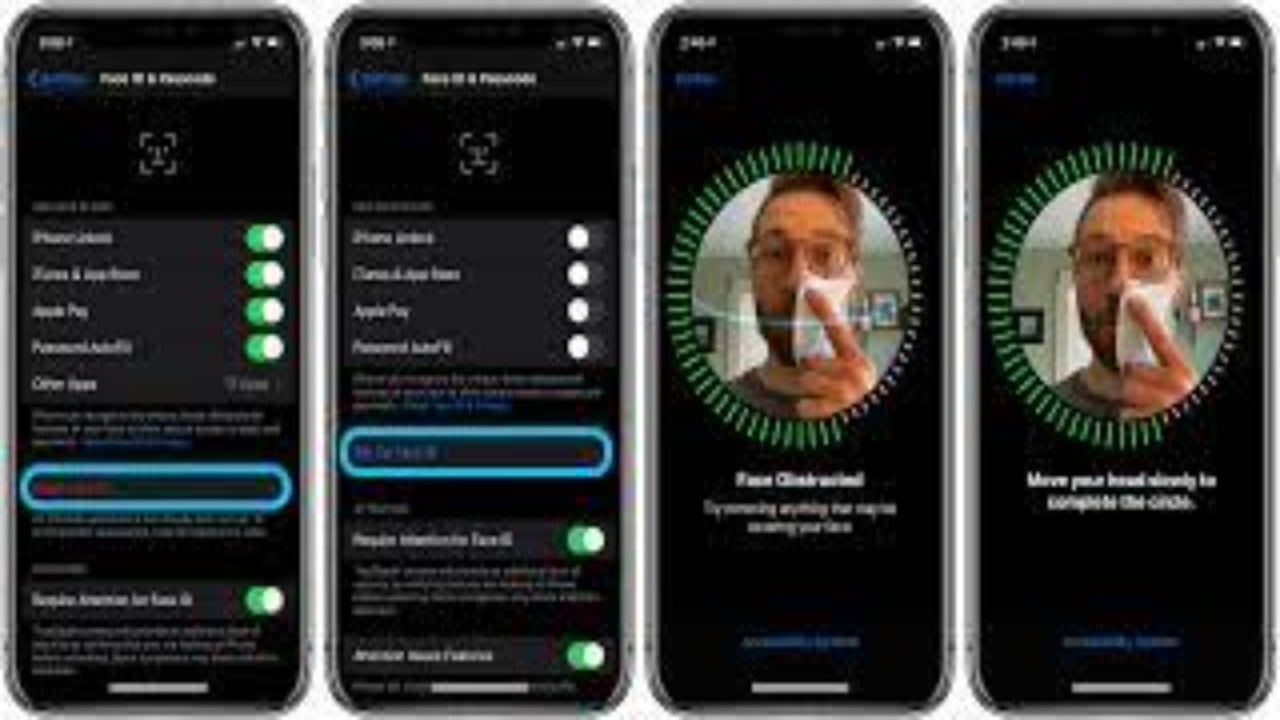
When users initially boot their iPhone running iOS 15.4, the feature will ask them to set up Face ID using a mask. Alternatively, the feature can be enabled after switching on the iPhone with iOS 15.4 by toggling to the option “Use Face ID with a mask” under Settings > Face ID & Passcode. Users don’t need to wear a mask during the setup, and the process is the same as enrolling for Face ID usually.

If the toggle to unlock the phone with the mask is enabled in iOS 15.4, the TrueDepth array will confirm a user’s identification using “unique features” around the eyes, as per Apple. The feature has been made to operate with glasses as well. Keep the toggle turned off to provide a more secure Face ID experience, according to Apple.

Meanwhile, Apple claims that the feature does not threaten security or privacy because the chance of a random person glancing at your iPhone and unlocking it using a Face ID with a mask is one in a million.

Tech

Meta introduces paid premium features globally for Instagram, Facebook, and WhatsApp

Meta has taken its premium “Plus” subscription plans global for Instagram, Facebook, and WhatsApp, introducing user-experience upgrades while laying out an expensive future roadmap for unified AI and creator tiers.

Published

on

In a significant pivot to diversify revenue streams beyond traditional advertising, tech giant Meta has officially initiated the global rollout of monthly paid subscription plans for its flagship social platforms: Instagram, Facebook, and WhatsApp. The expansion builds upon previous localized testing, bringing a suite of premium user features worldwide.

New premium ‘Plus’ tiers launched

According to statements made by Naomi Gleit, Meta’s Head of Product, the consumer subscriptions are branded under a “Plus” suffix for each respective application. Under the new pricing model, Instagram Plus and Facebook Plus are priced at $3.99 per month, while WhatsApp Plus is available for a slightly lower rate of $2.99 per month. Media reports clarify that these tiers operate entirely independently from the existing “Meta Verified” program, which remains a separate service dedicated solely to account verification and identity protection.

The new subscriptions introduce specific, exclusive upgrades designed for personalization and enhanced user data:

  • Instagram Plus: Grants subscribers the ability to view Stories anonymously without appearing on the viewer list, aggregate insights on how many users rewatched a Story, build unlimited custom audience lists, and extend Story availability beyond the standard 24 hours. Additional perks include customizable bio fonts, exclusive profile pins, unique app icons, and animated “Super Heart” reactions.
  • Facebook Plus: Replicates many of the social expression and profile customization features found in the Instagram tier, alongside the stealth viewing and extended duration tools for Facebook Stories.
  • WhatsApp Plus: Focuses primarily on utility and chat customization, enabling subscribers to change application themes, configure premium ringtones, use exclusive sticker packs, and pin up to 20 chats simultaneously.

Future roadmaps and upcoming AI subscriptions

Beyond consumer-focused social add-ons, Meta revealed it is actively piloting advanced monetization frameworks aimed at creators, business clients, and artificial intelligence enthusiasts. Product lead Naomi Gleit indicated that the company plans to eventually consolidate these upcoming tiers under a unified master brand known as “Meta One”.

Media reports highlight that the AI-centric subscription paths will include a “Meta One Plus” tier at $7.99 per month and a high-end “Meta One Premium” tier at $19.99 per month. While functional capabilities remain identical across both options, the Premium plan allocates significantly higher computing resources, allowing power users to process intensive queries requiring deeper inference and complex logic.

For content creators, Meta is structuring a tiered approach consisting of “Meta One Essential” at $14.99 per month—mirroring legacy verification benefits—and “Meta One Advanced” at $49.99 per month. The high-tier Advanced plan will offer prominent feed visibility, elevated search rankings, and automated follow-invitation mechanisms to maximize creator reach.

This systemic move toward multi-tier subscriptions materializes as Meta experiences heightened infrastructure spending, with internal projections expecting capital expenditure to reach between $125 billion and $145 billion this year due to heavy data center and AI research allocations. Following the formal rollout announcement, public market shares for Meta reacted positively, climbing nearly 3%.

Continue Reading

Gadgets

OnePlus India CEO Robin Liu steps down, shutdown rumours resurface

OnePlus India confirms business continuity after CEO Robin Liu’s resignation sparks shutdown rumours online.

Published

on

The resignation of Robin Liu as India CEO of OnePlus has triggered fresh speculation online about the company’s future, even as the firm has firmly denied any plans to shut down operations.

Liu will step down from his role effective March 31, 2026. His exit comes months after he publicly dismissed similar rumours about the company withdrawing from certain markets.

Google searches spike after leadership exit

Following news of Liu’s departure, search trends for terms like “OnePlus shutdown”, “OnePlus shutting down”, and “OnePlus India shutdown” saw a noticeable surge, indicating rising public concern.

However, OnePlus India clarified that there is no change in its business operations and dismissed the shutdown claims as misinformation.

In a public statement, Liu said the company is “operating as usual” and urged stakeholders to rely on official sources rather than unverified reports. He reiterated that claims about the company shutting down are false.

Company says operations remain unchanged

The company stated that Liu’s decision to step down was due to personal reasons and not linked to any strategic withdrawal or operational challenges in India.

OnePlus further emphasized that its India business continues normally, with no immediate changes expected in its strategy or market presence.

Restructuring within OPPO group

Industry observers suggest Liu’s exit may be part of a broader restructuring within the OPPO group, which owns OnePlus.

The restructuring is believed to focus on streamlining operations, reducing costs, and accelerating product development amid challenges such as rising component costs and supply constraints.

Reports also indicate that OnePlus experienced a decline in shipments in 2025, which may have contributed to internal changes.

Reports hint at global strategy shift

According to a report by 9to5Google, the company may scale back its presence in some global markets, including parts of Europe, as early as April 2026.

At the same time, OnePlus is reportedly planning to strengthen its focus on India and expand further into the mid-range smartphone segment.

Continue Reading

Gadgets

Oppo K14 5G launched in India with 7000mAh battery, starts at Rs 17,999

Oppo has launched the K14 5G in India with a 7000mAh battery, fast charging and durability features, starting at Rs 17,999.

Published

on

oppo K14 5G

Oppo has launched its latest mid-range smartphone, the K14 5G, in India, positioning it as an “endurance powerhouse” with a strong focus on battery life, smooth performance and long-term reliability.

The smartphone starts at Rs 17,999 for the 6GB + 128GB variant, while the 6GB + 256GB and 8GB + 256GB models are priced at Rs 19,999 and Rs 21,999 respectively. It will be available for purchase starting March 20 via Flipkart and the company’s official online store. Buyers can also avail an instant discount of up to Rs 1,000 along with no-cost EMI options for up to three months.

Focus on battery life and endurance

A key highlight of the Oppo K14 5G is its 7000mAh battery, designed to support extended daily usage without frequent charging. The company claims the device can deliver up to 738.8 hours of standby time. It also supports long usage across activities such as voice calls, video streaming, navigation and messaging.

The device comes with 45W fast charging, which can charge the battery from 1 percent to 37 percent in around 30 minutes, with a full charge taking about 92 minutes. Oppo says the battery is engineered to maintain durability for up to five years. Reverse wired charging is also supported for added convenience.

Built for durability and everyday use

The smartphone is designed with durability in mind, featuring SGS 5-star certification and MIL-STD-810H military-grade testing. It has undergone multiple drop tests and transportation shock testing to ensure resistance against accidental falls and rough usage conditions.

The device also carries IP66, IP68 and IP69 ratings, offering protection against dust, water immersion and high-pressure water exposure. Additional features like water-repellent camera coating and glove and splash touch support further enhance usability in different environments.

Display and design

The Oppo K14 5G features a 6.75-inch display with a 120Hz refresh rate and brightness of up to 1125 nits in high brightness mode. It is available in three colour options — Icy Blue, Prism Violet and Prism White — with a matte finish and subtle reflective design elements.

Performance and cooling

Powered by the MediaTek Dimensity 6300 chipset, the smartphone is designed to handle everyday tasks such as browsing, streaming and multitasking efficiently. It runs on ColorOS 15, which includes system optimisation features aimed at maintaining smooth performance over time.

To manage heat during extended usage, the device includes a vapor chamber cooling system with graphite layers for improved thermal management. This helps maintain stable performance during gaming and heavy usage.

Camera and AI features

The smartphone is equipped with a 50MP main camera, supported by a 2MP monochrome sensor, along with an 8MP front camera. It offers AI-powered features such as portrait retouching, AI eraser, AI clarity enhancement and dual-view video recording.

These tools are designed to improve image quality, assist in editing and enhance overall photography experience for users.

Availability and after-sales support

The Oppo K14 5G will be available starting March 20 with launch offers including discounts and EMI options. The company is also offering a 30-day inspection and replacement policy in case of manufacturing defects, supported by its nationwide service network.

Continue Reading

Trending

© Copyright 2022 APNLIVE.com