English हिन्दी
Connect with us

India News

Only six out of India’s 22 river basins are climate resilient: IIT-Guwahati Study

Published

on

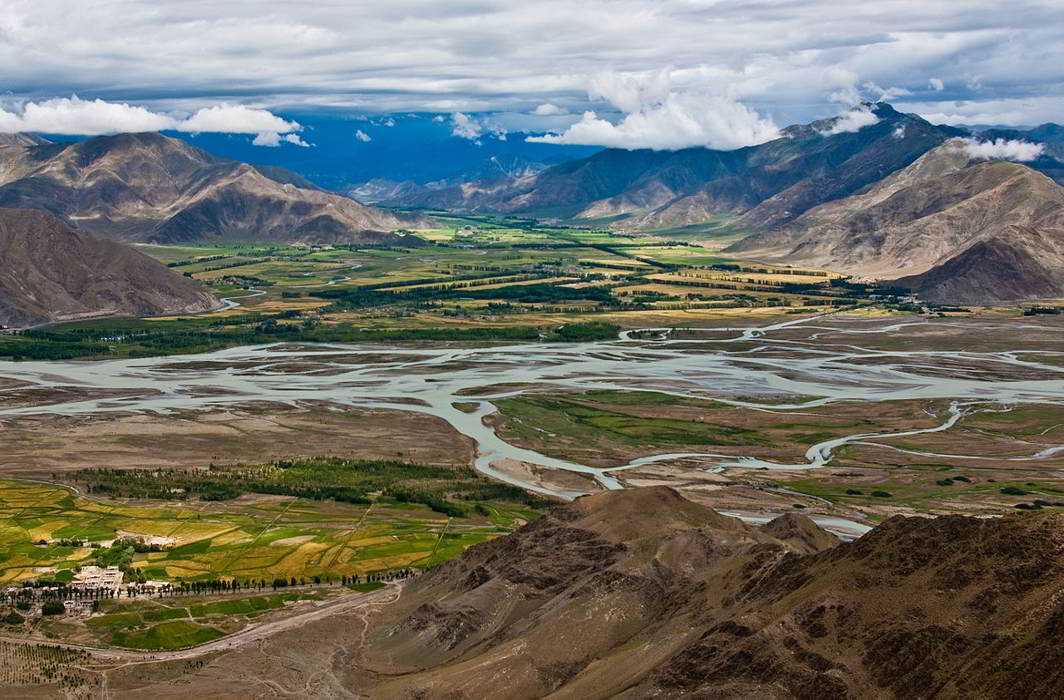
Brahmaputra River

By Umashankar Mishra

Only 6 river basins including Brahmaputra, Indus, Pennar were able to sustain their primary productivity by increasing water use efficiency during drought

New Delhi: Climate change remains a matter of concern globally. A new study by Indian researchers has shown that only 6 out of 22 river basins in the country have the potential to cope with the threat of climate change, particularly droughts.

This means nearly two-thirds of India’s terrestrial ecosystems are not resilient to drought. Central India has been found to be the most vulnerable to climate change. Parts of northwestern, northeastern and southern India appear to be resilient to cope with droughts while the rest of the country is non-resilient, says the study done by researchers at the Indian Institute of Technology, Guwahati.

“We evaluated the ecosystem resilience in terms of the capability of an ecosystem to maintain its productivity during hydroclimatic disturbances,” lead researcher Dr Manish Goyal said while speaking to India Science Wire.

“Only six river basins- Brahmaputra, Indus, Pennar, west flowing rivers of Kutch and Saurashtra including Luni basin, east flowing rivers between Krishna and Pennar basins and east flowing rivers between Pennar and Cauvery basin were able to sustain their primary productivity by increasing the water use efficiency under driest years,” Goyal said.

Researchers compared response of river basin systems to water stress at different levels such as river basins, land covers, and climate types. They have developed an ecosystem resilience map of India using high resolution remote sensing satellite data for 22 main river basins. The data productivity of a river basin and evapo-transpiration was obtained from NASA’s MODIS satellite and studied along with rainfall data from the India Meteorological Department.

Drastic reduction in water use efficiency under driest conditions was observed for some basins, which highlights their inability to cope with climate change. Low primary productivity can distort the balance of ecosystem and its resistance to fight drought. “The inability of ecosystems at different scales to tolerate water-limited conditions may pose a serious challenge in terms of crop production and food security,” Goyal added.

Only two types of forests – evergreen needle-leaf forest and evergreen broadleaf forest – were found to be resilient at land-cover scale. The presence of such forests in the Brahmaputra basin could be the reason for its resilience. However, forests in some parts of Western Ghats and central India were found more vulnerable to climate change. Ganga basin, the most populous and agriculturally important basin, was also found slightly non-resilient.

“It is clear that forests have higher resilience to withstand the climatic disturbances. The deforestation activities, in the name of economic development and expansion of agriculture, will result in making country more vulnerable to climate change”, researchers said.

The research team also included Ashutosh Sharma. The  study has appeared in journal Global Change Biology.

(This article is from an auto-generated syndicated feed provided by the India Science Wire)

India News

Didn’t violate party line: Shashi Tharoor defends stand on Operation Sindhoor

Shashi Tharoor says his stance on Operation Sindhoor was driven by national interest and insists he did not violate the Congress party line.

Published

on

Congress MP Shashi Tharoor says his views on Operation Sindhoor were guided by national interest and aligned with India’s security priorities

Congress MP Shashi Tharoor on Saturday said he has never crossed the Congress party’s stated positions inside Parliament, asserting that his only principled public disagreement was related to Operation Sindhoor.

Speaking during a session at the Kerala Literature Festival, Tharoor said he had taken a firm stand on the issue and remained “unapologetic” about it. His remarks come amid recent reports highlighting differences between him and sections of the party leadership, with speculation around his dissatisfaction over not being adequately acknowledged at a recent event in Kochi and alleged attempts by state leaders to sideline him.

Clarifying his position, Tharoor said that as a writer and observer, he had penned a newspaper column after the Pahalgam incident, arguing that the attack should not go unpunished and calling for a limited kinetic response. He added that while India’s primary focus remains development, the country should not be drawn into a prolonged conflict with Pakistan.

According to Tharoor, any response should be restricted to targeting terrorist camps rather than escalating tensions. He noted that he was surprised when the government eventually took steps that mirrored the approach he had outlined.

Referring to Jawaharlal Nehru’s famous words, “Who lives if India dies?”, Tharoor said that when the country’s security and global standing are at stake, national interest must take precedence over political differences.

He added that while political parties may disagree on various issues in the process of strengthening democracy, India must come first whenever core national interests are involved.

Continue Reading

India News

India to start first commercial semiconductor chip production in 2026, says Ashwini Vaishnaw

India is on track to begin its first commercial semiconductor chip production in 2026, with pilot production already underway and investments nearing $90 billion, according to Union Minister Ashwini Vaishnaw.

Published

on

Union Electronics and Information Technology Minister Ashwini Vaishnaw on Friday said India remains on schedule to begin commercial semiconductor chip production in 2026, in line with the targets outlined under the India Semiconductor Mission launched in January 2022.

Speaking to media, the minister said the government had committed to starting commercial production within five years of the mission’s launch and that the timeline is being met.

“The first commercial production will begin in 2026. Four semiconductor plants are expected to start operations this year, while pilot production has already begun at three plants in 2025,” Vaishnaw said.

Semiconductor ecosystem taking shape

The minister said India’s semiconductor ecosystem is developing rapidly, with global equipment manufacturers setting up operations in the country and a strong materials manufacturing base emerging alongside.

He added that the talent pipeline is progressing faster than expected. Against a target of training 85,000 skilled professionals over 10 years, India has already trained around 65,000 people in just four years, he said.

Vaishnaw noted that several milestones under the first phase of the Semiconductor Mission are either on track or ahead of schedule, reflecting growing confidence in India’s manufacturing ambitions.

Investments near $90 billion, more expected

On the investment front, the minister said total investments in the semiconductor sector have reached close to USD 90 billion so far. He added that committed investments could rise to around USD 150 billion as India approaches the upcoming AI Impact Summit scheduled to be held in New Delhi from February 16 to 20.

According to Vaishnaw, global semiconductor players are increasingly supportive of India’s efforts and are keen to participate in the country’s expanding chip manufacturing ecosystem.

ASML equipment for Dholera fab

Highlighting the importance of advanced manufacturing technology, Vaishnaw spoke about his visit to Veldhoven in the Netherlands, where he visited the headquarters of ASML, the world’s leading supplier of lithography equipment used in semiconductor manufacturing.

He said lithography remains the most complex and precision-intensive process in chip production and confirmed that India’s upcoming semiconductor fabrication facility in Dholera, Gujarat, will use equipment supplied by ASML.

Vaishnaw said the interest of global equipment manufacturers in India reflects the country’s strong design capabilities, large talent pool and consistent policy environment.

India’s progress in AI and global confidence

The minister also highlighted India’s growing role in artificial intelligence, stating that the country is developing strength across multiple layers of the AI stack, including applications, sovereign models, chips and infrastructure.

He said global industry leaders expressed strong confidence in India’s semiconductor and AI journey during discussions at the World Economic Forum in Davos, with many indicating their willingness to contribute to India’s long-term goals.

The India Semiconductor Mission, approved by the Union Cabinet in December 2021 with an outlay of Rs 76,000 crore, aims to support semiconductor fabrication, display manufacturing and chip design, and position India as a global hub for electronics manufacturing and innovation.

Continue Reading

India News

Rain in Delhi, snowfall in Kashmir as north India sees weather shift

Rainfall in Delhi and fresh snowfall in Kashmir and Manali point to a significant weather shift across north India, impacting flights, trains and temperatures.

Published

on

Snowfall

Light to moderate rainfall was recorded across several parts of Delhi on Friday morning, accompanied by thunderstorms, lightning and strong winds. Cloudy conditions are likely to persist through the day, according to weather updates.

The India Meteorological Department issued an orange alert early morning, warning of short but intense spells of rain along with moderate thunderstorm activity in multiple pockets of the city.

Areas such as Narela, Bawana, Alipur, Burari, Kanjhawala, Rohini, Badli, Model Town, Azadpur, Pitampura, Mundka, Paschim Vihar, Punjabi Bagh, Rajouri Garden, Jaffarpur, Najafgarh and Dwarka are expected to be affected. These regions may witness lightning and fast-moving winds along with rainfall.

The rain is likely to provide relief from prevailing temperatures in Delhi and nearby regions.

Fresh snowfall blankets Kashmir Valley

Several areas in the Kashmir Valley, including the popular ski destination of Gulmarg, received fresh snowfall as a strong western disturbance impacted Jammu and Kashmir. Snowfall began late Thursday evening in Gulmarg, located in Baramulla district.

High-speed winds were also reported across Srinagar and other plains of the valley.

Due to the continuing snowfall, authorities at Srinagar Airport have indicated that flight operations may take longer than usual to return to normal. Train services were affected, and the Srinagar–Jammu national highway was blocked following snow accumulation.

Himachal Pradesh’s Manali also witnessed fresh snowfall, covering the hill town in a white blanket and bringing cheer to residents and tourists.

Continue Reading

Trending

© Copyright 2022 APNLIVE.com