English हिन्दी
Connect with us

Latest world news

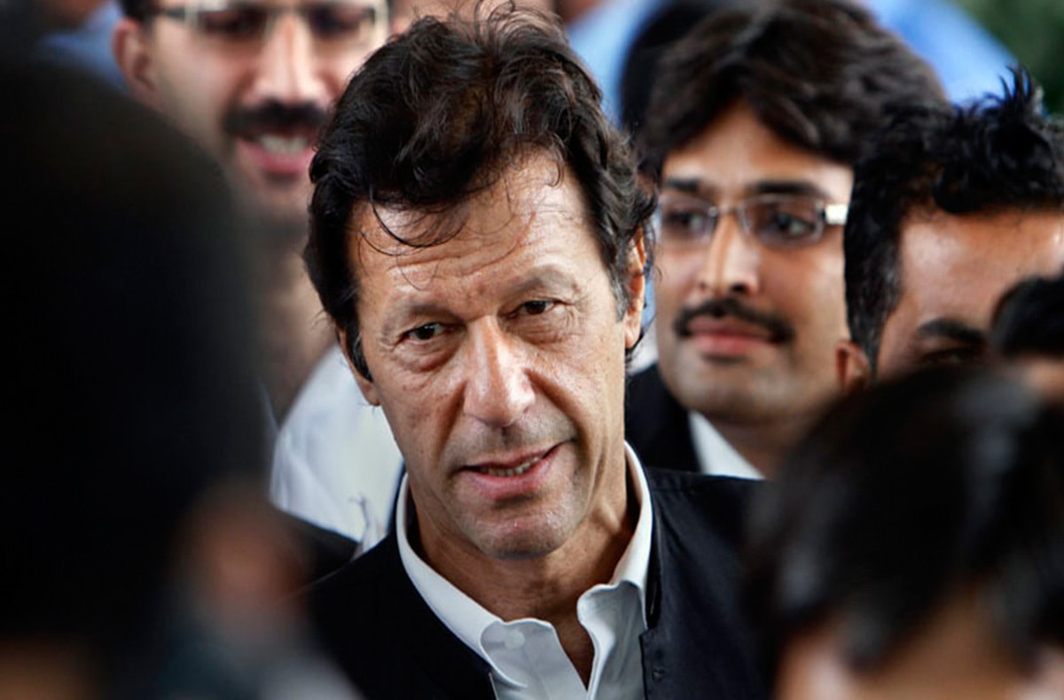
Election Commission of Pakistan issues non-bailable arrest against Imran Khan

Published

on

[vc_row][vc_column][vc_column_text]Issuing the warrant the ECP directed that Imran Khan should “be arrested and brought for the next hearing of the case”.

In a major setback for Imran Khan, the Election Commission of Pakistan on Thursday issued a non-bailable arrest warrant against the Pakistan Tehreek-e-Insaf (PTI) chief. The election commission’s directive came over a contempt of court case filed against Khan for “repeatedly failing to appear for the hearing and for failing to send a written apology for absence in court”.

Imran Khan was summoned by the ECP for the hearing of a case filed on October 26, against the former Pakistan cricket captain, by one PTI’s founding members, Akbar S Babar. Issuing the warrant the ECP directed that Khan should “be arrested and brought for the next hearing of the case”.

However, as reported by Dawn, party spokesperson, Naeemul Haq stated that they will challenge the ECP’s warrant in the Islamabad High Court. Earlier, a bailable arrest warrant was issued by the ECP on September 14, after Khan failed to appear for the hearing on the case. However, the court suspended the warrant following a petition from PTI.

On Thursday, Advocate Shahid Gondil told the court that the case, pertaining to the ECP’s jurisdiction to hear the plea, was pending in the Islamabad High Court (IHC). According to PTI spokesperson Naeemul Haq, the party is also set to challenge the warrants in the IHC.

Hitting out at the ECP’s order, Babar Awan, Imran Khan’s chief counsel said, “A new warrant is issued in the same case where a (bailable) warrant was already suspended. We will also look into whether this is contempt of the IHC’s full bench or not, and then (the party) we will challenge it.”

Though the ECP claimed on August 10 that it has the legal right to hear the contempt case against Imran Khan, the PTI chief had earlier challenged the commission’s jurisdiction to initiate hearing. And after Khan’s repeated failures to address the commission, ECP issued a formal show-cause notice, asking him to reply by August 23.

Earlier, after Khan claimed that the commission is biased in the foreign-funding case against him, his counsel tendered a formal apology with the commission. However, in a interview to a TV channel, Imran Khan stated that though his counsel had sought apology, he had not.[/vc_column_text][/vc_column][/vc_row]

Latest world news

Strait of Hormuz open but Iran’s Guards impose new transit conditions

Iran has reopened the Strait of Hormuz during a ceasefire, but new restrictions by the Revolutionary Guards limit how vessels can pass.

Published

on

Strait of Hormuz

The Strait of Hormuz has been declared open for commercial shipping during the ongoing ceasefire, but fresh conditions imposed by Iran’s Revolutionary Guards have raised questions over how unrestricted the passage actually is.

Iran’s Foreign Minister Abbas Araghchi announced that the crucial waterway would remain “completely open” for commercial vessels for the duration of the ceasefire. However, a separate statement from the Islamic Revolutionary Guard Corps (IRGC) clarified that ships must comply with specific operational requirements while transiting the strait.

According to the IRGC, all vessels must obtain prior permission before entering the strait. Additionally, civilian ships are required to follow designated routes set by Iranian authorities, while military vessels continue to be prohibited from passing through.

The Guards described these measures as part of a “new order” aligned with ceasefire terms, though these details were not explicitly mentioned in the foreign minister’s initial announcement.

The differing messages have also triggered reactions within Iran, with some state-backed outlets criticising the earlier statement for lacking clarity and potentially creating confusion around the reopening of the strait.

Meanwhile, global attention remains focused on the strategic waterway, which handles a significant share of the world’s oil shipments. The reopening announcement led to a sharp drop in crude prices, reflecting expectations of improved supply flows.

US President Donald Trump also confirmed that the strait is open for passage, though he indicated that the American naval blockade targeting Iran would continue until broader negotiations are completed.

Despite the reopening, analysts suggest that the situation remains fragile, with ongoing restrictions, geopolitical tensions, and security concerns continuing to affect maritime movement through one of the world’s most critical energy corridors.

Continue Reading

Latest world news

Trump calls PM Modi friend, says had very good conversation amid West Asia tensions

Trump described PM Modi as a friend after a 40-minute call focusing on Iran tensions, trade and strategic ties.

Published

on

Donald Trump statement

US President Donald Trump described Prime Minister Narendra Modi as a “friend” and said the two leaders had a “very good conversation” during a recent phone call held amid rising tensions in West Asia.

The call, which lasted around 40 minutes, comes shortly after developments in the ongoing Iran-related conflict and diplomatic efforts in the region. During the conversation, both leaders discussed key issues including regional security, trade, and bilateral cooperation.

The interaction marks one of the first high-level engagements between the two leaders following recent ceasefire-related developments involving the United States and Iran. The evolving situation in West Asia, including concerns around stability and global energy routes, was a significant focus of the discussion.

Officials indicated that the leaders also reviewed progress in India-US ties and reiterated their commitment to strengthening the strategic partnership across multiple sectors.

The phone call reflects continued coordination between New Delhi and Washington as geopolitical tensions persist in the Middle East, with both sides maintaining close communication on global and regional issues.

Continue Reading

Latest world news

Israel-Lebanon ceasefire to begin within hours as Trump announces 10-day truce

Israel and Lebanon may begin a 10-day ceasefire within hours after a proposal announced by Donald Trump amid ongoing tensions.

Published

on

Donald Trump

A temporary halt in hostilities between Israel and Lebanon is expected to begin within hours after US President Donald Trump announced a proposed 10-day ceasefire between the two sides, amid ongoing tensions in the region.

According to his statement, the ceasefire is likely to take effect around 5 p.m. Eastern Time, although independent confirmation from both sides is still awaited.

The development follows discussions involving Israeli Prime Minister Benjamin Netanyahu and Lebanese President Joseph Aoun, with mediation efforts led by the United States.

Officials indicated that the proposed truce is aimed at creating a limited window to reduce violence and potentially pave the way for broader diplomatic engagement. The situation along the Israel-Lebanon border has remained tense in recent weeks, with escalation linked to the activities of Hezbollah.

Diplomatic efforts have intensified in recent days, with discussions facilitated by the United States, including the involvement of US Secretary of State Marco Rubio. However, details of the agreement and the extent of coordination between the parties remain unclear.

The situation remains fluid, and the success of the ceasefire will depend on adherence by all sides involved. The conflict has already led to significant humanitarian and geopolitical consequences, including displacement and disruption in affected areas.

While the proposed ceasefire is being seen as an important step toward de-escalation, broader negotiations involving regional stakeholders are expected to be necessary for any lasting resolution.

Continue Reading

Trending

© Copyright 2022 APNLIVE.com