JEE Main Result 2022: Date, Direct Link, Merit List, Cutoff Trends
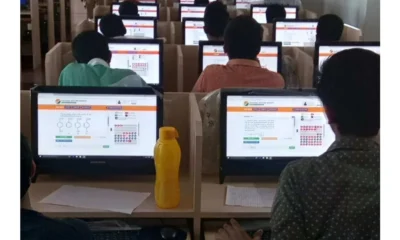
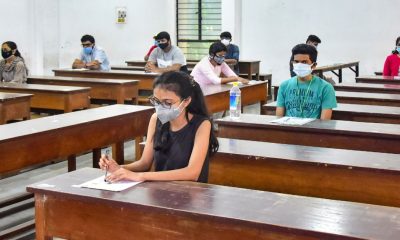
The National Testing Agency will release the JEE Main 2022 result on its official site within a week or 10 days after conducting the examination. Because NTA will conduct this year’s JEE Main examination in two phases, the JEE Main 2022 result will also be declared in two phases.
The National Testing Agency will release the JEE Main 2022 result on its official site within a week or 10 days after conducting the examination. Because NTA will conduct this year’s JEE Main examination in two phases, the JEE Main 2022 result will also be declared in two phases. This article will comprehensively cover all the important aspects of the JEE Main 2022 result like the important dates, step by step process to access the JEE Main 2022 marksheet, details mentioned on the scorecard and others.

The latest JEE Main result schedule is yet to be finalized by the NTA officials. The JEE Main 2022 phase 1 exam will be conducted between 16 and 21 April and the second phase between 24 and 29 May. As per the schedule, the result for the GATE 2022 exams can be expected within 7 to 10 days from the day the exam concludes.
JEE Main Result Highlights 2022
Some important pointers regarding the JEE Main Exam 2022result have been given in the table below –
Name of the Examination
Joint Entrance Examination Mains (JEE Mains)
Name of the Conducting Body
National Testing Agency
Exam Dates
Phase 1 – 16 to 21 April 2022Phase 2 – 24 to 29 April 2022
Result Declaration Date
Phase 1 – TBAPhase 2 – TBA
Total Number of Candidates Expected to Appear in the Exam
Click on the JEE Main 2022 result direct link given on the page
Enter your valid JEE Main candidate credentials like JEE registration number and password in their respective boxes and click on the “Submit” button
After the JEE Main 2022 result is displayed on the screen, check the details mentioned on the scorecard very carefully
Download the result card of JEE Main 2022 for future reference
Details Mentioned on the JEE Main 2022 Scorecard/Mark Sheet
The candidates must check if the following details are mentioned correctly in their respective JEE Main 2022 scorecards/mark sheets before downloading –
JEE Main 2022 roll number of the candidate
JEE Main 2022 registration number of the candidate
Marks obtained by the candidate in each paper of the examination
Total marks obtained by the candidate
All India Rank obtained by the candidate
Category-specific rank obtained by the candidate
JEE Main 2022 Inter-Se Merit List
Because JEE Main 2022 is a huge examination with applicants numbering in the tens of lakhs, the possibility of multiple candidates tied in the same marks is also high. Due to this possibility, the NTA officials have deduced a method to calculate the Inter-se merit of such candidates to provide them with ranks. The parameters of deducing the JEE Main inter-se merit of the candidates are different for candidates appearing for the B.Tech and B.Arch examinations. The JEE Main 2022 inter-se merit determination parameters have been discussed below –
B.E/B.Tech
B.Arch/B.Plan
First priority to candidates with higher marks in the Mathematics sectionNext, candidates with higher marks in the Physics section will be given priorityNext, the number of positive and negative marks obtained by the candidates are prioritizedFinally if the tie persists after employing all the aforementioned criteria, all the tied candidates are awarded the same rank
First priority to candidates with higher scores in the General Aptitude sectionNext, candidates with higher marks in the Drawing Section will be given priorityNext, the positive to negative marks ratio of the candidates are given priorityFinally if the tie persists after employing all the aforementioned criteria, all the tied candidates are awarded the same rank
Some important pointers regarding the JEE Main 2022 result as perceived from the official NTA brochure are given below –
The top 2,50,000 JEE Main 2022 rank holders will be eligible for the JEE Advanced 2022 examination scheduled to take place on 03rd July
For the calculation of this year’s JEE Main normalised score, the NTA officials will not consider the class 12 marks obtained by the test-takers
Based on the JEE Main 2022 normalised score, the NTA officials will prepare the cutoff list
The NTA officials will prepare separate All India Rank List and State Merit List
What After JEE Main 2022 Result?
The NTA officials will release the JEE Main 2022 cutoff list after the declaration of the result on their official website. The JEE Main 2022 cutoff scores will be released as per the category of the test-takers. There are two types of cutoff scores – Qualifying Cutoff Scores and Admission Cutoff Scores. The qualifying cutoff marks will be released by the participating institutions and the admission cutoff scores by JoSAA.
Kerala LSS USS result 2026: Official website slow? Check how to download scorecard online
The Kerala CM Kids LSS USS result 2026 has been declared online. Here is a comprehensive troubleshooting guide and step-by-step process to download your scorecard if the official portal bpekerala.in is down or unresponsive.
The Kerala Public Examination Section has officially announced the Kerala CM Kids LSS and USS result 2026. The scorecard link is live for candidates who sat for the scholarship eligibility examinations conducted in February 2026.
However, shortly after the declaration, several students and parents encountered difficulties trying to log onto the main portal, bpekerala.in. Due to a massive surge in simultaneous traffic from eager candidates, the official website has experienced temporary server slowdowns, loading delays, and intermittent error screens. Media reports indicate that the portal might stay slow during peak hours, but authorities ensure that the result data is perfectly safe and live online.
Technical glitches right after a major result declaration are quite common due to infrastructural limitations during peak traffic. Some of the primary factors contributing to the current loading errors include:
High visitor traffic: Thousands of students trying to load the homepage simultaneously.
Server overload: Simultaneous database requests leading to temporary unresponsive servers.
Mobile compatibility limitations: Heavy traffic coupled with certain mobile browsers causing slow rendering times.
Step-by-step guide to download Kerala LSS USS result 2026
If you are experiencing slow loading speeds on the primary web server, you can carefully try the following steps to download your marksheet:
Step 1: Navigate to the official website at bpekerala.in and let the landing page load completely without interrupting.
Step 2: Find and click on the link labeled “CM Kids LSS USS Result 2026” or head directly to the dedicated “Results” tab on the interface.
Step 3: Enter your accurate credentials, which include your Registration Number and Date of Birth (formatted as DD/MM/YYYY), precisely as mentioned in your original hall ticket.
Step 4: Click on the “Submit” or “View Result” button. If the screen takes time to process, avoid refreshing multiple times as it can block your session.
Step 5: Once your breakdown of scores appears on the dashboard, download the digital copy or capture a screenshot, then print a physical copy for any future administrative or school needs.
Alternative links and troubleshooting tips
If bpekerala.in fails to open entirely, candidates are advised not to panic. A backup official digital platform has been set up to ease the main server load. Students can log into pareekshabhavan.kerala.gov.in to access mirrored links for checking their LSS and USS scholarship scores.
Additionally, you can follow these easy technical fixes to bypass server bottlenecks:
Clear browser data: Empty your browser cache or open the link using an Incognito/Private window.
Change connectivity: Switch your internet connection from mobile data to a stable Wi-Fi connection, or vice versa, to reset data routing.
Switch your browser: Try alternative web browsers like Mozilla Firefox or Google Chrome instead of default system web viewers.
Check during off-peak windows: Wait for about 15 to 30 minutes and re-attempt during non-peak windows when server traffic naturally drops down.
CBSE makes three languages mandatory for Classes 9 and 10 from July 1
CBSE has announced that students in Classes 9 and 10 must study three languages from July 1, 2026, though no board examination will be conducted for the third language during the initial rollout.
The Central Board of Secondary Education has announced that students in Classes 9 and 10 will be required to study three languages from July 1, 2026, as part of the implementation of the National Education Policy (NEP) 2020 and the National Curriculum Framework for School Education (NCFSE) 2023.
Under the revised structure, students will study languages under the R1, R2 and R3 format. The board has clarified that two of the three languages must be Indian languages.
However, CBSE has stated that there will be no Class 10 board examination for the third language, also referred to as R3, during the initial phase of implementation.
What the new language structure means
According to the updated curriculum framework, students will choose three different languages. The same language cannot be selected at more than one level simultaneously.
The board has explained the structure as:
R1: Any language offered by CBSE
R2: A language different from R1
R3: A third language different from both R1 and R2
The move is aimed at promoting multilingual education in line with NEP 2020 recommendations.
No board exam for third language initially
CBSE has clarified that although the third language will become mandatory for Classes 9 and 10, students will not immediately face a board examination for R3 in Class 10.
Reports said the full implementation of the three-language board examination structure is expected to happen gradually over the coming years.
Schools asked to prepare for rollout
The board has already directed schools to finalise language options and upload details on the OASIS portal to ensure smooth implementation of the revised policy.
CBSE has also indicated that temporary textbook arrangements and interim measures for language teacher shortages may be introduced during the transition phase.
The National Testing Agency (NTA) has announced that the NEET UG 2026 re-examination will be conducted on June 21 following the cancellation of the earlier exam amid allegations of a paper leak.
The original NEET UG 2026 examination, held on May 3, was scrapped after investigative agencies flagged concerns regarding the integrity of the exam process. The matter is currently under investigation by the Central Bureau of Investigation (CBI).
NTA issues fresh schedule
According to the official announcement, candidates who had registered for the cancelled examination will not be required to submit fresh applications for the re-test. Existing registrations will remain valid for the June 21 examination.
The agency has also advised students and parents to rely only on official NTA communication channels for updates related to admit cards, examination centres and other examination-related notifications.
Paper leak investigation underway
The NEET UG paper leak case has triggered a nationwide probe, with the CBI making multiple arrests in connection with the alleged leak network. Investigators are examining how question papers were allegedly circulated before the examination.
Reports have suggested that handwritten copies of the question paper were allegedly scanned and circulated through messaging networks and intermediaries ahead of the examination.
Students await admit cards and city slips
The NTA is expected to release fresh city intimation slips and admit cards ahead of the June 21 examination date. Candidates have been advised to regularly check the official NEET website for updates regarding examination centres and instructions.
APN News is today the most watched and the most credible and respected news channel in India. APN has been at the forefront of every single news revolution. The channel is being recognized for its in-depth, analytical reportage and hard hitting discussions on burning issues; without any bias or vested interests.