English हिन्दी
Connect with us

Gadgets

Indian scientists at Pune’s NIV detect new strain of dengue virus

Published

on

Indian scientists at Pune’s NIV detect new strain of dengue virus

[vc_row][vc_column][vc_column_text]~By Dr T V Venkateswaran

Study by National Institute of Virology scientists shows that a dengue strain that originated in Singapore had emerged in Tamil Nadu in 2012 and Kerala in 2013

New Delhi: Scientists at Pune-based National Institute of Virology (NIV) have found a new genotype of dengue virus in patients who suffered due to one of the worst epidemics in recent years in Tamil Nadu. The study shows that the strain originated in Singapore and emerged in Tamil Nadu in 2012 and Kerala in 2013.

Even a single cell bacterium has not only DNA but also cell organelles. But viruses are just bits of DNA material in a wrap, and they use cellular mechanism of the host to multiply themselves. In doing so they damage the infected cells. The immune system of the body responds with production of specific antibodies, which destroy specific viruses.

Dengue virus comes in different types and each with different flavours. There are four serotypes of dengue virus – DENV-1 to 4. Each of them has multiple genotypes. The genotype variation can be subtle either in DNA material or the envelope. For example, DENV-1 comes in as many as five genotypes – Asia, South Pacific, Thailand, Malaysia and AM/AF.

When infected first time, the patient developed a life time immunity for that particular serotype due to presence of antibodies produced earlier. However, if the secondary infection is by another serotype, the immune system is confused and the infection can become life threatening.

“Dengue virus has four antigenically defined serotypes and each serotype has multiple genotypes with several clades based on phylogenetic analysis of envelope or whole genome sequences” says D Cecilia of the Dengue Group at ICMR-National Institute of Virology, Pune, who is the lead author of the new study. This makes developing an effective vaccine a major challenge.

During the last five years, the National Vector Borne Disease Control Programme (NVBDCP) reported 80,725 cases of dengue per year with a fatality rate of about 0.24%. The ten year data for Tamil Nadu, 2007–2016 show an average of 2539 cases per year with fatality of 0.21%. This is less than the national average. However, during 2012 the cases spiked to 12,826 and deaths rose to 66, which implied fatality of 0.51%. This was a clear signature of a dengue epidemic.  Epidemiological studies indicated that Tirunelveli in Tamil Nadu was the epicentre of the epidemic.

Past research had shown that the emergence of new genotype was the cause of the major dengue outbreak in late 1980s in India. Taking a cue, scientists led by Dr Cecilia collected blood samples from patients in South India during the 2012 outbreak with the help of Vellore-based Christian Medical College.  The genome sequence of the virus collected from the samples were compared against the GenBank library which hosts all known dengue virus samples from 1943 to 2015.

The study revealed that DENV-1 Asian genotype had replaced the AF-AM type that was hitherto dominant in Tamil Nadu. “All four serotypes were circulating but DENV-1 was dominant, present in 52% of the serotyped samples” says Cecilia. Further, the study showed that the DENV-1 Asian genotype had also developed a new phenotype in the E gene. “This is the first time after 20 years we are observing change in genotype in India,” the scientist added.

DENV-1 originated in US and Japan during 1932. However, the Asian genotype of DENV-1 that emerged in Thailand. The Indian strains that caused havoc during the 2012-15 emerged in Singapore sometime in 2005. The same strain caused an epidemic in Singapore in 2005 and later in 2009 in Sri Lanka. “Phylogenetic analysis revealed that the Asian genotype was introduced from Singapore and shared 99% similarity with viruses, associated with large outbreaks in Singapore and Sri Lanka. The movement of DENV can affect dengue outbreaks and underscores the need for close molecular monitoring of DENV,” says Cecilia.

The findings are published in journal Virology. The research team included D. Cecilia, J.A. Patil, M.B. Kakade, A. Walimbe, K. Alagarasu, B. Anukumar, from National Institute of Virology and  A. Abraham from  Christian Medical College, Vellore.

(This article has not been edited by the APNLive staff. It is auto-generated from a syndicated feed provided by the India Science Wire)[/vc_column_text][/vc_column][/vc_row]

Gadgets

OnePlus India CEO Robin Liu steps down, shutdown rumours resurface

OnePlus India confirms business continuity after CEO Robin Liu’s resignation sparks shutdown rumours online.


Published

on

The resignation of Robin Liu as India CEO of OnePlus has triggered fresh speculation online about the company’s future, even as the firm has firmly denied any plans to shut down operations.

Liu will step down from his role effective March 31, 2026. His exit comes months after he publicly dismissed similar rumours about the company withdrawing from certain markets.

Google searches spike after leadership exit

Following news of Liu’s departure, search trends for terms like “OnePlus shutdown”, “OnePlus shutting down”, and “OnePlus India shutdown” saw a noticeable surge, indicating rising public concern.

However, OnePlus India clarified that there is no change in its business operations and dismissed the shutdown claims as misinformation.

In a public statement, Liu said the company is “operating as usual” and urged stakeholders to rely on official sources rather than unverified reports. He reiterated that claims about the company shutting down are false.

Company says operations remain unchanged

The company stated that Liu’s decision to step down was due to personal reasons and not linked to any strategic withdrawal or operational challenges in India.

OnePlus further emphasized that its India business continues normally, with no immediate changes expected in its strategy or market presence.

Restructuring within OPPO group

Industry observers suggest Liu’s exit may be part of a broader restructuring within the OPPO group, which owns OnePlus.

The restructuring is believed to focus on streamlining operations, reducing costs, and accelerating product development amid challenges such as rising component costs and supply constraints.

Reports also indicate that OnePlus experienced a decline in shipments in 2025, which may have contributed to internal changes.

Reports hint at global strategy shift

According to a report by 9to5Google, the company may scale back its presence in some global markets, including parts of Europe, as early as April 2026.

At the same time, OnePlus is reportedly planning to strengthen its focus on India and expand further into the mid-range smartphone segment.

Continue Reading

Gadgets

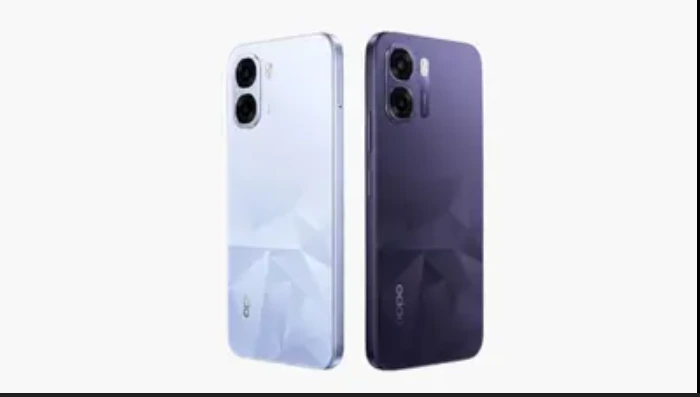
Oppo K14 5G launched in India with 7000mAh battery, starts at Rs 17,999

Oppo has launched the K14 5G in India with a 7000mAh battery, fast charging and durability features, starting at Rs 17,999.
Published

on

oppo K14 5G

Oppo has launched its latest mid-range smartphone, the K14 5G, in India, positioning it as an “endurance powerhouse” with a strong focus on battery life, smooth performance and long-term reliability.

The smartphone starts at Rs 17,999 for the 6GB + 128GB variant, while the 6GB + 256GB and 8GB + 256GB models are priced at Rs 19,999 and Rs 21,999 respectively. It will be available for purchase starting March 20 via Flipkart and the company’s official online store. Buyers can also avail an instant discount of up to Rs 1,000 along with no-cost EMI options for up to three months.

Focus on battery life and endurance

A key highlight of the Oppo K14 5G is its 7000mAh battery, designed to support extended daily usage without frequent charging. The company claims the device can deliver up to 738.8 hours of standby time. It also supports long usage across activities such as voice calls, video streaming, navigation and messaging.

The device comes with 45W fast charging, which can charge the battery from 1 percent to 37 percent in around 30 minutes, with a full charge taking about 92 minutes. Oppo says the battery is engineered to maintain durability for up to five years. Reverse wired charging is also supported for added convenience.

Built for durability and everyday use

The smartphone is designed with durability in mind, featuring SGS 5-star certification and MIL-STD-810H military-grade testing. It has undergone multiple drop tests and transportation shock testing to ensure resistance against accidental falls and rough usage conditions.

The device also carries IP66, IP68 and IP69 ratings, offering protection against dust, water immersion and high-pressure water exposure. Additional features like water-repellent camera coating and glove and splash touch support further enhance usability in different environments.

Display and design

The Oppo K14 5G features a 6.75-inch display with a 120Hz refresh rate and brightness of up to 1125 nits in high brightness mode. It is available in three colour options — Icy Blue, Prism Violet and Prism White — with a matte finish and subtle reflective design elements.

Performance and cooling

Powered by the MediaTek Dimensity 6300 chipset, the smartphone is designed to handle everyday tasks such as browsing, streaming and multitasking efficiently. It runs on ColorOS 15, which includes system optimisation features aimed at maintaining smooth performance over time.

To manage heat during extended usage, the device includes a vapor chamber cooling system with graphite layers for improved thermal management. This helps maintain stable performance during gaming and heavy usage.

Camera and AI features

The smartphone is equipped with a 50MP main camera, supported by a 2MP monochrome sensor, along with an 8MP front camera. It offers AI-powered features such as portrait retouching, AI eraser, AI clarity enhancement and dual-view video recording.

These tools are designed to improve image quality, assist in editing and enhance overall photography experience for users.

Availability and after-sales support

The Oppo K14 5G will be available starting March 20 with launch offers including discounts and EMI options. The company is also offering a 30-day inspection and replacement policy in case of manufacturing defects, supported by its nationwide service network.

Continue Reading

Gadgets

OnePlus Freedom Sale 2026 brings discounts on 15, 15R, 13, Nord 5 and tablets

OnePlus Freedom Sale 2026 begins Jan 16 with discounts on phones, tablets, and audio products across online and offline stores.


Published

on

OnePlus has announced its Freedom Sale, offering discounts on smartphones, tablets, and audio products across online and offline platforms. The deals include the recently launched OnePlus 15 series, Nord lineup, Buds audio devices, and other gadgets.

When and where to shop

The OnePlus Freedom Sale starts on Jan. 16 and will run both online and offline. Shoppers can purchase smartphones through OnePlus.in, OnePlus Experience Stores, Amazon, as well as offline retailers including Croma, Reliance Digital, Vijay Sales, and others. Tablets are available on Flipkart during the sale period.

Discounts on OnePlus smartphones

  • OnePlus 15: Launched at Rs 72,999, buyers can get an instant Rs 4,000 discount, lowering the effective price to Rs 68,999. Additional benefits include six months of no-cost EMI and a bundled OnePlus Nord Buds 3.
  • OnePlus 13: Originally priced at Rs 69,999, the phone receives an Rs 8,000 price drop, plus a bank discount of Rs 4,000, bringing the price down to Rs 57,999.
  • OnePlus 15R: Listed at Rs 47,999, buyers can avail Rs 3,000 off until Jan 26. After the date, the effective price is Rs 45,999.
  • OnePlus 13R: Launched at Rs 42,999, this device gets up to Rs 6,000 price cut and an additional Rs 1,000 bank discount.

Discounts on OnePlus tablets

  • OnePlus Pad 2: Rs 2,000 instant bank discount reduces the price to Rs 34,999.
  • OnePlus Pad 3: Eligible for a Rs 3,000 instant discount, making the price Rs 44,999. Purchases until Jan 26 include a free Stylo 2 stylus.
  • OnePlus Pad Go 2: Rs 1,000 price drop plus Rs 2,000 bank discount, now Rs 23,999.
  • OnePlus Pad Go: Price reduced to Rs 13,999 after Rs 3,000 cut and Rs 1,000 bank discount.
  • OnePlus Pad Lite: Available for Rs 11,999 after a Rs 2,000 price drop and Rs 2,000 bank discount.

Audio devices on offer

  • OnePlus Buds 4: Rs 700 price cut with Rs 300 bank discount, bringing the effective price to Rs 4,999.
  • OnePlus Buds Pro 3: Now Rs 9,999 after Rs 1,000 price drop and Rs 1,000 bank discount. No-cost EMI options are available for both Buds 4 and Buds Pro 3.

Additional discounts are also applicable to the Nord Buds series — including Nord Buds 3, Nord Buds 3 Pro, and Nord Buds 3R — and neckband devices such as Bullets Wireless Z2 ANC and Bullets Wireless Z3.

Continue Reading

Trending

© Copyright 2022 APNLIVE.com