English हिन्दी
Connect with us

India News

Election Commission clarifies Form 6 rules for existing voters under SIR

The Election Commission has clarified that voters previously enrolled in electoral rolls can submit Form 6 for inclusion if their names are missing from draft lists published during the Special Intensive Revision (SIR).

Published

on

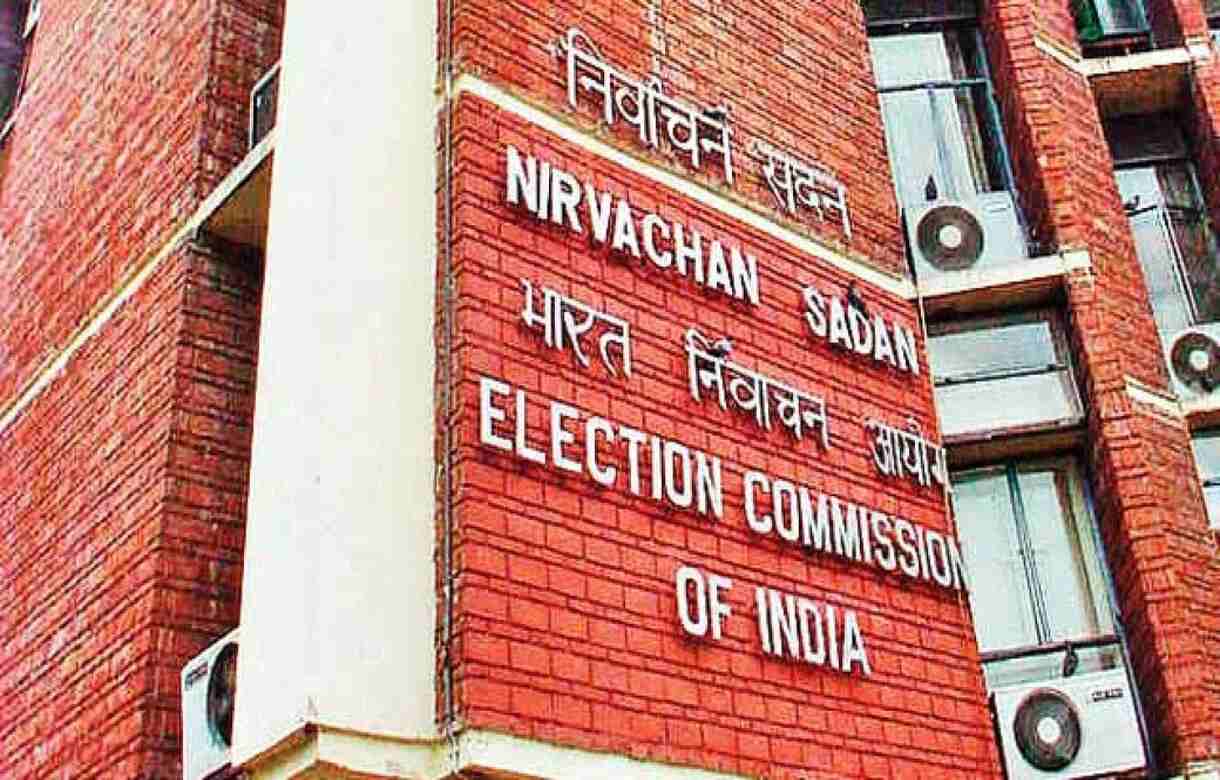
Election Commission of India

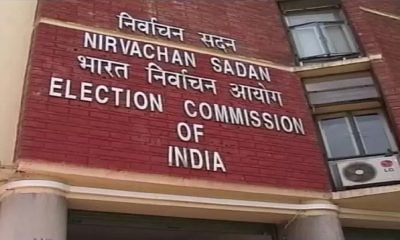
The Election Commission of India (ECI) has clarified that voters whose names appeared in earlier electoral rolls but are missing from draft lists published during the ongoing Special Intensive Revision (SIR) can submit Form 6 to seek inclusion in the final electoral roll.

In a communication issued on November 3 to the Chief Electoral Officers (CEOs) of all states and Union Territories, the poll body addressed concerns among previously registered voters who were hesitant to submit the form because of the declaration required alongside it.

The Commission clarified that submitting Form 6 in such circumstances would not, by itself, amount to making a false declaration merely because the applicant had been enrolled as a voter previously.

It also stated that no action under Section 31 of the Representation of the People Act, 1950, would be initiated against such applicants solely on the ground of their previous enrolment.

However, this protection applies provided the applicant is not already registered in another Parliamentary or Assembly constituency and the declaration submitted is otherwise in accordance with the law.

Why existing voters were hesitant to submit Form 6

The clarification follows concerns that some previously enrolled voters were reluctant to apply for inclusion in the electoral roll after finding their names missing from the draft lists published during the SIR exercise.

Form 6 requires applicants to furnish a declaration stating that their names are being included in the electoral roll for the first time.

This created apprehensions among previously registered voters, who feared that submitting the form despite their earlier enrolment could be treated as a false declaration and expose them to prosecution under Section 31 of the Representation of the People Act, 1950.

The Election Commission has now clarified that earlier registration does not prevent an eligible voter from submitting Form 6 again when their name does not appear in the draft electoral roll.

Election Commission refers to Delhi High Court order

In its communication, the Commission also referred to the Delhi High Court’s October 14 order in the case of Nilotpal Datta and another versus the Election Commission of India and others.

The case concerned an applicant who had previously been enrolled as a voter but was apprehensive about submitting Form 6 because of the declaration that the name was being included in the electoral roll for the first time.

The High Court observed that the petitioners’ apprehension was misplaced and allowed them to submit Form 6, if they wished, for processing in accordance with the law.

The Election Commission’s latest clarification is in line with this judicial observation.

EC asks states and UTs to publicise clarification

The poll body has asked Chief Electoral Officers across all states and Union Territories to ensure that the clarification reaches concerned voters.

It has also requested officials to publicise the information widely through available media platforms and in local languages so that eligible voters are aware of the procedure for seeking inclusion in the electoral roll.

The clarification comes amid ongoing concerns and legal challenges surrounding the Special Intensive Revision of electoral rolls and the process of re-enrolling voters whose names do not appear in draft lists.

India News

Supriya Sule backs delimitation with condition of 50% seat hike for all states

Supriya Sule said the NCP (SP) was open to supporting delimitation if all states receive a uniform 50% increase in Lok Sabha seats. However, the party has not taken a final decision.

Published

on

Supriya Sule

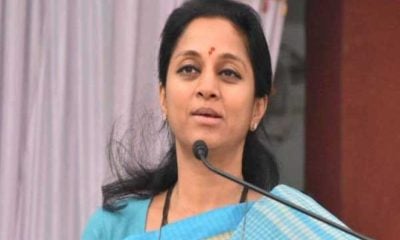
Nationalist Congress Party (Sharadchandra Pawar) working president Supriya Sule has said her party is open to supporting the Centre’s proposed delimitation exercise, provided every state receives an equal 50% increase in its Lok Sabha seats.

Speaking to reporters on Saturday, Sule said the proposal discussed earlier by the government was acceptable to her party in principle because it would ensure a uniform increase in parliamentary representation without giving preference to states based on population.

Her remarks come amid speculation over a possible merger between the two Nationalist Congress Party factions and discussions about a potential political realignment involving the BJP-led National Democratic Alliance (NDA).

However, Sule maintained that her party has not taken a final decision on the proposed legislation, as it has not received an official copy of the Bill.

Why Supriya Sule wants a uniform 50% seat increase

Explaining her party’s position, Sule referred to an earlier meeting convened by the Centre to discuss the proposed delimitation exercise.

The meeting was attended by Sule, Shiv Sena (UBT) MP Arvind Sawant and AIMIM chief Asaduddin Owaisi. Union Home Minister Amit Shah and Parliamentary Affairs Minister Kiren Rijiju were also involved in discussions around the proposal.

According to Sule, the government had discussed increasing Lok Sabha seats by a flat 50% across every state, irrespective of their population.

She said the NCP (SP) was comfortable with the formula in principle because it would prevent any state from being disadvantaged by a population-based increase.

Sule also said her party wanted to discuss the proposal with its INDIA bloc partners to build a broader consensus before taking a final position.

She clarified that no official Bill or proposal containing the formula had been shared with the party so far.

Sule cites rising voter numbers to justify delimitation

Making a case for smaller constituencies, Sule pointed to the significant increase in the number of voters represented by individual Members of Parliament.

Citing her Baramati constituency, she said its electorate had grown from around 10-12 lakh voters to nearly 20-22 lakh over the years.

According to Sule, the increase has made it practically impossible for an MP to visit every village and ensure equitable development across the constituency.

She also questioned whether the existing annual allocation of Rs 5 crore under the Members of Parliament Local Area Development (MPLAD) scheme was sufficient to address the requirements of such a large electorate.

She argued that dividing constituencies had become necessary to improve representation and ensure more effective development.

Women’s reservation must be prioritised, says Sule

Sule also stressed that women’s reservation should receive priority alongside the delimitation exercise.

She said the Women’s Reservation Bill had already been passed unanimously and maintained that its implementation should be considered together with the delimitation formula.

The Centre’s previous attempt to push the legislative package failed in Parliament on April 17.

The Constitution (131st Amendment) Bill, 2026, sought to increase the strength of the Lok Sabha from 543 to 850 seats and operationalise 33% reservation for women through delimitation.

The Bill received 298 votes in favour and 230 against. With 528 members voting, the government needed 352 votes to secure the two-thirds majority required for the constitutional amendment.

Following its defeat, the government withdrew the Delimitation Bill, 2026, along with the Union Territories Laws (Amendment) Bill, 2026.

Government sources have indicated that delimitation remains on the Centre’s agenda, with an effort to secure its passage by the end of the year.

Supriya Sule denies NCP merger speculation

Sule’s remarks have also come amid speculation about a possible merger between the Sharad Pawar-led NCP (SP) and the rival faction led by the late Ajit Pawar.

Her father, Sharad Pawar, has recently held meetings with leaders from the rival faction, adding to speculation about a possible reunion.

However, Sule dismissed the merger speculation, saying her party had put a full stop to the matter following her brother Ajit Pawar’s death.

She also indicated that there was no question of her party changing its political position on the basis of such speculation.

The NCP (SP) is currently part of the Congress-led INDIA bloc, while the rival NCP faction is aligned with the BJP-led Mahayuti alliance in Maharashtra.

Opposition voices concerns over delimitation proposal

Sule’s position comes as other Opposition leaders have raised concerns about the Centre’s proposed delimitation exercise.

Senior Congress leader P Chidambaram urged the DMK and NCP (SP) to maintain their stand on the issue.

He warned that supporting a new version of the legislation could amount to a betrayal of the position they had taken when the earlier Bill was defeated in April.

Congress leader Rahul Gandhi has also criticised the government’s delimitation proposal, arguing that the exercise should be based on the ongoing 2026 Census and take its caste-related data into account.

The political discussions around delimitation are continuing as the Centre seeks support for another attempt to introduce the legislation.

Continue Reading

India News

India-US trade deal nears finish line, Jaishankar says most issues resolved

India and the US have resolved most issues concerning their proposed trade agreement, External Affairs Minister S Jaishankar said, expressing hope that the deal would be concluded soon.
Published

on

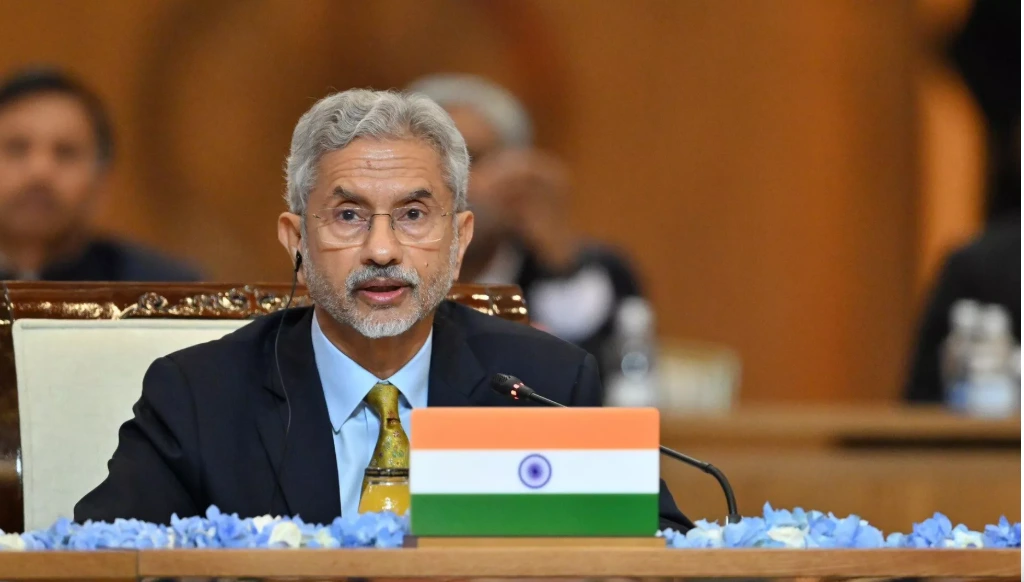
India and the United States have resolved most of the issues concerning their proposed trade agreement, with negotiations now approaching the final stage, External Affairs Minister S Jaishankar said on Saturday.

Speaking at an interactive session at the HT Leadership Summit, Jaishankar expressed hope that the agreement would be concluded soon. He indicated that several of the remaining concerns were not on India’s side, with more changes having taken place on the American side.

Describing the negotiations as being close to the “finishing line”, the minister said both countries had already worked through the bulk of the issues, including tariff-related matters.

Responding to a question about the progress of the proposed trade pact, Jaishankar said, “Well, it’s certainly our hope, and in many ways anticipation that we are at the last stretch. That’s not a secret.”

He added that the remaining issues were being addressed and that both sides were keen to complete the negotiations.

“The hope is that we should close it out soon. It’s always the case that in that last period, everybody’s impatient,” he said.

India-US trade deal could be announced during Modi-Trump meeting

Jaishankar’s remarks come ahead of Prime Minister Narendra Modi’s likely visit to the United States next month for the G20 Summit.

There has been speculation that India and the US could announce the trade agreement following a meeting between Modi and US President Donald Trump on the sidelines of the summit, scheduled to take place in Miami on December 14 and 15.

However, no formal announcement of the trade deal has been made.

Last month, US Secretary of State Marco Rubio had also indicated during his visit to Mumbai that both countries were very close to finalising the agreement.

India and the US have been negotiating the proposed trade pact since early 2025. The discussions aim to address tariff-related differences, eliminate non-tariff barriers and improve market access for businesses in both countries.

India has been seeking favourable tariff terms for its exports to the US compared with competing economies.

What India wants from the proposed trade agreement

Jaishankar said India’s priority was to secure an agreement that would be beneficial and balanced while providing the country with a comparative advantage over economies competing in similar sectors.

“For us the key is that we want a trade deal which is beneficial, it is balanced and which would give us a comparative advantage over groups of comparable economies,” he said.

The minister also highlighted the importance of evaluating trade agreements from a broader economic perspective rather than focusing only on their immediate benefits.

Referring to India’s earlier free trade agreements with several Asian economies, he said the expected gains from some of those arrangements had not fully materialised.

However, he noted that India’s more recent trade agreements had been assessed more carefully, both strategically and economically.

Jaishankar said the US was one of India’s biggest markets and that an agreement with the world’s largest economy would benefit the country.

He also observed that US President Donald Trump was seeking bilateral trade agreements with several countries to improve market opportunities for American businesses. The challenge, he said, was to find an acceptable outcome for both sides.

Jaishankar explains why negotiations have taken time

Explaining the extended negotiations, Jaishankar said trade agreements involving tariffs and market access could not be concluded simply through quick decisions.

He stressed that the discussions required detailed examination of individual tariff lines, a process that takes considerable time.

“If you are serious, you go tariff line by tariff line. That takes time. Now we’ve done it the painstaking way,” he said.

The minister added that the negotiations involved important economic considerations, particularly because the outcome could affect people’s jobs and livelihoods.

He reiterated that India had made considerable efforts to work through the issues and that negotiations had now reached an advanced stage.

Jaishankar expressed hope that the remaining differences would be resolved and the proposed agreement would be concluded soon.

Continue Reading

India News

PM Modi convoy helicopter develops snag, grounded in Karnataka

An IAF helicopter accompanying Prime Minister Narendra Modi’s convoy in Mysuru developed a technical snag and could not take off. PM Modi and other convoy members continued their journey in another helicopter.
Published

on

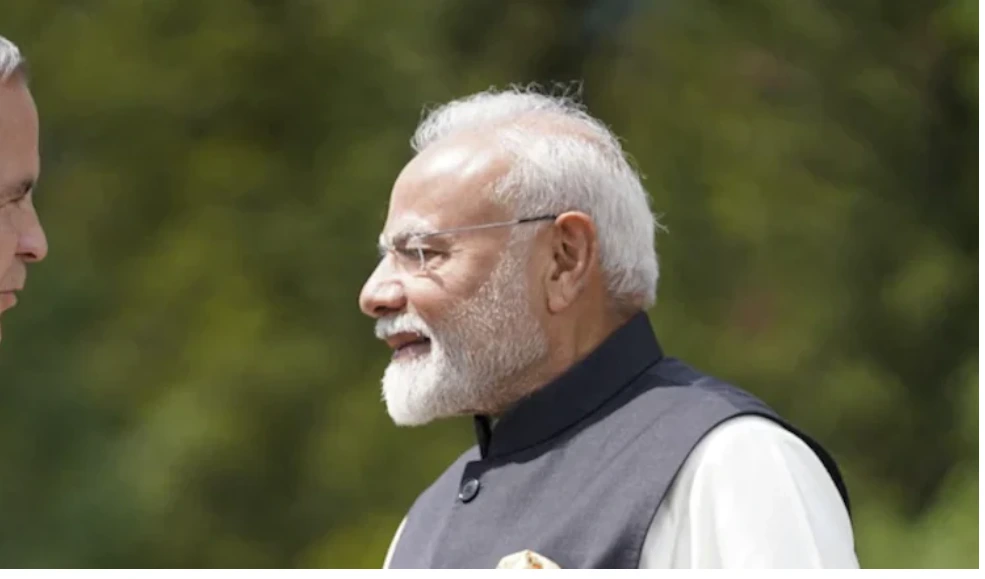
An Indian Air Force (IAF) helicopter that was part of Prime Minister Narendra Modi’s convoy during his visit to Mysuru developed a snag on Saturday and remained parked at the Jayachamaraja Wadiyar helipad near Lalit Mahal.

Prime Minister Modi had arrived in Mysuru on Friday at around 3:20 pm to inaugurate the COSMOS-Mysuru Planetarium. Three helicopters had arrived as part of his convoy and landed at the Jayachamaraja Wadiyar helipad.

Helicopter could not take off after technical problem

The problem emerged as the convoy was preparing to leave after the Prime Minister’s programme. One of the three helicopters developed a technical issue and could not take off.

PM Modi and the other members of his convoy subsequently continued their onward journey in one of the remaining two helicopters. The helicopter affected by the snag stayed at the helipad.

Technical personnel reached the site and began repair work on the helicopter. Efforts were being made to rectify the problem and make the aircraft fit for further operations.

Police cordon off helipad

Local police in Mysuru cordoned off the area around the helipad and provided security to the grounded helicopter. Staff from the Mysuru City Corporation were also deployed at the location as part of the arrangements.

The helicopter remained parked at the Jayachamaraja Wadiyar helipad near Lalit Mahal at the time the report was filed.

No official word on exact nature of snag

There was no official statement from the concerned authorities regarding the exact nature of the snag or when the helicopter would resume its journey.

Prime Minister Modi had visited Karnataka on Friday, November 13, where he launched and inaugurated infrastructure and development projects worth more than Rs. 15,600 crore across Bengaluru and Mysuru.

He had also inaugurated the COSMOS-Mysuru Planetarium during his Mysuru visit before travelling onwards to Gujarat.

Continue Reading

Trending

© Copyright 2022 APNLIVE.com