
Latest business news
Parliament committee defers controversial FRDI Bill, to submit its report in Budget session now

[vc_row][vc_column][vc_column_text]The Financial Resolution and Deposit Insurance (FRDI) Bill, 2017, which stirred a controversy over its clause that could result in the confiscation of a depositor’s money if the bank failed – called “bail-in” – has been deferred by the joint parliamentary committee which was supposed to submit a report on it for the Winter Session of Parliament.
The committee will now submit its report in the Budget session.
The Bill would have categorised a depositor as a creditor sans collateral, which would have meant that in the case of a collapse of the bank they would have to forgo their money. It would also have enabled the banks to re-package one’s deposits (including fixed deposits and mutual fund assignments) into special bonds yielding 5 percent or so.
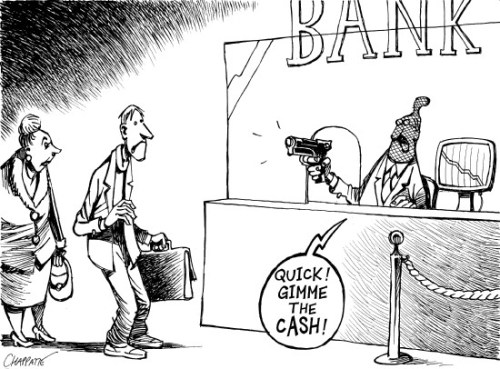
One has to keep in mind the fact that banks do not give depositors any guarantee for the money they have put in their custody. The bank lockers, in which people faithfully put in their family jewels, aren’t secured by any documentation at all, hence remain completely uninsured. In the case of a bank failure, the bank’s will also have the liberty to encash these.
The controversial provision is contained in Section 52 of the FRDI Bill. While the FRDI wants to provide a way out for banks and other financial institutions in the case of insolvency, without the government having to step in to bail them out with public money collected through taxes, the flip side is that it could be disastrous for the ordinary depositor, who may have put in his life’s earnings in the banks.
This “bail-in” clause had created a hue and cry and a huge signature campaign. On Thursday even the industry chamber Assocham called for the removal of the “bail-in” clause, saying that the very trust that the banks live on will be destroyed through this.
Notably, the Bill came after some previous moves by the government – first the drive to get as many people as possible to open bank accounts, then demonetisation, forcing them to put their money in banks and go for cashless transactions which depends on money in banks, and then writing off some of the bank loans which had turned NPAs (non-performing assets) for the banks.[/vc_column_text][/vc_column][/vc_row]







Latest business news
Xbox announces 3,200 layoffs as Asha Sharma outlines major restructuring plan
Xbox has announced plans to lay off 3,200 employees over the next year while introducing a major restructuring programme that includes management changes, studio restructuring and cost-cutting measures.


India News
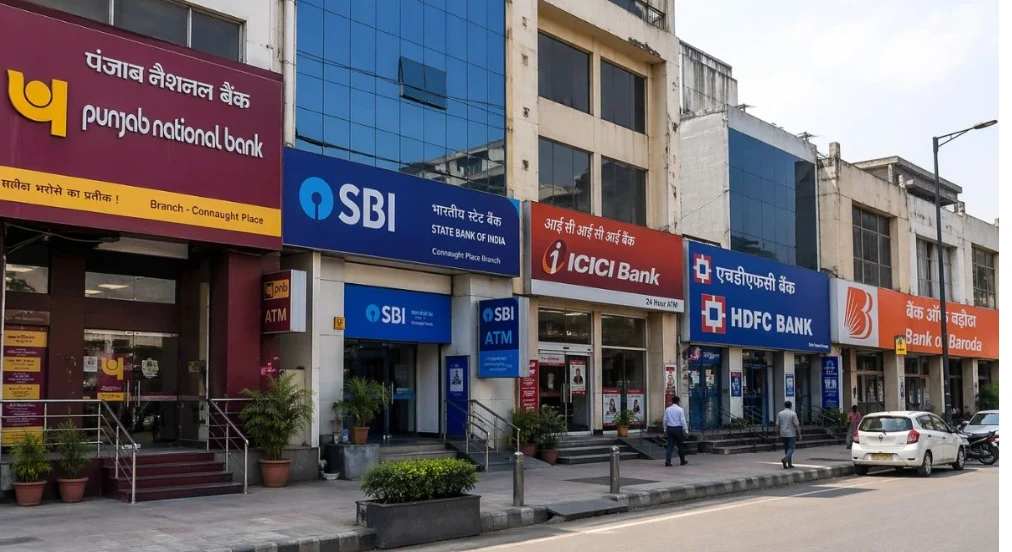
Bank holiday today: Are banks open or closed on June 29? Here’s what RBI calendar says
Banks in Himachal Pradesh and Mizoram will remain closed on June 29, 2026, due to regional holidays, while banking operations will continue normally in most other states.
India News
Union Budget 2026 highlights: Nirmala Sitharaman Raises Capex to Rs 12.2 Lakh Cr, West Bengal Gets Major Allocation
Finance Minister Nirmala Sitharaman is presenting the Union Budget 2026 in Parliament today. Follow this space for live updates, key announcements, and policy insights.



Magnitude 7 earthquake strikes Russia’s Kamchatka Peninsula

Mallikarjun Kharge’s ‘Your Friends’ jab at Rahul Gandhi over congress exits

Delhi deploys 25,000 personnel, installs CCTV cameras ahead of CJP march

Abhijeet Dipke detained ahead of CJP’s national flag march in Delhi

Mallikarjun Kharge seeks all-party meeting with PM Modi on delimitation

Centre sends 3 letters to Punjab government after anti-drug activist’s killing
Mallikarjun Kharge seeks all-party meeting with PM Modi on delimitation
Abhijeet Dipke detained ahead of CJP’s national flag march in Delhi
Magnitude 7 earthquake strikes Russia’s Kamchatka Peninsula
Delhi deploys 25,000 personnel, installs CCTV cameras ahead of CJP march

Afghan Men Try To Hang With The Jet Engine Of The Aircraft in Kabul- Afghanistan News – Kabul News
Trending Top 10 News: 10000 Crore Fine on Flipkart, Apple to Launch Unique Feature, Hdfc Bank Job Ad

Trending Top 10 News: Nokia 6310, Apple sales, Bachpan ka Pyar Video Kid, Dainik Bhaskar IT Raid

Trending Top 10 News: Canada bans Indian flights, Rain in Delhi NCR, AIMIM Twitter hacked, Raj Kundra case

Trending Top 10 News: Shein India, Apple New Service, Pocket Oxygen, Oppo Launched New Phone
-
 Latest world news14 hours ago
Magnitude 7 earthquake strikes Russia’s Kamchatka Peninsula
-
 India News15 hours ago
Mallikarjun Kharge’s ‘Your Friends’ jab at Rahul Gandhi over congress exits
-
 India News15 hours ago
Delhi deploys 25,000 personnel, installs CCTV cameras ahead of CJP march
-
 India News5 hours ago
Abhijeet Dipke detained ahead of CJP’s national flag march in Delhi
-
 India News4 hours ago
Mallikarjun Kharge seeks all-party meeting with PM Modi on delimitation
-
 India News3 hours ago
Centre sends 3 letters to Punjab government after anti-drug activist’s killing
