English हिन्दी
Connect with us

India News

Lok Sabha passes bill to criminalise insult to Vande Mataram

Parliament has passed the Prevention of Insults to National Honour (Amendment) Bill, 2026, extending legal protection to Vande Mataram and making insults to the national song a punishable offence.

Published

on

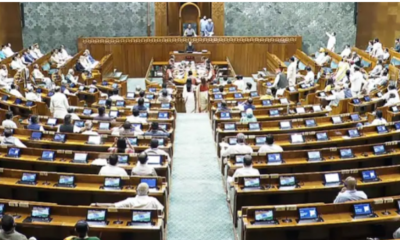
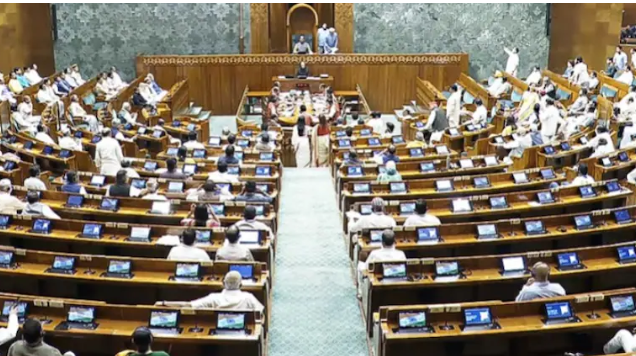
Parliament on Thursday approved legislation that makes insulting the national song Vande Mataram a punishable offence, with the Lok Sabha clearing the bill after it had already been passed by the Rajya Sabha. The amendment extends legal protection currently available to the national anthem, Jana Gana Mana, to the national song.

The Prevention of Insults to National Honour (Amendment) Bill, 2026 was passed by a voice vote in the Lok Sabha amid protests from the Opposition. With approval from both Houses, it becomes the first legislation cleared during the ongoing Monsoon Session of Parliament.

What the amendment changes

The existing Prevention of Insults to National Honour Act penalises acts such as intentionally preventing the singing of the national anthem or disrupting an assembly where it is being sung.

The new amendment brings Vande Mataram under the same legal framework, making insults to the national song a criminal offence. Under the existing law, such offences can attract imprisonment of up to three years, a fine, or both. Repeat convictions carry a mandatory minimum prison term of one year.

Government says bill gives due recognition to national song

Replying to the discussion in the Lok Sabha, Minister of State for Home Nityananda Rai said the amendment places Vande Mataram on par with the national anthem.

He criticised the Congress, alleging that the party failed to accord the national song the respect it deserved during its years in power and accused it of pursuing appeasement politics. Rai said the Narendra Modi government was giving the song the recognition it merits and concluded his remarks with a chant of “Vande Mataram.”

Opposition raises objections

The bill faced criticism from Opposition members during the debate.

DMK MP K Kanimozhi opposed the legislation, describing it as a “Hindutva agenda” presented in the name of nationalism. She argued that making all six stanzas of Vande Mataram compulsory and criminalising non-compliance was against the country’s secular and federal principles.

BJP MP Sambit Patra, however, defended the legislation, saying previous governments had not accorded the national song the respect it deserved.

The Opposition’s proposed amendments were rejected by the House. During the proceedings, DMK MP A. Raja tore documents and threw them towards the Well of the House amid protests before the Lok Sabha was adjourned for the day.

First bill passed in Monsoon Session

The amendment is the first bill to receive approval from both Houses during the ongoing Monsoon Session, which has witnessed repeated disruptions by the Opposition, largely over the NEET paper leak issue.

India News

PM Modi extends greetings to Uttarakhand on foundation day

Prime Minister Narendra Modi extended greetings to the people of Uttarakhand on Foundation Day, praising the state’s cultural heritage, natural beauty and development.

Published

on

PM Modi

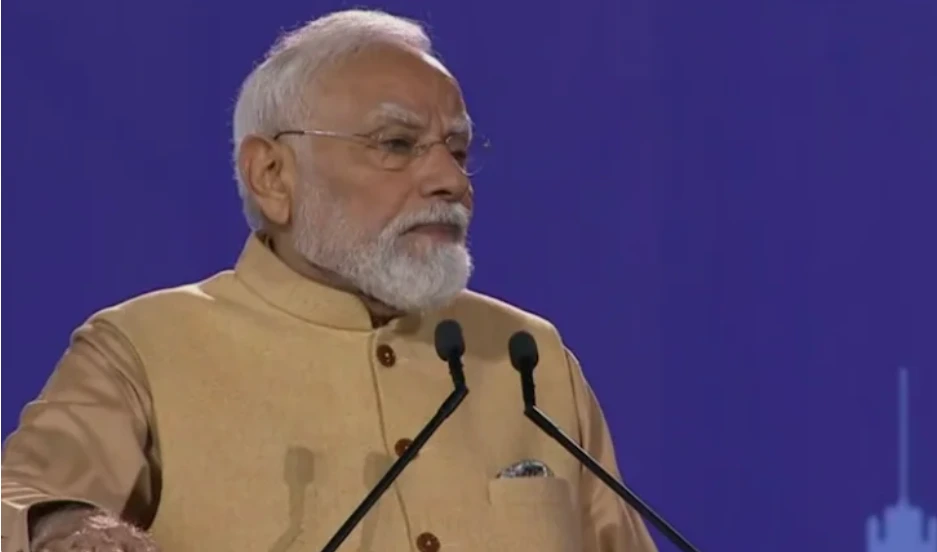
Prime Minister Narendra Modi on Monday extended greetings to the people of Uttarakhand on the occasion of the state’s Foundation Day, praising its spiritual heritage, natural beauty and development journey.

In a message posted on X, PM Modi described Uttarakhand as a land enriched by spiritual consciousness, mountain landscapes, sacred rivers and the Char Dham. He also highlighted the state’s distinct identity rooted in its cultural heritage.

PM Modi highlights Uttarakhand’s development

The Prime Minister credited the people of Uttarakhand for the state’s progress, saying their hard work, talent and progressive outlook had helped it reach new heights across different sectors.

He expressed confidence that Uttarakhand would continue to move rapidly along the path of development. PM Modi also wished happiness, peace and prosperity to the people of the state on the occasion.

Why Uttarakhand celebrates Foundation Day

Uttarakhand Foundation Day is observed every year on November 9. The state was formed on November 9, 2000, after being carved out of Uttar Pradesh, becoming the 27th state of India. Dehradun serves as its capital.

The Himalayan state is popularly known as Devbhoomi, or the Land of the Gods. It is home to the four major pilgrimage sites of Yamunotri, Gangotri, Kedarnath and Badrinath, collectively known as the Char Dham.

Yogi Adityanath also greets Uttarakhand

Uttar Pradesh Chief Minister Yogi Adityanath also extended greetings to the people of Uttarakhand on Foundation Day.

Yogi highlighted the state’s natural beauty, folk culture, spiritual heritage and tradition of valour. He also said that Uttarakhand was setting new benchmarks for development under the guidance of PM Modi and the leadership of Chief Minister Pushkar Singh Dhami.

Continue Reading

India News

Delhi AQI nears 400 as Diwali night smoke engulfs city

Delhi’s overall AQI reached 373 on Diwali night, with several areas recording AQI above 400 as smoke engulfed the city.

Published

on

Delhi Air Quality

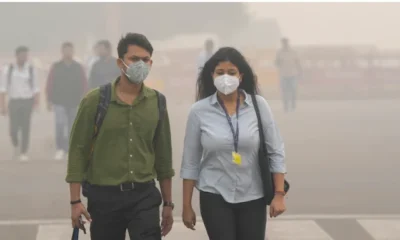
Delhi-NCR witnessed a sharp deterioration in air quality on Diwali night as thick smoke blanketed several parts of the region and visibility fell. Delhi’s overall Air Quality Index (AQI) stood at 373, in the “very poor” category, at 11:05 pm on November 8, according to data cited from the Central Pollution Control Board (CPCB).

Several parts of the capital, however, recorded AQI levels above 400, placing them in the “severe” category. Areas reporting such levels included Alipur, Bawana, Burari, Chandni Chowk, Mundka, Punjabi Bagh, Rohini and Vivek Vihar, among others.

Delhi-NCR air quality on Diwali night

The pollution was not restricted to Delhi. At 11:05 pm, Noida’s average AQI stood at 319, while Ghaziabad recorded 360. Gurugram and Faridabad recorded AQI levels of 280 and 297, respectively.

According to the CPCB classification, an AQI between 301 and 400 falls under the “very poor” category, while 401 to 500 is classified as “severe”.

The Air Quality Early Warning System had predicted that Delhi’s air quality was likely to remain in the severe category from November 9 for the next few days.

GRAP Stage 3 already in force

Ahead of Diwali, the Commission for Air Quality Management (CAQM) had enforced Stage 3 of the Graded Response Action Plan (GRAP) across Delhi-NCR as a pre-emptive measure.

The move came amid forecasts of worsening air quality around the festival.

Despite restrictions, concerns were raised over compliance with pollution-control measures and the continued use of firecrackers.

Environmentalist questions pollution data

Environmentalists also raised questions about whether official AQI readings fully reflected the pollution being experienced across neighbourhoods.

Environmental activist Bhavreen Kandhari questioned the reliability of government pollution data and pointed to differences between official readings and measurements from independent AQI monitors. She also raised concerns about data gaps at several monitoring stations on November 6.

Kandhari alleged that 11 monitoring stations had experienced data gaps, including 22 missing hourly PM2.5 readings and 27 missing PM10 readings. She specifically mentioned outages at IIT Delhi, Nangloi and NSIT Dwarka.

The concerns come as Delhi enters another period of severe winter pollution, with smoke, poor dispersion conditions and emissions contributing to deteriorating air quality.

Continue Reading

India News

L.K. Advani turns 99, PM Modi highlights his 2 defining qualities

On L.K. Advani’s 99th birthday, PM Narendra Modi highlighted two qualities he said set the BJP veteran apart — ideological clarity and intellectual sharpness.
Published

on

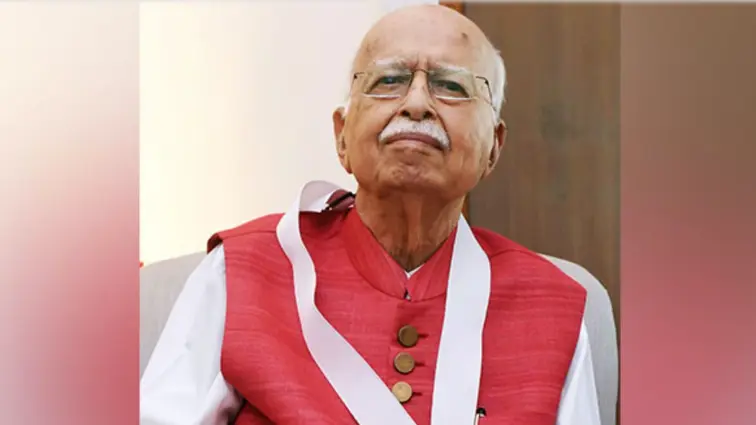
Prime Minister Narendra Modi on Sunday recalled the long political journey of veteran BJP leader and former Deputy Prime Minister L.K. Advani as he turned 99.

Advani, born on November 8, 1927, in Karachi, entered the 100th year of his life on Sunday. In a tribute, Mr Modi highlighted Advani’s contribution to the growth of the Bharatiya Janata Party and described two qualities that, according to him, set the veteran leader apart.

What are Advani’s 2 defining qualities?

According to PM Modi, the first defining quality was ideological clarity and intellectual sharpness.

He said this was reflected in Advani’s speeches, writings and interviews. Modi also noted that the resolutions Advani authored for the Jana Sangh and the BJP remained relevant for study.

The second quality highlighted by the Prime Minister was Advani’s manner of challenging what Modi described as “pseudo-secularism” promoted by a section of the Indian political class over the years.

Modi recalls Advani’s role in BJP’s growth

Modi said Advani played an important role in strengthening the Jana Sangh and subsequently building the BJP.

He recalled that during Advani’s terms as BJP president, the party emerged as the single-largest party in Parliament for the first time in 1996. Modi also credited Advani with nurturing successive generations of party workers and giving the BJP a foundation based on the principle of “Nation First”.

The Prime Minister also recalled the partnership between Advani and former Prime Minister Atal Bihari Vajpayee. He said the two leaders worked together for decades without becoming competitors and together influenced the course of Indian politics.

Advani’s journey from Rajasthan to national politics

Modi recalled Advani’s early work as an RSS pracharak in Rajasthan before he moved to Delhi and became involved in the Jana Sangh.

Advani became chairman of the Delhi Metropolitan Council in 1967, while his parliamentary career began in 1970. He later served as Leader of the Opposition and held key positions in the Union government.

Modi also remembered his association with Advani during the 1991 Lok Sabha election campaign. He said he helped prepare Advani’s papers and assisted him during the campaign when the BJP leader contested from Gandhinagar among two seats.

Modi recalls Emergency, Rath Yatra and Advani’s public life

The Prime Minister described the Emergency as a significant phase in Advani’s life and recalled his experiences during that period.

He also highlighted Advani’s role in the Somnath-to-Ayodhya Rath Yatra and said he had been involved in the initiative from its planning stage through its execution. Modi recalled Advani’s arrest in Bihar during the Yatra and the subsequent political developments in Gujarat.

Beyond politics, Modi described Advani as an avid reader with an interest in cinema, theatre and history. He also recalled Advani’s efforts to remain connected with Sindhi culture and his association with the Sindhu Darshan Puja near Leh.

Advani was awarded Bharat Ratna in 2024

Modi also referred to Advani receiving the Bharat Ratna in 2024, recognising his decades of public service.

Advani, who served as Deputy Prime Minister and Home Minister, has been one of the BJP’s most prominent leaders and played a significant role in the party’s political journey.

Concluding his birthday tribute, Modi wished Advani good health as he entered his 100th year.

Continue Reading

Trending

© Copyright 2022 APNLIVE.com