
India News
Journalists express solidarity with Tribune, reporter for Aadhaar expose


The Tribune chief thanks for action
By Abu Turab, APN
A large number of journalists and representatives of media associations came together with National Journalists Alliance (NJA) and Delhi Union of Journalists (DUJ) to express their solidarity with The Tribune and its investigative journalist Rachna Khaira over Aadhaar data expose .
The journalists’ bodies organized a special discussion on Wednesday at Gandhi Peace Foundation on “Right to Investigate: Freedom of Press”.
DUJ President S. K. Pande hosted the discussion while important speakers were: Siddharth Vardarajan, Editor of “The Wire”, Mehmood Pracha, senior lawyer, Satish Mishra, long time associate with Tribune, Masoom Moradabadi, Secretary of ALL India Urdu Editors Conference.
On Januarry 4, Rachna Khaira, exposed the UIDAI claim of Aadhaar being “fully safe” by purchasing a service offered by anonymous “sellers” over Whatsapp, in just Rs. 500 to access to the details of more than 1 billion Aadhaar numbers created in the country.
The Tribune’s associate editor K V Prasad read the message from Harish Khare, the Editor-in-Chief. He directly hit the government of the day questioning, “if the arrogant rulers of the day can think of wanting to arrest the reporter and The Tribune editor, which journalist in India can feel safe and confident in pursuing an honest story?”
Khare further said, “We at The Tribune did nothing more than what any other set of editors in a newspaper would have done. We do not think of ourselves as manning the barricades. We do not subscribe to permanent insurrection. We are not chasing any revolution.”
“We believe in the Constitution and its values; we assiduously seek to provide space to the voices of dissent. And yet, we are sought to be hauled up for doing a spot of honest, legitimate investigative reporting; we are sought to be intimidated for practising a bit of old-fashioned journalism.” Khare added.
Siddarth Vardarajan, the Editor of The Wire, which had broken story about multiplied worth of Amit Shah’s son Jai Shah’s business entity a few month ago, said that the action taken against The Tribune and its journalist is “an attack on constitution” and “an assault on freedom of speech”.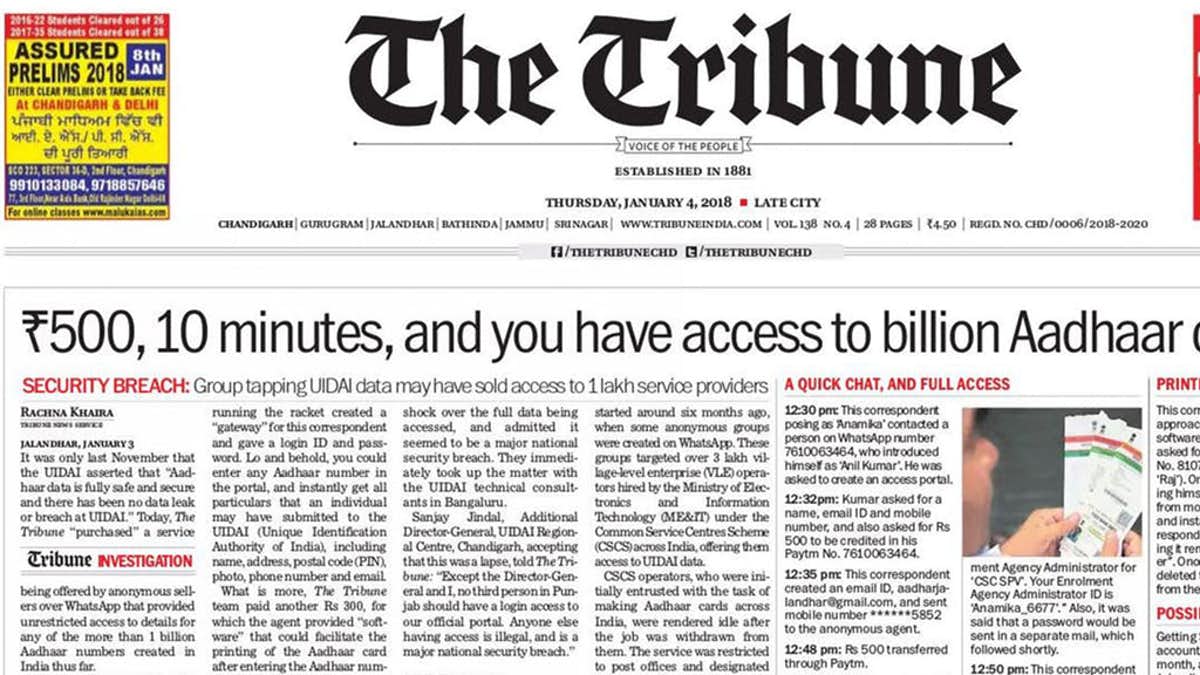
He said that this is a “threat against other journalists” to keep them away from doing similar stories exposing the loophole. Instead, “UIDAI should have filed FIR’s against those ministries and state governments who have uploaded the Aadhaar details of large number of individuals much before the recent expose,” he said.
Addressing the legal issues surrounding the Aadhaar expose, Mehmood Pracha, a renowned lawyer, said Rachna Khaira, the journalist who exposed the insecure mechanism of Aadhaar, “should be honoured as heroine”. He said that he was sure that “charges will not sustain in any court of law” against the newspaper or the journalist.
Pracha said that billions of rupees were being spent on Aadhaar project which is in itself a huge scam. This case is just a peanut, we should focus on the motives behind the whole exercise, he said.
According to him, under the law, citizens are “entitled” to get their Aadhaar cards but the government is “forcing” them to get themselves registered through difference means and excuses, which is illegal.
Pracha said that today the government is insisting on biometric data, tomorrow it may demand more, even ask for our genome. “We should demolish Aadhaar as a whole,” he said.
DUJ President S. K. Pande called upon all journalists “to unite to defend ourselves” from such attacks on our right to investigate and report freely and fearlessly. He demanded for the withdrawal of FIR against the investigative journalist and the newspaper.
Pranjoy Guha Thakurta, former editor of Economic and Political Weekly said that Aadhaar is a mass surveillance tool. He asked Civil Society to find ways to protect itself, methods to protect our children and their children “from such surveillance”.
Veteran journalist Sukumar Muralidharan, Sanjay Kapur, the editor of Hard News, Satish Mishra, a veteran journalist, W. Chandrakant of National Alliance of Journalists and Sujata Madhok, the General Secretary of DUJ also spoke on the occasion.
Masoom Moradabadi, a senior Urdu journalist, echoing the need to dissent, read out a poem by Faiz Ahmed Faiz on the citizen’s right to speak up against all kind of oppression.
Moreover, S. D. Thakur, President of All India Newspaper Employees Federation (AINEF) and Tapan Sen, General Secretary of Centre of Trade Union (CTU) sent their solidarity messages to the journalists raising their voice against the draconian action against The Tribune and its journalist.





India News
Centre sends 3 letters to Punjab government after anti-drug activist’s killing
The Centre has sought reports from the Punjab government on three incidents linked to allegations surrounding drug-related activities, including the killing of anti-drug activist Parvinder Singh Jhota.

India News
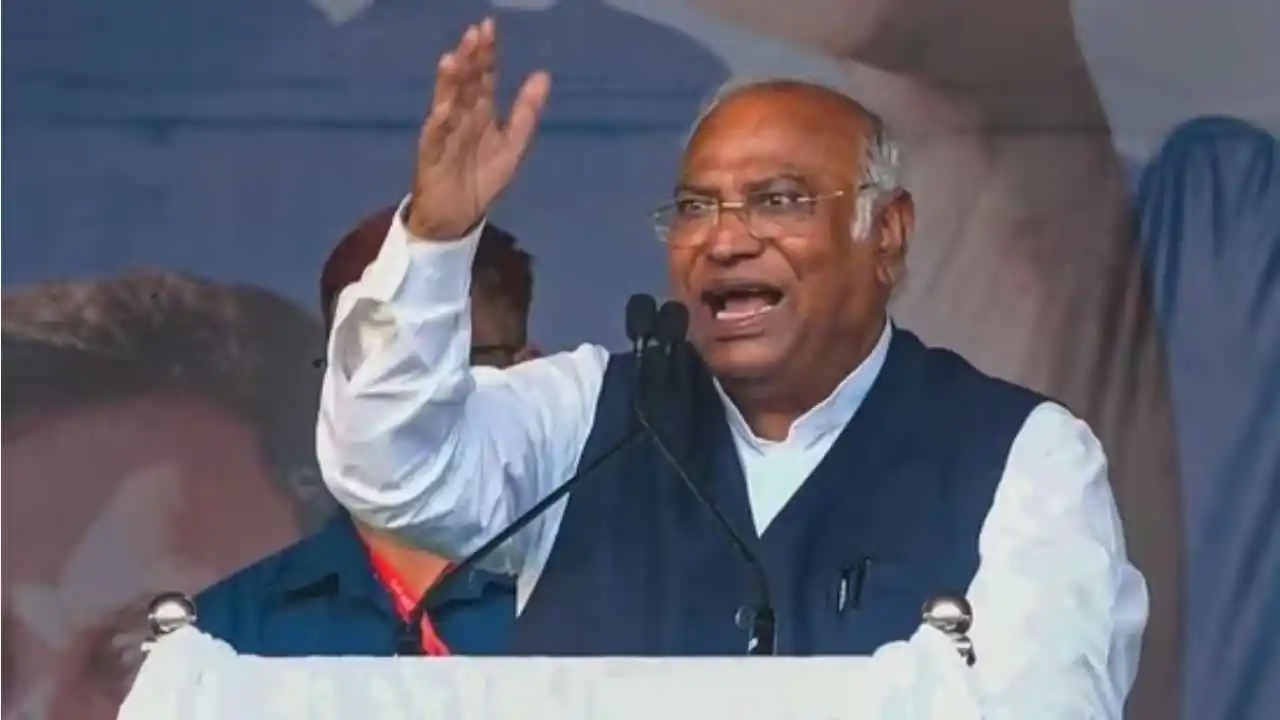
Mallikarjun Kharge seeks all-party meeting with PM Modi on delimitation
Congress president Mallikarjun Kharge has written to Prime Minister Narendra Modi for the fourth time, seeking an all-party meeting on delimitation. He also flagged the 64-day delay in proroguing Parliament’s Monsoon Session.
India News
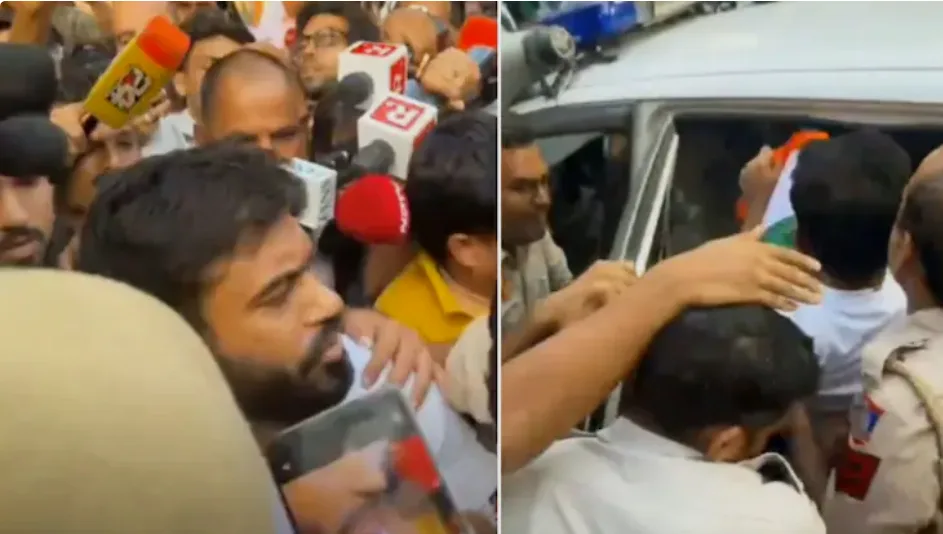
Abhijeet Dipke detained ahead of CJP’s national flag march in Delhi
Cockroach Janta Party founder Abhijeet Dipke was detained by Delhi Police on October 16, 2026, shortly before a planned national flag march. The proposed rally followed the judicial custody of two CJP members who had waved the Tricolour at Jantar Mantar.

Magnitude 7 earthquake strikes Russia’s Kamchatka Peninsula

Mallikarjun Kharge’s ‘Your Friends’ jab at Rahul Gandhi over congress exits

Delhi deploys 25,000 personnel, installs CCTV cameras ahead of CJP march

Abhijeet Dipke detained ahead of CJP’s national flag march in Delhi

Mallikarjun Kharge seeks all-party meeting with PM Modi on delimitation

Centre sends 3 letters to Punjab government after anti-drug activist’s killing
Mallikarjun Kharge seeks all-party meeting with PM Modi on delimitation
Abhijeet Dipke detained ahead of CJP’s national flag march in Delhi
Magnitude 7 earthquake strikes Russia’s Kamchatka Peninsula
Delhi deploys 25,000 personnel, installs CCTV cameras ahead of CJP march

Afghan Men Try To Hang With The Jet Engine Of The Aircraft in Kabul- Afghanistan News – Kabul News
Trending Top 10 News: 10000 Crore Fine on Flipkart, Apple to Launch Unique Feature, Hdfc Bank Job Ad

Trending Top 10 News: Nokia 6310, Apple sales, Bachpan ka Pyar Video Kid, Dainik Bhaskar IT Raid

Trending Top 10 News: Canada bans Indian flights, Rain in Delhi NCR, AIMIM Twitter hacked, Raj Kundra case

Trending Top 10 News: Shein India, Apple New Service, Pocket Oxygen, Oppo Launched New Phone
-
 Latest world news18 hours ago
Magnitude 7 earthquake strikes Russia’s Kamchatka Peninsula
-
 India News18 hours ago
Mallikarjun Kharge’s ‘Your Friends’ jab at Rahul Gandhi over congress exits
-
 India News18 hours ago
Delhi deploys 25,000 personnel, installs CCTV cameras ahead of CJP march
-
 India News9 hours ago
Abhijeet Dipke detained ahead of CJP’s national flag march in Delhi
-
 India News8 hours ago
Mallikarjun Kharge seeks all-party meeting with PM Modi on delimitation
-
 India News7 hours ago
Centre sends 3 letters to Punjab government after anti-drug activist’s killing
