English हिन्दी
Connect with us

India News

Interview gone wrong: Journalists heckled at Ahmedabad Hospital

Published

on

Interview gone wrong: Journalists heckled at Ahmedabad Hospital

Incident occurred on Jan 6 when the reporters had gone to interview a medical student who had attempted suicide alleging caste discrimination 

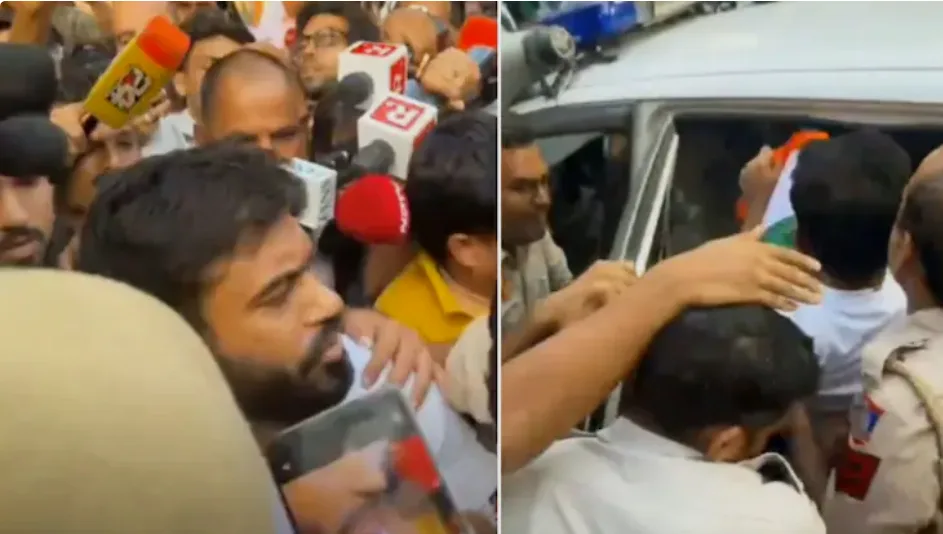
 A scuffle broke out at the Civil Hospital in Ahmedabad on January 6 in which two reporters were allegedly heckled and pushed around by a group of men.

Damayanti Dhar, freelance journalist and another reporter with an Ahmedabad-based newspaper were present at the hospital to interview Dr. M Mariraj, a student of surgery who had attempted suicide alleging caste discrimination by doctors at the hospital when the incident took place.

Dr Mariraj is a third year student of the Masters in Surgery (M.S) course at the BJ Medical College in Ahmedabad. On Friday, he attempted suicide by swallowing sleeping pills following a verbal spat with senior doctors in the operation theatre. Mariraj who hails from Tirunelveli in Tamil Nadu had gained admission at the college under the All-India Scheduled Castes (SC) quota. An FIR was filed in which nine doctors were named and booked under the SC & ST (Prevention of Atrocities) Act.

A short while after Dr.Mariraj’s interview commenced in the E-3 ward of the hospital, a group of men led by one Keval Rathod who claimed to be a High Court lawyer and a Dalit activist entered the room. At one point, according to the reporter when Dr.Mariraj was asked about the claims made by senior doctors that he was oversensitive and overreacted to situations at times, he got visibly upset. At this point, Rathod and others alleged that the reporter had said that the case filed by Dr. Mariraj was false. This led to tension and the reporters were asked to leave the room.

Speaking to Alt News, Damayantee Dhar said, “At one point I asked him (Mariraj) do you think you are overreacting, because this is what your associate professors have said, that you are hypersensitive. Dr. Mariraj thought I asked him if he was exaggerating, and he got agitated. At this point Keval Rathod and others started shouting that I alleged the case that has been filed is bogus. These people became aggressive and Keval started abusing me at this point. I kept repeating I am simply doing my job. Others came into the room. Jyotsna Mali (Dr. Mariraj’s friend and intepreter) and I then came out of the room. These people pushed the other reporter out of the room and shut the door”

Dhar added, “These people then came out of the room and demanded that I show my identity card and that I delete the audio recording of the interview. They pushed me to the wall. The matron, at this point called the security. The constable who was present at the spot intervened but these people were in no mood to listen. Even after we were escorted to the main corridor, we were pulled back into the post-operative ward. I was pushed around and abused. The other reporter’s hand was twisted. The entire incident was recorded by these people from their mobile phones”.

Alt News also spoke to the reporter from the Ahmedabad based daily who concurred with Dhar’s account. “Keval Rathod who was present in the room said that Damayantee had alleged that a false case had been filed by Dr.Mariraj, when she had not said any such thing. Jyotsna (Dr.Mariraj’s friend) tried to mediate but Keval was not backing down. He asked us to get out. We were pushed out of the room. Later, these people stepped out and we were pushed around, not only in the E3 ward but also in the main corridor after we were escorted till there”, he said.

Alt News spoke to Jyotsna Mali, who said that the reporter’s questions were in the nature of provocation, and that she ought to have displayed greater sensitivity while interviewing Dr. Mariraj whose mental condition at that time was delicate. “She was questioning him about his experience and knowledge. Things got heated up because of the way she was questioning him, almost in the manner of interrogation. I left the hospital as I saw things were getting out of hand”

Alt News also spoke to Keval Rathod who downplayed the incident at the hospital. “It was a very minor incident. The reporters asked Dr.Mariraj if he is overreacting, and they suggested that the case filed by him was false as a result of which Dr. Mariraj did not wish to continue the interview. The matter ended there”

Geeta Pathan, PI Shahibaug division Ahmedabad in a conversation with Alt News confirmed that the reporters were indeed heckled at the scene. “Keval Rathod was present at the police station on January 10 where he apologised to Dhar for the misbehaviour of his colleagues at the hospital on January 6. He maintained that there was no intention to hurt the reporter. He has however expressed regret”.

-Courtesy: Alt News

India News

Amit Shah counters delimitation concerns, says southern states to gain Lok Sabha seats

Amit Shah assures Parliament that southern states will gain Lok Sabha seats after delimitation, countering opposition criticism during the women’s reservation debate.

Published

on

Amit Shah

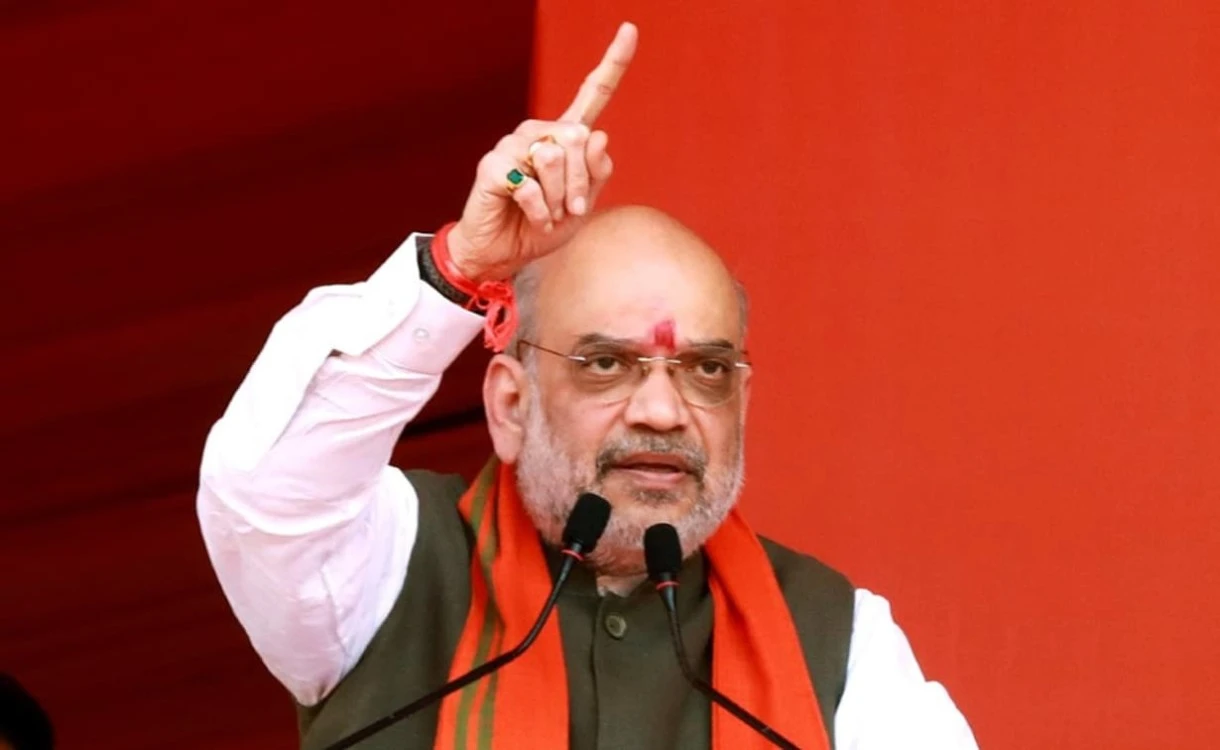
Union Home Minister Amit Shah on Thursday addressed concerns over the proposed delimitation exercise, asserting in the Lok Sabha that southern states will not lose representation but instead see an increase in their number of seats.

His remarks came during a heated debate linked to the implementation of women’s reservation, where opposition parties have raised fears that population-based delimitation could reduce the political weight of southern states.

Shah rejected these claims, calling them misleading, and said the proposed framework ensures fairness while expanding the overall strength of the Lok Sabha.

Seat count to rise with expansion of Lok Sabha

The government has indicated that the total number of Lok Sabha seats could increase significantly as part of the delimitation process. In this expanded House, the combined representation of southern states is expected to rise from 129 seats at present to around 195 seats.

Shah emphasised that no state will lose seats in absolute terms, and the exercise is designed to reflect population changes while maintaining balance across regions.

State-wise projections shared in Parliament

During his address, Shah also provided indicative figures for individual southern states, suggesting notable increases in representation. According to the projections:

  • Tamil Nadu could see its seats rise substantially
  • Kerala, Telangana, and Andhra Pradesh are also expected to gain additional seats
  • Karnataka’s representation may increase as well

These figures were presented to counter the argument that delimitation would disproportionately favour northern states.

Political debate intensifies over linkage with women’s quota

The delimitation exercise has been closely linked to the rollout of women’s reservation, which proposes one-third seats for women in Parliament and state assemblies.

Opposition leaders have questioned this linkage, arguing that tying reservation to delimitation could delay its implementation and raise federal concerns. Some leaders have also warned that the move could impact national unity if apprehensions among states are not addressed.

The government, however, maintains that the reforms are necessary to ensure equitable representation and to align the electoral system with demographic realities.

Centre dismisses ‘false narrative’ on southern states

Shah reiterated that concerns about southern states losing influence are unfounded. He said the delimitation process will increase representation across regions and described the criticism as a “false narrative” aimed at creating confusion.

The issue is expected to remain a key flashpoint as Parliament continues discussions on the women’s reservation framework and related legislative changes.

Continue Reading

India News

PM Modi assures no discrimination in women’s quota, delimitation debate intensifies in Parliament

PM Narendra Modi has assured that women’s reservation will be implemented without discrimination, amid a heated debate over delimitation in Parliament.

Published

on

PM modi

Prime Minister Narendra Modi has assured that there will be no discrimination in the implementation of women’s reservation, as Parliament witnessed a sharp debate over the proposed linkage between the quota and delimitation exercise.

During the ongoing special session, the government reiterated its commitment to ensuring fair representation while addressing concerns raised by opposition parties regarding the timing and structure of the legislation.

The proposed framework aims to reserve 33 percent of seats for women in the Lok Sabha and state assemblies. However, its implementation is tied to a fresh delimitation exercise, which is expected after the next census.

Opposition questions timing and intent

Opposition leaders have raised concerns that linking the women’s quota to delimitation could delay its implementation. They argue that the process of redrawing constituencies may push the actual rollout further into the future.

The issue has triggered a broader political confrontation, with multiple parties questioning whether the move could alter representation across states.

Some critics have also alleged that the delimitation exercise could disproportionately benefit certain regions based on population, a charge the government has rejected.

Government reiterates commitment to fair implementation

Responding to these concerns, the Centre has maintained that the reforms are necessary to ensure accurate and updated representation based on population data.

Leaders from the ruling side have repeatedly emphasized that the process will be carried out transparently and without bias. The assurance that there will be “no discrimination” is aimed at addressing fears among states and opposition parties.

The debate marks a key moment in Parliament, with both sides engaging in intense exchanges over one of the most significant electoral reforms in recent years.

Continue Reading

India News

Give all tickets to Muslim women, Amit Shah says, attacking Akhilesh Yadav on sub-quota demand

A sharp exchange between Amit Shah and Akhilesh Yadav in Parliament over sub-quota for Muslim women highlights key divisions on women’s reservation implementation.

Published

on

A heated exchange broke out in Parliament during discussions on the women’s reservation framework, with Union Home Minister Amit Shah and Samajwadi Party chief Akhilesh Yadav locking horns over the demand for a sub-quota for Muslim women.

The debate unfolded as the government pushed forward key legislative measures to implement 33% reservation for women in the Lok Sabha and state assemblies.

Akhilesh Yadav argued that the proposed reservation must ensure representation for women from marginalised communities, including Other Backward Classes (OBCs) and Muslim women. He said that without such provisions, large sections could remain excluded from political participation.

He also questioned the timing of the bill, alleging that the Centre was avoiding a caste census. According to him, a census would lead to renewed demands for caste-based reservations, which the government is reluctant to address.

Government rejects religion-based quota

Responding to the demand, Amit Shah made it clear that reservation based on religion is not permitted under the Constitution.

He stated that any proposal to provide quota to Muslims on religious grounds would be unconstitutional, firmly rejecting the idea of a separate sub-quota for Muslim women within the broader reservation framework.

The government has maintained that the existing framework already includes provisions for Scheduled Castes (SC) and Scheduled Tribes (ST) women within the overall reservation structure.

Wider political divide over implementation

The issue of sub-categorisation within the women’s quota has emerged as a major flashpoint, even as most opposition parties broadly support the idea of women’s reservation.

Samajwadi Party leaders reiterated that their support for the bill depends on inclusion of OBC and minority women, while the government continues to defend its constitutional position.

The debate is part of a broader discussion during the special Parliament session, where multiple bills linked to delimitation and implementation of the women’s quota are being taken up.

Continue Reading

Trending

© Copyright 2022 APNLIVE.com