English हिन्दी
Connect with us

Festivals

Raksha Bandhan 2022: From Gulab Jamun to Coconut Laddu, sweets recipes for this festival season

Let’s all celebrate this Raksha Bandhan with some mouth-watering sweets.

Published

on

Raksha Bandhan sweets

Raksha Bandhan or Rakhi is an Indian festival to celebrate the bond and love between a brother and a sister. It is a ritual in which a holy thread Rakhi is tied around the brother’s wrist by the sister. 

Rakhi is the representation of the bond of protection that signifies that a brother must protect his sister in all situations. Raksha Bandhan is a huge festival in India. Food is a major part of every celebration in India, therefore the sweets prepared on this occasion must be exceptional too.

Let’s all celebrate this Raksha Bandhan with some mouth-watering sweets. There are so many sweets that can be prepared at home without any hustle and bustle.

Gulab Jamun

This Rakhi, don’t buy Gulab Jamun from your regular sweet shops, instead, you can cook this yourself. Gulab Jamun is made with khoya, flour, and nuts and it is dipped in sugar syrup infused with saffron. The recipe:

  • Griddle the flour with the baking powder and the milk powder three times to ensure the ingredients are evenly mixed.
  • Add in the ghee and rub the mixture with the fingertips, mix well.
  • Add milk to the gulab jamun powder and knead to make the dough smooth.
  • Keep the dough aside to set for 5 minutes.
  • Gently roll small portions of the dough into smooth balls.
  • Prepare your sugar syrup by heating 2 cups sugar with two cups water.
  • Slow down the heat and allow the syrup to settle down for 7-8 minutes. Add lemon juice to refine the syrup and remove any foam that may have come on the surface.
  • Remove the syrup from the fire and add some rose water.
  • Reheat about 3 cups of ghee in a pan or you can use refined oil as well.
  • Put the prepared balls into the hot oil and remove them from the heat right away.
  • Wait for the balls to turn golden and allow them to acquire from deep gold to light brown colour.
  • Add the cooled balls to the hot syrup and warm it for 5 minutes on low heat.

Read Also: Kajari Teej 2022: Wishes, quotes, messages to send to your family and friends

Almond Katli

  • Badam katli or Almond katli is an Indian dessert made up of almonds, milk, and sugar. It can be very easily made at home.
  • The first step to prepare the dish is soaking almonds in warm water.
  • Then de skinning of the almonds is done.
  • The next step is to ground the almonds into a fine powder, or even to thick paste with milk.
  • Then the paste is mixed with sugar paste which basically gives a barfi or any desired shape.

Moong Dal Ki Barfi

Everyone loves Moong ki dal ka halwa and barfi. It is very easy to make moong dal ki barfi using condensed milk, where you will not have to cook in the kitchen for hours to make this delicious barfi. 

  • Drain and grind dal coarsely. Slightly coarser than the feel of fine sand.
  • In a very heavy kadhai, mix the ghee and dal, and place over low heat.
  • Stir-fry it until it turns brown.
  • Remove from the kadhai and add khoya within the same kadhai and stir-fry till it’s a smooth mixture and lightly coloured.
  • Mix the dal, elaichi and khoya and keep them aside to cool down.
  • In another pan place the sugar and water over low heat stirring till the sugar dissolves, taking care to not let it come to a boil before the sugar dissolves.
  • Once the sugar dissolves, increase the warmth and produce to a boil and let the syrup cook till thick.
  • Take the pan out of the warmth and blend immediately into the cooled dal mixture, stirring vigorously and quickly, to blend well.
  • Transfer it to the greased plate, pat to level, garnish with almonds and leave to chill.
  • When cool and set, cut it into desired-sized pieces with a sharp knife.

Milk Cake

Milk Cake is a traditional Indian milk fudge that’s made of milk, sugar, ghee, and an acidic agent such as lemon juice.

  • Take milk and bring it to a boil, in a very large thick-bottomed non-stick kadai on high heat.
  •  Add alum and sugar, and still cook, stirring continuously, for about one and a half hours, or till the milk becomes grainy and begins to thicken.
  • Add the ghee and liquid sugar; mix it well and still cook till the mixture begins to depart the edges of the kadai.
  • Transfer the mixture to a seven-and-a-half-inch round and two-and-a–half-inch deep greased dish and canopy it. Put aside for four to 5 hours.
  •  During this point, it’ll still cook and therefore the middle layer will become brown.
  •  Turn the milk cake out onto a dish, take squares and serve.

Coconut Laddu

  • Heat 1 tablespoon ghee during a heavy-bottomed Kadhai over low heat.
  • Add 175 grams (2 cups) of desiccated coconut.
  • Roast over low heat for 2-3 minutes or until it gives out a nutty aroma.
  • Add 1 cup milk and 1/4 cup cream.
  • Cook, stirring continuously until the milk is absorbed by the coconut.
  • Add 160 grams (2/3 cup) of sugar.
  • Mix well, the sugar will melt and release moisture.
  • Cook, stirring continuously until the mixture releases most of the moisture.
  • Add 3 to 4 tablespoons milk and 1/2 teaspoon cardamom powder.
  • Mix and cook until the mixture come together, forms a dough-like consistency, and starts leaving the perimeters of the kadhai.
  • Turn out the warmth and transfer the mixture to a plate or bowl. Allow it to chill down slightly, just warm enough to handle, for about 10 minutes.
  • Grease your palms with little ghee, take about 2 tablespoons of the mixture, and form a ball by rolling between your palms.
  • Coat it with desiccated coconut and transfer it to a plate.

Mamata Banerjee expands cabinet, Babul Supriyo among eight new ministers

Enforcement Directorate seals National Herald office in Delhi amid money laundering probe

Festivals

Good Friday 2026: History, significance and why it is observed by Christians

Good Friday marks the crucifixion of Jesus Christ and is observed with prayer, fasting, and reflection by Christians worldwide.


Published

on

Good Friday

Good Friday, one of the most solemn days in Christianity, will be observed on April 3, 2026. The day commemorates the crucifixion of Jesus Christ and is marked by reflection, prayer, and remembrance of his sacrifice for humanity.

Also known as Holy Friday, Great Friday, or Black Friday, the occasion holds deep spiritual importance for Christians around the world.

History of Good Friday

According to the New Testament, Jesus Christ was arrested and brought before the Roman authorities after being accused of blasphemy by religious leaders. He was later sentenced to death by crucifixion under the orders of Pontius Pilate.

Following the trial, he was made to carry a wooden cross to the site of execution, where he was nailed to it and died. Crucifixion at the time was considered one of the harshest punishments, typically reserved for serious crimes.

For Christians, this event represents the ultimate act of sacrifice, believed to have been undertaken for the redemption of humanity’s sins.

Significance of the day

Good Friday is observed as a day of mourning, prayer, and repentance. Churches hold special services that include scripture readings, hymns, and reflections on the final hours of Christ’s life.

Many traditions associated with the day emphasize solemnity—church bells remain silent, lights are dimmed, and statues may be covered. Devotees often fast, participate in processions, and engage in charitable acts as a form of spiritual observance.

While the day reflects sorrow and sacrifice, it also carries a message of hope. It precedes Easter Sunday, which celebrates the resurrection of Jesus Christ and symbolizes renewal and the promise of new life.

Continue Reading

Festivals

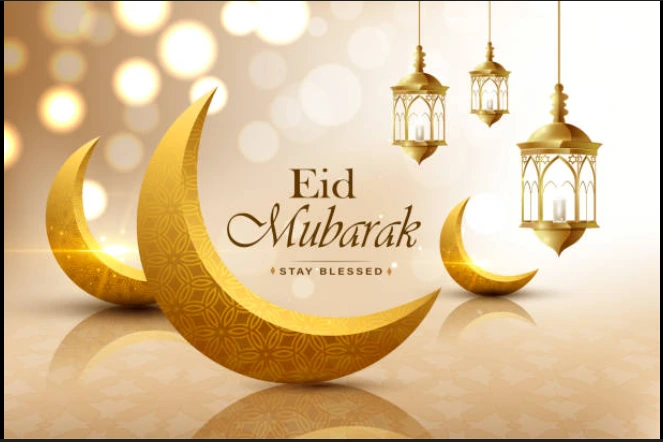
Eid Mubarak 2026 wishes and greetings highlight joy and togetherness

Eid ul-Fitr 2026 is marked by prayers, celebrations and the exchange of heartfelt wishes that reflect joy, gratitude and togetherness.
Published

on

Eid Mubarak

As Eid ul-Fitr is celebrated across the world in 2026, people are sharing warm wishes and messages with family and friends, reflecting the spirit of unity and gratitude. The festival marks the conclusion of Ramadan, a period of fasting, prayer, and reflection observed by Muslims globally.

The occasion is traditionally associated with prayers, acts of charity, and festive meals, while modern celebrations increasingly include exchanging greetings through digital platforms. Messages shared via social media and messaging apps have become an important way to stay connected with loved ones, especially those living far away.

Sharing joy through meaningful messages

People are expressing their emotions through simple yet heartfelt wishes that capture the essence of the festival. Here are 20 messages widely shared during the celebrations:

  1. Eid Mubarak! May your home be filled with happiness and peace.
  2. Wishing you and your family a joyful and blessed Eid.
  3. May this Eid bring success, health, and prosperity to you.
  4. Eid Mubarak! Stay happy and keep smiling always.
  5. May Allah bless you with endless joy this Eid.
  6. Sending warm wishes and love on this special day.
  7. Eid Mubarak to you and your loved ones.
  8. May your prayers be accepted and your heart be content.
  9. Wishing you peace, happiness, and good health this Eid.
  10. May this festival bring new hope and opportunities.
  11. Eid Mubarak! Enjoy every moment with your family.
  12. May your life be filled with light and positivity.
  13. Wishing you a day full of laughter and celebration.
  14. Eid Mubarak! May all your dreams come true.
  15. May this Eid strengthen our bond and bring us closer.
  16. Sending you blessings and warm hugs this Eid.
  17. May your days be bright and your heart be light.
  18. Eid Mubarak! Celebrate with love and gratitude.
  19. May happiness surround you today and always.
  20. Wishing you a peaceful and joyful Eid with your loved ones.

While traditional customs remain central to the festival, the growing role of digital communication highlights how celebrations are evolving with time. The exchange of messages has become a key way to spread positivity and maintain connections.

Eid ul-Fitr continues to serve as a reminder of compassion, generosity, and togetherness, bringing people closer as they celebrate the end of a spiritually significant month.

Continue Reading

Festivals

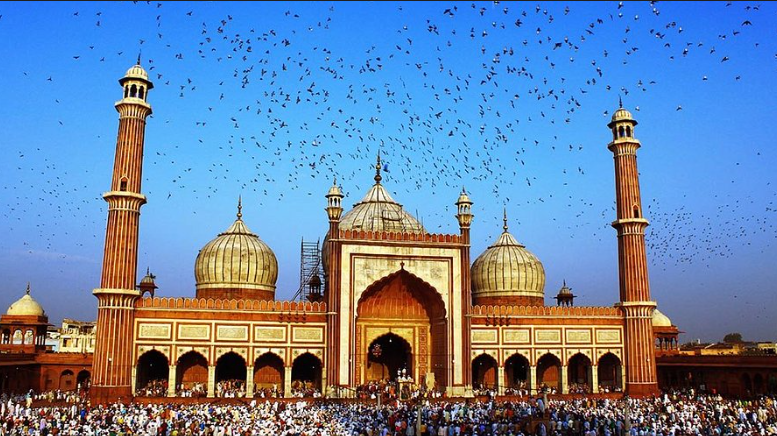
Eid 2026 in India may fall on March 20 or 21, moon sighting on March 19 to decide

Eid al-Fitr 2026 in India is expected on March 20 or 21, depending on the crescent moon sighting on March 19.
Published

on

Eid al-Fitr 2026 in India is expected to be celebrated on either March 20 or March 21, depending on the sighting of the crescent moon on the evening of March 19.

The festival, which marks the end of the holy month of Ramadan, is observed based on the Islamic lunar calendar. Religious authorities and moon sighting committees across the country will confirm the date only after verifying the visibility of the Shawwal moon.

Eid 2026 date in India

As per astronomical predictions and traditional practices, if the crescent moon is sighted on March 19, Eid will be observed the next day on March 20. However, if the moon is not visible, Ramadan will complete 30 days, and Eid will be celebrated on March 21.

The final announcement is typically made later in the evening after confirmations from different regions.

Chand Raat 2026 timing

“Chand Raat,” the night marking the sighting of the moon, is expected to be observed on Thursday evening, March 19, 2026. It begins shortly after sunset when people look for the crescent moon.

This night holds cultural importance, with markets witnessing increased activity as people prepare for Eid celebrations.

Significance of Eid al-Fitr

Eid al-Fitr signifies the conclusion of Ramadan, a month dedicated to fasting, prayer, and charity. The festival represents gratitude, spiritual renewal, and a sense of unity within the community.

How Eid is celebrated

The day begins with a special congregational prayer held at mosques and open grounds. People dress in new clothes, exchange greetings of “Eid Mubarak,” and visit friends and family.

Traditional dishes, especially seviyan, are prepared and shared. Giving Zakat al-Fitr, a form of charity, is considered essential to ensure that everyone can participate in the celebrations. Chand Raat is also marked by shopping, applying henna, and festive preparations.

Continue Reading

Trending

© Copyright 2022 APNLIVE.com