English हिन्दी
Connect with us

Top Stories

WATCH: Video of Noida police officer taking bribe goes viral, 3 suspended

Three police officials have been suspended in the bribery case after the video of the incident went viral on social media.

Published

on

Noida police officer taking bribery

A video of a policeman posted at a police post in Noida’s Police Station Sector-58, allegedly taking a bribe from youth, is doing rounds on social media.

In the video, the Noida police official can be seen wearing police uniform and asking for money. Another man can also be seen counting rupees in front of the police officer. The police also threatened the victim to pay money otherwise they will not release the accused.

https://twitter.com/thejamiatimes/status/1571040199026810880?t=EIO2T_XT7ZfZeK_wFzwE7Q&s=08

Three police officials have been suspended in the bribery case after the video of the incident went viral on social media.

Read Also: WATCH: Video of Noida police officer taking bribe goes viral, 3 suspended

As soon as the video of the Noida police official taking bribes went viral on social media, the users started questioning the poor functioning of Noida Police and demanded action against other accused involved in the bribery, including the policeman seen in the video.]

The Noida police officer, who can be seen taking bribes, has been identified as Sonu Kumar, who is posted in Noida Sector-58.

After investigation, Noida Sector-57 in-charge Lokesh Sharma, head constable Rajkumar Tyagi, Constable Ankit Balyan and Sonu Kumar were found guilty in the bribery case. Legal action will also be taken against them, the police said.

Navrang Tiwari, a resident of Uttar Pradesh’s Kushinagar district, has accused the police of falsely implicating him in a case and extortion and also appealed to the concerned authorities to look into the matter.

He had complained to the DCP that on September 14, a police officer came to him in a car and his name was Ankit Balyan. The officer took him to the Noida Kotwali Sector-58, Tiwari said.

He was allegedly beaten up over the charges of drug dealing. The police officer also threatened him saying it is a big matter, if not able to bring 50,000, then be ready to be in jail for 5 years, Tiwari said.

After this, he took Narang to the Kotwali police station and beat him up there. Later Narang gave 20 thousand rupees to the police. During this, someone made a video taking money.

Viral: Traffic police tractor pulls out Mercedes Benz after it fails in Lucknow rains

Viral: Owner defends dog biting Zomato delivery guys in his private parts, says usse kutta mat bolo

Continue Reading

India News

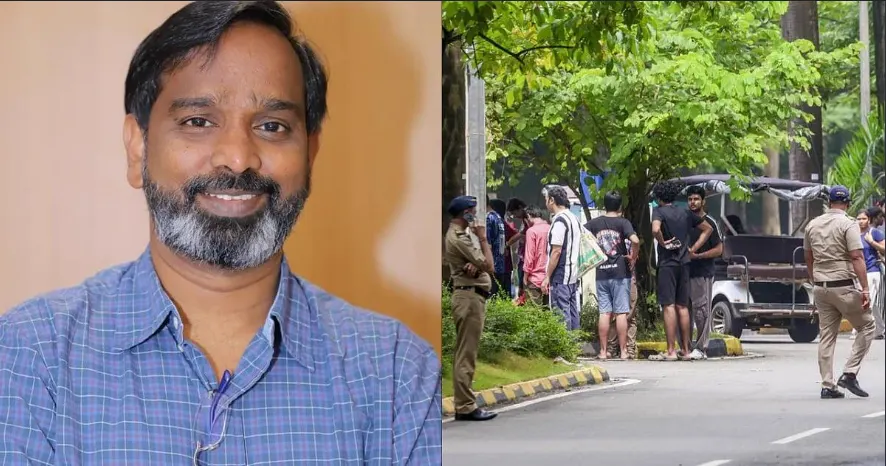
IIT Bombay Professor Suryanarayana Doolla sent on leave amid student suicide row

IIT Bombay professor Suryanarayana Doolla has been sent on leave amid the ongoing student protests following Sahil Wakode’s death.

Published

on

IIT Bombay professor Suryanarayana Doolla has been sent on leave amid the ongoing controversy following the death of 20-year-old student Sahil Wakode, with protests on the campus seeking action against the professor.

Doolla, a faculty member in IIT Bombay’s Department of Energy Science and Engineering, had been involved in the examination incident concerning Wakode. The student was allegedly found using a mobile phone during a mid-semester examination and had uploaded the question paper to an AI platform to seek answers, according to the institute.

Why Suryanarayana Doolla is at the centre of the controversy

Doolla was the course instructor and examination invigilator during the examination and was involved in reporting the alleged examination malpractice to the institute’s authorities.

IIT Bombay has said Wakode was subsequently counselled by the instructor and the Head of Department and was assured that the examination incident would not adversely affect his academic career. The institute has also maintained that no disciplinary action had been initiated against the student before his death.

Wakode’s family, however, alleged harassment and caste-based discrimination. Mumbai Police registered a case based on the family’s complaint, with Doolla among those named. The allegations remain subject to investigation.

Student protests at IIT Bombay

Following Wakode’s death, students began protesting on the IIT Bombay campus and demanded action against Doolla.

IIT Bombay Director Professor Shireesh Kedare met the protesting students on September 20 and signed an 18-point charter of demands. The demands included action against Doolla.

Doolla was subsequently removed from the post of Dean Students Welfare amid the protests. The latest action comes as the controversy surrounding Wakode’s death and the allegations against the professor continue to be investigated.

Faculty members back Doolla

While students have demanded action against Doolla, IIT Bombay’s Faculty Forum has backed the professor, saying he was performing his duties as an invigilator and had followed the institute’s prescribed procedure after detecting the alleged examination malpractice.

The controversy involves the examination incident, allegations made by Wakode’s family and the police investigation into his death. The allegations against Doolla have not been established as facts and remain part of the ongoing investigation.

Continue Reading

Latest world news

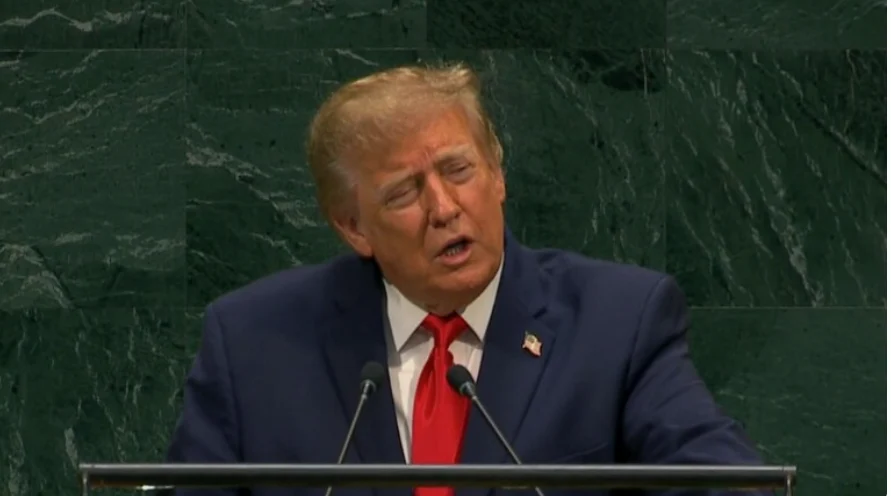
Trump issues fresh Iran warning at UN General Assembly, signals deal after midterms

US President Donald Trump issued a fresh warning to Iran during his UN General Assembly address, saying he faces a choice between a deal and further escalation.
Published

on

US President Donald Trump used his address to the United Nations General Assembly on Tuesday to outline what he described as a major decision over Iran, putting the possibility of a deal against further military escalation.

Speaking at the UN in New York, Trump said he had a “big decision” to make. He questioned whether the United States should pursue an agreement that would allow Iran to rebuild or instead take further action against the Islamic Republic.

Trump later indicated that he believed an agreement with Iran could be reached after the US midterm elections, which are scheduled for November 3.

Trump says deal with Iran remains possible

During his speech, Trump presented two possible paths. He said a deal could allow Iran to rebuild and become a stronger country, while also raising the possibility of destroying the Islamic Republic if an agreement was not reached.

Trump said he believed a deal could eventually be reached, arguing that Iran was waiting to see the outcome of the US midterm elections.

His comments came amid the continuing US-Iran conflict and renewed diplomatic activity surrounding the confrontation. Trump’s UN appearance came as Washington was also engaged in discussions with multiple international leaders over the Iran conflict and other global issues.

Iranian delegation walks out during Trump’s speech

The Iranian delegation reportedly left the General Assembly chamber as Trump began describing the military confrontation with Iran.

According to the report, only one person from the Iranian delegation remained seated as Trump spoke about the conflict and the military strikes of the past six months.

The walkout came as tensions between Washington and Tehran remained high, with both sides facing pressure over the continuation of the conflict.

Trump’s latest warning follows earlier comments

Trump’s UN remarks came days after he said he was approaching a major decision over whether to intensify military action against Iran or pursue another route.

He had also indicated before his UN appearance that he could be open to meeting Iranian President Masoud Pezeshkian during the UN General Assembly in New York.

The possibility of renewed negotiations comes against the backdrop of continuing military and diplomatic tensions between the two countries.

Continue Reading

India News

Amit Shah sets 2029 deadline to make India drug-free

Union Home Minister Amit Shah has set December 31, 2029 as the deadline for India’s fight against drugs, urging states to focus on dismantling trafficking networks rather than only recording seizures.
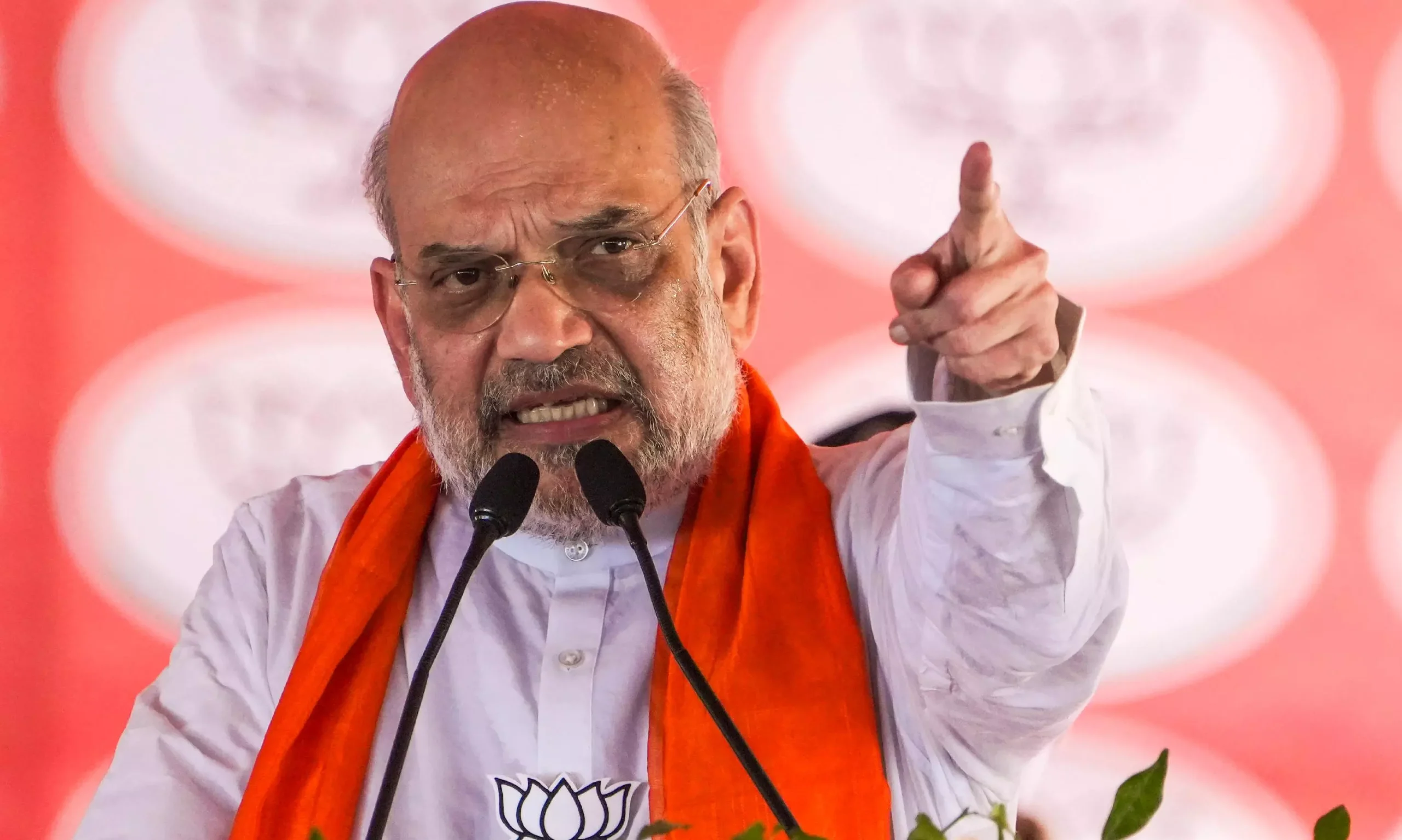
Published

on

Union Home Minister Amit Shah has set December 31, 2029 as the deadline for India’s campaign against drugs, calling on states and Union Territories to move beyond recording seizures and focus on dismantling the networks behind narcotics trafficking.

Speaking at the third National Conference of Anti-Narcotics Task Force Heads in New Delhi on Tuesday, Mr Shah said India would not allow drugs to enter or leave the country.

“Neither will we allow a single gram of drugs to enter India, nor will we allow a single gram of drugs to go out,” he said.

The conference brought together police chiefs from 36 states and Union Territories as the government outlined its roadmap for tackling the country’s drug problem.

Amit Shah asks states to focus on drug networks

Mr Shah said drug seizures alone should not be treated as the measure of success. He called for a shift from meetings to missions, reports to results and seizures to dismantling the networks responsible for drug trafficking.

Districts have been identified as the frontline units in the strategy. They are to be assessed based on whether they are involved in drug production or entry, serve as transit corridors or primarily face drug consumption.

The response would then be tailored according to the nature of the threat in each district.

The Home Minister also stressed the need to follow the money generated by narcotics trafficking, including through investigations into bank accounts and shell transactions that help sustain drug networks.

Synthetic drugs, darknet and crypto payments in focus

The government is also preparing for emerging methods used by drug traffickers, with synthetic drugs, darknet marketplaces, cryptocurrency payments and dead-drop deliveries identified as areas requiring greater attention.

Mr Shah urged states to develop specialised teams capable of investigating these newer forms of narcotics trafficking.

The government also wants foreign nationals involved in drug supply chains to face deportation and blacklisting, while those operating supply networks into India from abroad are to be pursued for extradition.

2026-2029 drug control roadmap

The government’s Vision Document 2026-2029 is based on four pillars: enforcement and intelligence, control of precursor chemicals and synthetic drugs, demand and harm reduction, and capacity building.

According to the report, the document contains more than 100 individual targets.

The Nashamukt Mitra programme is another part of the campaign. Nearly 47,000 volunteers have registered so far, with a target of reaching one lakh volunteers. The programme plans to take awareness activities to around 10 lakh schools and colleges.

The government has also launched new television advertisements against drug use, redesigned the Narcotics Control Bureau website and laid the foundation stones for NCB zonal complexes in Lucknow and Dehradun.

Mr Shah linked the anti-drug campaign to Prime Minister Narendra Modi’s vision of a developed India by 2047, arguing that protecting the country’s young population from narcotics is essential to that goal.

Continue Reading

Trending

© Copyright 2022 APNLIVE.com