The Law Ministry’s Department of Justice has put out the department’s major achievements in 2022. It highlighted the appointment of 165 judges in High Courts as a record, since it is the highest number of appointments made in a calendar year. A ministry statement said during 2022-2023, Tele-Law expanded to cover as many as 1 lakh Gram Panchayats across 755 districts in 36 States and Union Territories. Apart from this, the Ministry unveiled the digital court initiative to enable the switch to paperless courts by providing judges with access to court records in digital form. Here is the full press statement:
1. Appointment and transfer of Judges:
165 Judges were appointed in the High Courts which is highest number of appointments made in a calendar year – High Court of Allahabad (13), Andhra Pradesh (14), Bombay (19), Calcutta (16), Chhattisgarh (3), Delhi (17), Gauhati (2), Himachal Pradesh (2), Jammu & Kashmir and Ladakh (4), Jharkhand (1), Karnataka (6), Kerala (1), Madhya Pradesh (6), Madras (4), Orissa (6), Patna (11), Punjab and Haryana (21), Rajasthan (2), Telangana (17).
38 Additional Judges were made permanent in High Courts – High Court of Allahabad (10), Bombay (4), Calcutta (6), Himachal Pradesh (1), Karnataka (3), Kerala (4), Madras (9), Manipur (1).
Tenure of 02 Additional Judges was extended – High Court of Bombay (1) and Madras (1).
08 Chief Justices were appointed – High Courts of Gauhati (1), Himachal Pradesh (1), Jammu & Kashmir and Ladakh (1) Karnataka (1), Madras (1), Telangana (1), Rajasthan (1), Uttarakhand (1).
02 Chief Justices were transferred from one High Court to another.
06 Judges of High Courts were transferred from one High Court to another.
2. Tele-law:
Under AzadiKaAmritMahotsav, Department of Justice organized a number of events during the allotted week of 8th -14th November,2021 Department initiated Login Week Campaign under its Tele-Law: Reaching the Unreached, to promote increased access to pre- litigation advice for rightfully claiming their entitlements and timely redressal of their difficulties. More than 52000 beneficiaries were reached out through 4200 awareness sessions and nearly 17000 were provided with legal advice and consultation by dedicated pool of Panel Lawyers through video/teleconferencing facilities under Tele-Law. To maximize outreach Tele-Law on Wheels campaign was also rolled out where special Tele-Law branded Mobile Vans travelled in different parts of the country to spread the message of Tele-Law through playing of videos, radio jingle and distribution of Tele-Law leaflets.
A mega event was also organized by the Department on 13th November 2021 presided by Hon’ble Minister of Law and Justice and Hon’ble Minister of State, which was attended by more than 65,000 participants. On this occasion 126 best performing front-line functionaries were felicitated whose relentless efforts in the far flung areas of the country has helped Tele law reach glorious heights. A Tele-Law Mobile App has also been launched for enabling seamless connect of beneficiaries with Panel Lawyers. Various print and digital knowledge products were released which includes Tele-Law Brochure, Tele-Law Movies, Tele-Law Logo and Tele-Law Mascot to ensure citizen participation. Tele-Law services are available at 75,000 CSCs/Gram Panchayats in 669 Districts (including 112 Aspirational Districts as per NITI Aayog data) across 36 States/UTs of the country. As on 30th November, 2021, there are 12,70,135 total cases registered, of which advice has been enabled to 12,50,911 beneficiaries.
During the Year 2022-2023 the Tele-Law has been expanded to cover 1 lakh Gram Panchayats across 755 districts (including 112 aspirational districts) in 36 states and UTs. Out of 800+ Lawyers engaged to provide pre litigation advice, each district has been allocated with one panel lawyer positioned in the front offices at the district level through the legal services authorities. Various campaigns have been rolled out viz., backlog clearance drive, SMS campaign and Selfie drive to reach the desired beneficiaries and maximize the delivery of tele-law service. As on 31st October, 2022, 25 lakh + beneficiaries have been provided with legal advice and consultation.
National Legal Services Authority (NALSA) participated in the Republic Day Parade, 2022 through a float on LokAdalat. “EkMutthiAasman” was the theme of Tableau of NALSA showcasing inclusive Legal System through LokAdalat. The front part of the tableau showed ‘NyaySabkeLiye’, a hand gesture of fearlessness, guarantee and protection. On the rear, a hand is seen opening its five fingers one by one, depicting five guiding principles of LokAdalats – Accessible, Definitive, Affordable, Equitable and Timely – Justice for all.
18th All India Legal Services Meet was organized by NALSA at Jaipur on 16th and 17th July 2022. During the event, Department of Justice, Ministry of Law & Justice and National Legal Services Authority (NALSA) exchanged Memorandum of Understanding (MoU) on Integrated Delivery of Legal Services.
NALSA organized its first All India Meet of District Legal Services Authorities (DLSAs) on 30th and 31st July 2022 at Vigyan Bhawan. The meet was inaugurated by Hon’ble Prime Minister in the presence of the then Hon’ble Chief Justice & Patron in Chief of NALSA Shri N V Ramana, Hon’ble Minister of Law and Justice (Shri KirenRijiju), Judges of Supreme Court of India, Minister of State for Law and Justice (Shri S. P. Singh Baghel), Chief Justices of High Courts, Executive Chairpersons of the State Legal Services Authorities (SLSAs) and Chairpersons of the District Legal Services Authorities (DLSAs). The Hon’ble Prime Minister also released a commemorative postal stamp on the ‘Right to free legal aid’. The meet was attended by 1000+ participants from across 676 DLSAs and 37 SLSAs in the country.
4. eCourts Mission Mode Project:
The e-Court Integrated Mission Mode Project was launched with the objective of improving access to justice using technology. Phase II of the project started in 2015 with an outlay of Rs.1,670 crore out of which a sum of Rs.1668.43 crore has been released by the Government. Under Phase II, 18,735 District & Subordinate Courts have been computerized so far.
As part of WAN project, connectivity to 2973 of 2992 court complexes (99.3% sites) have been provided with 10 Mbps to 100 Mbps bandwidth speed using various technologies like OFC, RF, VSAT, etc.
Using National Judicial Data Grid (NJDG), developed with elastic search technology, lawyers and litigants can access case status information of 21.44 crore cases and more than 19.40 crore orders/judgments.
From the Covid lockdown period, more than 2 crore virtual hearings have been held by the Courts across India, making India a world leader in virtual hearings.
Live Streaming of court proceedings have started in Gujarat, Orissa, Karnataka, Jharkhand, Patna and Madhya Pradesh High Courts and Hon’ble Supreme Court of India, thus allowing interested persons to join the proceedings.
21 virtual courts in 17 States / UTs have been set up to try traffic offences. These courts have heard more than 2.21 crore cases and realized Rs. 325 crore in fines. Delhi High Court has started 34 Digital Courts to hear cheque bounce cases under the Section 138 of NI Act.
An eFiling system has been rolled out for the electronic filing of legal papers. This allows the lawyers to access and upload documents related to the cases from any location 24X7 which makes coming to the court for filing of papers unnecessary.
To make justice delivery inclusive and to bridge the digital divide, 619 eSewaKendras have been rolled out for helping the lawyer or litigant who needs any kind of assistance ranging from information to facilitation and eFiling.
Citizen centric services are provided through 7 platforms or service delivery channels for providing real time information on case status, cause lists, judgements etc. to lawyers/litigant. The services are SMS Push and Pull (2,00,000 SMS sent daily), Email (2,50,000 sent daily), multilingual and tactile e-Courts services Portal (35 Lakh hits daily), Judicial Service Centers (JSCs), Info Kiosks, e-Courts Mobile App for lawyers/litigants (with 1.50 crore downloads till 01.11.2022 and Just IS app for judges (17,664 downloads till 31.10.2022).
National Service and Tracking of Electronic Processes (NSTEP) has been developed for process serving and issue of summons and is currently functional in 26 States/UTs.
To bring awareness to the public about justice sector, advertising various schemes of the Department and to give status of various fields to the public, 38 Justice Clocks have been installed at 24 High Courts.
As per data published on Electronic Transaction Aggregation & Analysis Layer (eTaal) portal, eCourts is one of the leading projects among top 5 MMPs in India with total 629 crore e-transactions in last one year.
A manual on e-filing and a Brochure on “How to register for E Filing” has been made available in English, Hindi and 12 regional languages for the use of the lawyers. A Youtube channel has been created in the name of the e Court services which has helped advocates to acquire skills required for operating digital platforms with ease. The e-Committee of the Supreme Court of India has conducted trainings and awareness programmes on the ICT services which have covered 5,13,080 stakeholders.
A new ‘Judgment & Order Search’ portal has been inaugurated for the convenience of its stakeholders in searching judgments easily. It can be reached at https://judgments.ecourts.gov.in. e-Courts project has bagged various awards including National Award for e-Governance consecutively for the last three years.
5. Scheme of Fast Track Special Courts (FTSC):
A Centrally Sponsored Scheme for setting up of 1023 Fast Track Special Courts (FTSCs) including 389 exclusive POCSO (e-POCSO) Courts was started by the Union of India in October, 2019 to provide speedy justice to the victims of rape and POCSO Act through expeditious disposal of related cases. The scheme was initially for one year with outlay of Rs.767.25 crore with Central Share amounting to Rs. 474 crore to be funded under Nirbhaya Fund. Central Share in FY 2019-20 ofRs. 140 crore and in FY 2020-21 of Rs.160 crore was released to States as Central Share from Nirbhaya Fund. Rs. 134.56 crore has been released in the FY 2021-22 and Rs. 186.93 crore released during the current financial year up-to 10/12/2022.The scheme has been continued up to 31st March, 2023 at a total outlay of Rs.1572.86 crore with Rs.971.70 crore as central share.
733 FTSCs with 413 exclusive POCSO Courts have been operationalized in 28 States/UTs which have disposed of more than 1,24,000 cases (up to October, 2022).
The FTSCs reflects the national commitment to champion the cause of safety and security of women and girl child.
The FTSCs are dedicated courts which have helped in fast tracking delivery of justice to the helpless victims of sexual offences; in creating a deterrence framework for sexual offenders, strengthening citizen’s faith in the justice system and making way for a safe environment for women and children.
6. Launch of Gram Nyayalaya online Portal:
A Gram Nyayalaya online portal has also been created, wherein the States/High Courts upload data relating to Gram Nyayalayas, including case disposal, on monthly basis.
7. National Mission for Justice Delivery and Legal Reforms:
The National Mission for Justice Delivery and Legal Reforms was set up in August 2011. National Mission for Justice Delivery and Legal Reforms focuses on improvement of administration of justice and justice delivery and legal reforms in the entire country and to address the diverse needs of all sections of stakeholders. Its objectives are two-fold:
Increasing access by reducing delays and arrears in the system, and
Enhancing accountability through structural changes and by setting performance standards and capacities
Initiatives under National Mission
Implementation of the Centrally Sponsored Scheme (CSS) for Development of Infrastructure Facilities for Judiciary:
One of the major initiatives of the National Mission relates to Centrally Sponsored Scheme (CSS) for Development of Infrastructure Facilities for Judiciary. CSS for Development of Infrastructure Facilities for Judiciary aims to increase the availability of suitable number of Court Halls, Residential Accommodations for Judges / Judicial Officers of District and Subordinate Courts all over the country including at District, Sub-District, Taluka, Tehsil and Gram Panchayat and Village levels. This will help in improving the functioning and performance of the Judiciary across the country in reaching out to every citizen.
The Government has approved the continuance of this CSS for a period of 5 years i.e. from 2021-22 to 2025-26 with a financial outlay of Rs.9000 crore (including central share of Rs.5307 crore) and also introduced some new features like provision of Lawyers Halls, toilet complexes and digital computer rooms for the convenience of lawyers & litigants, besides court halls and residential units.
A sum of Rs. 9445.46 crore has been released till 06.12.21 since the inception of the scheme, of which Rs. 6001.16 crore has been released since 2014-15 which is around 63.53% of the total releases under the Scheme. During the current financial year 2022-2023 a sum of Rs. 848 crore has been allocated of which a sum of Rs. 436.08 crore has been sanctioned. In the financial year 2021-22, an amount of Rs. 684.14 crore was released to the States.
As per the information made available by the High Courts, there are 21,159 court halls available, a significant increase as compared to the 15,818 available court halls in 2014. As far as the Residential Units are concerned,18,557 Residential units are available against the current working strength of 19,235 Judges/Judicial Officers. There were 10,211 Residential Units available in 2014. In addition, 2673 court halls and 1662 residential units are currently under construction as per Nyaya Vikas portal.
Launch of Nyaya Vikas 2.0:
Nyaya Vikas as an online tool for monitoring of construction projects was launched by Hon’ble Minister of Law & Justice on 11th June, 2018. The Nyaya Vikas web portal and mobile app have been upgraded and version 2.0 has been made available for public online from 1st April, 2020 with enhanced capabilities and functionalities, which has been developed based on the feedback from different State Users, with the assistance of NRSC, ISRO. As on 6282 court halls (completed, under construction and proposed), 5385 residential units (completed, under construction and proposed) are geotagged.
Filling up of Vacancies in District and Subordinate Courts
As per the Constitutional framework, the selection and appointment of judges in subordinate courts is the responsibility of the High Courts and State Governments concerned. The Supreme Court, through a judicial order in Malik Mazhar case, has devised a process and time frame to be followed for the filling up of vacancies in subordinate judiciary. Department of Justice has been taking up the matter of filling up of vacant positions in District & Subordinate Courts with the States and High Courts. Department of Justice hosts a MIS web-portal on its website for reporting and monitoring of sanctioned and working strength, and vacancies of Judicial Officers of District and Subordinate Courts on monthly basis. This enables the policy makers to get monthly judicial data. SinceApril, 2021 portal for reporting of compliance of directions of Malik Mazhar Sultan case is also live on the Department of Justice website.
Pendency in Courts
Disposal of cases is within the domain of the judiciary. However, the Union Government is committed to speedy disposal of cases and reduction in pendency of cases to improve access to justice in line with the mandate under Article 39A of the Constitution. The National Mission for Justice Delivery and Legal Reforms, established by the Union Government, has adopted many strategic initiatives, including improving infrastructure [court halls and residential units] for Judicial Officers of District and Subordinate Courts, leveraging Information and Communication Technology (ICT) for better justice delivery, filling up of vacant positions of Judges in High Courts and Supreme Court, reduction in pendency through follow up by Arrears Committees at District, High Court and Supreme Court level, emphasis on Alternate Dispute Resolution (ADR) and initiatives to fast track special type of cases. As on 6th December 2022, there are 69,598 cases pending in the Supreme Court. The pendency in respect of High Courts and District & Subordinate Courts, as on 6th December 2022 stands at 59,57,704and 4,28,21,378 respectively.
Online Reporting on Time taken for Disposal:
The Department hosts MIS portal for reporting of “Average Time Taken for Disposal of Cases” on its website to record the responses by all High Courts pertaining to time taken, on an average, in disposal of criminal and civil cases. This in compliance of observations made by Department-related Parliamentary Standing Committee on Public Grievances, Personnel and Law & Justice to maintain record of time taken in disposal of cases in courts.
Reduction in Pendency through arrears committees:
In pursuance of resolution passed in Chief Justices’ Conference held in April, 2015, Arrears Committees have been set up in High Courts to clear cases pending for more than five years. Arrears Committees have been set up under District Judges too. Arrears Committee has been constituted in the Supreme Court to formulate steps to reduce pendency of cases in High Courts and District Courts. The Department of Justice developed an online portal for reporting by all High Courts regarding the compliance with Arrears Committee guidelines of the Malimath Committee Report.
Ease of Doing Business
The Ease of Doing Business (EoDB) index is a ranking system established by the World Bank Group wherein the ‘higher rankings’ (a lower numerical value) indicate better, usually simpler, regulations for businesses and stronger protections of property rights. Enforcing Contracts is one such indicator, which measures time and cost to resolve a standardized commercial dispute as well as a series of good practices in the judiciary. Department of Justice is the nodal Department for the Enforcing Contract Indicator. In order to create an environment conducive for investment and business, continued efforts have been made by implementing reforms to enable expeditious enforcement of contracts to improved Ease of Doing Business various reforms have been under taken by Department of Justice in coordination with eCommittee of Supreme Court of India and High Courts of Delhi and Mumbai.
To handle commercial cases, 35 dedicated Commercial Courts in Delhi, 6 in Mumbai, 10 in Bengaluru and 2 in Kolkata have been operationalized. In the year 2022, 13 Dedicated Commercial Courts have been operationalized in Delhi to exclusively deal with commercial disputes, bringing the total number of Dedicated Commercial Courts in Delhi to 35. This is inclusive of 2 Digital Commercial Courts operationalized in Saket District Court, New Delhi, that are paperless courts with e-filing and virtual hearing facility. 2 New Dedicated Commercial Courts in Bengaluru bringing up the total number of Dedicated Commercial Courts to 10 in Karnataka.
Other reforms undertaken include special benches at various High Courts to deal with high value commercial disputes above 500 crore, designated Special Courts for Infrastructure project contracts disputes as per Section 20B of the Specific Relief (Amendment) Act, 2018, implementation of three adjournment rules (vide Colour Banding facility), use of ICT, e-filing, random and automated allocation of cases, use of electronic case management tools by Judges and lawyers, e-summons, etc.
One of the major initiative taken relates to linkage of property registration with court proceedings. Twenty-Six States (UTs) Governments have received clearances from their respective High Courts for linkage of land records and registration database with NJDG. This would help in quick disposal of land disputes and reduce workload of the judiciary.
Department of Justice has also launched the Enforcement of Contracts Portal which provides a comprehensive source of information on reforms being undertaken on the “Enforcing Contracts” parameters.
(v) Rule of Law Index
The Rule of Law Index (ROLI) is developed and published by World Justice Project (WJP). ROLI 2022 covers 140 countries and ranks them based on the country-specific data collected across 8 factors and 44 sub-factors. ROLI quantitatively measures rule of law-in-practice by way of survey/polling of general public and sector experts.
As per the latest report, India’s current rank in ROLI is 77 out of 140 countries assessed by the WJP. Department of Justice has been working with 23 stakeholder Ministry/Departments to improve India’s performance on 08 key indicators/factors and 44 sub-factors identified for the purpose. A Coordination Committee consisting of these Ministries/Departments has been formed, which has held 13 meetings so far. Additionally, inputs were also sought from legal experts and industry regarding quantification of the improvement in qualitative / perception based parameters
Subsequently, a Project Management Unit (PMU) in DoJ established on 08.07.2021 consisting of expert agency (M/s. Market Xcel Data Matrix Pvt. Ltd., local agency previously engaged by WJP for their polling surveys in India) as members, headed by Joint Secretary, to assist line M/Ds with filling up information in prescribed template, formulate action plan to improve India’s performance in ROLI. The representatives of Ministry of Statistics and Programme Implementation have also been associated for advice on creation of India Index, with local data sources. The PMU expanded parameters/ sub-parameters so that information collated by line M/Ds is more granular and precise. A revised template for ROLI to add more information related to reform actions to assist in formulation of communication-outreach media plan was also prepared by the PMU.
The Action Plan formulated to take the process forward involves, identification of Low Hanging fruits or parameters which are critical for score improvement, collection of details to be completed from each line M/D as per the parameters allocated, additional information to formulate a “Communication Outreach Plan” for further improvement to change the perception and relevance among people, developing an exclusive ROLI webpage on DoJ website to showcase progress undertaken, completion of information of ROLI Dashboard developed by NITI Aayog, and Release of Bi-annual ROLI newsletter.
The challenges include converting the conceptual qualitative index into quantitative, with data from various Ministries/Departments, identification of data sources, alternate data sources where data is not available.
(vi) Data Governance Quality Index (DGQI)
The DGQI Evaluation Exercise was undertaken by NITI Aayog to assess the data preparedness of the various Ministries and Departments. This study was conducted on the “Data Systems to ensure smooth processes of data generation, management and its use” as being employed by the various Central Ministries/ Departments. There have been two editions of this exercise DGQI 1.0 and 2.0, so far. In the last assessment in Quarter 4 of DGQI 2.0, the Department of Justice (at 8th place out of 24 Departments in the Social category) secured a score of 4.05 out of 5 improving upon its last score of 2.98 out of 5 under DGQI 1.0. In the overall rankings for DGQI 2.0, DoJ stands at 24th position out of 74 line M/Ds.
The objective is to achieve a frontier score of 5 by using the indicative outline as per the DGQI Report for achieving frontier scores of 5.0 for the 2nd Edition of the DGQI exercise that has an enhanced horizontal and vertical scope expansion and covers CSS and CS Scheme as well as non-schemes/other initiatives.
To steer the development and implementation of the action plan/roadmap to achieve frontier score of 5.0 on the DGQI report, a Data and Strategy Unit (DSU) in Department of Justice chaired by Joint Secretary (National Mission) has been constituted, which holds weekly meetings and reports the progress undertaken directly to Secretary, Department of Justice, on a fortnightly basis. Till date, 24 meetings have been held for tracking of DGQI progress internally including NALSA, CSCs including 2 reviews held before Secretary, Department of Justice.
The Department has come up with an indicative outline of roadmap to improve data preparedness and improve DGQI scores. Besides Data Management Guidelines for DoJhave been issued with the aim of developing policies, programs and practices that would control, protect and enhance the value of datasets and information reported/collected by Department of Justice.
The following progress has been achieved under the DGQI exercise:
S.No.
Pre-DSU Position
Post-DSU Position
1
Nyaya Vikas 2.0 portal and compartmentalization of CSS-related data
All CSS-related data integrated & visualised on single portal Open for public view
2
Gram Nyayalaya MIS portal; secured login with select users
Introduction of DashboardOpen for public view
3
No data related E-Courts MMP Phases I & II
eCourts MMP Phase I & II data visualized on India mapVision Document for Phase III hosted on website. Open for public view.
4
Fast Track Courts(FTCs) MIS portal; secured login with select users
Dashboard & depiction on India-map for related data Open for public view.
5
Special Courts(Family Court/Fast Track Courts/MPs MLAs Courts/SCs STs Courts, etc.) MIS portal; secured login with select users
Dashboard & depiction on India-map for related dataOpen for public view.
6
Online reporting of Judicial Officers vacancy in District and Subordinate Courts MIS Portal; secured login with select users
Dashboard for Vacancy-related, category-wise dataDepiction on India-map of State-wise vacancy position in Subordinate JudiciaryOpen for public view.
7
Data related to Vacancy position of Supreme Court and Higher Judiciary in pdf format
Depiction on India-map of High Court-wise vacancy position in Higher JudiciaryOpen for public view.
8
Tele-Law related data only reported cumulative figures
Data visualised for advice enabled, case-wise, gender-wise and reserved category-wise.Data related to no. of CSC, cases registeredOpen for public view.
8. Constitution Day Celebration
Constitution Day or commonly referred as Samvidhan Divas is annually celebrated to mark the adoption of the Indian Constitution by the Constituent Assembly in 1949 and also to remind us the significance of this historic day. Constitution is the bed rock upon which Indian nation stands and continues to achieve great heights every passing year.
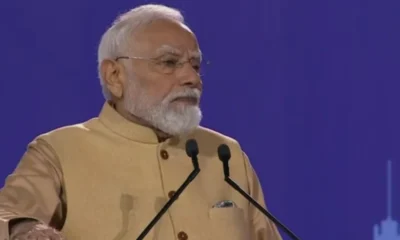
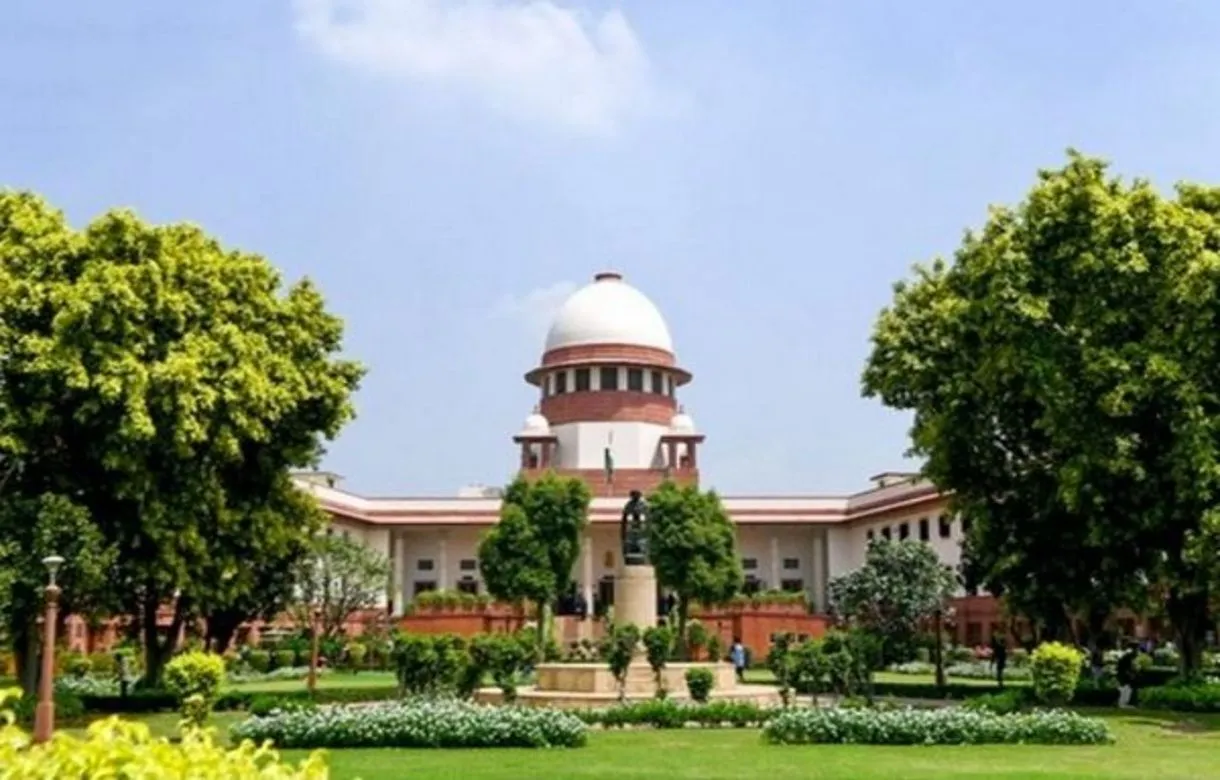
The Constitution day was celebrated by the Supreme Court of India from its premises on 26.11.2022. The Hon’ble Prime Minister of India was Chief Guest in the inaugural session and the Hon’ble President of India was Chief Guest in the valedictory session. During the event, the Hon’ble Prime Minister also launched four e-initiatives namely: initiatives Virtual Justice Clock, JustISMobile App 2.0, Digital court and s3WaaS websites of district courts.
4 new initiatives related to the e-court project was launched by Hon’ble Prime Minister Shri Narendra Modi on 26.11.2022 during Constitution Day celebrations at Supreme Court of India. The PM introduced the following:
(a) Virtual Justice Clock
Virtual Justice Clock is an initiative to exhibit vital statistics of the justice delivery system at the Court level giving the details of the cases instituted, cases disposed and pendency of cases on day/week/month basis at the Court level. The effort is to make the functioning of the courts accountable and transparent by sharing with the public the status of case disposals by the court. The public can access the Virtual Justice Clock of any court establishment on the District Court’s website.
JustIS Mobile App 2.0
The JustIS Mobile App 2.0 is a tool that judges can use to effectively manage their courts and cases by keeping track of the cases that are pending before their court as well as the judges who work under them. Judges of the High Court and Supreme Court can now monitor the status of every State and District that falls under their purview by using this App, which is also made available to them.
Digital Court
The digital court initiative aims to enable the switch to paperless courts by providing judges with access to court records in digital form.
S3WaaS Websites for District Judiciary
S3WaaS (Secure, Scalable and Sugamya Website as a Service) is framework developed for Government entities using which customizable websites can be created that can be easily edited. Thereby, ensuring transparency, accessibility and seamless dissemination of information to the public. It is Divyang-friendly, Multilingual, and Citizen-friendly.
Nobody can browbeat judiciary, Chief Justice warns over Rahul Gandhi’s march
The Supreme Court issued notices to opposition leaders, including Rahul Gandhi and Akhilesh Yadav, over their march to the court on October 12 concerning irregularities in the Special Intensive Revision of electoral rolls.
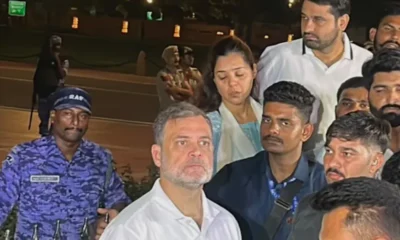
The Supreme Court has issued notices to Congress leader Rahul Gandhi, Samajwadi Party chief Akhilesh Yadav and other protesters over the opposition’s October 12 march to the apex court. The march was organised to raise concerns about alleged irregularities in the Special Intensive Revision (SIR) of electoral rolls.
The court’s remarks that nobody can browbeat the judiciary have brought the focus back to the dispute over the opposition’s protest and the appropriate way to raise grievances before the court.
Why the opposition marched to the Supreme Court
The march was part of the opposition’s campaign against what it described as irregularities in the voter-list revision process. The opposition has raised concerns over alleged electoral malpractice and demanded action concerning the Election Commission and the revision of electoral rolls.
Rahul Gandhi had led the march to the Supreme Court after Chief Justice of India Surya Kant declined a request to meet opposition leaders, including Gandhi and Congress president Mallikarjun Kharge.
The Chief Justice had advised the leaders to approach the court through the judicial process rather than seek an administrative meeting to discuss issues already pending before the Supreme Court.
Chief Justice’s position on approaching the court
The Chief Justice had said that the Supreme Court’s doors were open to every citizen and that people could approach it through petitions. He also indicated that matters affecting citizens would be considered in accordance with the law.
The distinction between the administrative and judicial functions of the court was central to the disagreement over the opposition leaders’ request for a meeting. The Chief Justice’s position was that pending legal issues should be addressed through judicial proceedings.
Supreme Court issues notices over the march
The Supreme Court issued notices to Rahul Gandhi, Akhilesh Yadav and other protesters concerning the October 12 march. The proceedings relate to the protest over irregularities in the Special Intensive Revision of electoral rolls.
The opposition’s allegations about the voter-list revision remain allegations and should not be treated as established findings merely because the matter has reached the court.
The developments have placed the opposition’s protest, its concerns over electoral rolls and the judiciary’s role in addressing such disputes at the centre of the ongoing debate.
Dhruv Rathee gets fresh summons in 2018 BJP IT cell video case
YouTuber Dhruv Rathee has received fresh summons from a Delhi court in a 2018 criminal defamation case filed by Vikas Pandey over a video concerning the BJP IT Cell. The matter will next be heard on October 17.
YouTuber Dhruv Rathee has received fresh summons from a Delhi court in a criminal defamation case linked to his 2018 video titled “BJP IT Cell Part 2”. The complaint was filed by Vikas Pandey, who alleged that the video contained defamatory claims about him.
The latest court action follows renewed efforts to serve Rathee with the summons while he is in India. The matter is scheduled to be heard next on October 17.
Judicial Magistrate Rahul Jain of the Saket District Court passed the order on October 12. The fresh summons were issued after the complainant’s lawyer informed the court that Rathee, who usually resides abroad, was in India in connection with the ongoing Cockroach Janta Party (CJP) protests in Delhi.
What is the case against Dhruv Rathee?
The criminal defamation complaint concerns Rathee’s video, “BJP IT Cell Part 2”, which was published in 2018.
Pandey, who founded the social media page “I Support Narendra Modi”, alleged that Rathee’s video accused him of being associated with the BJP IT Cell and offering Rs 50 lakh through an intermediary to Mahavir Prasad. According to the complaint, the money was allegedly offered to persuade Prasad to withdraw allegations that the BJP IT Cell spreads fake news.
These claims form part of the complainant’s allegations. The court’s issuance of summons does not establish that the allegations against Rathee are true or amount to a finding of guilt.
Why has the court issued fresh summons?
According to the court proceedings, the complainant’s side had been attempting to serve Rathee with summons for several years. The court had initially summoned him through an order dated July 23, 2019, but the process of serving the summons had faced delays.
The complainant’s lawyer sought an earlier hearing after learning that Rathee was in India. The application argued that his presence in the country offered an opportunity to complete the service of summons without further delay.
The court subsequently directed that fresh summons be issued. The latest report states that the summons were served at Rathee’s Gurugram residence during his visit to India.
How is Arvind Kejriwal linked to the case?
The case also involved Aam Aadmi Party (AAP) leader Arvind Kejriwal, who had re-shared Rathee’s video on X, then known as Twitter, in 2018.
Pandey filed a separate complaint against Kejriwal over the re-sharing of the video. The Delhi High Court later declined to quash the summons issued to Kejriwal.
In February 2024, the Supreme Court stayed the trial court proceedings against Kejriwal in the matter. During the proceedings, his lawyer told the court that Kejriwal acknowledged making a mistake by re-tweeting the video.
The proceedings against Rathee continued, leading to the fresh summons issued by the Saket court.
What happens next?
The case is scheduled for its next hearing on October 17. The proceedings concern the pending criminal defamation complaint and the steps taken to serve Rathee with the court’s summons.
The allegations in the complaint remain allegations unless established through the legal process.
Supreme Court questions EC over missing records in Sringeri election dispute
The Supreme Court questioned the Election Commission over missing video footage of the 2023 counting in Karnataka’s Sringeri constituency. The case involves a revised result following a recount of postal ballots.
The Supreme Court on Wednesday questioned the Election Commission of India (ECI) over its inability to locate video recordings of the original vote counting in Karnataka’s Sringeri Assembly constituency in 2023. The court said it would not accept what it described as “lame excuses” and directed the poll body to produce whatever records are available at the next hearing.
A bench of Justices Sanjay Kumar and Sanjeev Sachdeva expressed displeasure after the Election Commission’s counsel informed it that the footage of the original counting could not be traced.
The bench also warned that it could draw an adverse inference if the required documents were not produced.
Questioning how the poll body could lose records relating to an election it had conducted, the judges stressed that maintaining election documentation was central to its responsibilities.
“How can the Election Commission of India say that it has lost the records? Your whole purpose is to hold an election, and you need to have a document. Where is the question of you saying we are trying to trace it?” the bench asked.
“We will not accept these kinds of lame excuses,” it added.
What is the Sringeri election dispute?
The case stems from the 2023 Karnataka Assembly election in Sringeri, where Congress leader TD Rajegowda was initially declared the winner.
The result was challenged by BJP candidate Jeevaraj before the Karnataka High Court. The High Court later ordered a recount of postal ballots, including the reverification of 279 rejected postal votes.
Following the recount, the Returning Officer declared a revised result in which Jeevaraj was declared the winner. Rajegowda then approached the Supreme Court to challenge the revised outcome.
In May, the Supreme Court granted interim relief to Rajegowda, directing that he continue as the Member of the Legislative Assembly while his plea remained pending.
Rajegowda seeks counting records and observer’s report
Rajegowda has sought access to the election observer’s report and video recordings of both the original counting conducted in 2023 and the recount held this year.
The missing original counting footage became a point of concern during Wednesday’s hearing, with the bench questioning the Election Commission’s inability to trace the recording.
The court directed the Commission to submit whatever records it possesses at the next hearing. Its warning about a possible adverse inference underscores the importance the bench attached to the production of the requested documents.
The court has scheduled the next hearing for February 15, 2027.
APN News is today the most watched and the most credible and respected news channel in India. APN has been at the forefront of every single news revolution. The channel is being recognized for its in-depth, analytical reportage and hard hitting discussions on burning issues; without any bias or vested interests.