English हिन्दी
Connect with us

Auto

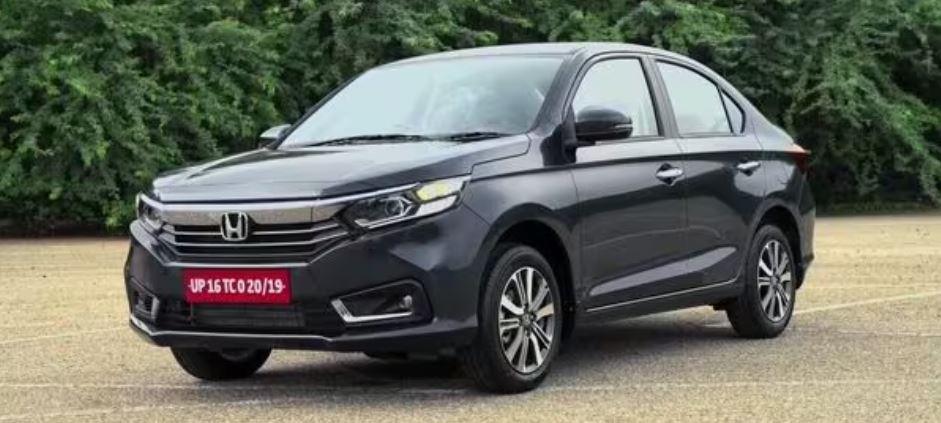
Honda discontinues Amaze diesel variant, here’s why!

Published

on

The journey of the diesel variant of Honda Amaze (Honda Amaze) is over now. It was one of the last cars in the sub-compact sedan segment to get a diesel engine. Honda Cars India has now put a full stop on production of the diesel version of it ahead of the implementation of the upcoming Real Driving Emission (RDE) norms that will come into power from April 2023.

As per the reports, all the authorised dealers of Hona have confirmed the news. They say that in order to follow the rule of RDE, the company had to take the decision. Amid this, the firm also removed the details of the diesel variant including the prices from its website. The move is a part of Honda’s strategy to focus on petrol and hybrid powertrains in the Indian market going forward.

In view of the upcoming RDE norms, it is mandatory to discontinue small-capacity diesel engines. This is the reason why cars like the Amaze diesel do not comply with stricter emission norms. However, after being getting updating, the vehicle was unable to impress the customers and faces a seen a sharp drop in demand for diesel.

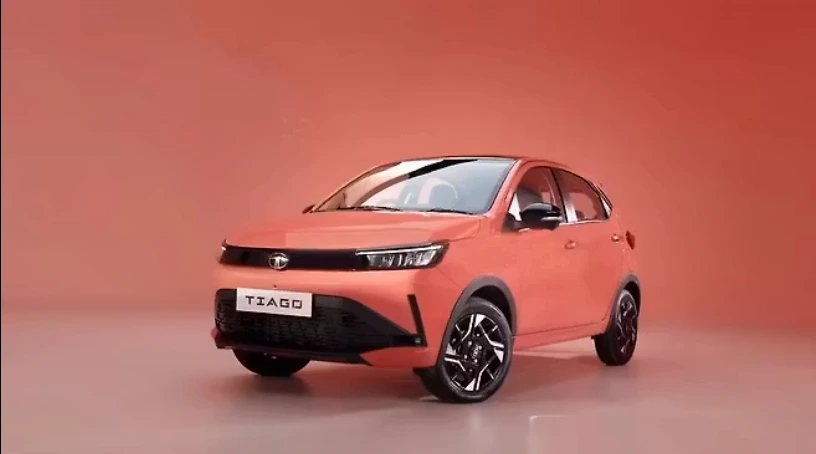
The model used to compete with cars like Maruti Suzuki Dzire, Hyundai Aura and Tata Tigor in its segment. All other of these vehicles have had their diesel engine variants discontinued during the last three years.

Other diesel models will also be discontinue soon

Honda sells only two diesel cars in India. This includes the fifth-generation models of the Honda WR-V and the Honda City. Reports suggested that these cars’ production will also be removed before April.

Meanwhile, Honda first introduced the 1.5-litre diesel engine in India with the Amaze. This engine generates 100 hp power and 200 Nm torque. A 5-speed manual gearbox has been given with this engine. At the same time, this engine with CVT automatic gearbox generates power of 80 hp and torque of 160 Nm.

Continue Reading

Auto

Maruti Suzuki Victoris SUV unveiled with 5-Star BNCAP rating, hybrid option

Maruti Suzuki has introduced the Victoris SUV as its Arena flagship with 5-star safety, ADAS, hybrid powertrain, and a long list of premium features.
Published

on

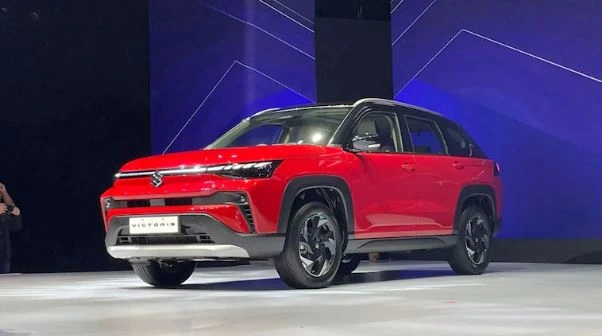
Maruti Suzuki has officially introduced its latest SUV, the Victoris, as the flagship model under its Arena range. Positioned above the Brezza, the Victoris comes with a strong focus on safety, premium features, and multiple powertrain options, aiming to strengthen the automaker’s hold in the mid-size SUV segment.

Safety features with first-time ADAS in Maruti

The Victoris has achieved a 5-star BNCAP crash test rating, addressing long-standing concerns about Maruti Suzuki’s safety standards. It is equipped with six airbags as standard and, for the first time in India, the company has introduced Level-2 ADAS features. These include adaptive cruise control with curve speed reduction, automatic emergency braking, lane-keep assist, blind spot monitoring, rear cross traffic alert, and high beam assist.

The SUV also features disc brakes on all four wheels and an electronic parking brake with auto-hold.

Design and colour options

The Victoris carries a modern yet clean design, inspired by the e-Vitara. It gets slender LED headlamps, a chrome strip on the grille, and slightly elevated fog lamps. The SUV rides on 17-inch aero-cut alloy wheels, while the rear design is highlighted by connected LED tail lamps with a unique glow pattern.

Dimensionally, it measures 4,360 mm in length, 1,655 mm in width, and 1,795 mm in height with a wheelbase of 2,600 mm. Buyers can choose from 10 colour options—including new shades Mystic Green and Eternal Blue, with three dual-tone finishes.

Interiors and advanced features

Inside, the Victoris gets a dual-tone black and ivory cabin with soft-touch panels, piano black inserts, and textured upholstery. Boot practicality has been enhanced even in CNG variants, as the cylinder is now placed under the floor.

The SUV is feature-loaded with a 10.1-inch SmartPlay Pro-X touchscreen, 8-speaker Infinity system with Dolby Atmos, a 10.25-inch digital instrument cluster, 64-colour ambient lighting, and a PM2.5 air filter.

Other highlights include ventilated front seats, wireless charging, gesture-controlled powered tailgate, 8-way powered driver seat, 360-degree camera, TPMS, and front & rear parking sensors.

Engine, variants and mileage

The Victoris shares its powertrain lineup with the Grand Vitara, offering:

  • 1.5L NA petrol engine: 103 Hp, 139 Nm, paired with 5-speed MT or 6-speed AT, with optional AWD and factory-fitted CNG kit.
  • 1.5L strong-hybrid setup: 92.5 Hp, 122 Nm, paired with e-CVT gearbox.

Mileage claims:

  • 21.18 km/l (manual petrol)
  • 21.06 km/l (automatic petrol)
  • 19.07 km/l (AWD petrol)
  • 27.02 km/kg (CNG)
  • 28.65 km/l (hybrid)

With these combinations, the Victoris is set to rival the Hyundai Creta, Kia Seltos, and Toyota Hyryder in the growing mid-size SUV space.

Continue Reading

Auto

Mahindra XUV700 facelift spied with redesigned headlamps and hybrid variant possibility

The facelifted Mahindra XUV700 has been spied testing with new design features and possibly a hybrid powertrain option, indicating a significant mid-cycle update.

Published

on

Mahindra

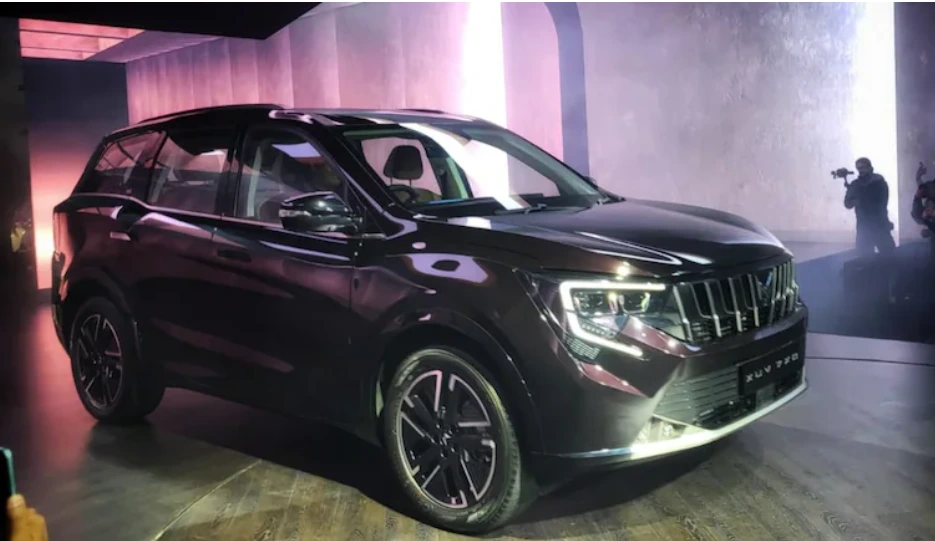
Mahindra’s flagship SUV, the XUV700, has been spotted undergoing road tests under heavy camouflage, indicating that a mid-cycle facelift is in development. Although most of the body styling appears similar to the current model, several changes hint at a refreshed design philosophy and potential technological upgrades.

According to visuals captured during road testing, the test mule features redesigned projector headlamps accompanied by round-shaped daytime running lights (DRLs). These alterations suggest Mahindra is experimenting with improved headlight throw and a more modern appearance. Additionally, a new front grille featuring vertically slanted slats further differentiates this version from the current XUV700.

Cosmetic and tech upgrades on the horizon

The refreshed front fascia aligns with Mahindra’s attempt to maintain a stronghold in the competitive D-segment SUV space, which includes rivals offering advanced features. The camouflaged prototype hints at possible future enhancements, such as:

  • Triple-screen infotainment and driver display setup
  • A new dashboard design potentially inspired by Mahindra’s XUV.e9 concept
  • Premium features like rear ottoman seats, digital key access, auto park assist
  • Upgraded Harman sound system

These expected additions are part of Mahindra’s effort to keep the XUV700 technologically competitive.

Powertrain options and hybrid speculation

Under the hood, the facelifted XUV700 is likely to retain the current powertrain options, including:

  • A 2.0L turbo petrol engine producing 197 BHP and 380 Nm of torque
  • A 2.2L turbo diesel motor generating 182 BHP and 450 Nm of torque

However, speculation is rife that Mahindra might introduce a new hybrid variant or even a plug-in hybrid powertrain with the updated model, as part of its broader push toward sustainable mobility. No official confirmation has been provided, but such a move would align with evolving industry trends.

Competitive pressure drives evolution

Mahindra has consistently performed well in the D-segment with products like the Thar Roxx, Scorpio N, and Scorpio Classic. However, with competition intensifying, especially from newer entrants, this facelift of the XUV700 seems aimed at reinforcing Mahindra’s position in the premium SUV market.

Continue Reading

Auto

Honda CB750 Hornet and CB1000 Hornet SP launched in India with premium features and aggressive styling

Honda Motorcycle & Scooter India has launched the CB750 Hornet and CB1000 Hornet SP, expanding its premium bike portfolio in India with bookings now open and deliveries starting June 2025.

Published

on

Honda Motorcycle & Scooter India (HMSI) has officially introduced two new high-performance motorcycles in the Indian market—the CB750 Hornet and the CB1000 Hornet SP. These additions to Honda’s premium lineup aim to tap into the growing demand for performance bikes among Indian riders.

Pricing and availability

The CB750 Hornet is priced at Rs 8,59,500 (ex-showroom), while the CB1000 Hornet SP comes at a premium Rs 12,35,900 (ex-showroom). The former will be accessible through both BigWing and BigWing Topline dealerships, while the latter will be available exclusively at BigWing Topline outlets across the country. Deliveries for both models are expected to start in June 2025, and bookings are already open.

Engine and performance specs

The CB750 Hornet is powered by a newly designed 755cc, inline twin-cylinder engine that delivers 90.51 hp and 75 Nm of torque. In contrast, the CB1000 Hornet SP features a more powerful 999cc inline four-cylinder DOHC engine, producing 155 hp and 107 Nm of torque. Both models come mated with a 6-speed gearbox equipped with assist and slipper clutch technology for smoother gear transitions.

Braking and safety

Braking duties on the CB1000 Hornet SP are handled by dual 310mm front discs with Brembo radial-mount calipers, along with a 240mm rear disc. The CB750 Hornet is fitted with 296mm dual front discs and a 240mm rear disc. Both motorcycles feature dual-channel ABS to enhance safety during braking.

Official statements

At the launch event, HMSI’s Managing Director and CEO Tsutsumu Otani emphasized the growing interest in premium motorcycles among young Indian riders. He noted that the new Hornets are designed to deliver a blend of performance, style, and Honda’s renowned engineering.

Yogesh Mathur, Director of Sales and Marketing at HMSI, highlighted that the Hornet brand holds strong emotional value for motorcycle enthusiasts. According to him, the introduction of the CB750 and CB1000 Hornet SP elevates the Hornet’s legacy by combining modern technology, signature design, and an assertive road presence.

Continue Reading

Trending

© Copyright 2022 APNLIVE.com