English हिन्दी
Connect with us

Latest world news

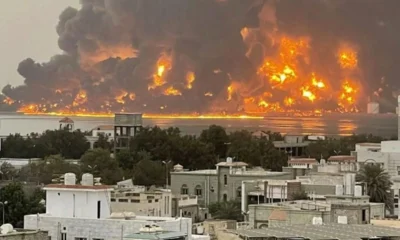
Saudi Arabia hits MSF Cholera center in Yemen

Published

on

https://apnlive.com/world-news/yemens-houthi-condemn-saudi-arabia-for-hitting-presidential-office-43064

Riyadh denies the allegation, instead allege Houthis for the attack

In yet another Saudi-led coalition act against helpless civilians in Yemen, a cholera treatment center in Abs district in Hajjah governorate was targeted. This was claimed by Doctors without Borders Organization on Monday.

A press release issued by the organization said, “A newly constructed cholera treatment center run by the international medical humanitarian organization doctors Without Borders/Medicins Sans Frontiers (MSF) in Abs, Yemen, was hit by an airstrike Monday at approximately 5.40 am.”

Joao Martins, the head of MSF mission in Yemen said in a statement, “This morning’s attack on an MSF cholera treatment center (CTC) by the Saudi and Emirati-led coalition (SELC) shows complete disrespect for medical facilities and patients. Whether intentional or a result of negligence, it is totally unacceptable.”

Saudi Arabia hits MSF Cholera center in Yemen

He further said,“The compound was clearly marked as a health facility and its coordinates were shared with the SELC. With only half of health facilities in Yemen fully functional, nearly 10 million people in acute need, and an anticipated outbreak of cholera, the CTC had been built to save lives. MSF has temporarily frozen its activities in Abs until the safety of its staff and patients is guaranteed.”

Read More: Yemen’s Houthi condemn Saudi Arabia for hitting Presidential Office

Sana’a based Al-Maseerah TV reports, “It is noteworthy that the US-Saudi aggression bombed facilities supported by Doctors Without Borders and other humanitarian organizations and displaced camps in Yemen, during more than three years of aggression dozens of times.”

The Houthi controlled network further said, “US-Saudi aggression deliberately targets all public, private and infrastructure installations in Yemen without discrimination since 26 March 2015.”

“After every bombardment, Doctors without Borders Organization receives assurances from the parties to the conflict and promises that it will not be repeated,” said Teresa Sankristoval, Director of the MSF Emergency Unit in August 2016.

Read More: Houthi warns: US and Saudi Arabia will regret in Yemen

According to Saudi Arabia’s official Al-Arabiya network, Colonel Turki al-Maliki, the spokesman for the Arab coalition in Yemen has denied that the coalition targeted any medical facility affiliated with Doctors Without Borders on Monday.

Saudi Arabia hits MSF Cholera center in Yemen

Instead, Turki al-Maliki condemned the Houthi threat against relief organisations and voiced the importance of protecting relief workers. He said that the Arab coalition has issued hundreds of decisions hot to strike any targets during relief operations out of concern for relief workers safety”.

The spokesman for the coalition further said that the “legitimate forces in Yemen” are preparing to cut the Houthis’ route of supplies towards Saada”. He also played a video showing the destruction of Houthi capabilities in Yemen including missile launcher in Saada and a factory to manufacture drones in Hajjah and targeting Houthis in Al-Jawf axis.

Read More: Saudi Arabia attacks Yemeni capital airport, target drones

Maliki also condemned Houthis for launching four ballistic missiles towards Saudi Arabia during past two months, adding that one of these missiles fell in Yemen.

Meanwhile, Mohamed Al-Houthi, the head of the Supreme Revolutionary Committee, said on Tuesday that US bears the responsibility of any escalation or threat to Hodeidah port. He said that failure and defeat is the only thing aggression will gain. He said, “If any such adventure happen, we promise, the aggression will only gain failure and defeat, by God willing.”

According to latest reports, the United Nations and the International Committee for the Red Cross withdrew their staff from the besieged Yemeni port city of  Hodeidah, fearing that an attack by UAE led forces was imminent.

Read More: Saudi Arabia claims intercepting Yemen’s Houthi missiles

New York Times reports that frantic diplomacy to stave off an attack on the city of 600,000 people and avert a potential humanitarian disaster moved to the UN on Monday, where the Security Council held a closed-door briefing on the situation.

Antonia Guterresm the Secretary General at UN said on Monday, “We are, at the present moment, in intense consultation. There is a lull in the fighting to allow for them, and I hope that it will be possible to avoid a battle for Hudaydah.”

Read More: UN criticise Saudi Arabia for human rights violations in Yemen

There are reports that bipartisan efforts were underway in Washington that Senate should warn UAE, its ally in Yemen (the ousted government based in Riyadh) and Saudi Arabia that a military assault on Al Hudaydah could result in the US cutting off funding for aerial refueling, which has been crucial to the Saudi air campaign in Yemen.

Latest world news

Bangladesh rushes to finalise US trade deal after India secures lower tariffs

Bangladesh is accelerating talks with the US to finalise a trade agreement after India secured lower tariffs, raising concerns over export competitiveness and transparency.

Published

on

Bangladesh is moving quickly to finalise a trade agreement with the United States after India concluded a deal with Washington that lowered tariffs on Indian goods to 18 per cent. The development has triggered concern in Dhaka that Bangladesh could lose market share in the US if it fails to secure comparable or better terms.

The US and Bangladesh are expected to sign the agreement on February 9, just three days before the country’s national election scheduled for February 12. The timing and lack of transparency surrounding the deal have drawn criticism from economists, business leaders and political observers.

Bangladesh’s economy is heavily dependent on ready-made garment exports, which account for nearly 90 per cent of its exports to the US. Any tariff disadvantage compared to India could significantly impact export orders and employment in the sector.

Tariff cuts under negotiation

The proposed agreement follows a series of tariff revisions imposed by Washington. In April 2025, the US imposed a steep 37 per cent tariff on Bangladeshi goods. This was reduced to 35 per cent in July and further lowered to 20 per cent in August.

According to reports, the upcoming deal is expected to bring tariffs down further to around 15 per cent. Officials see this as critical to keeping Bangladeshi exports competitive against Indian products in the US market.

Secrecy around negotiations raises concerns

Concerns have intensified due to the confidential nature of the negotiations. In mid-2025, the interim government led by Muhammad Yunus signed a formal non-disclosure agreement with the US, committing to keep tariff and trade discussions confidential.

No draft of the agreement has been shared with the public, parliament or industry stakeholders. A commerce adviser had earlier stated that the deal would not go against national interests and could be made public with US consent.

Policy experts, however, argue that the lack of disclosure prevents meaningful debate on the agreement’s long-term implications.

Conditions reportedly linked to the deal

Media reports suggest that the agreement may include several conditions. These include reducing imports from China, increasing military procurement from the US, and allowing American goods easier access to the Bangladeshi market.

It is also reported that Bangladesh may be required to accept US standards and certifications without additional scrutiny. Inspections on US vehicle imports and parts could reportedly be eased to facilitate smoother entry into the local market.

A senior policy analyst described the process as opaque, noting that signing the agreement just days before elections could bind the hands of the next elected government.

Garment industry left in the dark

Bangladesh exports garments and textiles worth between $7 billion and $8.4 billion annually to the US, accounting for nearly 96 per cent of its total exports to the American market. In comparison, Bangladesh imports around $2 billion worth of goods from the US.

With India and Bangladesh exporting similar apparel products, lower tariffs for India could shift US buyers towards Indian suppliers. Industry leaders warn that this could put millions of jobs at risk in Bangladesh’s garment sector, which employs 4 to 5 million workers, most of them women.

The sector contributes over 80 per cent of Bangladesh’s export earnings and nearly 20 per cent of its GDP.

A senior garment exporters’ association official said the agreement carries major implications and should ideally have been signed after the election to allow broader political and public discussion.

Political timing draws criticism

Economists and analysts have also questioned why an unelected interim administration is finalising a major trade agreement so close to national elections. They argue that responsibility for implementing the deal will fall on the incoming elected government.

A prominent economist criticised the process as lacking transparency and warned that the country could be pushed into long-term commitments without adequate scrutiny or public consent.

Meanwhile, US diplomats have indicated openness to engaging with various political forces in Bangladesh, including Jamaat-e-Islami, which has been banned multiple times in the country’s history.

Continue Reading

Latest world news

Pakistan faces domestic backlash after India secures lower tariffs in US trade deal

India’s US trade agreement has sparked criticism in Pakistan after Islamabad ended up with higher tariffs despite sustained outreach to Washington.

Published

on

PM Shehbaz Sharif

India’s recently concluded trade agreement with the United States has triggered strong domestic criticism in Pakistan, where opposition leaders, journalists and commentators are questioning Islamabad’s diplomatic strategy after the country ended up with higher tariffs than India.

Under the agreement announced on February 2, US tariffs on Indian exports have been set at 18 per cent, while Pakistani goods will face a 19 per cent rate. The outcome has drawn sharp reactions in Pakistan, especially given what critics describe as sustained efforts by its leadership to engage Washington in recent months.

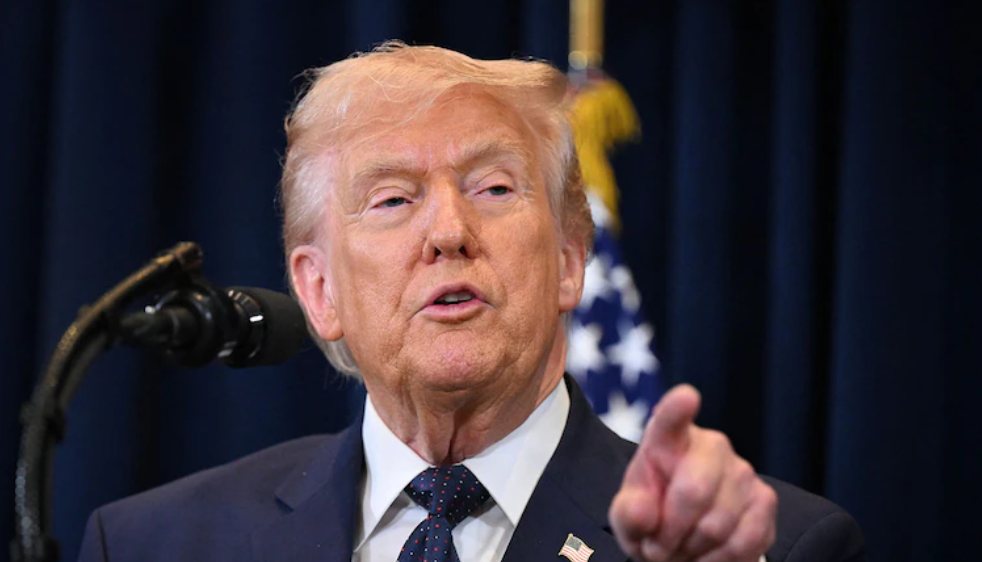
New Delhi, by contrast, is widely seen as having resisted pressure from US President Donald Trump and negotiated from a position of economic leverage rather than personal diplomacy.

Social media reactions highlight public anger

Following the announcement, Trump shared images related to India, including India Gate and a magazine cover featuring Prime Minister Narendra Modi alongside himself, before confirming the revised tariff rate for Indian goods. The optics did not go unnoticed in Pakistan, where social media users questioned why India secured better terms without overt displays of political deference.

One widely circulated post by Pakistan-based X user Umar Ali used sharp language and imagery to criticise Pakistan’s approach, reflecting growing frustration among sections of the public over what they see as an unequal outcome despite extensive outreach efforts.

Opposition leaders question foreign policy approach

Former Pakistan Tehreek-e-Insaf minister Hammad Azhar described the outcome as a failure of strategy rather than circumstance. He argued that modern foreign policy depends on economic strength, market access and tariffs, not symbolic gestures or personal relationships, pointing to India’s recent trade agreements with both the US and the European Union as examples.

Other opposition figures echoed similar views, saying India negotiated with “strategic autonomy” while Pakistan relied too heavily on personal engagement with US leadership.

Journalists warn of economic consequences

Journalists in Pakistan also weighed in, warning that the tariff decision could deepen the country’s existing economic challenges. Concerns were raised about declining exports, falling foreign investment and reduced bargaining power on the global stage.

Commentator Imran Riaz Khan criticised what he termed a failed lobbying strategy, arguing that symbolic gestures cannot replace economic leverage in international negotiations. Digital creator Wajahat Khan similarly framed the outcome as a reflection of unequal negotiating positions, stating that India approached the talks as a partner, while Pakistan did not.

India’s trade deals expected to boost exports

India’s back-to-back trade agreements with the European Union and the United States are expected to provide a significant boost to exports. Estimates suggest these deals could add up to $150 billion in exports over the next decade, strengthening India’s economic standing and reinforcing its negotiating position in future global trade talks.

Continue Reading

Latest world news

New Delhi free to buy oil from any source, Russia says amid US deal claims

Russia has said India is free to purchase oil from any country, dismissing claims that New Delhi has agreed to stop buying Russian crude under a US trade deal.

Published

on

New Delhi free to buy oil from any source, Russia says amid US deal claims

Russia has said that India is free to purchase crude oil from any country, responding to claims by US President Donald Trump that New Delhi has agreed to stop buying Russian oil as part of a recent trade deal with Washington.

The Kremlin said Russia is not India’s only energy supplier and noted that India has long sourced crude oil from multiple countries. It added that there is nothing new in India’s efforts to diversify its oil imports.

Kremlin spokesperson Dmitry Peskov said that energy experts are well aware that India purchases oil and petroleum products from various global suppliers. He added that Moscow does not see any change in India’s approach to sourcing crude.

No official word from India on halting imports

A day earlier, Peskov said Russia has not received any official statement from India regarding the cessation of Russian oil purchases. Russia’s Foreign Ministry echoed the view, saying the hydrocarbon trade between the two countries remains mutually beneficial.

Foreign Ministry spokesperson Maria Zakharova said India’s purchase of Russian hydrocarbons contributes to stability in the global energy market and that Moscow remains ready to continue close cooperation with New Delhi in the energy sector.

Russian media also noted that, unlike the US president, Prime Minister Narendra Modi has not made any public statement indicating an agreement to stop Russian oil imports.

India’s oil imports from Russia

India has continued to import Russian crude even after the US imposed tariffs on Indian goods. According to global trade data provider Kpler, India has been importing around 1.5 million barrels of Russian crude per day, making it the second-largest buyer of Russian oil and accounting for more than one-third of India’s total crude imports.

India buys about 88 per cent of its crude oil needs from overseas, with roughly one-third sourced from Russia. At its peak, imports from Russia crossed 2 million barrels per day, before falling to around 1.3 million barrels per day in December. The volume is expected to remain broadly stable in the near term.

However, imports declined further to about 1.1 million barrels per day in the first three weeks of January following higher tariffs imposed by the US, including levies linked to purchases of Russian energy.

Complete switch unlikely, experts say

Energy experts believe Indian refiners cannot fully replace Russian crude with American oil. Igor Yushkov of the National Energy Security Fund said US shale oil is lighter in grade, while Russian Urals crude is heavier and contains more sulphur.

He explained that replacing Russian oil would require blending different grades, increasing costs for refiners. He added that the US is unlikely to be able to supply the volume currently exported by Russia to India.

Yushkov also recalled that when Russia redirected its oil exports from Western markets to India in 2022, it reduced production by about one million barrels per day, contributing to a sharp rise in global oil prices and record fuel prices in the US.

Continue Reading

Trending

© Copyright 2022 APNLIVE.com