
Latest world news
India, major powers welcome Trump-Kim summit


World hails the summit as positive development
India has welcomed the summit between US President Donald Trump and North Korean leader Kim Jong-un as a “positive development” and expressed hope that any resolution to the “peninsula” issue will address New Delhi’s concerns about Pyongyang’s proliferation linkages with India’s neighborhood, a clear reference to Pakistan.
A statement issued by Ministry of External Affairs (MEA) on Tuesday said, “India welcomes the United States-DPRK (Democratic People’s Republic of Korea) Summit held in Singapore. This is a positive development. India has always supported all efforts to bring about peace and stability in the Korean Peninsula through dialogue and diplomacy.We hope that the outcomes of the US-DPRK Summit will be implemented, thus paving the way for lasting peace and stability in the Korean Peninsula.”
It further said, “We also hope that the resolution of the Korean Peninsula issue will take into account and address our concerns about proliferation linkages extending to India’s neighborhood.”
Read More: West meets the East in historic summit in Singapore
Meanwhile China, Russia, Japan and South Korea also reacted positively to the historic summit, with Beijing suggesting sanctions relief for Pyongyang in light of the new diplomatic developments.
Speaking following the summit, Chinese Foreign Ministry spokesman GengShuang suggested that sanctions relief could be considered for North Korea with the new agreements.
 He was addressing the journalists in a daily briefing in Beijing. He said, “The UN Security Council resolutions that have been passed say that if North Korea respects and acts in accordance with the resolutions then sanction measures can be adjusted, including to pause or remove the relevant sanctions.”
Read More: Trump receive Kim’s letter from North Korean envoy
Geng also reaffirmed that Beijing has always abode by all UN resolutions on North Korea, stressing China’s “obligation to play its deserved role in the progress of shifting to a non-nuclear peninsula.”
“China has consistently held that sanctions are not the goal in themselves. The Security Council’s actions should support and conform to the efforts of current diplomatic talks towards denuclearizing the Korean Peninsula, and promote a political solution for the peninsula,” he added.
Moreover, Russia gave a positive assessment of the deal between the US and North Korean leaders, noting, however, that “the devil is in the detail.”
Read More: North Korea’s former spy chief Kim Yong-Chol travels to US
In its report on Tuesday afternoon, Russia’s official TASS news agency quoted Deputy Foreign Minister Sergei Ryabkov as saying that Moscow is ready to assist in implementing the agreement and hopes settling the nuclear crisis will unblock normal economic cooperation.
According to Seoul’s official news agency Yonhap, South Korean President Moon Jae-in hailed the outcome, calling it a historic event that will end the last remaining conflict of the Cold War and write a new history of peace and cooperation on the Korean Peninsula.
Moon said in a statement read by Cheong Wa-dae spokesman Kim Eui-kyeom on his behalf.“I congratulate and welcome the success of the historic North Korea-US summit with a burning heart.”
Moreover, Japan’s Prime Minister Shinzo Abe welcomed the document signed by North Korea’s leader as a “first step” towards denuclearization.
He was quoted by reporters saying, “Through this US-North Korea summit, Chairman Kim Jong-un’s intent for complete denuclearization of the Korean peninsula was confirmed in writing. I support this as a first step to the comprehensive resolution of issues concerning North Korea.”
US President Donald Trump and North Korean leader Kim Jong-un have signed a “very comprehensive” document after their summit in Singapore on Tuesday. After the talks, the US president said that the process of denuclearization on the Korean peninsula will begin “very soon” and the North Korean leader promised to leave the past behind.
“We’re signing a very comprehensive document, and we’ve had a really great time together, a great relationship,” Trump said while signing the document along with Kim at the end of the summit – the first between a sitting US president and North Korea’s top leader.
The document signed by the two leaders promised a new relationship between the nations and pledging to work toward complete denuclearization of the Korean Peninsula.
Kim “reaffirmed his firm and unwavering commitment to complete denuclearization of the Korean Peninsula” and Trump, in exchange, agreed to “provide security guarantees” to North Korea.







Latest world news
Magnitude 7 earthquake strikes Tibet after floods
A magnitude 7 earthquake struck northern Tibet on Thursday, October 22. The tremor came weeks after deadly flash floods and landslides hit the mountainous region near the Nepal-China border. Initial reports did not confirm casualties or damage from the earthquake.


Latest world news
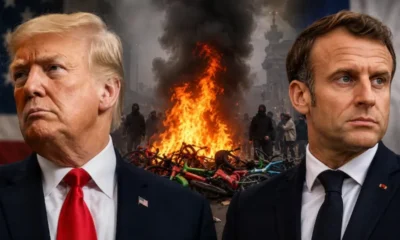
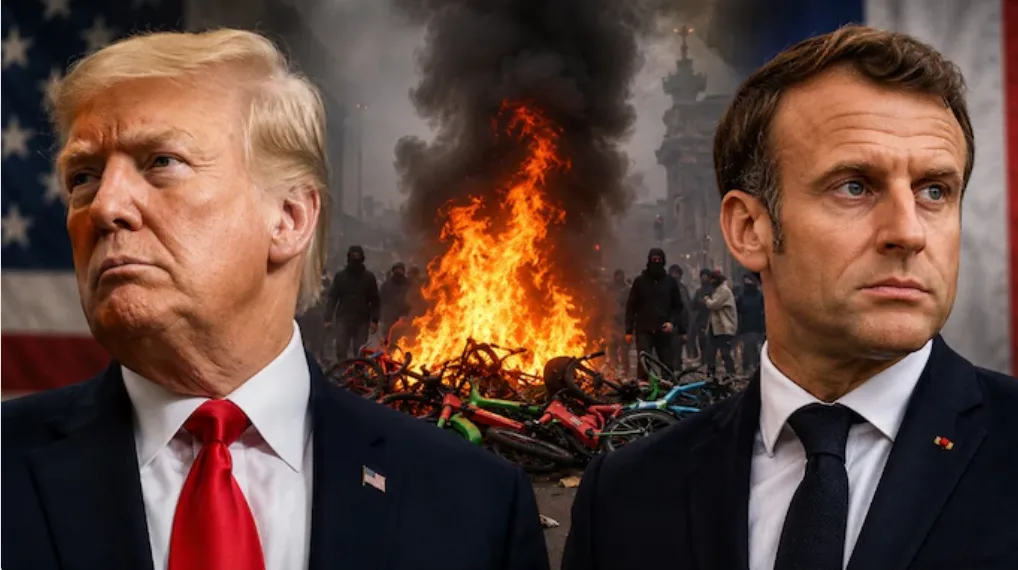
Macron rejects Trump’s immigration claims over France riots
French President Emmanuel Macron criticised Donald Trump and other foreign leaders over their comments on France’s recent unrest. Macron rejected claims that the country was being overrun by migrants and Islamists, calling such assertions false.
Latest world news
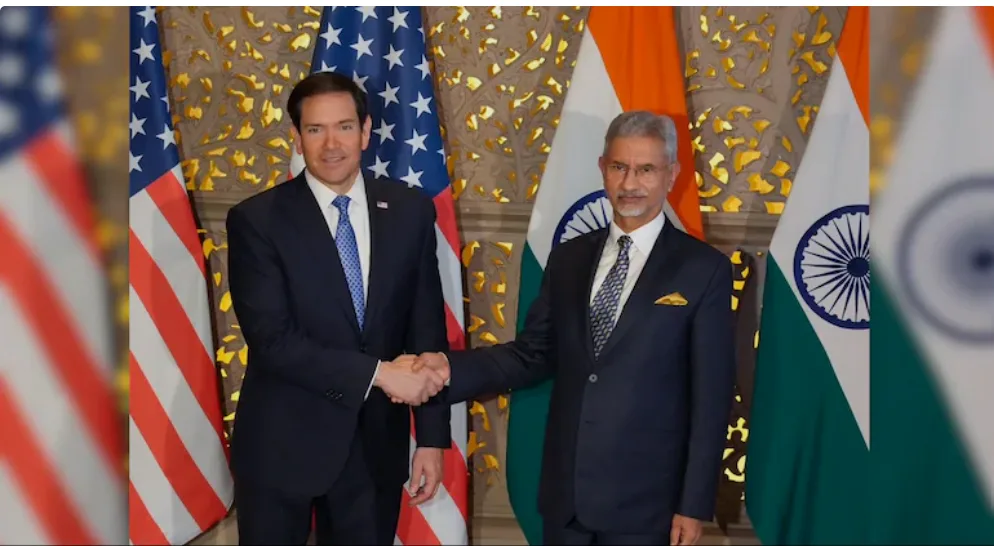
Marco Rubio says India and US share extraordinary alignment on key issues
US Secretary of State Marco Rubio said India and the United States share an extraordinary alignment on core issues, even though disagreements between the two countries may arise.

Om Prakash Mathur sworn in as Keralam Governor

PM Modi to inaugurate Rs 169-crore RBI data centre in Odisha on October 25

MEA responds after ITBP chief flags ongoing face-offs with China in Arunachal

Delhi High Court rejects Neha Bora’s plea against peace bond notice

Thousands bang utensils, beat drums in Manipur protest over continued killings

Congress seeks 175-200 seats in UP, Samajwadi Party stresses on winnability
Thousands bang utensils, beat drums in Manipur protest over continued killings
MEA responds after ITBP chief flags ongoing face-offs with China in Arunachal
Delhi High Court rejects Neha Bora’s plea against peace bond notice
PM Modi to inaugurate Rs 169-crore RBI data centre in Odisha on October 25

Afghan Men Try To Hang With The Jet Engine Of The Aircraft in Kabul- Afghanistan News – Kabul News
Trending Top 10 News: 10000 Crore Fine on Flipkart, Apple to Launch Unique Feature, Hdfc Bank Job Ad

Trending Top 10 News: Nokia 6310, Apple sales, Bachpan ka Pyar Video Kid, Dainik Bhaskar IT Raid

Trending Top 10 News: Canada bans Indian flights, Rain in Delhi NCR, AIMIM Twitter hacked, Raj Kundra case

Trending Top 10 News: Shein India, Apple New Service, Pocket Oxygen, Oppo Launched New Phone
-
 India News21 hours ago
Om Prakash Mathur sworn in as Keralam Governor
-
 India News21 hours ago
PM Modi to inaugurate Rs 169-crore RBI data centre in Odisha on October 25
-
 India News19 hours ago
MEA responds after ITBP chief flags ongoing face-offs with China in Arunachal
-
 India News20 hours ago
Delhi High Court rejects Neha Bora’s plea against peace bond notice
-
 India News7 hours ago
Thousands bang utensils, beat drums in Manipur protest over continued killings
-
 India News6 hours ago
Congress seeks 175-200 seats in UP, Samajwadi Party stresses on winnability
