English हिन्दी
Connect with us

Latest world news

Khalistan supporters attack Indian consulate in San Francisco, graffiti demanding Amritpal’s freedom sprayed on walls

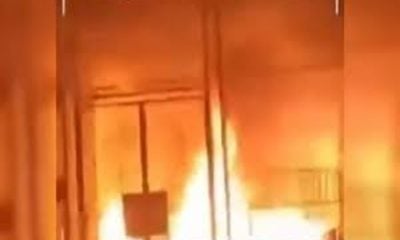
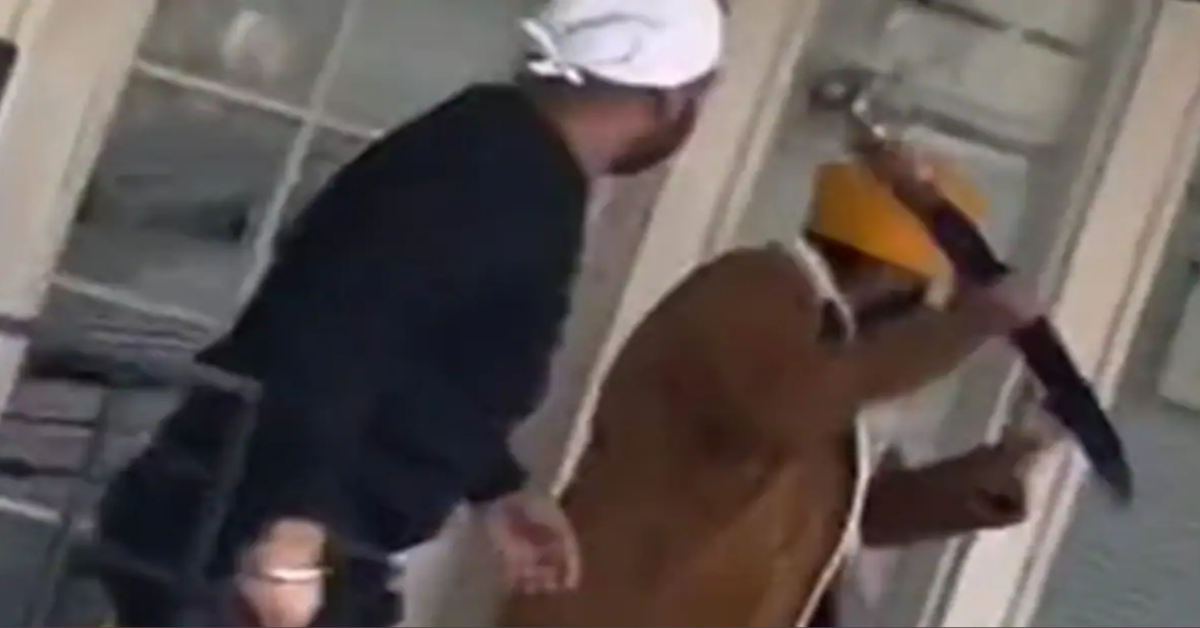
As per the reports, various videos of the Indian consulate attack by Pro-Khalistani supporters surfaced. The videos were reportedly recorded by the mob of attackers themselves. It was also reported that the mob of Khalistani attackers vandalised the Indian consulate building and damaged the glass windows.

Published

on

Khalistan supporters attack Indian

Punjab maybe under a mobile internet shutdown since Saturday last but the Central government’s attempt to arrest Khalistani supporter Amritpal Singh reverbrated across the world with pro-Khalistan supporters attacking the Indian consulate in San Francisco, USA. This is despite the lack of mobile internet in Punjab.

In San Francisco, protesters sprayed graffiti on the consulate saying “Free Amritpal”. Close aides of the self-styled successor of Jarnail Singh Bhindranwale are being rounded up and are being booked under tough statutes. The reflowering of the Khalistan call on Indian soil has been irking the government since the attack on a Punjab Police station by Amritpal and his hardline supporters.

Earlier in the day, the Indian High Commission in London saw the tricolour being lowered by Khalistani elements. This prompted a swift response from India on the London incident by summoning a senior British diplomat.

As per the reports, various videos of the Indian consulate attack by Pro-Khalistani supporters surfaced. The videos were reportedly recorded by the mob of attackers themselves. It was also reported that the mob of Khalistani attackers vandalised the Indian consulate building and damaged the glass windows.
Read Also: Canada Sikh student attacked, turban ripped, dragged by hair in British Columbia

The episode transpired after few employees of the Indian consulate removed few Khalistani flag which was installed near the consulate building. Upon witnessing the flags being taken down by the employees, the protesting Khalistani supporters outside the consulate broke through the barricades and charged at the employees. The employees, however, were able to flee and rush into the Indian consulate house.

The agitated the supporters then went on to vandalise the Indian consulate building while loud Punjabi music was played in the background, said reports.

Indian High commission in London, after the episode of the Tricoulour was pulled down and replaced with Khalistani flag earlier, proceeded to install a huge Indian National flag in a bid to counter the pro-Khalistani supporters.
The move by the Indian High Commission in London was also lauded by many.

After the London incident transpired, the External Affairs ministry summoned British deputy high commisioner on Sunday seeking arrest and prosecutuion of the people invovled in the incident.

London Mayor Sadiq Khan condemns pro-Khalistan protest at Indian High Commission

Amritpal Singh case: Punjab government extends internet ban till tomorrow noon

Latest world news

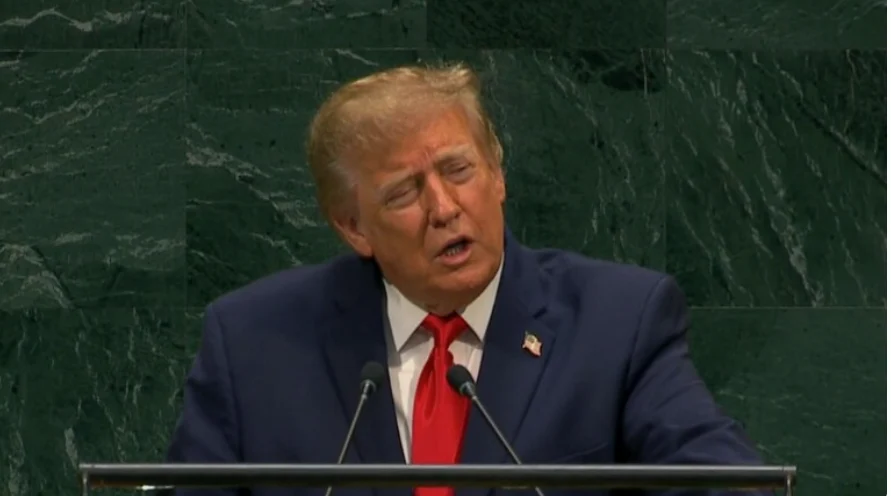
Trump issues fresh Iran warning at UN General Assembly, signals deal after midterms

US President Donald Trump issued a fresh warning to Iran during his UN General Assembly address, saying he faces a choice between a deal and further escalation.

Published

on

US President Donald Trump used his address to the United Nations General Assembly on Tuesday to outline what he described as a major decision over Iran, putting the possibility of a deal against further military escalation.

Speaking at the UN in New York, Trump said he had a “big decision” to make. He questioned whether the United States should pursue an agreement that would allow Iran to rebuild or instead take further action against the Islamic Republic.

Trump later indicated that he believed an agreement with Iran could be reached after the US midterm elections, which are scheduled for November 3.

Trump says deal with Iran remains possible

During his speech, Trump presented two possible paths. He said a deal could allow Iran to rebuild and become a stronger country, while also raising the possibility of destroying the Islamic Republic if an agreement was not reached.

Trump said he believed a deal could eventually be reached, arguing that Iran was waiting to see the outcome of the US midterm elections.

His comments came amid the continuing US-Iran conflict and renewed diplomatic activity surrounding the confrontation. Trump’s UN appearance came as Washington was also engaged in discussions with multiple international leaders over the Iran conflict and other global issues.

Iranian delegation walks out during Trump’s speech

The Iranian delegation reportedly left the General Assembly chamber as Trump began describing the military confrontation with Iran.

According to the report, only one person from the Iranian delegation remained seated as Trump spoke about the conflict and the military strikes of the past six months.

The walkout came as tensions between Washington and Tehran remained high, with both sides facing pressure over the continuation of the conflict.

Trump’s latest warning follows earlier comments

Trump’s UN remarks came days after he said he was approaching a major decision over whether to intensify military action against Iran or pursue another route.

He had also indicated before his UN appearance that he could be open to meeting Iranian President Masoud Pezeshkian during the UN General Assembly in New York.

The possibility of renewed negotiations comes against the backdrop of continuing military and diplomatic tensions between the two countries.

Continue Reading

Latest world news

Visegrad Group backs India’s bid for permanent UN Security Council seat

India’s bid for a permanent UN Security Council seat received collective backing from the four Visegrad Group countries at a meeting in New York.
Published

on

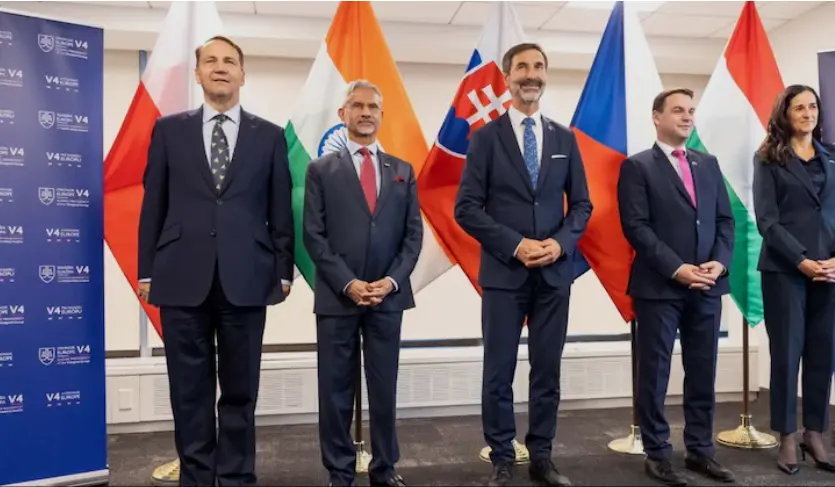
India’s campaign for a permanent seat on the United Nations Security Council received fresh backing from four Central European countries at a meeting on the sidelines of the 81st UN General Assembly in New York.

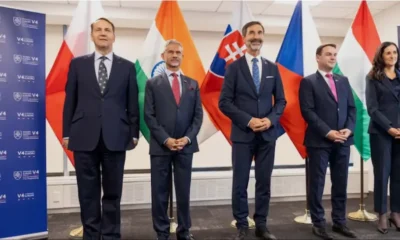
The Visegrad Group, comprising Poland, Hungary, Slovakia and the Czech Republic, backed India’s call for permanent membership of the UN Security Council.

The support came during the first V4+India foreign ministers’ meeting involving External Affairs Minister S Jaishankar and his counterparts from the four-member grouping.

What Slovakia said on India’s UNSC bid

Slovak Foreign and European Affairs Minister Juraj Blanar said the four Visegrad countries agreed that India should have a permanent place on the UN Security Council.

Blanar described India as a country from the Global South and an emerging power in the Indo-Pacific region while expressing the group’s support for India’s permanent membership.

The statement was made after the meeting with Jaishankar in New York.

India has been seeking reform of the Security Council, including permanent membership, arguing for greater representation of today’s global political landscape.

India and V4 agree to deepen cooperation

The meeting was not limited to the Security Council issue. Jaishankar said India and the four Visegrad countries agreed to strengthen cooperation across several areas.

The countries agreed to hold annual meetings of foreign ministers and establish an annual business forum to deepen economic engagement.

The discussions also covered technology and innovation, research and education, defence, space, connectivity, culture and people-to-people relations.

Jaishankar described the first V4+India meeting as a “new historic occasion” and said India had very good relations with the four countries.

The ministers also discussed major international developments, including the conflict in Ukraine and developments in the Gulf.

What is the Visegrad Group?

The Visegrad Group, also known as V4, is a regional grouping of four Central European countries — Poland, Hungary, Slovakia and the Czech Republic.

The group was established in 1991 and provides a platform for cooperation in areas including political, economic, security and other matters.

India seeks permanent seat on UN Security Council

The UN Security Council currently has 15 members, including five permanent members — China, France, Russia, the United Kingdom and the United States — and 10 non-permanent members elected for two-year terms.

India has been seeking comprehensive reform of the Security Council and a permanent seat as part of that process.

The backing from the Visegrad Group adds four more countries to the list of nations supporting India’s permanent-membership demand. However, the V4 countries’ support by itself does not change the existing structure of the Security Council or complete the UN reform process. Any expansion would require the necessary agreement among UN member states and changes to the UN Charter.

Continue Reading

Latest world news

Trump signs Russia sanctions bill, India faces 100% tariff threat

Donald Trump has signed the Russia sanctions bill into law, giving the US president authority to impose tariffs of up to 100% on countries buying Russian oil and gas, including India and China.
Published

on

Donald Trump

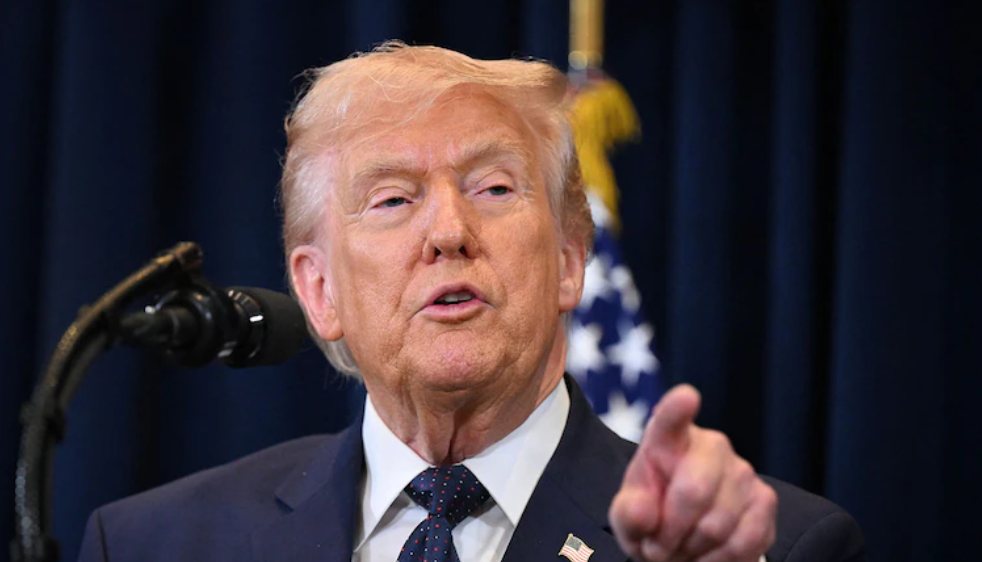
US President Donald Trump has signed a Russia sanctions bill into law, giving his administration the authority to impose tariffs of up to 100 per cent on countries that buy Russian oil and gas.

The legislation puts major Russian energy buyers, including India and China, at risk of additional US tariffs. However, the law does not automatically impose a 100 per cent tariff on either country. The actual tariff would depend on whether Trump chooses to exercise the authority granted under the legislation.

The signing came two days after the Republican-led US House of Representatives passed the sweeping sanctions package by 262-159.

The legislation, known as the Lindsey O Graham Sanctioning Russia and Iran Act of 2026, is aimed at reducing the financial resources supporting Russia’s war against Ukraine.

What does the Russia sanctions bill contain?

The new law targets Russian officials, banks, energy interests and foreign entities accused of supporting Moscow’s military operations.

It also provides for tariffs of up to 500 per cent on Russian goods. Separately, countries covered by provisions targeting purchases of Russian oil and gas could face duties of up to 100 per cent.

The legislation also includes sanctions against Russian President Vladimir Putin and senior members of the Russian government.

Why India faces a 100% tariff threat

India is among the major buyers of Russian crude oil and could therefore be affected by the new tariff authority.

An amendment proposed by Democratic Congressman Steny Hoyer sought to explicitly identify 10 countries — China, India, the UAE, Turkiye, Singapore, Azerbaijan, Kazakhstan, Hungary, Kyrgyzstan and Slovakia — as eligible for tariffs of up to 100 per cent under the secondary tariff provisions.

However, the amendment itself does not impose a 100 per cent duty on India.

Instead, the legislation gives Trump the power to impose such tariffs if he decides to use it. The eventual impact on Indian exports will depend on the tariff rate, if any, announced by the US administration.

What India said on Russian oil purchases

India had responded to the passage of the sanctions bill by reiterating its focus on energy security.

The Ministry of External Affairs said India remains committed to ensuring energy security for its 1.4 billion people and would continue to diversify its sources of energy based on changing market conditions.

The ministry also said India’s oil trade with Russia had been discussed at high levels with US officials in recent months and that New Delhi had clearly conveyed the potential implications for bilateral relations and the international energy market.

Previous US tariffs on India

The latest development comes after earlier tariff tensions between India and the US over Russian crude imports.

According to the report, Trump had previously imposed an additional 25 per cent tariff on Indian imports of Russian crude, on top of a 25 per cent reciprocal tariff. The additional tariff was removed in February 2026, while the reciprocal tariff was reduced to 18 per cent under a US-India trade framework.

The new law therefore creates another potential source of pressure on India-US trade relations, although the final effect will depend on how the Trump administration uses the tariff authority.

Continue Reading

Trending

© Copyright 2022 APNLIVE.com