English हिन्दी
Connect with us

Latest world news

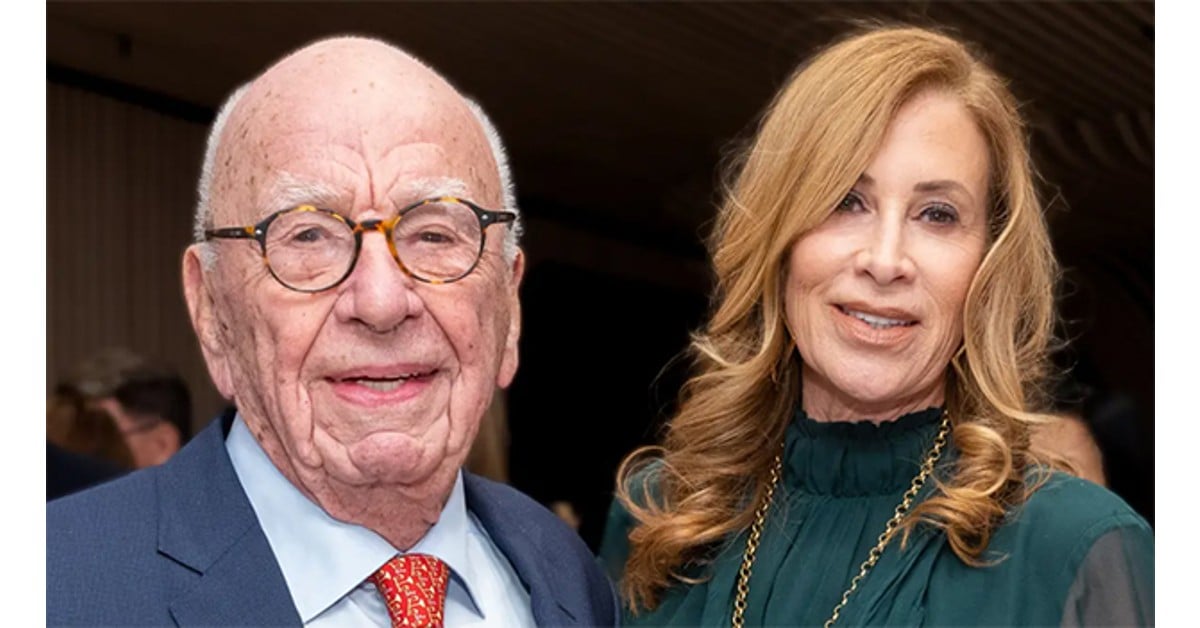
Rupert Murdoch set to marry for 5th time at 92

Murdoch, who met 66-year-old Smith last September at an event held at Murdoch’s vineyard in California, is planning to marry her in the summer.

Published

on

Rupert Murdoch Smith

Rupert Murdoch, an Australian-born American business magnate, announced on Monday that he will be marrying for the fifth time at the age of 92. Murdoch is already engaged to former San Francisco police chaplain Ann Lesley Smith.

Talking about his fifth marriage, Murdoch, the 31st richest person in the United States, said he was very nervous, and dreaded falling in love, but he knew it would be his last. He said he is happy about it.

Murdoch, who met 66-year-old Smith last September at an event held at Murdoch’s vineyard in California, is planning to marry her in the summer. He said that they both are looking forward to spending the second half of their lives together. They will spend their time between California, the UK, Montana and New York, reports state.
Smith is the widow of an American country singer and media executive who died in 2008. Speaking about the relationship with Murdoch, Smith said the two bonded over their shared knowledge of the media business.

Read Also: Amritpal Singh crackdown: Khalistani leader’s uncle brought to Central Jail in Assam, internet suspension to continue till March 23 noon in Punjab

She said for both of them it’s a gift from God. She said she is a widow for 14 years. Smith went on to say that like Rupert, her husband was a businessman. Worked for local papers, developed radio and TV stations, and helped promote Univision. So she speaks Rupert’s language. They share the same beliefs, she added.

Murdoch, Chairman and CEO of News Corp., has six children from his first three marriages. Prudence MacLeod, with his first wife Patricia Booker, then Elisabeth and sons Lachlan and James with his second wife Anna Mann. He has two more daughters, Grace and Chloe, with his third wife Wendi Deng.

Later, he married former supermodel Jerry Hall for the fourth time. But the couple decided to part ways eight months ago after being together for six years.

According to Forbes, Murdoch is believed to have a fortune of around $17 billion. His empire includes Fox News, the Wall Street Journal and a string of other media assets around the world.

Rahul Gandhi says he won’t be intimidated days after Delhi Police search his residence

Traffic chaos as rain lashes Delhi NCR, more showers forecast tomorrow

Latest world news

Suicide bombing at Islamabad shrine kills 10, over 20 injured

A suicide bombing at a Shia shrine in Islamabad’s Shehzad Town area killed at least 10 people and injured over 20, prompting a city-wide emergency.

Published

on

Suicide bombing at Islamabad Shrine

At least 10 people were killed and around 20 others sustained injuries after a suicide bomber detonated explosives at a Shia shrine in Pakistan’s capital, Islamabad, on Friday afternoon.

The explosion took place at Tarlai Imambargah, located in the Shehzad Town area, when the attacker set off the device at the main entrance of the place of worship, where devotees had gathered.

Bomber stopped at entrance, say officials

Security officials said alert guards intercepted the attacker at the gate, preventing him from entering the main hall of the shrine. The timely action is believed to have reduced the scale of casualties inside the premises.

However, the blast caused significant damage to the gate structure. Visuals from the site showed shattered windows of nearby buildings and debris scattered across the road following the explosion.

Emergency declared across Islamabad

In the aftermath of the attack, the Islamabad Inspector General of Police declared a city-wide emergency. Rescue teams and law enforcement personnel rushed to the site amid concerns that the casualty count could rise.

The injured were shifted to Pakistan Institute of Medical Sciences (PIMS) and Polyclinic Hospital for treatment.

Recent history of suicide attacks in the capital

The incident comes less than three months after a suicide bombing outside a district and sessions court building in Islamabad on November 11, 2025, which killed 12 people and injured more than 30 others, raising renewed concerns over security in the capital.

Continue Reading

Latest world news

Bangladesh rushes to finalise US trade deal after India secures lower tariffs

Bangladesh is accelerating talks with the US to finalise a trade agreement after India secured lower tariffs, raising concerns over export competitiveness and transparency.

Published

on

Bangladesh is moving quickly to finalise a trade agreement with the United States after India concluded a deal with Washington that lowered tariffs on Indian goods to 18 per cent. The development has triggered concern in Dhaka that Bangladesh could lose market share in the US if it fails to secure comparable or better terms.

The US and Bangladesh are expected to sign the agreement on February 9, just three days before the country’s national election scheduled for February 12. The timing and lack of transparency surrounding the deal have drawn criticism from economists, business leaders and political observers.

Bangladesh’s economy is heavily dependent on ready-made garment exports, which account for nearly 90 per cent of its exports to the US. Any tariff disadvantage compared to India could significantly impact export orders and employment in the sector.

Tariff cuts under negotiation

The proposed agreement follows a series of tariff revisions imposed by Washington. In April 2025, the US imposed a steep 37 per cent tariff on Bangladeshi goods. This was reduced to 35 per cent in July and further lowered to 20 per cent in August.

According to reports, the upcoming deal is expected to bring tariffs down further to around 15 per cent. Officials see this as critical to keeping Bangladeshi exports competitive against Indian products in the US market.

Secrecy around negotiations raises concerns

Concerns have intensified due to the confidential nature of the negotiations. In mid-2025, the interim government led by Muhammad Yunus signed a formal non-disclosure agreement with the US, committing to keep tariff and trade discussions confidential.

No draft of the agreement has been shared with the public, parliament or industry stakeholders. A commerce adviser had earlier stated that the deal would not go against national interests and could be made public with US consent.

Policy experts, however, argue that the lack of disclosure prevents meaningful debate on the agreement’s long-term implications.

Conditions reportedly linked to the deal

Media reports suggest that the agreement may include several conditions. These include reducing imports from China, increasing military procurement from the US, and allowing American goods easier access to the Bangladeshi market.

It is also reported that Bangladesh may be required to accept US standards and certifications without additional scrutiny. Inspections on US vehicle imports and parts could reportedly be eased to facilitate smoother entry into the local market.

A senior policy analyst described the process as opaque, noting that signing the agreement just days before elections could bind the hands of the next elected government.

Garment industry left in the dark

Bangladesh exports garments and textiles worth between $7 billion and $8.4 billion annually to the US, accounting for nearly 96 per cent of its total exports to the American market. In comparison, Bangladesh imports around $2 billion worth of goods from the US.

With India and Bangladesh exporting similar apparel products, lower tariffs for India could shift US buyers towards Indian suppliers. Industry leaders warn that this could put millions of jobs at risk in Bangladesh’s garment sector, which employs 4 to 5 million workers, most of them women.

The sector contributes over 80 per cent of Bangladesh’s export earnings and nearly 20 per cent of its GDP.

A senior garment exporters’ association official said the agreement carries major implications and should ideally have been signed after the election to allow broader political and public discussion.

Political timing draws criticism

Economists and analysts have also questioned why an unelected interim administration is finalising a major trade agreement so close to national elections. They argue that responsibility for implementing the deal will fall on the incoming elected government.

A prominent economist criticised the process as lacking transparency and warned that the country could be pushed into long-term commitments without adequate scrutiny or public consent.

Meanwhile, US diplomats have indicated openness to engaging with various political forces in Bangladesh, including Jamaat-e-Islami, which has been banned multiple times in the country’s history.

Continue Reading

Latest world news

Pakistan faces domestic backlash after India secures lower tariffs in US trade deal

India’s US trade agreement has sparked criticism in Pakistan after Islamabad ended up with higher tariffs despite sustained outreach to Washington.

Published

on

PM Shehbaz Sharif

India’s recently concluded trade agreement with the United States has triggered strong domestic criticism in Pakistan, where opposition leaders, journalists and commentators are questioning Islamabad’s diplomatic strategy after the country ended up with higher tariffs than India.

Under the agreement announced on February 2, US tariffs on Indian exports have been set at 18 per cent, while Pakistani goods will face a 19 per cent rate. The outcome has drawn sharp reactions in Pakistan, especially given what critics describe as sustained efforts by its leadership to engage Washington in recent months.

New Delhi, by contrast, is widely seen as having resisted pressure from US President Donald Trump and negotiated from a position of economic leverage rather than personal diplomacy.

Social media reactions highlight public anger

Following the announcement, Trump shared images related to India, including India Gate and a magazine cover featuring Prime Minister Narendra Modi alongside himself, before confirming the revised tariff rate for Indian goods. The optics did not go unnoticed in Pakistan, where social media users questioned why India secured better terms without overt displays of political deference.

One widely circulated post by Pakistan-based X user Umar Ali used sharp language and imagery to criticise Pakistan’s approach, reflecting growing frustration among sections of the public over what they see as an unequal outcome despite extensive outreach efforts.

Opposition leaders question foreign policy approach

Former Pakistan Tehreek-e-Insaf minister Hammad Azhar described the outcome as a failure of strategy rather than circumstance. He argued that modern foreign policy depends on economic strength, market access and tariffs, not symbolic gestures or personal relationships, pointing to India’s recent trade agreements with both the US and the European Union as examples.

Other opposition figures echoed similar views, saying India negotiated with “strategic autonomy” while Pakistan relied too heavily on personal engagement with US leadership.

Journalists warn of economic consequences

Journalists in Pakistan also weighed in, warning that the tariff decision could deepen the country’s existing economic challenges. Concerns were raised about declining exports, falling foreign investment and reduced bargaining power on the global stage.

Commentator Imran Riaz Khan criticised what he termed a failed lobbying strategy, arguing that symbolic gestures cannot replace economic leverage in international negotiations. Digital creator Wajahat Khan similarly framed the outcome as a reflection of unequal negotiating positions, stating that India approached the talks as a partner, while Pakistan did not.

India’s trade deals expected to boost exports

India’s back-to-back trade agreements with the European Union and the United States are expected to provide a significant boost to exports. Estimates suggest these deals could add up to $150 billion in exports over the next decade, strengthening India’s economic standing and reinforcing its negotiating position in future global trade talks.

Continue Reading

Trending

© Copyright 2022 APNLIVE.com