English हिन्दी
Connect with us

Latest world news

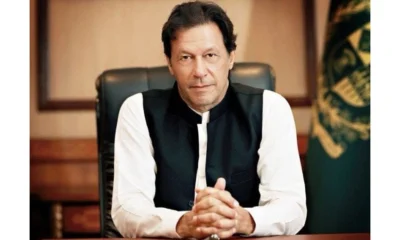
Pakistan Minister says either Imran Khan or us will get murdered

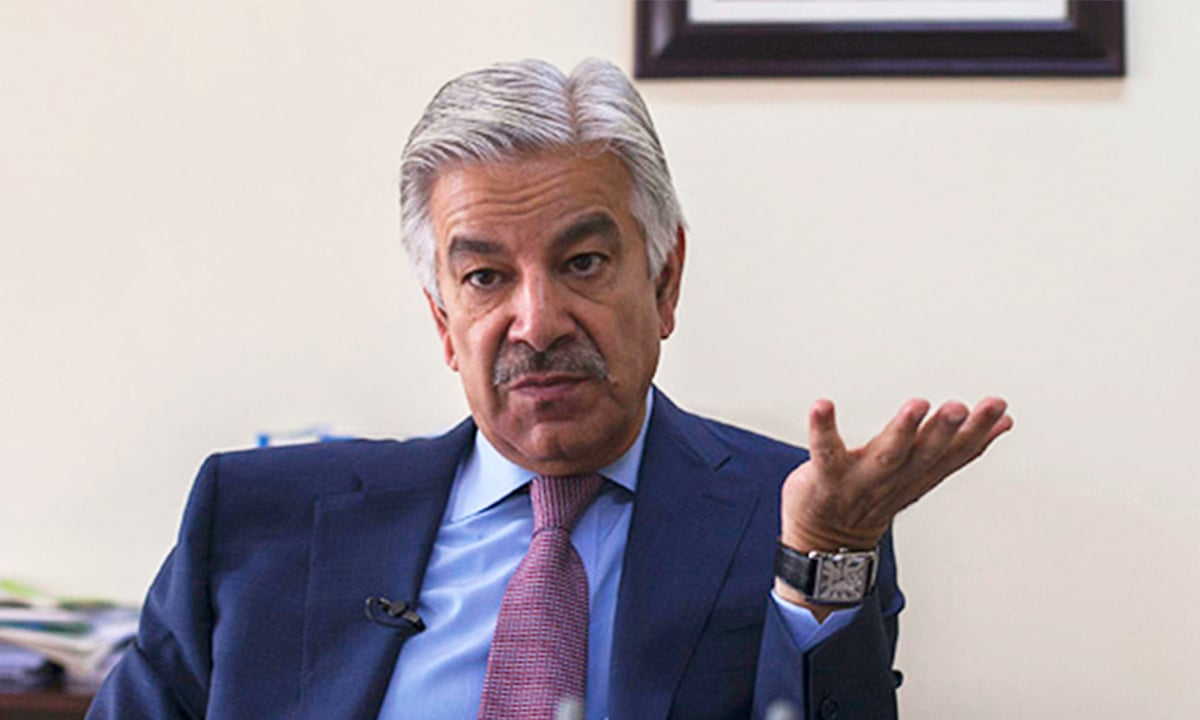
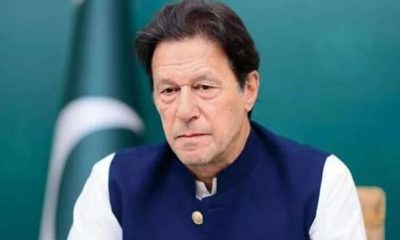
Pakistan Interior Minister Rana Sanaullah on Sunday courted controversy with his remarks on former Prime Minister Imran Khan saying that the PTI chief has taken the country’s politics to a point where “he (Imran Khan) will get murdered or us.”

Published

on

Pakistan Minister Rana Sanaullah

Pakistan Interior Minister Rana Sanaullah on Sunday courted controversy with his remarks on former Prime Minister Imran Khan saying that the PTI chief has taken the country’s politics to a point where “he (Imran Khan) will get murdered or us.”

Rana Sanaullah, a close aide of former Pakistan premier Nawaz Sharif and a senior leader of the ruling Pakistan Muslim League (N) (PML-N) told private TV channels in an interview on Sunday that Imran Khan has taken Pakistan’s to a point where only one of the two can remain—PTI or PMLN. He claimed that Khan has turned politics into animosity and now he is “our enemy” and will be treated like that.

The senior Minister said that Imran khan has put the entire existence of PMLN in jeopardy and its has come to a point where either “he (Khan) or us” will get murdered, adding that the PMLN will “go to any extent” to settle a score with the ousted Pakistan Prime Minister.

Asked if such remarks could result in anarchy in Pakistan, Sanaullah said that anarchy already prevails in the country.

Sanaullah’s comments triggered outcry among the country’s political circles, especially Imran Khan’s Pakistan Tehreek-i-Insaf (PTI) who have termed it as an open threat to Khan’s life and urged the country’s Supreme Court to take notice.

Read Also: Congress leader Pawan Khera apologizes for old tweet after Rahul Gandhi loses Lok Sabha seat

Responding to the minister’s comments, former federal information minister and PTI leader Fawad Chaudhry termed the remarks as a “direct threat” to Imran Khan’s life from the PMLN-led coalition regime.

Chaudhry asked: “Is Sanaullah running a gang or government? Adding that the Supreme Court had rightly declared Sharifs-led PMLN a Sicilian mafia and Sanaullah’s statement is proof.

Another senior PTI leader Shireen Mazari said the comments are proof of Rana Sanaullah’s murderous intent towards Imran Khan, while urging the judiciary to take note of the threats issued against Khan.

The PTI said it has never witnessed in the past that a ruling party openly declared eliminating a popular leader of Pakistan.

In November last year, Imran Khan, 70, after surviving an assassination bid during a rally in Wazirabad in Pakistan’s Punjab, had named Rana Sanaullah behind the attempt on him.

Khan in his application to the police had also named Prime Minister Shehbaz Sharif and a senior ISI officer for their alleged role in the bid on his life.

Amritpal Singh hunt: Ludhiana man arrested for sheltering fugitive Khalistani leader’s gunman Tejinder Singh alias Gorkha Baba

21, including children, hospitalized after eating Khichdi at Navratri feast in UP village

Latest world news

Two helicopters collide while landing in Nepal, one Indian killed

Two helicopters struck each other while approaching a heliport near Mount Everest in Nepal. One Indian national died, while another person was taken to hospital with injuries.


Published

on

An Indian national was killed and another person injured after two helicopters collided while attempting to land at a high-altitude heliport in Nepal’s Solukhumbu district, near Mount Everest.

Nepal Police confirmed the incident in a post on X. The heliport is located around 250 km from Kathmandu, the country’s capital. The deceased was identified as Vasanth Kumar Balaramaramadu, an Indian national, according to a report by Kathmandu Post.

The accident came into public attention after a video purportedly showing the collision circulated on social media. The footage appears to show the rotor blades of the two helicopters striking each other shortly before landing, following which both aircraft fall onto the icy ground.

However, the authenticity of the video has not been independently verified by report.

Nabin Raja Budhathoki, who is in charge of Solukhumbu district police, told AFP that one foreign national had died at the scene, while another injured person had been taken to hospital.

Helicopters play an important role in Nepal, transporting tourists, mountaineers and supplies across its mountainous terrain. They are also used for emergency evacuations.

Nepal has eight of the world’s 14 highest mountains and receives thousands of foreign climbers and trekkers every year. Flying in these high-altitude areas presents considerable challenges.

At higher elevations, thinner air gives helicopter rotor blades fewer air molecules to push against, reducing the lift they can generate. Engines also receive less oxygen for combustion, which can affect their power output.

A similar high-altitude helicopter accident was reported just days earlier in India’s Uttarakhand. That helicopter crashed shortly after taking off from Badrinath, killing all six people on board, including the pilot and five passengers.

An Indian national was killed and another person injured after two helicopters collided while landing at a high-altitude heliport in Nepal’s Solukhumbu district, near Mount Everest. A purported video of the collision has surfaced on social media, but its authenticity remains unverified.

Continue Reading

Latest world news

Arab parties emerge kingmakers in Israel as Netanyahu falls short of majority

Arab parties have emerged as potential kingmakers in Israel after Prime Minister Benjamin Netanyahu’s right-wing bloc fell short of the 61 seats required for a parliamentary majority. The opposition bloc also failed to secure a majority on its own.
Published

on

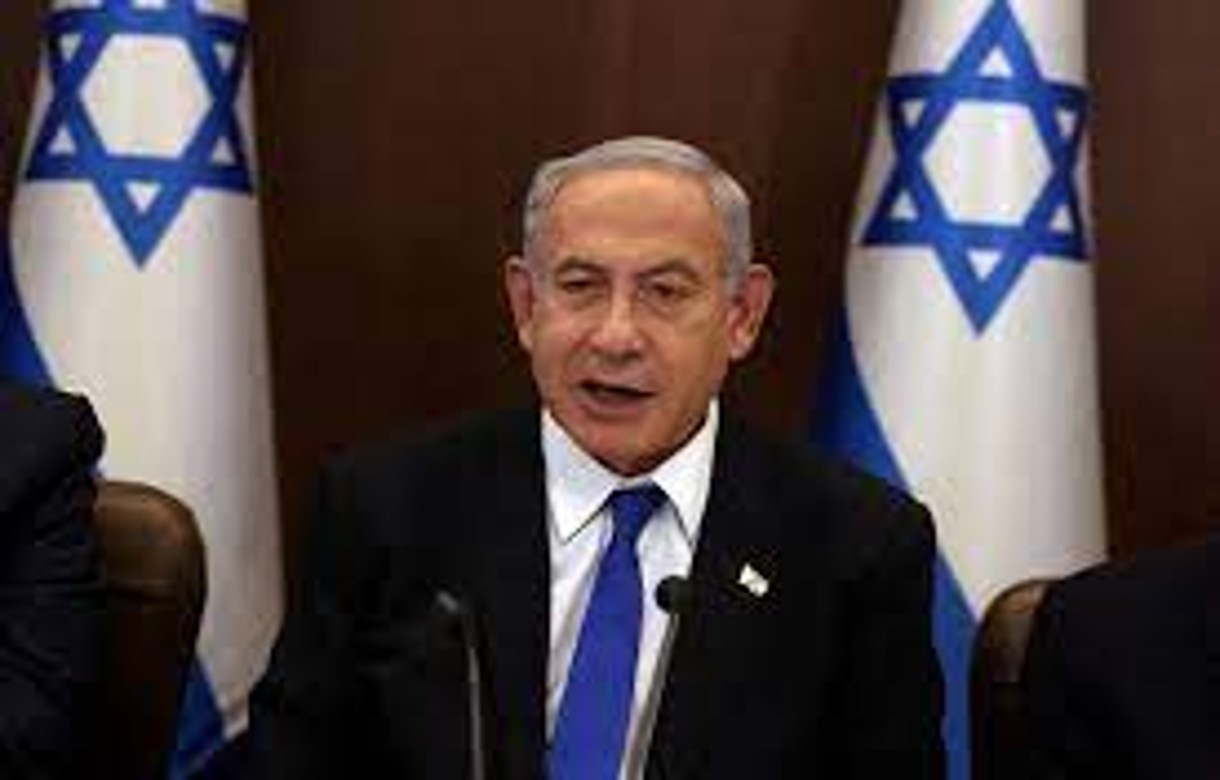
PM Benjamin Netanyahu

Arab political parties have emerged as crucial players in Israel’s government formation process after the country’s 2026 parliamentary election left both Prime Minister Benjamin Netanyahu’s ruling bloc and the opposition short of the numbers needed to secure a majority.

According to the final vote count, Netanyahu’s right-wing bloc secured 53 seats, while the opposition bloc won 48 seats. Arab parties, meanwhile, secured a combined 19 seats, placing them in a potentially decisive position in negotiations over the next government.

Israel’s parliament, the Knesset, has 120 seats, and a coalition needs at least 61 to form a government. With neither major political bloc reaching that threshold independently, Arab parties could play an important role in determining the country’s political direction.

The figures were reported following the release of results by Israel’s Central Elections Committee on Thursday.

Netanyahu’s Likud remains largest party

Despite falling short of a parliamentary majority, Netanyahu’s Likud party is expected to emerge as the largest single party in the Knesset, with 27 seats.

However, the overall performance of his right-wing bloc has left him facing difficulties in securing enough support to form the next government.

The opposition bloc, led by former military chief Gadi Eisenkot, also failed to reach the 61-seat threshold with its 48 seats.

The outcome has made coalition negotiations particularly important, with the support of Arab-led parties potentially changing the parliamentary arithmetic.

How Arab parties could influence government formation

The combined 19 seats won by Arab parties have given them considerable influence in the post-election political landscape.

Even without formally joining a government coalition, Arab lawmakers could support Netanyahu’s opponents in important parliamentary votes.

One possibility involves supporting the opposition in the election of a new Knesset speaker. Such backing could give the opposition greater control over parliamentary proceedings and potentially allow it to advance legislation before a new government is formed.

Netanyahu’s main rival, Gadi Eisenkot, has indicated that he is open to working with Arab-led parties under certain conditions.

Ahmad Tibi, who is second on the Arab-led Joint List, also said that the opposition bloc had approached him about replacing the Knesset speaker. He indicated that his party would support the opposition’s candidate.

However, the possibility of cooperation remains politically complicated, given differences within the opposition over working with Arab parties.

Netanyahu faces corruption charges and October 7 scrutiny

The election outcome could also have significant implications for Netanyahu’s political future.

If he loses office, he would face accountability over long-standing corruption charges. A formal investigation would also almost certainly be launched into the security failures surrounding the Hamas-led attack on Israel on October 7, 2023.

Netanyahu has faced sustained political pressure over the handling of the security lapses surrounding the attack.

Meanwhile, his party amplified allegations that Arab-led parties had stolen the election, potentially with foreign assistance, as the final results emerged.

The allegations were not substantiated in the report.

Opposition leaders accused Netanyahu of targeting and demonising Israel’s Arab population following the historic performance of Arab-led parties.

Another election remains a possibility

With neither political bloc securing an independent majority, Israel could face another election if negotiations fail to produce a government.

The next government formation process will therefore depend on whether the opposition can secure support from Arab parties or find other political arrangements to reach the required majority.

For now, the 19 seats won by Arab parties have placed them in a pivotal position, while Netanyahu’s 53-seat bloc remains short of the numbers required to govern independently.

Continue Reading

Latest world news

Israel election results show no clear winner as Netanyahu short of majority

Israel’s 2026 election has produced no clear winner, with Benjamin Netanyahu’s bloc and the opposition led by Gadi Eisenkot both short of the 61 seats required for a majority in the Knesset.

Published

on

PM Benjamin Netanyahu

Israel’s 2026 parliamentary election has left Prime Minister Benjamin Netanyahu’s bloc and the opposition bloc led by Gadi Eisenkot short of a majority in the Knesset, leaving the formation of the next government uncertain.

Exit polls released after voting ended on October 27 projected different seat totals for Netanyahu’s bloc and the opposition led by Gadi Eisenkot. The differing projections indicated that neither bloc was assured of a majority.

The Knesset, Israel’s parliament, has 120 seats, and a majority requires at least 61. The initial projections suggested that neither side had reached that threshold.

Netanyahu and Eisenkot blocs fall short

Exit polls from Channels 11 and 13 projected 51 seats for each of the two rival blocs, while Channel 12 projected 52 seats for Netanyahu’s bloc.

Although Netanyahu’s Likud party was projected to remain the largest individual party, its position did not automatically guarantee another term for the prime minister.

A partial count reported on October 28 put Netanyahu’s bloc at 53 seats, the opposition bloc led by Eisenkot at 48 and Arab-led parties at 19. These figures were provisional, with the counting and verification of special ballots still capable of changing the seat distribution.

Arab-led parties could influence government formation

Arab-led parties could influence the coalition arithmetic because neither main bloc had secured a majority in the partial count. However, their seat totals alone do not establish whether they will support either bloc in government formation.

However, the number of seats won by a party or bloc does not by itself determine who becomes prime minister. Government formation depends on whether a candidate can secure sufficient parliamentary support.

The final seat distribution and the positions taken by potential coalition partners will therefore be important in determining the next steps.

What happens next in Israel?

After the official results are announced, President Isaac Herzog is expected to consult representatives of the elected parties and assign the task of forming a government to the candidate he believes has the best chance of securing parliamentary support.

Coalition negotiations could take weeks. If neither side can assemble a government, the country could face further political uncertainty.

At the reporting stage described on October 28, the count was still underway, and the available figures had not established whether either bloc could secure a majority in the Knesset.

Continue Reading

Trending

© Copyright 2022 APNLIVE.com