
Latest world news
Syria captures strategic hill near occupied Golan Heights


Stepping ahead for achieving full control over their territories from the terror groups, Syrian government troops have regained control of a strategic hill overlooking the Israeli-occupied Golan Heights.
According to Syrian state-media report, troops loyal to President Bashar al-Assad took control of the al-Haara hill on the second day of an offensive aimed at retaking the remaining pockets of opposition in Quneitra province. The area is situated along the border with Israel.
The highest ground in Deraa province fell into rebel hands in October 2014. It was heavily bombed by Russian and Syrian army air raids over the past two days as part of their ongoing efforts to vacate the territories from the most dreaded and well equipped terrorists.
Read More: Israel fires missiles on Syrian forces near Aleppo
Aljazeera reports that the violence is taking place a few kms away from the line marking the start of the United Nations Disengagement Observer Force zone, an area monitored by a UN force since 1974 following the Arab-Israeli War.
Meanwhile, Israel has warned of a “harsh response” should Syrian government forces be deployed in the area and perceives the presence of Iranian and Hezbollah troops, a threat to its security interests in the region.
 In another development Russian President Vladimir Putin, while talking to Fox News, has stressed that terrorist organisations bear responsibility for civilian casualties in Syria. He has also reiterated that large number of civilians have been killed in the fierce and daily shelling by the US on Raqqa city.
Putin has also hoped that there will be progress in the cooperation with Washington with regard to setting the crisis in Syria.
Read More: Syrian Forces Recapture Areas in Dara’a, Civilians Flee
Since the beginning of the reversal of situation Syrian government forces with the support of Russian Air Force, Iranian military advisors and Hezbollah fighters, have so far cleared most of the important cities, including Raqqa, Aleppo, Deir az-Zawr, Ghouta, Homs, Hama and several adjoining areas.
Read More: Bashar say US, French, Turks, Israeli troops occupying Syria
During the army operations Russians have been playing important role by negotiating with the terror organisations offering them safe passage and have been transported in government provided buses to the areas in and around Idlib in northern Syria.







Latest world news
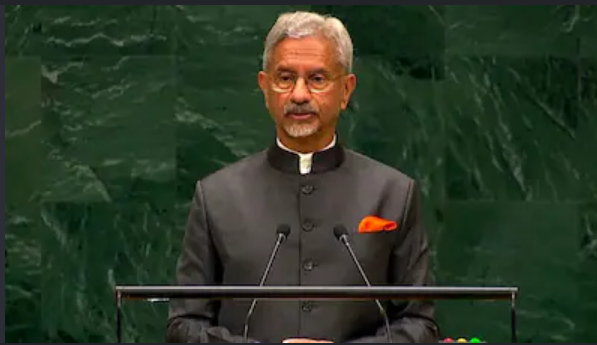
S Jaishankar says India is a natural option for Russia amid Europe tensions
External Affairs Minister S Jaishankar said India remained a natural option for Russia as Moscow increasingly turned towards Asia amid strained relations with Europe. He highlighted the continuity of India-Russia ties and their significance for the balance of power in Asia.


Latest world news
Putin praises PM Modi, says he has very good ideas on Ukraine war
Russian President Vladimir Putin has praised Prime Minister Narendra Modi for repeatedly raising the need to end the Ukraine war, describing his ideas for a settlement as “very good”.
Latest world news
S Jaishankar calls Pakistan a “serial practitioner of terrorism” at UN
S Jaishankar criticised Pakistan at the UN General Assembly, referring to a “serial practitioner of terrorism” and warning against attempts to normalise terrorism.

CJP leaders Saurav Das, Ashutosh Ranka, Ajinkya Shinde sent to 5-day judicial custody

S Jaishankar says India is a natural option for Russia amid Europe tensions

PM Modi speaks to Mark Carney as India and Canada push to strengthen ties

Meerut murder: Muskaan Rastogi and Sahil Shukla get death sentence

Rahul Gandhi joins India Gate protest by Ankita Bhandari’s parents

Supreme Court questions EC over missing records in Sringeri election dispute
Rahul Gandhi joins India Gate protest by Ankita Bhandari’s parents
Meerut murder: Muskaan Rastogi and Sahil Shukla get death sentence
PM Modi speaks to Mark Carney as India and Canada push to strengthen ties
S Jaishankar says India is a natural option for Russia amid Europe tensions

Afghan Men Try To Hang With The Jet Engine Of The Aircraft in Kabul- Afghanistan News – Kabul News
Trending Top 10 News: 10000 Crore Fine on Flipkart, Apple to Launch Unique Feature, Hdfc Bank Job Ad

Trending Top 10 News: Nokia 6310, Apple sales, Bachpan ka Pyar Video Kid, Dainik Bhaskar IT Raid

Trending Top 10 News: Canada bans Indian flights, Rain in Delhi NCR, AIMIM Twitter hacked, Raj Kundra case

Trending Top 10 News: Shein India, Apple New Service, Pocket Oxygen, Oppo Launched New Phone
-
 India News21 hours ago
CJP leaders Saurav Das, Ashutosh Ranka, Ajinkya Shinde sent to 5-day judicial custody
-
 Latest world news20 hours ago
S Jaishankar says India is a natural option for Russia amid Europe tensions
-
 India News20 hours ago
PM Modi speaks to Mark Carney as India and Canada push to strengthen ties
-
 India News10 hours ago
Meerut murder: Muskaan Rastogi and Sahil Shukla get death sentence
-
 India News9 hours ago
Rahul Gandhi joins India Gate protest by Ankita Bhandari’s parents
-
 India News8 hours ago
Supreme Court questions EC over missing records in Sringeri election dispute
