
Latest world news
Mnangagwa’s ZANU-PF wins elections in Zimbabwe


Elections held for Presidency and National Assembly
Zimbabwe’s ruling ZANU-PF party, headed by incumbent President Emmerson Mnangagwa, has attained majority in the National Assembly by winning72 percent seats declared so far by country’s election commission.
According to Harare based Herald, the Zany-PF has an unassailable majority at 109 seats while the immediate rival Movement for Democratic Change (MDC) alliance remained distant begging only 41 seats. National Patriotic Front got one seat and one seat went to an independent candidate so far. Results for 58 seats remain to be declared.
Twenty-three candidates, 19 men and four women, contested for the presidency – all first-time contenders.
The general election in the country was to elect the president and members of both houses of parliament.
#UPDATE Zimbabwe’s ruling ZANU-PF party wins the most seats in parliament, official results show, as the count continues and the opposition MDC cry foul https://t.co/3oVXow01Bc pic.twitter.com/8xEKMFrDbC
— AFP news agency (@AFP) August 1, 2018
 The Herald also reported that the Association for Free Research and international Cooperation (AFRIC) has given the Zimbabwe Electoral Commission (ZEC) the thumbs up for conducting a successful plebiscite. It is among international organisations observing that country’s elections.
AFRIC is a community of independent researchers, experts and activists and their main goal is to create a platform for elaboration and dissemination of objective analytical information, first-hand opinions; establishing direct communication and cooperation.
 Meanwhile, Jyoti Kalash, India’s principal resident commissioner, while speaking at a press conference in Harare yesterday said they came to Zimbabwe a week ago and witnessed peace and harmony in all provinces they visited.
“We are a team of eight election observers and we are proud to say Zimbabwean elections were held in a peaceful manner. We never witnessed or heard reports of violence during elections and we do expect this after the election period,” he said.
Elections observers from the European Union and the United States have also been allowed to monitor the vote – the first time since 2002.
Monday’s vote was Zimbabwe’s first election since long-term President Robert Mugabe was pushed out of office last year. In November last year, after a long controversy, Mugabe had resigned, belonging an end to 37 years of his rule.
 Since then Emmerson Dambudzo Mnangagwa served as the third president of the country after independence. Current elections were held on Monday.
There are reports that the rural vote was key in the elections. Haru Matasa, an Aljazeera correspondent in Harare said, “The way things are going it’s looking like they’re going to get the majority because of the rural vote”.
She said, “Everyone knew it was the rural vote that was key, the majority of people are in rural areas and since 1980 they have voted for the ruling party.”
On Tuesday, opposition leader Nelson Chamisa, who is also a church pastor and heading MDC alliance, said he was “winning resoundingly” but the Electoral Commission denied his victory claims.
Late on Tuesday night President Emmerson Mnangagwa of the ruling ZANU-PF said he in a tweet:
As we wait for further official results, I urge us all to remember the teaching from Ephesians, “Be completely humble and gentle; be patient, bearing with one another in love.”
— President of Zimbabwe (@edmnangagwa) July 31, 2018
More than five million Zimbabweans registered to take part in the poll. The Electoral Commission said 1.3 percent of the registered voters could not cast their votes because they presented wrong documents at polling stations.
The likelihood of the holding elections went into doubt following the Mugabe’s resignation in November 2017 coup, when party spokesman said that Emmerson Mnangagwa would serve for the remaining period of Robert Mugabe’s term before September 2018. However, on 20 March this year President Mnangagwa said he was willing to hold elections in July.
The full name of the ruling party is Zimbabwe African National Union-Patriotic Front (ZANU-PF). ZANU was militant organization that fought against white minority rule in Rhodesia, formed a split from the Zimbabwe African People’s Union (ZAPU).
ZANU split in 1975 into wings loyal to Robert Mugabe and Ndabaningi Sithole, later respectively called ZANU-PF and ZANU-Ndonga. These two sub-divisions ran separately at the 1980 general election, where ZANU-PF has been in power ever since and Zanu-Ndonga, a minor opposition party.




Latest world news
S Jaishankar says India is a natural option for Russia amid Europe tensions
External Affairs Minister S Jaishankar said India remained a natural option for Russia as Moscow increasingly turned towards Asia amid strained relations with Europe. He highlighted the continuity of India-Russia ties and their significance for the balance of power in Asia.


Latest world news
Putin praises PM Modi, says he has very good ideas on Ukraine war
Russian President Vladimir Putin has praised Prime Minister Narendra Modi for repeatedly raising the need to end the Ukraine war, describing his ideas for a settlement as “very good”.

Latest world news
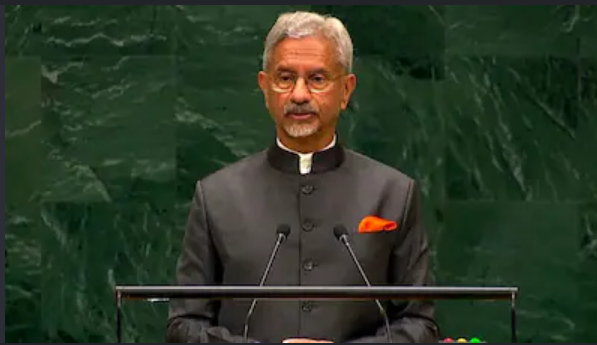
S Jaishankar calls Pakistan a “serial practitioner of terrorism” at UN
S Jaishankar criticised Pakistan at the UN General Assembly, referring to a “serial practitioner of terrorism” and warning against attempts to normalise terrorism.

Dhruv Rathee gets fresh summons in 2018 BJP IT cell video case

Nobody can browbeat judiciary, Chief Justice warns over Rahul Gandhi’s march

India-US trade deal first phase finalised, drafting underway

Election Commission orders voter roll revision in 17 states, UTs

Actor Imran Khan asked to leave India after CJP protest

Delhi Police offers 11-person limit for CJP’s Connaught Place protest
Actor Imran Khan asked to leave India after CJP protest
Election Commission orders voter roll revision in 17 states, UTs
India-US trade deal first phase finalised, drafting underway
Nobody can browbeat judiciary, Chief Justice warns over Rahul Gandhi’s march

Afghan Men Try To Hang With The Jet Engine Of The Aircraft in Kabul- Afghanistan News – Kabul News
Trending Top 10 News: 10000 Crore Fine on Flipkart, Apple to Launch Unique Feature, Hdfc Bank Job Ad

Trending Top 10 News: Nokia 6310, Apple sales, Bachpan ka Pyar Video Kid, Dainik Bhaskar IT Raid

Trending Top 10 News: Canada bans Indian flights, Rain in Delhi NCR, AIMIM Twitter hacked, Raj Kundra case

Trending Top 10 News: Shein India, Apple New Service, Pocket Oxygen, Oppo Launched New Phone
-
 India News18 hours ago
Dhruv Rathee gets fresh summons in 2018 BJP IT cell video case
-
 India News15 hours ago
Nobody can browbeat judiciary, Chief Justice warns over Rahul Gandhi’s march
-
 India News10 hours ago
India-US trade deal first phase finalised, drafting underway
-
 India News8 hours ago
Election Commission orders voter roll revision in 17 states, UTs
-
 India News7 hours ago
Actor Imran Khan asked to leave India after CJP protest
-
 India News6 hours ago
Delhi Police offers 11-person limit for CJP’s Connaught Place protest
